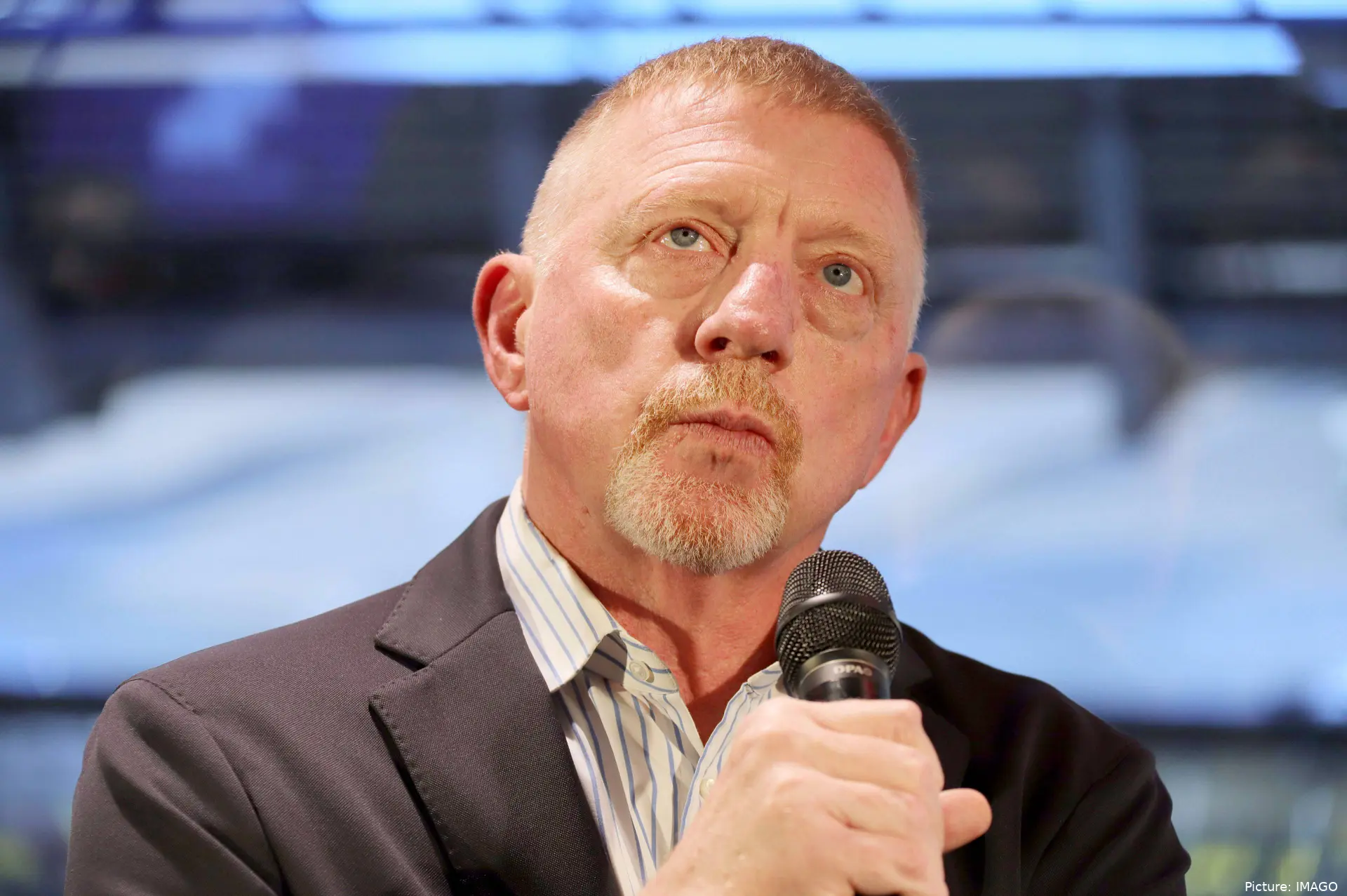
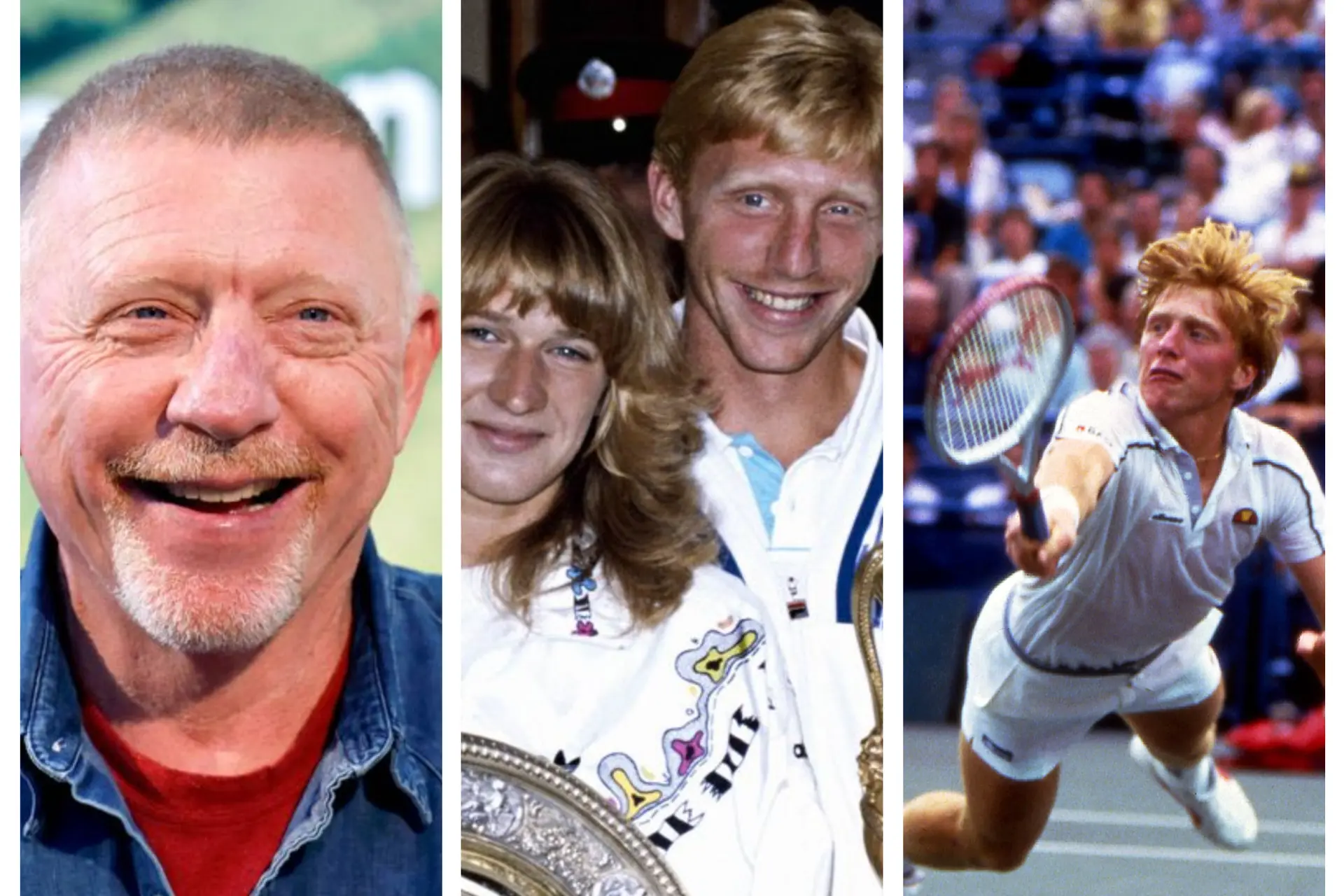
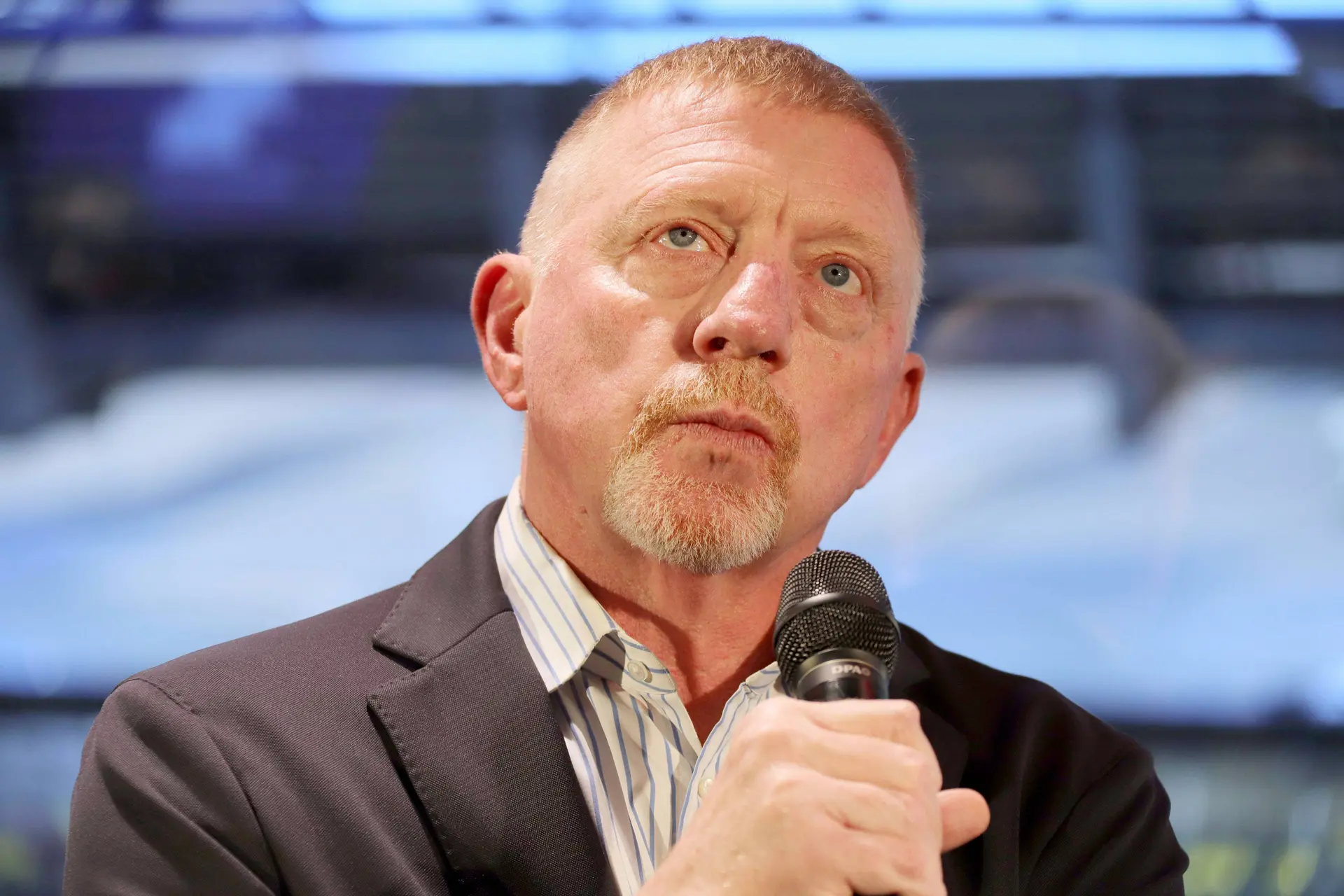
Boris Becker has never shied away from scrutiny. As a 17-year-old, he became the youngest men’s singles champion in Wimbledon history in 1985, launching a career that would yield six Grand Slam singles titles and 49 ATP titles overall. Decades later, however, the narrative surrounding the German is no longer defined solely by Centre Court triumphs but by financial collapse and a prison sentence in the United Kingdom.
In a wide-ranging interview, Becker addressed the arc of his life with unusual directness. He revisited the earnings from his playing days, the loans that accelerated his financial downfall, and the legal process that culminated in a 30-month prison sentence in 2022, of which he served eight months. His tone was measured, often defensive, but consistently reflective.
The former world No. 1 was declared bankrupt in 2017 and later found guilty of four charges under the UK Insolvency Act for failing to disclose assets. Becker disputes elements of the public narrative, arguing that headlines oversimplified the case and misrepresented key details. “I wasn’t hiding assets,” he insisted in an interview with Louis Theroux, describing delays and technical errors rather than deliberate concealment.
Now approaching his late fifties, Becker frames his prison experience as a turning point rather than an endpoint. He describes that period as “living hell,” but also as a necessary rupture in a life that had drifted off course after retirement. For Becker, the contrast between his early dominance and later disgrace forms part of a larger story about ambition, identity and consequence.
Read also
The economics of success and collapse
Becker rejects common estimates of his career wealth, including figures widely circulated online. While his official career prize money exceeded $25 million, he notes that taxation immediately reduced that figure. “Out of this $25 million prize money, half of it is gone with taxes right away,” he said, arguing that endorsement income is often overstated when commissions and contractual deductions are ignored.
He also questioned the reliability of publicly available financial data, suggesting that even basic personal details about him are inaccurate. For Becker, the issue extends beyond numbers to how a simplified narrative of rise and fall has taken hold.
“If you Google Wikipedia… It says I have three kids, not four kids. Starting with very factual information that’s easy to verify — it gives you an idea how many wrong things there are on Wikipedia. They’ve never seen my bank account, my tax returns, and they’ve never seen me paying commissions to any of my managers.”
By his own account, Becker retired in 1999 with approximately 30 million Deutsche Marks — around €15 million. A costly divorce soon after halved that sum. Long-term child support obligations, which he described as “a good five-figure range every month,” steadily reduced his liquidity over time, even as his post-retirement earnings no longer matched his peak years on tour.
“I walked away with around 30 million Deutsche Marks, which is about 15 million euros. That’s a hell of a lot of money, but it’s not 50 and it’s not 100. Within the first year after my retirement, I had a very expensive divorce. Half of it is gone. Because I had a high child support for three children over 15 to 20 years, the child support was in a good five-figure range every month, net. Naturally, after my tennis career, I didn’t have the income anymore. But I had the outgoings.”
The decisive turning point, however, came with a high-interest loan from a private bank in England. Becker secured a €5 million loan against projected future income, repaying roughly €1.5 million before disputes escalated. The 25% interest rate compounded the pressure. He describes himself as “badly advised” but accepts responsibility for agreeing to the terms.
Becker maintains that public discussion has frequently blurred the distinction between insolvency and tax evasion. He stresses that his 2022 conviction related to breaches of the UK Insolvency Act rather than concealed offshore accounts. Of 29 initial charges, he was acquitted on the majority, with four convictions tied, he says, to delayed disclosures rather than intent to defraud.
“What got me the 30 months was that I took not 850,000, but 382,000 pounds, to pay child support, to pay personal expenditure, and so forth — which I had to do by law. That’s what I did. And I told the trustee this three weeks after he asked me. That’s the God-honest truth.”
From Centre Court to Wandsworth
Few narratives in modern tennis carry such stark symbolism. Wimbledon’s SW19 postcode lies just miles from Wandsworth Prison in SW18, where Becker was initially incarcerated. He described the contrast as “incredible,” noting that the roundabout near Wimbledon directs traffic left toward Centre Court and right toward prison. “The one time I had to go right,” he said.
Becker’s account of prison life dispels any romanticism. He portrays it as unpredictable and dangerous, with inmates of varying offences housed in close proximity. He stresses the importance of quickly assessing power structures and aligning with influential figures to ensure protection. “You need to have a group,” he explained, describing the necessity of reading the environment.
“Prison is very dangerous. You think you’re in a safe place. No — it’s the most dangerous place I’ve been in my life. They don’t tell you that before. I was surprised in HMP Wandsworth that they didn’t really have wings where you go, ‘Okay, the paedophiles on wing B, the dangerous criminals on wing A.’ They didn’t do that. Everybody was mixed.”
After several weeks in Wandsworth, Becker was transferred to Huntercombe Prison, which houses foreign nationals. There, he continued adapting to the environment. He claims his global fame did not significantly influence his status among inmates, many of whom were too young to remember his 1980s achievements. Survival depended less on celebrity and more on composure.
“When you lose everything, including your freedom, you’re bound to have only your personality and your character. Everything else is gone. And you have to deal with your character and personality with other very dangerous inmates. If you’re not strong, if you’re not smart, if you don’t agree to rules, they’re going to bully you. They’re going to assault you.”

The champion’s mindset — and its cost
Becker attributes both his sporting excellence and his later misjudgments to a single character trait: an unwillingness to accept limits. As a player, that mentality propelled him to six Grand Slam singles titles — three Wimbledon crowns, two Australian Opens and one US Open — and the world No. 1 ranking. Off the court, he suggests, it occasionally blurred into overreach.
“In order to become the best at what you do, you have to go past your own limitations,” he said. That refusal to accept “no for an answer” proved invaluable on Centre Court but less suited to corporate negotiations and legal frameworks. Becker rejects the label of recklessness, distinguishing it from fearlessness. “I’m not reckless, but I’m not afraid,” he stated.
The years following his 1999 retirement exposed the vulnerability many elite athletes face once structure and purpose dissolve. Becker acknowledges drifting during his thirties, describing a gradual erosion of discipline. Mistakes accumulated over time rather than erupting suddenly. Divorce, business disputes and mounting expenses compounded financial pressure long before formal insolvency.
“Maybe I needed to go to prison. I was on the wrong path. I was not a happy camper in my mid-40s. I was eating too much and drinking too much and hanging with the wrong people. Mistakes don’t happen overnight. They happen over 10 to 15 years.”
Today, Becker presents himself as recalibrated. He speaks of marriage, impending fatherhood and a renewed focus on stability. Whether the second act of his life will remain free of controversy remains uncertain. What is clear is that Becker now views his downfall not as an anomaly but as a consequence — one tied inseparably to the same drive that once made him a champion.

Cristhián AvilaTennis Journalist
Cristhián Ávila is a tennis journalist based in Santiago, Chile, and has been part of the TennisUpToDate team since early 2023. He covers the ATP and WTA Tours as well as all four Grand Slams, producing breaking news, match reports, analysis, and regular liveblogs from major tournaments.
His reporting combines statistical analysis with clear explanation, helping readers understand tactical developments, player form, and broader storylines across the tour. Working fluently in both Spanish and English, Cristhián collaborates with an international editorial team and contributes to comprehensive global coverage. As part of his work, he has conducted interviews and media interactions with leading figures in the sport, including Caroline Wozniacki and John McEnroe.
In his journalism, Cristhián places strong emphasis on careful sourcing, editorial accuracy, and updating articles promptly when new, verified information becomes available. His coverage is grounded in research, context, and direct engagement with professional tennis.
claps 0visitors 0
Just In

Popular News
Latest Comments
- A healthy Qinwen may be hard to stop next season. She was already scaring her opponents before her medical leave(s). Unfortunately, Zheng insisted on singing again. On the positive side -- Mirra did not sing!! ;~}
 mandoist11-10-2026
 - Where is it written that athletes, entertainers... People in general... are mandated to keep looking at -- or even using [anti]Social Media? Public & private figures consistently complain and reveal their concerns about negativity and violence thrown at them -- yet they insist on participating. Avoid it, don't use it, don't read it. It's okay to occasionally look up at the World instead beating your eyes & thumbs to death on The Inventions out there.mandoist11-10-2026
- great articlestennisseserver07-10-2026
- Medvedev was leading Djokovic 7-5, 3-5 when an attempted return..' NO you ignorants, Djokovic was leading .weiss05-10-2026
- No more bullshit "Wildcards" to these two. Qualify like everyone else -- there will be cameras there, too. Time to scream... WTF ????!!!!mandoist29-09-2026
- Let's not BS the general public -- Sabalenka started showing cracks in her game last season. Her losses and near-losses started at about the same time she began being distracted by Fame (constant Selfies, making TV commercials, magazine shoots, endless Social Media nonsense, etc., etc.) One would think even Saba could recognize the parallels with others who failed before her -- Raducanu, Giorgi, Bouchard to name a few.mandoist25-09-2026
- Gross!! Hey Raducanu, Giorgi, and Bouchard -- reserve a seat at your Social Media Selfie table for Saba + Naomi. They're heading in your direction soon enough.mandoist24-09-2026
- And then these same players will complain about how lengthy their season’s were and need more time-off. I’m all for more tennis but the amount of tennis we get now is actually kind of crazy! We all need a break, especially the players.DaveyWavey23-09-2026
- You should do a comparison article for "different kinds of justice" the courts decide for tennis players. I can think of at least three players who received very small bans of a few months, however Tara Moore has been fighting for her literal survival the past few years. It seems odd considering she is not a "name" player, unlike the other cases.DaveyWavey22-09-2026
- PRIZE MONEY & POINTS Winner - $185,500 Finalist - $114,500 Semi-Finalist - $66,003 Quarter-Finalist - $35,000 Round of 16 - $18,045 Round of 32 - $13,005 Winner - 500 Finalist - 325 Semi-Finalist - 195 Quarter-Finalist - 108 Round of 16 - 60 Round of 32 - 1DaveyWavey20-09-2026

Loading