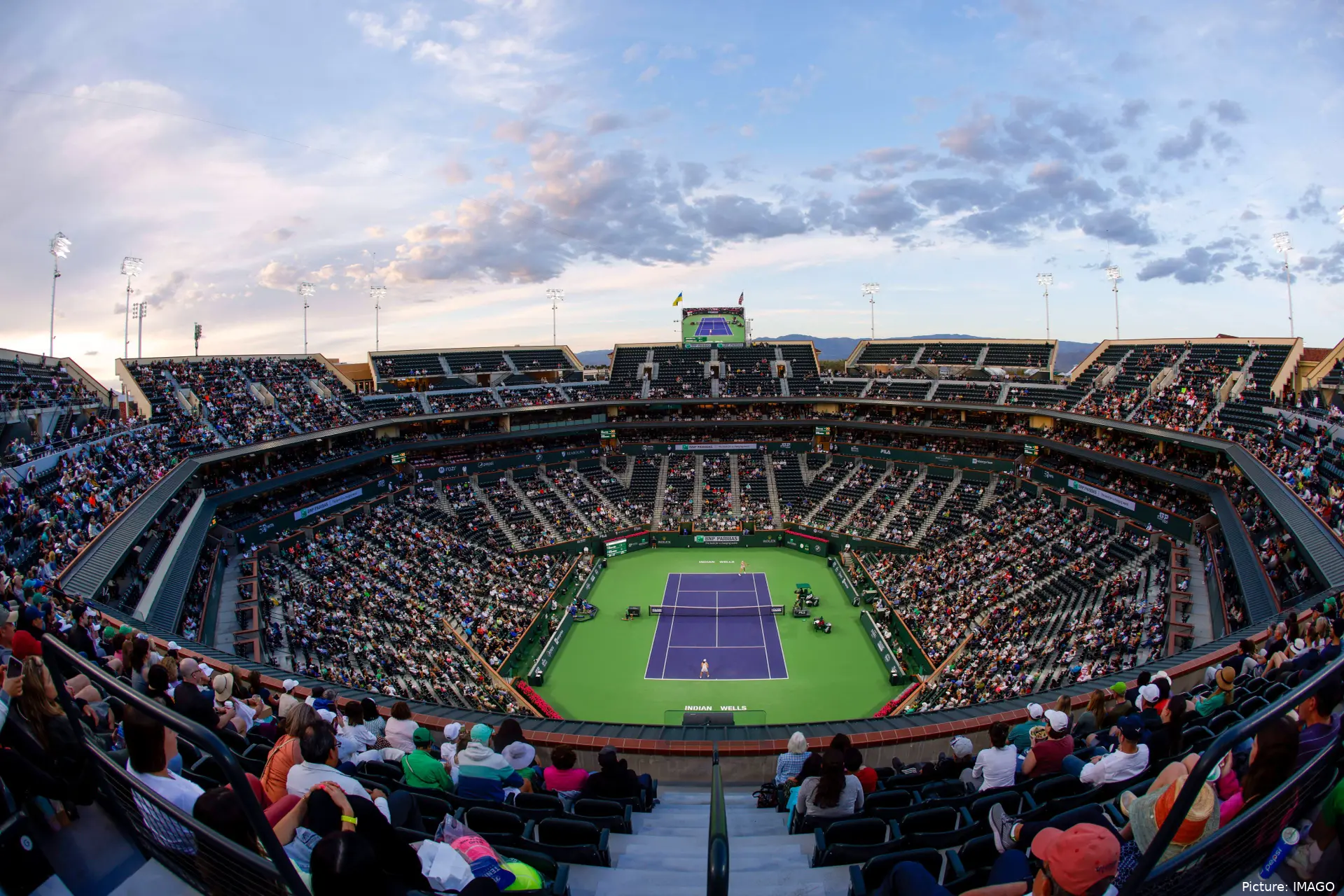
China Open in late September is when the
race for year end points heats up. With Grand Slams behind us, and the tennis
season entering its last tournaments, every point feels more important than
ever. The championship in China sits right in that lane. It is a combined ATP
and WTA event on outdoor hard courts at the National Tennis Centre, and in 2025
it stretches across three weeks, with the showcase finals landing during
China’s Golden Week holidays. The timing is perfect, meaning we can expect big
crowds on the stands, vocal China
Open expert picks and predictions displaying their proficiency in
the sport, bigger pressure on top players, and a direct link to the season
finales in Riyadh for the women and Turin for the men.
Why Beijing Matters More Than Ever?
The China Open is one of the last premium
hard court stops before the year end cutoffs. For the women, points won in
Beijing can lock in or boost a place at the WTA Finals in Riyadh, which run
from November 1-8. For the men, the tournament feeds directly into the ATP Live
Race to Turin, with the ATP Finals scheduled for November 9-16. If you are
close to the line, going far into the tournament in Beijing can be the
difference between packing early for the off season and walking into the top
eight players.
The event’s history on hard courts is also
a great preparation for the indoor finals. Players who serve well, have fast
and clean returns, and manage short court exchanges in Beijing tend to carry
that form indoors. Essentially, if players’ baseline game is tight here, it
usually lasts to the last two weeks of the season.
What We Know About The 2025 Championship?
Just days before China 2025 kicks off,
there was news coming from Aryna Sabalenka’s team. The current world No.1 in
women’s singles cited fatigue from the previous US Open championship, and the
physical toll the run left on her body. That reshuffled the seedings, so for
fans who want to bet on China Open, Iga Swiatek and defending
champion Coco Gauff are left as the top contenders. However, the tournament is
more than just the two top players. There are plenty of other strong players,
big hitters and shot makers, who can quickly change the course of a match.
On the men’s side, the ATP entry is led by
Jannik Sinner, Alexander Zverev, and Stefanos Tsitsipas, with proven hard court
threats like Daniil Medvedev and Andrey Rublev in the mix. A healthy Alex de
Minaur brings top level speed around the court, and young players like Jakub
Mensik can be dangerous in any part of the draw, because their power gives them
a real chance to beat even the top seeds. None of this guarantees results, but
it paints the picture of how thick the draw will be from day one.
The Recent Past That Shapes This Year
Beijing is not a lottery. The tournament in
China heavily favors complete players, the ones who have a strong serve along
with precise returns and quick play on the net. In 2024, Carlos Alcaraz
outlasted Sinner in a three hour epic to win the men’s title, a match that set
a new length record for Beijing’s ATP 500. It was a testament of mental
endurance as well as first strike tennis, winning points efficiently with
minimum physical strain. A year earlier, Sinner lifted the trophy thanks to his
improved backhand and aggressive serve.
On the women’s side, Coco Gauff stormed to
the 2024 title with fast starts and crisp return games, announcing that her
hard court skills go beyond her native North America. Those are the styles that
win here: clean serves, early take return positions, and the nerve to hit
through tough moments.
The Women’s Favorites
●
Sabalenka is out, and the
tournament’s odds at Stake.com
immediately started shifting. We will enjoy the play of world’s No. 2 and No.3,
Swiatek and Gauff, separated by only around 60 points, along with Elena
Rybakina, Zheng Qinwen, Jessica Pegula, and Jasmine Paolini pushing just
behind.
●
Swiatek’s case is simple. Her
return numbers on hard courts are elite, and she builds pressure by winning
neutral rallies with controlled aggression. Beijing’s pace gives her enough
time to set her feet on the forehand and open the court with wide returns. With
the WTA Finals a week earlier on the calendar this year than some past
editions, Swiatek also knows that a Beijing title can set a tone for Riyadh.
She has already qualified for the WTA Finals, and the target now is to gain
more points in order to stay behind Sabalenka.
●
Gauff arrives with the most
direct Beijing confidence, since she is the defending champion. Last year Coco
sailed through the finale with improved serve placement and a much more
proactive forehand when she was on top of the rally. Add in elite speed and
counterpunching, and we could have a rerun of the last season. With the WTA
Finals staged in Riyadh again, Gauff’s team will want a crisp hard court block
to set her up for a great push to second place.
●
Rybakina is the biggest threat
to both of them. Her first serve numbers can take the racket out of anyone’s
hands for a set and a half. Beijing’s conditions reward that fast serve with a
powerful forehand to follow. If she strings together health and tempo for five
to six matches, she can win the whole thing.
●
Zheng Qinwen is the home court
variable. She has strengthened her return game and has learned to flatten the
forehand down the line to finish points rather than count on returns going
across the court. The support in Beijing will be loud, and if her first serve
percentage holds, she is a genuine title shot deep into week two.
●
Paolini brings a different
threat of balance and resilience. She thrives in long rallies, and as her 2024
season showed, she can survive extended, nervy sets and still find focus to
stay in the set.
●
Add in Pegula’s steady baseline
weight and Mirra Andreeva’s fearless timing, and you can see why the second
week will feel like continuous seeded player warfare. The field is that strong.
So, who can realistically win this
tournament and go to Riyadh less stressed? Gauff and Swiatek are the two most
likely finalists, with Rybakina as the best spoiler. The coin flip edge goes to
Gauff because of her Beijing comfort and the way her speed tends to unsettle
Swiatek by disturbing her hits on hard courts. A repeat champion is not easy
here, but her path makes sense. If the draw puts a lot of big servers on
Gauff’s side, then Swiatek has a better chance of winning the title, because
her section would be easier to handle. If Zheng lands a friendly section, we
could see her in the semifinals with the crowd as a bonus force.
The Men’s Favorites
●
Carlos Alcaraz was supposed to
come as a defending champion to China, but the Spaniard, after his stellar
performance at the US Open, opted to stay in the US and play in the Laver Cup.
The No. 1 will kick off his Asian tour with the Japan Open later this
year.
●
Jannik Sinner is the star name
at every tournament. His hard court play has been improving since 2023, by
hitting powerful first and second serves, followed by his confidence to step
inside the baseline on returns. Sinner is currently hitting the cleanest
backhand on the tour, which is his most effective weapon coming to China. The
second seeded player developed a pattern of serving wide in the ad court,
backhand through the middle, then changing to the forehand proved to be a
winning combination that rivals still don’t have an answer to. His track to
Turin is also familiar and positive. He knows the surface profile he’ll see at
the Finals, and he’ll try to tune the same weapons here.
●
Alexander Zverev has played his
best late season tennis on hard courts, especially in structured baseline
rallies where he can roll the backhand deep and look for forehand finishes.
Beijing’s bounce helps him defend his backhand corner and still reach short
balls on time. If his second serve holds under pressure, he could be a title
contender.
●
Daniil Medvedev is the chess
player in this room. His return can drag even the biggest servers into rallies
they do not want. The question is always about his willingness to step forward
when the match asks for it. If he finds a week of clean forehand finishing, he
can win the tournament.
●
Stefanos Tsitsipas remains a
shot maker who can rip off nine games in a row and then go quiet. It happened
to him so many times before. However, if the backhand down the line is landing
on the inside of the court, and the forehand is heavy into the corners, he
becomes a nightmare for rivals. His serve volley is spectacular when the
opponents find themselves deep into the court.
●
Alex de Minaur brings a
different flavor. He turns defense into offense and forces you to hit three
extra balls in every rally. In Beijing’s court, that stubbornness breaks
opponents who have not fully settled. If he gets a draw with a few strong
hitters early, he can run to the weekend.
The live wire name is Jakub Mensik. Big
serve, fearless backhand, and a willingness to take the forehand early. He may
not be a popular title pick, but he is a serious “ruin a seed’s week”
candidate. In short, Sinner is the clear top pick because his Beijing patterns
mirror the tennis that has made him a force at the ATP Finals. If the draw
splits Sinner and Medvedev, the likeliest final is Sinner versus Zverev or
Medvedev. The simple forecast is Sinner over Medvedev in a straight sets final
built on first strike points and patient backhand. The bolder call is de Minaur
shocking the bottom half and pushing Sinner to a tiebreak.
How Beijing Style Translates to Riyadh and Turin
The WTA Finals in Riyadh reward players who
take the ball early and protect serve against aggressive returners. That is why
Swiatek, Gauff, and Rybakina loom so large in Beijing. Rallies tend to be short
in the business end of both events. Holding serve is the most important skill
when playing in China. If the second serve is vulnerable here, it will be
punished later. With the Finals locked into Riyadh again in 2025, the women who
close out the China Open with clean service games will feel they have solved
the hardest problem at this stage in the season.
Turin’s indoor court favors the value of a
first serve and a first forehand. The back half of the China Open gives you
those exact stress tests. That is why players like Sinner and Medvedev aim to
leave Beijing with good timing of their forehands. If they handle Beijing’s
pace, Turin feels like a continuation of China’s championship. The event has
been confirmed in Italy long term, so the drive to peak on hard courts in Asia
is as strong as it has ever been.
Players With the Most to Gain
Some athletes already have enough points to
feel safe. Others use Beijing to improve their ranking. On the women’s side,
the Race shows a gap between the top two and the field. That creates
opportunity. A semifinal or better here can vault a player who has been
hovering between ninth and twelfth straight into Riyadh. That is why athletes
like Pegula or Paolini become so dangerous now. They do not need to win the
title to transform their season, but rather just one great week against the top
eight.
Men, on the other hand, typically have a
packed schedule before going to Turin. One good week can be worth two months of
steady ATP250 tournaments. Players who are still in their teens, come to China
to swing freely, without pressure or expectations. The official Race page
updates daily and tells the story of these shifts. In late September, that
story can change fast.

Samuel GillEditor-in-Chief
Samuel Gill is the Chief Content Officer (CCO) of TennisUpToDate.com, a role he has held since 2020. He is responsible for editorial governance across the platform, including setting content standards, overseeing accuracy and consistency, and guiding long-term editorial strategy. Since joining, he has contributed more than 10,000 articles and editorial pieces across the TennisUpToDate network, playing a central role in the daily operation and development of the site.
Based in Leicester, Samuel has a broad background in tennis media. In his current role, he works closely with editors and writers to ensure coverage meets clear journalistic standards, with particular attention to verification, consistency, and timely updates when new information becomes available.
claps 0visitors 0
Just In

Popular News
Latest Comments
- A healthy Qinwen may be hard to stop next season. She was already scaring her opponents before her medical leave(s). Unfortunately, Zheng insisted on singing again. On the positive side -- Mirra did not sing!! ;~}
 mandoist11-10-2026
 - Where is it written that athletes, entertainers... People in general... are mandated to keep looking at -- or even using [anti]Social Media? Public & private figures consistently complain and reveal their concerns about negativity and violence thrown at them -- yet they insist on participating. Avoid it, don't use it, don't read it. It's okay to occasionally look up at the World instead beating your eyes & thumbs to death on The Inventions out there.mandoist11-10-2026
- great articlestennisseserver07-10-2026
- Medvedev was leading Djokovic 7-5, 3-5 when an attempted return..' NO you ignorants, Djokovic was leading .weiss05-10-2026
- No more bullshit "Wildcards" to these two. Qualify like everyone else -- there will be cameras there, too. Time to scream... WTF ????!!!!mandoist29-09-2026
- Let's not BS the general public -- Sabalenka started showing cracks in her game last season. Her losses and near-losses started at about the same time she began being distracted by Fame (constant Selfies, making TV commercials, magazine shoots, endless Social Media nonsense, etc., etc.) One would think even Saba could recognize the parallels with others who failed before her -- Raducanu, Giorgi, Bouchard to name a few.mandoist25-09-2026
- Gross!! Hey Raducanu, Giorgi, and Bouchard -- reserve a seat at your Social Media Selfie table for Saba + Naomi. They're heading in your direction soon enough.mandoist24-09-2026
- And then these same players will complain about how lengthy their season’s were and need more time-off. I’m all for more tennis but the amount of tennis we get now is actually kind of crazy! We all need a break, especially the players.DaveyWavey23-09-2026
- You should do a comparison article for "different kinds of justice" the courts decide for tennis players. I can think of at least three players who received very small bans of a few months, however Tara Moore has been fighting for her literal survival the past few years. It seems odd considering she is not a "name" player, unlike the other cases.DaveyWavey22-09-2026
- PRIZE MONEY & POINTS Winner - $185,500 Finalist - $114,500 Semi-Finalist - $66,003 Quarter-Finalist - $35,000 Round of 16 - $18,045 Round of 32 - $13,005 Winner - 500 Finalist - 325 Semi-Finalist - 195 Quarter-Finalist - 108 Round of 16 - 60 Round of 32 - 1DaveyWavey20-09-2026

Loading