The Competitive Mindset Linking Tennis and Modern Online Gaming Today
OtherTuesday, 28 October 2025 at 06:58
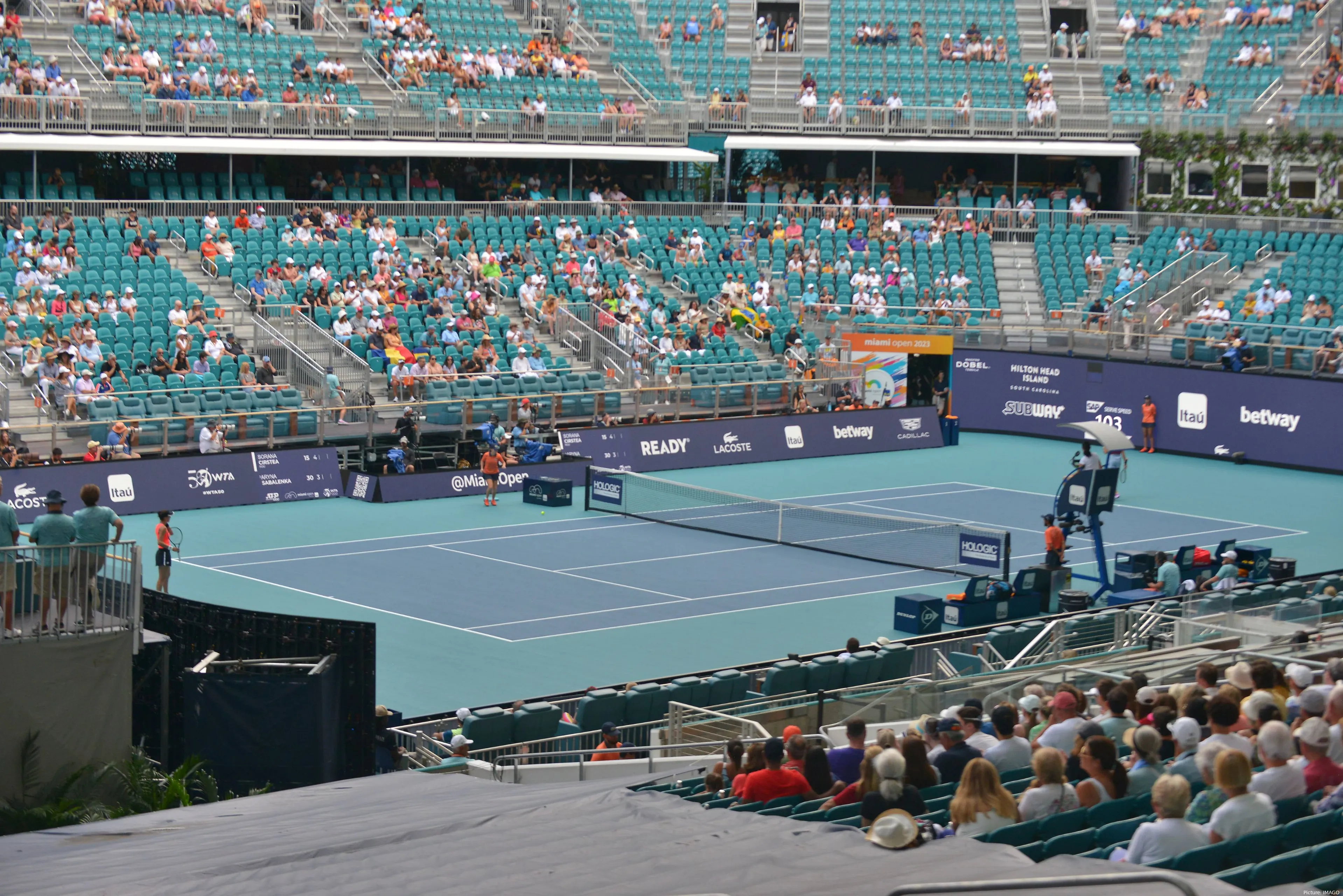
During a deciding set in tennis, each choice could determine the match. A player must learn when to break the offense, when to play defense and when to go with their instincts. That same focus characterizes modern competitions that are digital and automated, where success is determined by precision and emotional stability. After all, the same mental discipline that is practiced on the court is needed at lonestar sweeps casino, where success is determined by timing, pattern recognition and calm execution. In both circumstances, success is given to those who can keep their temperament during a situation, quickly analyze a problem and alter their method in moments of crisis.
Strategy Beyond the Court
Every top tennis player understands that part of winning depends on something other than just physical prowess. In a rally, Carlos Alcaraz can seamlessly adjust where he is going to hit the ball and Iga Świątek changes rhythm to break her opponent’s timing. These tactical decisions come from assessing the match and mentally holding a dominant position in highly demanding environments. Thus, tennis is as much a game of strategy as it is of strength.
Digital competitors operate under the same principles as traditional competitors. Whether someone is managing a high-tempo string of tasks or is focused on reaction-time drills, a sustained ability to think critically is the defining characteristic that separates the casual players from the serious competitors. Studies on competitive gaming show a close parallel to the development of players in other sports, such as tennis, where the focus of practice, repetition and review improves advanced skills of concentration, attention and rapid, decisive action over prolonged periods. The sustained practice of any activity in a disciplined manner requires a high degree of constancy, a readiness to adopt changes and the determination to learn through experience.
A Growing Culture of Digital Competition
The entertainment gaming industry continues to enjoy unprecedented growth. Newzoo reports a global games market revenue of $188.8 billion in 2025, coming mainly from mobile and console gaming and the industry is expanding on the back of 3.6 billion active players globally. The growth of the digital competition market shows an evolution to a fully mainstream activity that competes with traditional sports in structure and dedication.
Like many other sports, tennis has embraced new technology. Smart rackets, match analytics and real-time data tracking help athletes prepare for competition. Fans can stream matches, monitor serve speeds and analyze serve speeds. With digital technology, fans gain a new understanding of tennis without replacing the sport.
Streaming live matches and different sporting events has created a new reality. Viewers can simulate tournaments, communicate around the match, interactively review gameplay and experience the thrill of a live audience. This digital reality links competitive sports to interactive gameplay, allowing fans to participate and analysts to perform.
Focus, Flow and the Pursuit of Mastery
To be great and not just average at a sport, a player must have great focus. In tennis, athletes enter a “flow state,” a mental space where all concentration is on the match and everything is closed off. This is especially important in high-pressure situations. Both Novak Djokovic and Iga Świątek have spoken on the use of mindfulness and mental training to help them achieve this state.
Research indicates that competitors in gaming and sports share identical cognitive and physiological experiences. Competitive gameplay encourages focused attention, increased reaction time and mental absorption, closely compared to that of an athlete. The mental demands of consistency during an extended rally on a clay court and during a fast-paced online game are identical. Both tennis and gaming require the player to keep an emotionally steady state, recover quickly from mistakes and remain focused during uncertain phases of the match.
The Psychology of Risk and Reward
Every tennis point presents a player with an element of risk. A player must determine if they will serve aggressively or play it safe. The player must also consider the time limits, confidence, risk and reward of the serve. A player must construct a mental strategy to overcome these challenges. The same logic holds in competitive digital gaming, where a player will be rewarded for well-thought-out preparation, analysis and composure rather than for a hasty strategy.
Frustration can come from a missed shot or rejected outcome, but it’s resilience that earns you distinction. With time, most players learn that winning depends on how fast they can regain their composure after a defeat. This is the winning mentality observed at lonestar sweeps Casino, where players apply time, logic and observation to secure their positions. Progress is a product of reflection and consistency, not the incessant pursuit of short-term goals.
From Spectator to Participant
Watching from the stands is a thing of the past for many sports enthusiasts. As the 2024 insights report from Deloitte illustrates, digital systems are revolutionizing the fan experience by changing watchers into active participants. People are venturing into strategy-based activities that enable them to experience the anticipation and the decision-making that characterize professional sporting action.
For tennis enthusiasts, this advancement applies in a new way to their connection with the sport. The focus is not to replace active play but to stretch the mindset that makes it riveting. The digital realm is another space for the same patience and strategic thought that guides a match on the court. Both scenarios inspire self-discipline, focus and a host of other traits that are crucial in life.
The Modern Arena of Competition
Competition's limits are changing again due to technology. Innovations such as Hawk-Eye and performance-tracking software in tennis technology offer more accurate assessments and outcomes and allow real-time score inflation. In gaming, analytical tools help players improve timing and decisions. These systems help clear thinking and performance.
The core pursuit is the same whether you are facing a match point or navigating a complex digital problem. Both situations demand focus, patience and the ability to perform under pressure. Competition may have shifted to different platforms, but the essence remains the same: the relentless pursuit of mastery through strategy, awareness and composure.
claps 0visitors 0
Just In

Popular News
Latest Comments
- She blames the conditions for her loss but her opponent had to play in the same conditions. To me, this means she is belittling the abilities of her opponent. She lost to a player who played better.
- I will talk to her soon. My girl cannot stomach tiebreak losses anymore.
- If WTA cared about the players they would have listened to them 2 seasons ago and NOT manufactured a grueling, demanding schedule. Basically, given WTA's demands and threats, forcing them to perform beyond the human body's normal capacity
- WOW!! Finally some extensive (correct) and intelligent insight. Word-for-word exactly what WTA offers fans/viewers -- but also what needs to do to salvage its Future. Great stuff by writer Aron Solomon!
- Ha-ha-ha... great stuff from Pegula. The important thing is, Vekic went home. Contrary to what Jess said, she is not a "nice person". Although she seems to be trying hard to change that these days.
- tennisuptodate seems to want to be a sensationalist rag like its lame competition online. Majority doesn't give a rat's ass about the Willams' personal problems and needs for the Spotlight... so stop already.
- This article is SPOT ON!!!!
- Playing against #86 was a good practice session... most work she did all month.
- Awwww.... it's always "so unfair" for these two sisters. 1. She is wasting able young players' opportunities by seeking out Wildcards she does not deserve. Retire means RETIRE. 2. Deal with the situation(s) like no immediate water, etc. -- just like everyone else.
- "He ended up saying, 'look, I don't think this is going in the way we both want it to' so he ended it really." TRANSLATION: 'If you're not going to listen, or do the work, it is over'


Loading