Which Players Have Managed to Win a Set Against Jannik Sinner Across the Last Two Australian Opens?
Other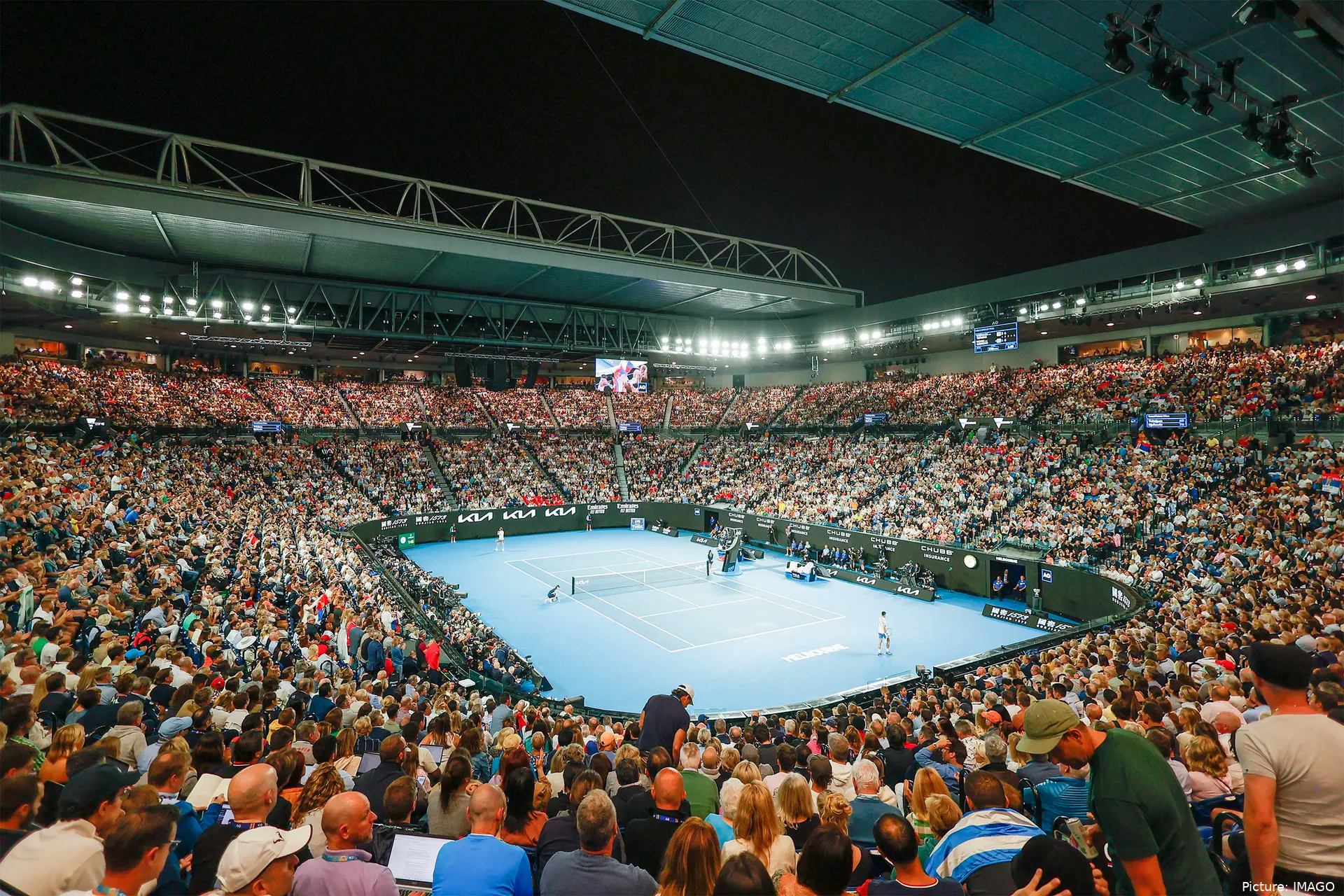
When
home favorite Tristan Schoolkate cracked a forehand winner to close out the
first set against reigning champion Jannik Sinner in the second round of last year's
Australian Open, the roar inside Rod Laver Arena felt like it could've lifted
the roof clean off. It was just past 8 p.m. on a Thursday night in Melbourne,
and a 23-year-old Aussie wildcard ranked No. 173 in the world had just taken a
set off the defending champion. The scoreboard flashed 6-4, and for one surreal
moment, upset magic hung in the air like smoke.
It
didn't last. Sinner won 16 of the next 21 games, the gulf in class becoming
painfully obvious as the Italian's precision overwhelmed Schoolkate's courage.
The reigning champ would lose just one more set throughout the entirety of the
tournament as he romped to his second straight title
Down Under. Fast forward to 2026, and Sinner stands on the brink of history.
Sinner's Three-Peat Hopes
A
new online betting site is just launching in time for the Australian Open. The
highly anticipated Ozoon Sports will be bringing its
offering to tennis aficionados in the very near future, and when the Canadian
outlet opens its virtual doors, it will follow the rest of the market by
installing Sinner as the odds-on favorite to claim his third straight title in
Melbourne. If he lives up to the billing, he will become just the second man in
the Open Era to ever complete a three-peat of Australian Open titles.
But
here's the thing about Schoolkate's moment in the sun last year—that single set
he claimed mattered. It put the Western Australian into the rarest company in
tennis right now: players who've actually claimed a set off Jannik Sinner
during his dominant run in the land down under.
Four
players. Fourteen matches. Five sets dropped total across two years. But who
were the players who managed to claim them? Let's take a look.
Medvedev's Heartbreak
Daniil
Medvedev didn't just take a set off Sinner in the 2024 final. He took two. And
he was 85 minutes away from winning the whole damn thing.
The
Russian came out swinging with a tactical adjustment that initially broke
Sinner's rhythm completely. Instead of camping three meters behind the baseline
like he normally does, Medvedev stepped up to the Italian's serve, taking the
ball early and suffocating Sinner's time. He broke serve in the third game of
the match—something opponents had managed just twice in Sinner's entire
tournament run—and kept his foot on the gas.
Fourteen
winners in the first set alone. Constant pressure. Sinner looked hesitant at
the net, uncertain about his approach game. When Medvedev closed out the second
set to go up two sets to love, it seemed for all the world that the Russian was
on the brink of a career-defining victory.
But
champions don't fold, and Sinner certainly didn't. Instead, he adjusted and
started forcing Medvedev deeper and deeper behind the baseline in the fourth
set, finding success with his backhand down the line. When he faced a break
point serving at 3-3 in the fourth, he fired an ace. The momentum flipped.
Medvedev, who'd already played nearly 21 hours of tennis across three
five-setters just to reach the final, started showing cracks. Fatigue crept in.
Sinner won the third, then the fourth, then rode the wave into the decider.
Final
score: 3-6, 3-6, 6-4, 6-4, 6-3. Three hours and 44 minutes of brilliance and
heartbreak. Sinner became only the second player in the Open Era to rally from two sets
down in an Australian Open final—the other being Rafael Nadal in
2022, also against Medvedev.
Djokovic's Lone Stand
Heading
into the 2024 semifinal, Novak Djokovic hadn't lost at the Australian Open in
over five years. He was expected to breeze past the upstart Sinner before
claiming a tenth title Down Under. But instead of waltzing to glory, the
Serbian sensation was ransacked by his younger rival as Sinner broke Djokovic's
serve five times in the opening two sets, ripping winners from every angle in
the process.
Djokovic
committed 54 unforced errors—an absolutely uncharacteristic performance for
someone who'd won 33 straight matches at Melbourne Park. The scoreline after
two sets read 6-1, 6-2, and it felt like watching the changing of the guard
happen in real time. But champions don't go quietly.
Djokovic
elevated his game in the third set, digging into the kind of resolve that's won
him 24 Grand Slam titles. The set went to a tiebreak. Sinner had a match point
at 6-5. One point from a straight-sets demolition of the greatest player of all
time. Djokovic saved it. Then he saved another. He won the breaker 8-6 to
finally get on the board, but it was only a brief reprieve.
Sinner
broke early in the fourth set and closed out the match with a blazing forehand
winner after three hours and 22 minutes. Final score: 6-1, 6-2, 6-7(6), 6-3.
Djokovic had finally been beaten in Australia, and that single set he took? It
represented defiance more than dominance.
Rune's Window and Schoolkate's Moment
Holger
Rune's fourth-round clash against Sinner last year featured a 21-minute delay
when the net broke, medical timeouts for both players, and conditions so brutal
that rallies left them gasping. The Italian took the first set easily, 6-3, but
then something shifted. The defending champion looked off, his movement
compromised.
He
took a medical timeout off-court, and when play resumed, Rune pounced. The Dane
earned his first break point when Sinner double-faulted to trail 5-3 in the
second. Rune leveled the match before Sinner's conditioning and shotmaking
reasserted control for a 6-3, 3-6, 6-3, 6-2 victory. Rune didn't outplay Sinner
so much as he capitalized on a rare moment when the Italian looked vulnerable.
That's all you get against the world No. 1—a window, not a door.
And
then there's Schoolkate, the ultimate underdog story. The Perth native had
failed to qualify for the Australian Open for five straight years before
finally earning a wildcard. He walked onto Rod Laver Arena for his center court
debut against the defending champion with nothing to lose and everything to
prove. He played smart, aggressive tennis—moving forward constantly to avoid
baseline wars with Sinner, winning 94% of his net points in the opening set.
When he broke Sinner to love to close out the set 6-4, nearly 15,000 fans
exploded. It ended Sinner's streak of 29 consecutive sets won.
The
Australian couldn't sustain it. Sinner broke back to lead 4-3 in the second
set, and the difference in class became glaring. But the Aussie shouldn't be
too disheartened. Plenty that came before him were embarrassed by Sinner, and
plenty more will be in 2026.

Samuel GillEditor-in-Chief
Samuel Gill is the Chief Content Officer (CCO) of TennisUpToDate.com, a role he has held since 2020. He is responsible for editorial governance across the platform, including setting content standards, overseeing accuracy and consistency, and guiding long-term editorial strategy. Since joining, he has contributed more than 10,000 articles and editorial pieces across the TennisUpToDate network, playing a central role in the daily operation and development of the site.
Based in Leicester, Samuel has a broad background in tennis media. In his current role, he works closely with editors and writers to ensure coverage meets clear journalistic standards, with particular attention to verification, consistency, and timely updates when new information becomes available.
claps 0visitors 0
Just In



Popular News
Latest Comments
- A healthy Qinwen may be hard to stop next season. She was already scaring her opponents before her medical leave(s). Unfortunately, Zheng insisted on singing again. On the positive side -- Mirra did not sing!! ;~}
 mandoist11-10-2026
 - Where is it written that athletes, entertainers... People in general... are mandated to keep looking at -- or even using [anti]Social Media? Public & private figures consistently complain and reveal their concerns about negativity and violence thrown at them -- yet they insist on participating. Avoid it, don't use it, don't read it. It's okay to occasionally look up at the World instead beating your eyes & thumbs to death on The Inventions out there.mandoist11-10-2026
- great articlestennisseserver07-10-2026
- Medvedev was leading Djokovic 7-5, 3-5 when an attempted return..' NO you ignorants, Djokovic was leading .weiss05-10-2026
- No more bullshit "Wildcards" to these two. Qualify like everyone else -- there will be cameras there, too. Time to scream... WTF ????!!!!mandoist29-09-2026
- Let's not BS the general public -- Sabalenka started showing cracks in her game last season. Her losses and near-losses started at about the same time she began being distracted by Fame (constant Selfies, making TV commercials, magazine shoots, endless Social Media nonsense, etc., etc.) One would think even Saba could recognize the parallels with others who failed before her -- Raducanu, Giorgi, Bouchard to name a few.mandoist25-09-2026
- Gross!! Hey Raducanu, Giorgi, and Bouchard -- reserve a seat at your Social Media Selfie table for Saba + Naomi. They're heading in your direction soon enough.mandoist24-09-2026
- And then these same players will complain about how lengthy their season’s were and need more time-off. I’m all for more tennis but the amount of tennis we get now is actually kind of crazy! We all need a break, especially the players.DaveyWavey23-09-2026
- You should do a comparison article for "different kinds of justice" the courts decide for tennis players. I can think of at least three players who received very small bans of a few months, however Tara Moore has been fighting for her literal survival the past few years. It seems odd considering she is not a "name" player, unlike the other cases.DaveyWavey22-09-2026
- PRIZE MONEY & POINTS Winner - $185,500 Finalist - $114,500 Semi-Finalist - $66,003 Quarter-Finalist - $35,000 Round of 16 - $18,045 Round of 32 - $13,005 Winner - 500 Finalist - 325 Semi-Finalist - 195 Quarter-Finalist - 108 Round of 16 - 60 Round of 32 - 1DaveyWavey20-09-2026

Loading