Professional tennis has spent years telling players that their safety matters. Their mental health matters. Their well-being matters. Until, apparently, it doesn't.
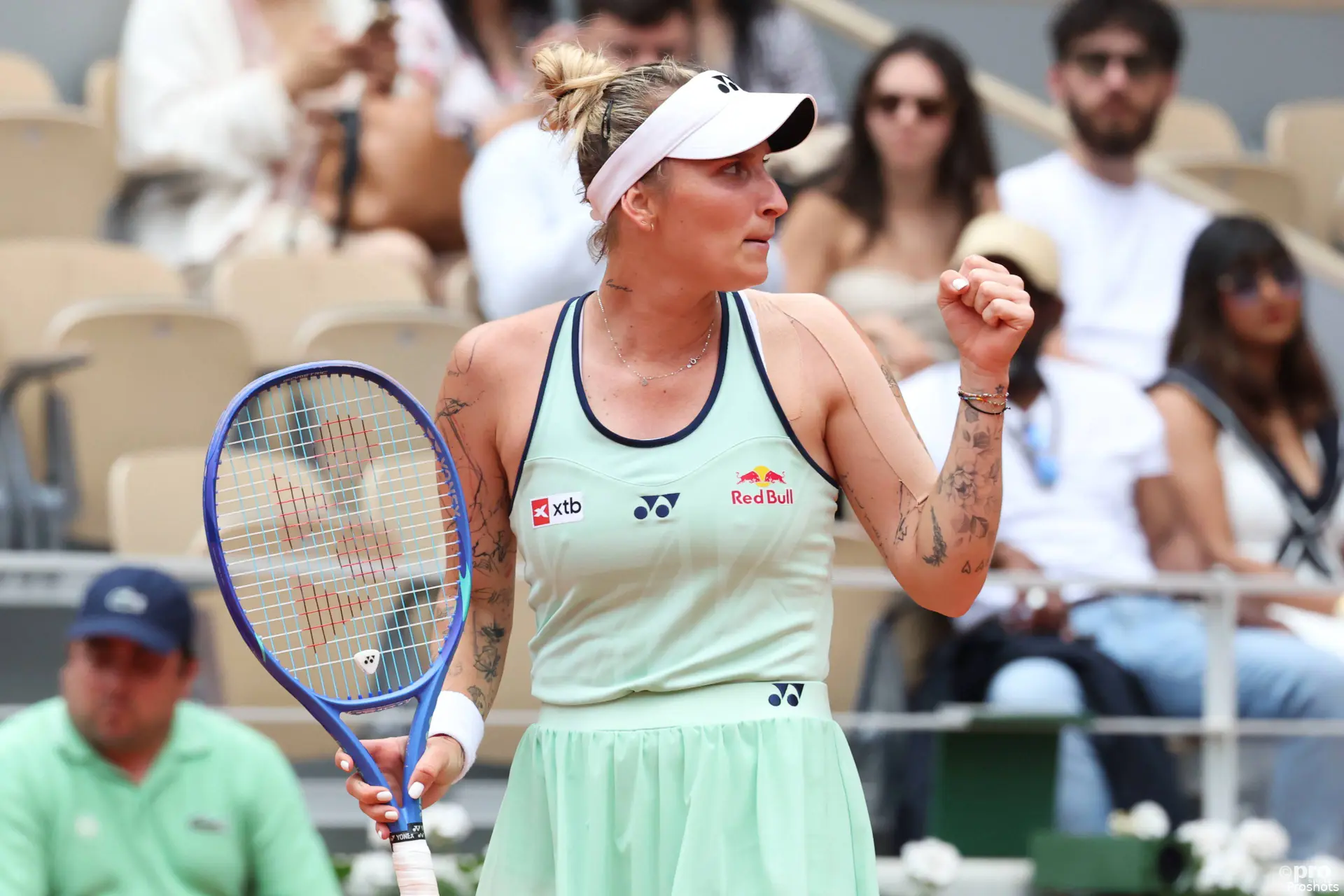
On Monday, former Wimbledon champion Marketa Vondrousova was handed a four-year suspension after refusing an out-of-competition anti-doping test at her home in December 2025. Under anti-doping rules, refusing a test is treated much the same as testing positive because authorities fear athletes could otherwise avoid detection by simply declining to participate.
The rule is understandable. This result is absolutely not. According to the tribunal's findings, Vondrousova refused entry to a doping control officer who arrived at her home. Vondrousova argued that the officer failed to properly identify themselves and did not follow protocol. She said she felt unsafe. She said she was scared. She said the decision was made in a moment of fear, not deception.
The tribunal was not persuaded. But perhaps the tribunal was asking the wrong question. The issue should not simply be whether the rules were technically violated. The issue should be whether tennis has created a system that expects athletes to ignore perfectly reasonable personal safety concerns.
Imagine someone arrives unexpectedly at your home late in the evening. Imagine that person says they need access to your residence.
Read also
Kvitova memories ring true
Imagine you are uncertain about who they are. What would most people do? Most people would not immediately open the door. Most people would ask questions. Most people would verify identities.
Most people would prioritize their safety. Yet in this case, the sport appears to have concluded that the correct response was immediate compliance. What makes the situation even more troubling is the context Vondrousova reportedly raised during the proceedings.
For Czech players, the memory of Petra Kvitova's 2016 attack is impossible to ignore. Kvitova was stabbed by an intruder who gained access to her apartment. The injuries nearly ended her career. She suffered severe damage to the hand that held her racket and required extensive surgery before eventually returning to the tour. That attack shocked tennis.

Petra Kvitova after her last appareance in Wimbledon 2025
It also left a lasting impression on an entire generation of Czech players. Whether Vondrousova consciously thought about Kvitova in that moment almost misses the point. The lesson from that tragedy was clear: athletes, particularly women living alone, have every reason to take unexpected visitors seriously. Tennis cannot spend years promoting athlete safety and then punish an athlete for acting on safety concerns when they arise.
The ITIA insists its officers are trained professionals. I have no reason to doubt that. But this case is not really about the officer. It is about perspective. From the governing body's perspective, a test was refused. From Vondrousova's perspective, an unfamiliar person appeared at her home and she did not feel safe granting access. Those are not the same thing.
The anti-doping system exists to catch cheaters. Nothing in this case suggests Vondrousova failed a drug test. Nothing suggests performance-enhancing drugs were found. Nothing suggests an elaborate effort to undermine the integrity of competition. The violation occurred because she refused entry. The rules may permit treating that refusal as equivalent to a positive test. That does not mean common sense requires us to view it that way.

There is a difference between protecting clean sport and abandoning proportionality (and a sport governing body essentially losing their mind). A four-year suspension effectively erases the prime years of a professional athlete's career. It is the type of punishment most fans associate with deliberate, sophisticated doping schemes.
Applying the same punishment to an athlete who says she acted out of fear sends an uncomfortable message. It tells players that when safety concerns collide with anti-doping procedures, the procedures will always win.
No questions asked. No context considered. No humanity applied. Rules are necessary. But rules that cannot distinguish between a cheat and a frightened person eventually stop serving justice and start serving bureaucracy. That distinction matters. And in Marketa Vondrousova's case, tennis seems to have forgotten it.

Aron SolomonGuest Author
A Pulitzer Prize-nominated journalist for his groundbreaking op-ed in The Independent exposing the NFL’s “race-norming” policies, Aron Solomon, JD, is a globally recognized thought leader in law, media, and strategy.
As Chief Strategy Officer for AMPLIFY, he leverages his deep expertise to shape the future of legal marketing. Aron has taught entrepreneurship at McGill University and the University of Pennsylvania and was honored as a Fastcase 50 recipient, recognizing him among the world’s top legal innovators. A prolific commentator on law, business, and culture, his insights regularly appear in Newsweek, The Hill, Crunchbase News, and Literary Hub.
He has also been featured in The New York Times, Fast Company, Fortune, Forbes, CBS News, CNBC, USA Today, ESPN, TechCrunch, BuzzFeed, Venture Beat and countless other leading global media outlets. We are proud to have Aron on board at TennisUpToDate, where his deep tennis expertise enriches the site with sharp, original columns that connect the sport to wider cultural debates.
claps 0visitors 0
Just In


Popular News


Latest Comments
- Does Sinner need that 4.5 mil? I doubt it. He can make that with three modelling gigs!😅🤣Rapunzel21-10-2026
- Did "People Magazine" purchase this website? This nonstop storyline is bullshit.
 mandoist21-10-2026
 - Listen... this is of no concern to anyone but these two. Deal with your own issues -- most of us have our own. Thanks, media, for these insignificant follow-ups which are meaningless.mandoist21-10-2026
- This is so very very sad, for all three of them. I truly thought they had an unbreakable bond, but life throws up so many differing challenges. Having your homeland suffering in such a terrible way, makes happiness lose out to guilt as well. Our thoughts are with them. X💔bjsexton20-10-2026
- I have lost all respect for Svitolina! Could she not have waited until he had played at the Paris Masters!!! She is selfish and don't give a damn about Gael. That is NOT how love is demonstrated Elina!!Rapunzel19-10-2026
- Perhaps convenient tennis tour sex is not a strong enough experience in which to base a marriage?mandoist19-10-2026
- Fight the Good Fight... Tennis (sports in general) need more Humans such as yourself.mandoist18-10-2026
- When is WTA going to mandate Genetic Testing (DNA) ???mandoist18-10-2026
- Hey, Dan... you just wake up from a coma? Regardless -- Thanks for the comedy this morning!mandoist18-10-2026
- Two Things: 1. Stop allowing these Spoiled Trust-Fund Elitists to behave badly. Your little hand-slaps do not deter them. 2. STOP the incessantly annoying "towel wiping" nonsense!!!!mandoist15-10-2026

Loading