
Professional tennis loves to talk about revolution. It loves open letters, task forces, “historic” meetings, and carefully worded statements about the future of the sport. Every few months, especially during the clay court season when the calendar slows down enough for people to think, the same conversations resurface.
Players deserve a larger percentage of Grand Slam revenue. The schedule is too long. Lower-ranked professional players cannot survive financially. There should be guaranteed healthcare. There should be maternity protections robust enough that a player can have a child without effectively risking financial collapse. There should be an actual off-season. There should be a modernized governance structure. There should be unity.
And almost everyone agrees on all of it. That is precisely why none of it is going to happen. Professional tennis has spent decades proving that its greatest opponent is not another sport, a changing media landscape, or even declining attention spans. Its greatest opponent is itself. Tennis is arguably the world’s most globally recognizable individual sport, yet it consistently operates like a collection of competing fiefdoms accidentally sharing a logo package.
The ATP wants one thing. The WTA wants another. The Grand Slams operate as their own sovereign nations. Tournament directors protect their interests. Agents protect theirs. Players unite publicly until unity becomes inconvenient privately. Everybody wants reform as long as somebody else absorbs the cost.

The simplest test
Which brings us to the simplest test imaginable. Indian Wells should become a Grand Slam. Not “could.” Should. If tennis actually wants to prove it can evolve, here is the easiest possible opportunity. No lawsuits required. No labor war. No existential restructuring of the sport. No tearing down the entire calendar. Just one obvious, logical, almost universally accepted upgrade. Indian Wells is already known as “Tennis Paradise.” It is already widely referred to as the unofficial fifth Slam. Players adore it. Fans adore it. Sponsors adore it. The facilities are spectacular. The attendance numbers are elite. The production value feels major. The atmosphere is world class. In terms of prestige, experience, and overall stature, it stands miles above every other ATP and WTA 1000-level event. And perhaps most importantly, there is virtually no downside.
The money is there. The marketability is there. The prestige is already there. The television product is there. The fan support is there. The weather certainly helps. If tennis wants another marquee event capable of generating enormous global attention and additional revenue, Indian Wells is sitting there like the most obvious answer on earth. So make it official.

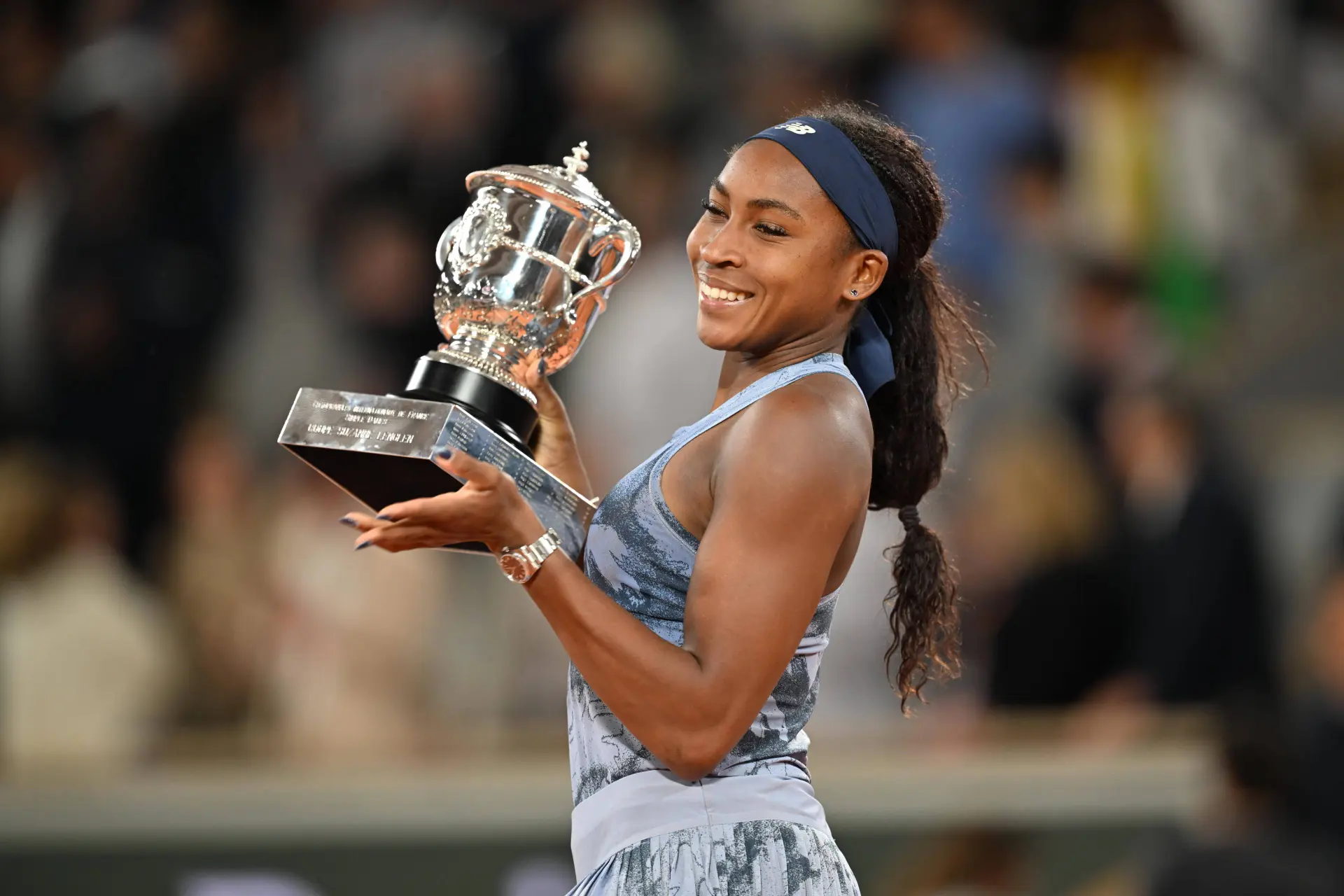
Sabalenka won Indian Wells.
Raise the purse to Grand Slam level. Increase the ranking points. Expand the event where necessary. Give the sport a fifth major that players and fans already treat like one anyway. Done. Except it will never happen.
Not because it is a bad idea. Quite the opposite. It will not happen because professional tennis has never demonstrated the institutional ability to accomplish relatively straightforward structural change when multiple power centers are involved.
The existing Grand Slams would resist dilution of their status. Traditionalists would panic about history and records. Various tours and governing bodies would spend years fighting over revenue allocation, calendar implications, ranking systems, broadcasting rights, and political leverage. Committees would be formed. Studies would be commissioned. Everyone would release carefully optimistic statements. And eventually the entire thing would quietly disappear into the same black hole where most meaningful tennis reform goes to die.
That is why all the current conversations about player compensation and systemic reform should be viewed cautiously. If tennis cannot accomplish something as commercially logical, fan-friendly, and comparatively uncomplicated as elevating Indian Wells into an official Grand Slam, why exactly should anyone believe the sport is suddenly capable of solving its much larger existential problems?
Why should anyone believe the tours will suddenly unify around revenue redistribution models that fundamentally alter the economics of the sport? Why should lower-ranked players trust promises about long-term financial stability when tennis cannot even streamline its own governance? Why should anyone expect meaningful calendar reform from organizations that struggle to coordinate basic consistency from week to week?
The uncomfortable truth is that tennis has always possessed more potential than operational competence. That sounds harsh because it is harsh. But it is also true. This is a sport with global stars, extraordinary history, incredible athleticism, and unmatched international reach. Tennis should be far bigger culturally and commercially than it is. Yet year after year, it feels like the sport is forever negotiating with itself instead of building something coherent.
Indian Wells becoming a Grand Slam would not solve every problem. But it would send a message. It would show the sport can still recognize obvious opportunities and act decisively in the collective interest of the game. And if tennis cannot even do that, then perhaps the endless annual conversations about transformation are exactly what they have always been: conversations.

Aron SolomonGuest Author
A Pulitzer Prize-nominated journalist for his groundbreaking op-ed in The Independent exposing the NFL’s “race-norming” policies, Aron Solomon, JD, is a globally recognized thought leader in law, media, and strategy.
As Chief Strategy Officer for AMPLIFY, he leverages his deep expertise to shape the future of legal marketing. Aron has taught entrepreneurship at McGill University and the University of Pennsylvania and was honored as a Fastcase 50 recipient, recognizing him among the world’s top legal innovators. A prolific commentator on law, business, and culture, his insights regularly appear in Newsweek, The Hill, Crunchbase News, and Literary Hub.
He has also been featured in The New York Times, Fast Company, Fortune, Forbes, CBS News, CNBC, USA Today, ESPN, TechCrunch, BuzzFeed, Venture Beat and countless other leading global media outlets. We are proud to have Aron on board at TennisUpToDate, where his deep tennis expertise enriches the site with sharp, original columns that connect the sport to wider cultural debates.
claps 1visitors 1
Just In


Popular News



Latest Comments
- Lena... Takin' care of business
 mandoist25-10-2026
 - Can you please stop publishing this nonsense? Stick to Tennis.mandoist25-10-2026
- Does Sinner need that 4.5 mil? I doubt it. He can make that with three modelling gigs!😅🤣Rapunzel21-10-2026
- Did "People Magazine" purchase this website? This nonstop storyline is bullshit.mandoist21-10-2026
- Listen... this is of no concern to anyone but these two. Deal with your own issues -- most of us have our own. Thanks, media, for these insignificant follow-ups which are meaningless.mandoist21-10-2026
- This is so very very sad, for all three of them. I truly thought they had an unbreakable bond, but life throws up so many differing challenges. Having your homeland suffering in such a terrible way, makes happiness lose out to guilt as well. Our thoughts are with them. X💔bjsexton20-10-2026
- I have lost all respect for Svitolina! Could she not have waited until he had played at the Paris Masters!!! She is selfish and don't give a damn about Gael. That is NOT how love is demonstrated Elina!!Rapunzel19-10-2026
- Perhaps convenient tennis tour sex is not a strong enough experience in which to base a marriage?mandoist19-10-2026
- Fight the Good Fight... Tennis (sports in general) need more Humans such as yourself.mandoist18-10-2026
- When is WTA going to mandate Genetic Testing (DNA) ???mandoist18-10-2026

Loading