
When working as a summariser on the BBC’s opening day (Monday, June 15) of coverage at the ATP Queen's Club event, former British Davis Cup Captain John Lloyd delivered strident views on his belief that men's Grand Slam matches should be reduced to best of 3 sets across the whole tournament, or at least until the last eight stage. The main reasons for this view is the increasing number of injuries in tennis and the added physicality of the sport in 2026 compared to decades past.
In conversation with presenter Clare Balding and fellow pundit Annabel Croft, the former Australian Open finalist surprised both women with his emphatic rhetoric around the necessity of switching to the main tour diet of three sets as opposed to the historic test of five set matches at the sport’s blue riband events.
Unknown to me, Lloyd has held this view for several years. He said to Balding, “In my opinion, the calendar is awful. It has been for years. I think Grand Slams should be the best of three sets anyway. I’ve said that for years. All the way through, or certainly from the quarter-finals. I’ve been saying this for years.
The caveat of Lloyd saying from at least the quarter-finals is something BBC Tennis Correspondent Russell Fuller has advocated in the past. There's no doubt this compromise would partially appease those, including myself, that regard a five set contest as the ultimate test and spectacle in tennis. It would also potentially assist in alleviating the increasing number of players breaking down with injuries if they could play less than five set matches at the majors.
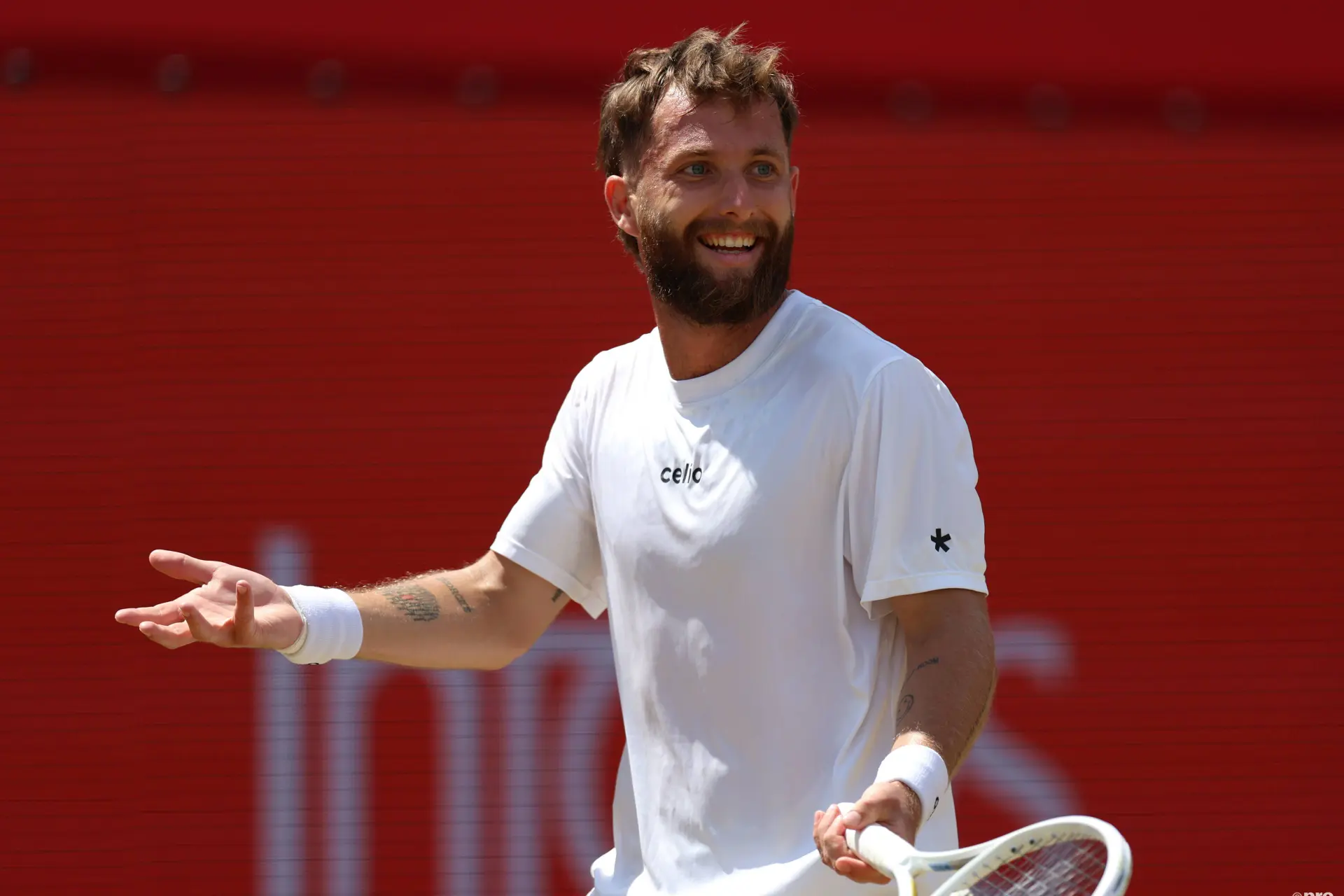
Lloyd elaborated further, “We are going to see more and more injuries, mark my words, unless something is changed. It will happen, there will be more injuries. The best of five sets for four Slams, it’s not just the playing at the tournament that does it, it’s the preparation.
Getting yourself in shape for those. During the season, as you’re playing in Miami, and Indian Wells, and so on, you get into the clay, and then you’ve got to up your training again ready for the French and Wimbledon. You ease off after Wimbledon for a couple of weeks and then you’ve got to get yourself ready for the US Open again. It’s insanity.”
Preparation for Grand Slams requires male players to condition themselves for five set contests that are no longer scheduled at any tournaments outside the majors.
I'd argue that rather than reduce the amount of sets played at Grand Slams, an alternative solution would be to address a calendar that's often considered brutal by players, especially the limited off-season.
Australian Open pays heed to Lloyd's notion
One issue Lloyd has with the calendar is how ludicrous the date of the Australian Open is given the season has barely commenced. On this point I agree with Lloyd. An earlier finish date to the season would allow players greater opportunity to enjoy genuine time off the tennis treadmill before entering another training block. A climax in mid to late October would free up an extra month for players to readjust before the next year's campaign.
A further tweak that could assist the players in regards to preparation and playing less tennis would the ATP reducing the number of mandatory events a player should feature in. Extra space on the calendar could be facilitated by ensuring all 1000 events last only a single week.
When you reflect on tennis history and its vast pantheon of great contests, many would immediately recall five set classics above any three set thrillers. Lloyd’s view is that would change if Grand Slams only offered up best of three, “Best of three sets, when players have to come out from the starting point, every match will be dynamic. People remember great matches, but they remember them because they were at Slams. Not because it’s five hours, a three hour match will be remembered as much if they are at the Slams.”
It's true the prestige of Grand Slams would elevate a great best of three beyond one played at a 1000 event, but it wouldn't be comparable with the great five set classics that are woven into the rich tapestry of men's tennis. The fluctuations in a best of five are more pronounced and occur in greater quantity.

Elena Rybakina won the title at the Australian Open with shorter sets, should men's be the same?
One of the most compelling aspects of men's tennis at majors is the comeback narrative of a player overturning a two set deficit to force a fifth set decider. Last year's French Open final - one of the greatest matches ever played - would've never happened if this was played as a three-set affair. A bounce back from a set down doesn't resonate in the same w asay and would suffer with comparisons of past comebacks in the Grand Slam archive.
Similarly, would a masterclass victory in straight sets carry the same weight over two sets when compared to those exhibited in three? Sustaining a benchmark level over a longer trip is held in higher regard in any sport.
For example, snooker and darts World Championships are played over the longest format and are regarded as the ultimate test. Test cricket is the ultimate examination of a cricketer’s standing rather than the shorter white ball formats.
A weakened test in men's Grand Slams would make historical comparisons difficult. The very first Grand Slam singles championship - Wimbledon in 1877 - they played a best of 5 format. Triumphs in a best of 3 sets format would often be caveated with people saying the challenge was less difficult given the way a match changes deep into a five-setter.
The physicality of a fifth set adds a layer to the challenge that can't be replicated over a three set clash. While the hurdles mentally become ever greater when fatigue is factored into their decision-making.
Insanity of late sessions
Another factor determining Lloyd's opinion is how the five set format is not compatible with the desire of most Grand Slams to schedule evening sessions.
“It’s not so much about Wimbledon, because Wimbledon finishes at 11 o’clock. The other three Slams have evening sessions. Best of five sets, you cannot work it this way. The men’s matches get longer and longer, it’s ridiculous. Matches finish at 2 o’clock in the morning. No one wants it. People have gone home, people have to get to work the next day. The people watching on TV have nodded off. Players go to bed at 5.
“It can ruin a tournament for them. It’s insanity. If you’re going to have evening matches, you have to move it to best of three sets in my opinion.”
I concur with Lloyd about the insanity of how late many evening sessions go past a sociable hour. The sweet spot for peak viewing figures is generally somewhere between 8pm and 10.30pm. Yet many of these sessions tend to finish after midnight when the crowd has thinned out and a great number at home will have gone to sleep.
I'd look to reduce the night sessions to one match from either singles event and if the contest is a men's game, organisers should start earlier. The issue of injuries is a great cause for concern as those on the treatment table does seem to be increasing significantly. The sport clearly doesn't benefit from big occasions witnessing players defaulting or absences from showpiece events.
A compromise of introducing five set matches from the last eight stage is a possible solution but TV companies may find two set matches insufficient if they're over quickly.
There's no denying the game is more physical now but players of the distant past never had access to the benefits of advancements in sports science those in the 21st century are utilising to help with their health and conditioning.

Carlos Alcaraz often has to play late but should he?
There seems little appetite for this among the current players. I believe they want to maintain the historical continuity of going through a similar test most champions have gone through, especially since the Challenge Round system was abolished in 1922. The greater spike in viewing numbers for five set thrillers underline their continued appeal in an age of instant gratification. These epics often reveal more of a player's character and act as a true identifier of excellence in a way three-set contests fail to do.
Changes to the calendar, allowing greater preparation time, would be a wiser move than interfering with the sport’s ultimate test. This would allow players to condition bodies more effectively for the rigours of a Grand Slam fortnight that could feature up to seven five-set matches.
The epic 2008 Wimbledon final between Roger Federer and Rafa Nadal; Bjorn Borg and John McEnroe at SW19 in 2018; the near six hour battle at the 2012 Australian Open contested by Nadal and Novak Djokovic are contests which transcend the sport for their epic nature.
Tennis's future needs to contain further matches of this richness as opposed to streamlined versions that would only suffer from comparisons with these high watermarks.

Jay Brannon is a sports journalist from Sutton Coldfield, England, with a lifelong passion for athletic competition and storytelling. For the past 1.5 years, he has been a prominent voice at TennisUpToDate.com, where he has authored more than 3,000 articles, specializing in deep-dive columns, tactical analyses, liveblogs, and comprehensive match reports for the ATP and WTA tours.
Jay’s tennis reporting blends rigorous, real-time statistical analysis with on-the-ground coverage. He frequently travels to tournaments to cover the action firsthand from the press box and player press conferences. This direct access allows him to deliver sharp insight into player form and tour developments—a dedication sparked by his earliest sporting memory of the iconic 1991 Wimbledon final between Michael Stich and Boris Becker.
Beyond the court, Jay brings a versatile background in live broadcasting and media. His professional experience includes serving as a sports reporter for BHBN Hospital Radio—where he delivered live updates and analysis for West Bromwich Albion and Wolverhampton Wanderers matches—as well as working as a match reporter for Sutton Coldfield Town.
Jay holds a degree in Music Journalism and Broadcasting from Staffordshire University, a foundational training that shaped his voice as a thoughtful, authentic storyteller. Grounded in core journalistic ethics, he places a strict emphasis on careful sourcing, editorial accuracy, and swift, verified updates.
claps 2visitors 1
Just In

Popular News



Latest Comments
- Does Sinner need that 4.5 mil? I doubt it. He can make that with three modelling gigs!😅🤣Rapunzel21-10-2026
- Did "People Magazine" purchase this website? This nonstop storyline is bullshit.
 mandoist21-10-2026
 - Listen... this is of no concern to anyone but these two. Deal with your own issues -- most of us have our own. Thanks, media, for these insignificant follow-ups which are meaningless.mandoist21-10-2026
- This is so very very sad, for all three of them. I truly thought they had an unbreakable bond, but life throws up so many differing challenges. Having your homeland suffering in such a terrible way, makes happiness lose out to guilt as well. Our thoughts are with them. X💔bjsexton20-10-2026
- I have lost all respect for Svitolina! Could she not have waited until he had played at the Paris Masters!!! She is selfish and don't give a damn about Gael. That is NOT how love is demonstrated Elina!!Rapunzel19-10-2026
- Perhaps convenient tennis tour sex is not a strong enough experience in which to base a marriage?mandoist19-10-2026
- Fight the Good Fight... Tennis (sports in general) need more Humans such as yourself.mandoist18-10-2026
- When is WTA going to mandate Genetic Testing (DNA) ???mandoist18-10-2026
- Hey, Dan... you just wake up from a coma? Regardless -- Thanks for the comedy this morning!mandoist18-10-2026
- Two Things: 1. Stop allowing these Spoiled Trust-Fund Elitists to behave badly. Your little hand-slaps do not deter them. 2. STOP the incessantly annoying "towel wiping" nonsense!!!!mandoist15-10-2026

Loading