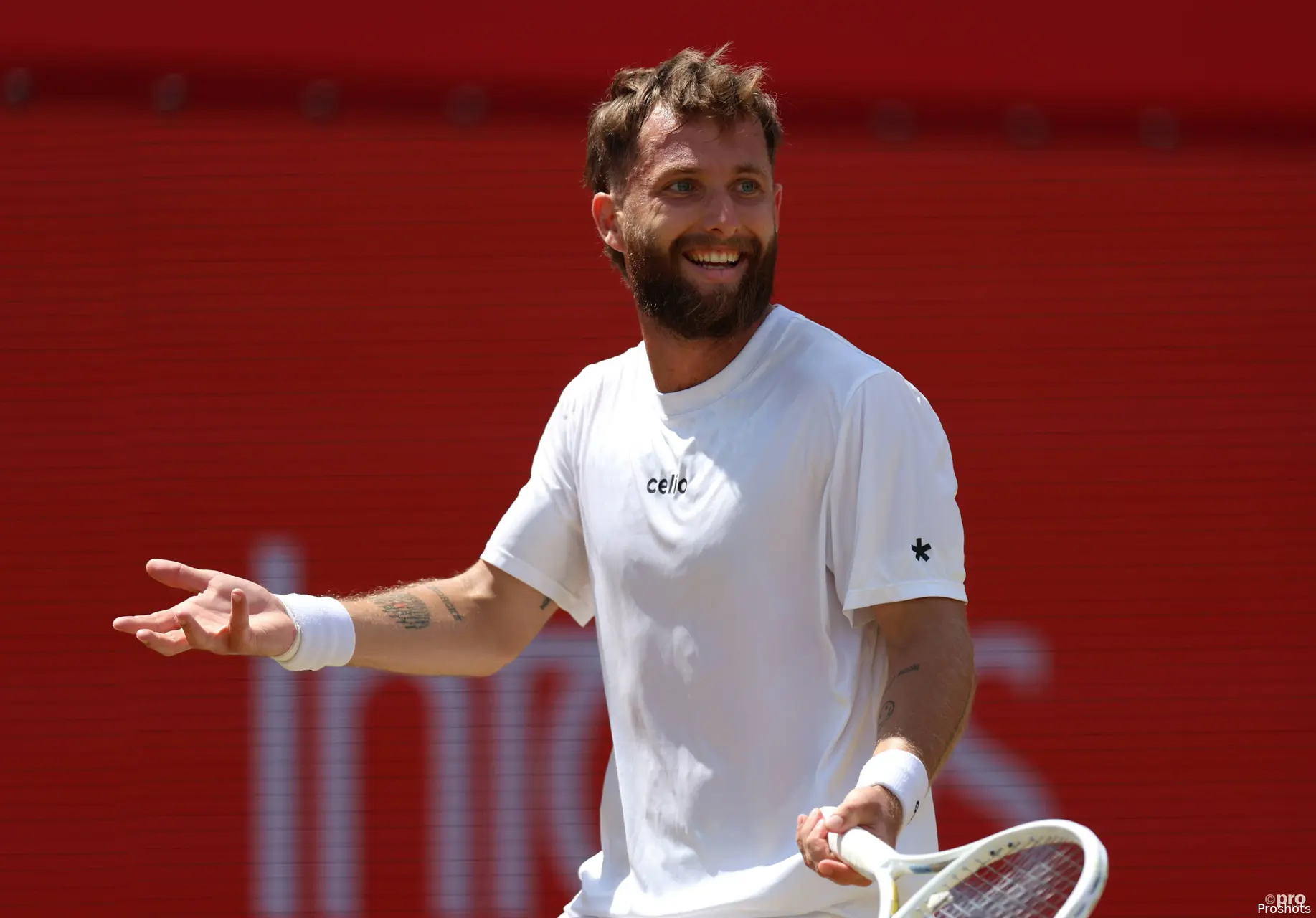
Professional tennis has fined Corentin Moutet $40,000 for repeatedly using an expletive during an on-court interview at Queen's Club.
The ATP has every right to enforce its rules. Moutet has every right to appeal. But the larger question is whether this is really what professional tennis should be spending its time worrying about. Because if we're being honest, Moutet's comments were not particularly shocking. They were not directed at an opponent. They were not directed at an official. They were not discriminatory, threatening, or abusive. They were not part of some prolonged meltdown that disrupted a match.
They were, quite obviously, part of a player interacting with a crowd and enjoying a moment. Was it polished? No. Was it professional? Perhaps not.
Was it worthy of a $40,000 punishment? That is where the conversation becomes much more interesting.

Tennis has always had an uneasy relationship with personality. The sport celebrates individuality when it helps sell tickets, television rights, and social media engagement. It promotes players who show emotion, create memorable moments, and connect with fans. Yet the moment those interactions become slightly unpredictable, the instinct is often to reach for the rulebook. The result is a sport that sometimes seems determined to sanitize itself into irrelevance.
Fans are constantly told that tennis needs bigger personalities. They are told the sport needs more engagement, more authenticity, and more opportunities for players to connect with audiences in ways that feel genuine rather than scripted.
Then a player has some fun with an interviewer and a crowd, and suddenly we are talking about fines large enough to make headlines around the world.
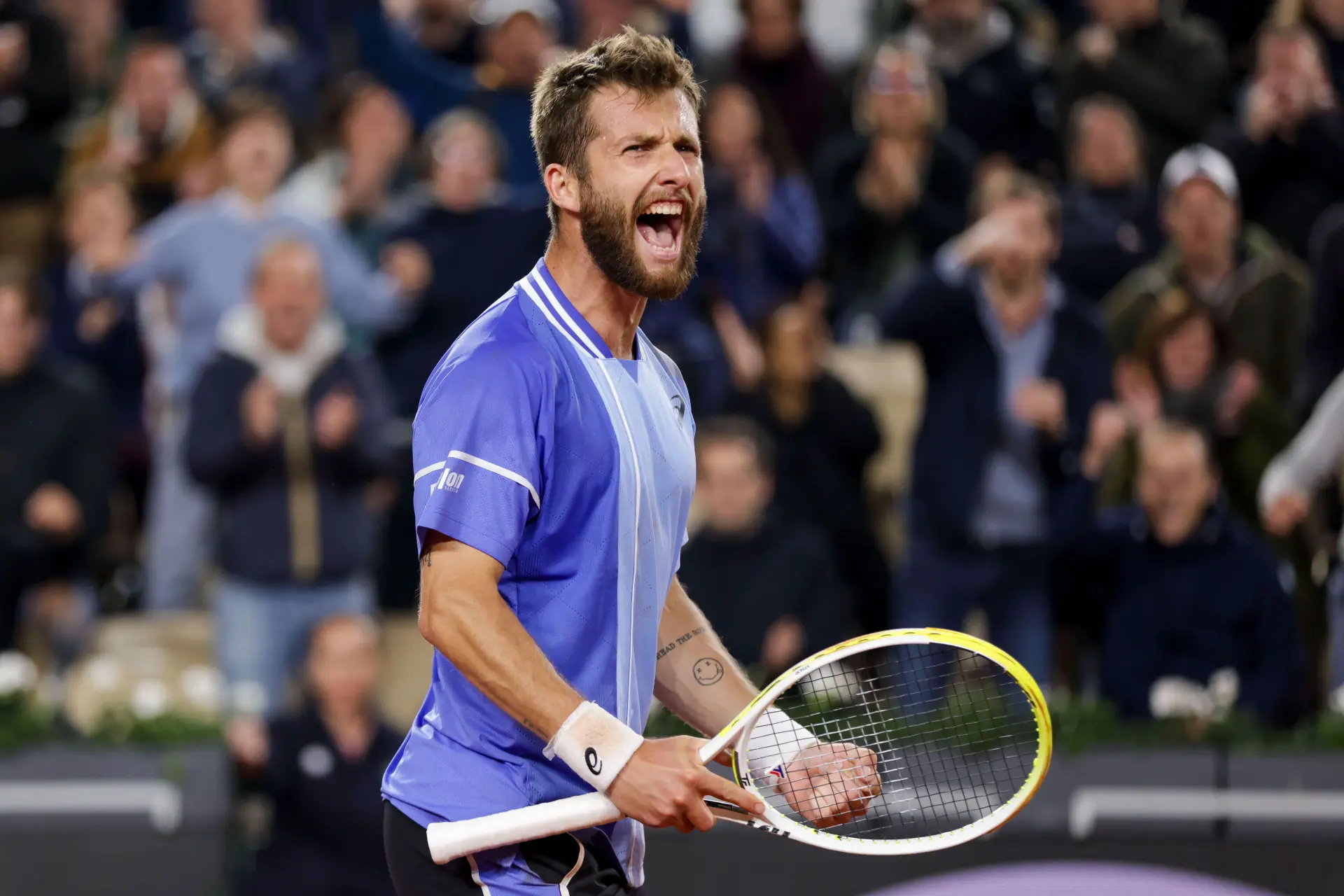
What exactly is the message here? That players should be themselves, but only in ways approved by the ATP's communications department? More importantly, is this really where tennis should be directing its attention?
Professional tennis has spent years battling questions that go to the heart of the sport's credibility. The International Tennis Integrity Agency continues to investigate betting-related corruption. Match-fixing concerns remain a reality, particularly at lower levels of the game. The handling of anti-doping cases routinely generates controversy and public skepticism. Questions about consistency in officiating have become a recurring topic of discussion. Scheduling disputes, player welfare concerns, and uneven treatment between stars and rank-and-file players seem to surface almost every week.
These are issues that affect trust. These are issues that affect the actual future of the sport. These are issues that determine whether fans believe the competition they are watching is fair.
Less like protecting tennis, more like protecting appearances
Against that backdrop, a $40,000 fine for colorful language during a post-match interview feels less like protecting tennis and more like protecting appearances. The irony is that moments like Moutet's often make tennis feel more human.
Fans do not fall in love with athletes because they sound like corporate press releases. They connect with competitors who show emotion, reveal personality, and occasionally say things that feel unscripted. Nobody is suggesting there should be no standards. Of course there should. But proportionality matters.
A punishment should fit both the conduct and the harm caused by that conduct. It is difficult to identify who was actually harmed here.

Moutet sparked backlash for his outburst.
Children heard a bad word? Most of them have probably heard far worse on social media before breakfast. Sponsors were offended? If modern sponsorship agreements cannot survive an athlete getting carried away during a celebratory interview, they are far more fragile than anyone would like to admit.
The ATP is free to enforce whatever standards it chooses. The rest of us are free to question whether those standards reflect the sport's most pressing concerns.
Because when a player having a laugh with the crowd generates a $40,000 punishment while the sport continues to wrestle with issues that directly impact competitive integrity, it is fair to wonder whether tennis has lost sight of what actually matters.
Corentin Moutet may have used the wrong words. But tennis may be focusing on the wrong problem.

Aron SolomonGuest Author
A Pulitzer Prize-nominated journalist for his groundbreaking op-ed in The Independent exposing the NFL’s “race-norming” policies, Aron Solomon, JD, is a globally recognized thought leader in law, media, and strategy.
As Chief Strategy Officer for AMPLIFY, he leverages his deep expertise to shape the future of legal marketing. Aron has taught entrepreneurship at McGill University and the University of Pennsylvania and was honored as a Fastcase 50 recipient, recognizing him among the world’s top legal innovators. A prolific commentator on law, business, and culture, his insights regularly appear in Newsweek, The Hill, Crunchbase News, and Literary Hub.
He has also been featured in The New York Times, Fast Company, Fortune, Forbes, CBS News, CNBC, USA Today, ESPN, TechCrunch, BuzzFeed, Venture Beat and countless other leading global media outlets. We are proud to have Aron on board at TennisUpToDate, where his deep tennis expertise enriches the site with sharp, original columns that connect the sport to wider cultural debates.
claps 0visitors 0
Just In



Popular News



Latest Comments
- Does Sinner need that 4.5 mil? I doubt it. He can make that with three modelling gigs!😅🤣Rapunzel21-10-2026
- Did "People Magazine" purchase this website? This nonstop storyline is bullshit.
 mandoist21-10-2026
 - Listen... this is of no concern to anyone but these two. Deal with your own issues -- most of us have our own. Thanks, media, for these insignificant follow-ups which are meaningless.mandoist21-10-2026
- This is so very very sad, for all three of them. I truly thought they had an unbreakable bond, but life throws up so many differing challenges. Having your homeland suffering in such a terrible way, makes happiness lose out to guilt as well. Our thoughts are with them. X💔bjsexton20-10-2026
- I have lost all respect for Svitolina! Could she not have waited until he had played at the Paris Masters!!! She is selfish and don't give a damn about Gael. That is NOT how love is demonstrated Elina!!Rapunzel19-10-2026
- Perhaps convenient tennis tour sex is not a strong enough experience in which to base a marriage?mandoist19-10-2026
- Fight the Good Fight... Tennis (sports in general) need more Humans such as yourself.mandoist18-10-2026
- When is WTA going to mandate Genetic Testing (DNA) ???mandoist18-10-2026
- Hey, Dan... you just wake up from a coma? Regardless -- Thanks for the comedy this morning!mandoist18-10-2026
- Two Things: 1. Stop allowing these Spoiled Trust-Fund Elitists to behave badly. Your little hand-slaps do not deter them. 2. STOP the incessantly annoying "towel wiping" nonsense!!!!mandoist15-10-2026

Loading