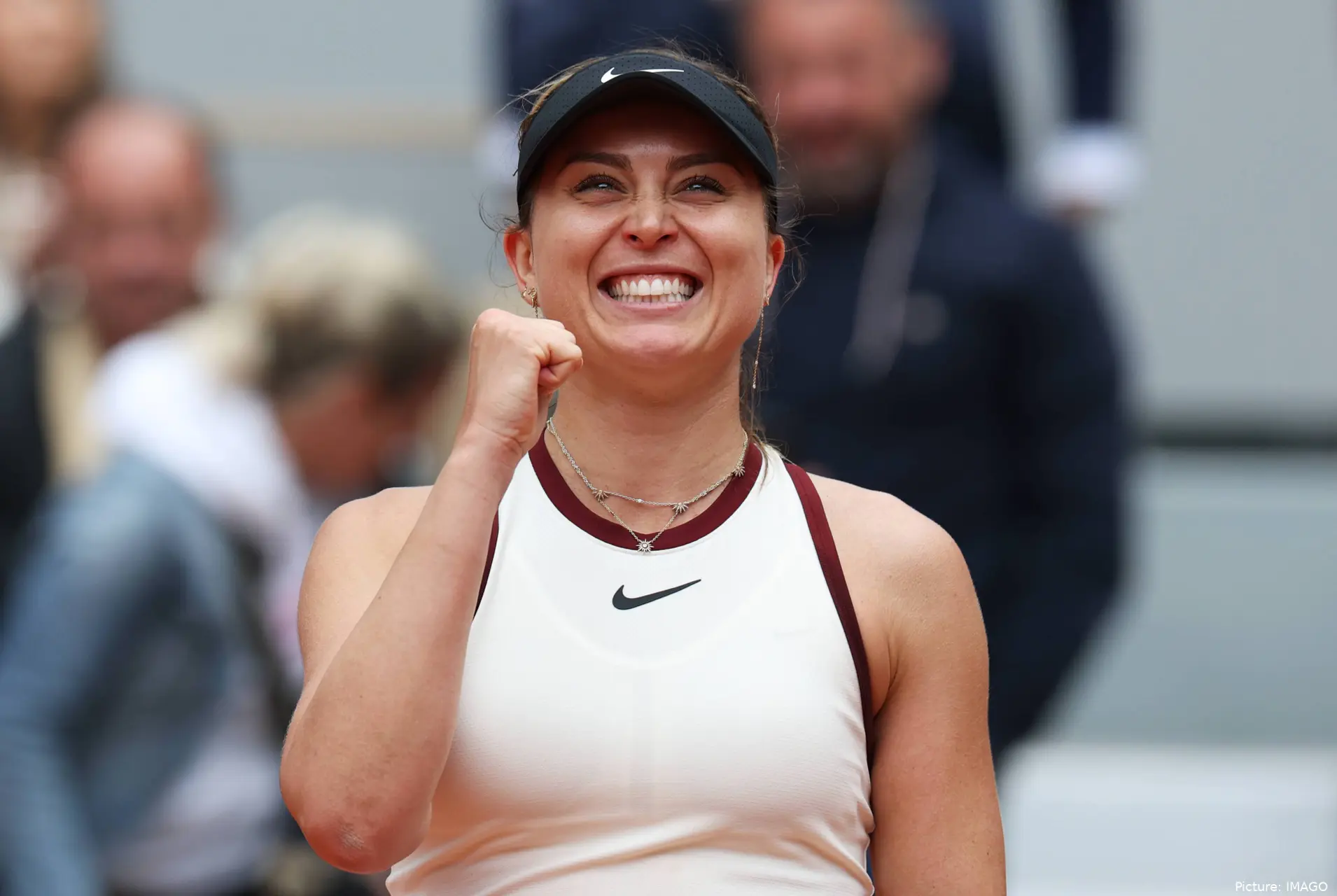
There’s a familiar rhythm to sports outrage online. A decision gets made. A name appears where some people think it shouldn’t. Rankings get cited like gospel. And within minutes, the verdict is in: undeserved.
This week, it’s Paula Badosa and her wild card into the Porsche Tennis Grand Prix, a WTA 500 event in Stuttgart. Her ranking—currently hovering outside the top 100—has become the centerpiece of the argument. For some, that number alone is the case against her.
But that argument misses the point entirely. Badosa isn’t just another player trying to sneak into a main draw. She’s a former world No. 2. A proven contender at the highest level of the sport. And more importantly, she’s a player whose ranking doesn’t reflect her ability—it reflects what injuries took from her.
Tennis, unlike many sports, has a brutally simple accounting system. You don’t play, you don’t earn points. You don’t earn points, you fall. It doesn’t care whether you’re a fringe qualifier or a former elite player battling chronic injuries. The ranking system is clean. It’s fair. And it’s completely blind to context.
Read also

Not loopholes, not charity
That’s exactly why wild cards exist. They are not loopholes. They are not charity. They are a necessary correction mechanism in a sport that otherwise treats absence the same, whether it’s caused by poor performance or physical breakdown.
And let’s be honest about something else: tournaments are not spreadsheets. They are live events. They are entertainment products. They are narratives unfolding in real time. A healthy—or even semi-healthy—Badosa walking onto a court carries a level of intrigue, credibility, and competitive upside that a typical No. 103 player simply does not. That’s not disrespect to anyone grinding through qualifiers. It’s just reality.
We say we want the best players in the world competing on the biggest stages. We say we value comebacks, resilience, and second acts. But when the system makes room for exactly that, suddenly it’s a problem? It shouldn’t be.
Because the alternative is a version of tennis that quietly erases its own stars the moment they get hurt. A system where a player can climb to No. 2 in the world, suffer through injuries, and then be forced to rebuild entirely out of sight, as if that prior excellence never happened. That’s not meritocracy. That’s amnesia.
Read also
Wild cards, when used well, are about preserving continuity in the sport. They allow fans to stay connected to players whose stories didn’t end—they were interrupted. They give tournaments the ability to balance fairness with reality. And they give players like Badosa something the rankings can’t: a bridge back.
Also, let’s not ignore the competitive angle. If critics truly believe Badosa doesn’t belong, then the solution is simple—beat her. Wild cards don’t guarantee wins. They guarantee opportunity. What happens next is still decided on court, the way it should be. And maybe that’s the most important point here.
Tennis doesn’t lose anything by letting a former world No. 2 take a shot in a main draw. But it loses quite a bit if it forgets how to make space for players who’ve already proven they belong. Sometimes the number next to a name tells the story. And sometimes, it doesn’t even come close.

Aron SolomonGuest Author
A Pulitzer Prize-nominated journalist for his groundbreaking op-ed in The Independent exposing the NFL’s “race-norming” policies, Aron Solomon, JD, is a globally recognized thought leader in law, media, and strategy.
As Chief Strategy Officer for AMPLIFY, he leverages his deep expertise to shape the future of legal marketing. Aron has taught entrepreneurship at McGill University and the University of Pennsylvania and was honored as a Fastcase 50 recipient, recognizing him among the world’s top legal innovators. A prolific commentator on law, business, and culture, his insights regularly appear in Newsweek, The Hill, Crunchbase News, and Literary Hub.
He has also been featured in The New York Times, Fast Company, Fortune, Forbes, CBS News, CNBC, USA Today, ESPN, TechCrunch, BuzzFeed, Venture Beat and countless other leading global media outlets. We are proud to have Aron on board at TennisUpToDate, where his deep tennis expertise enriches the site with sharp, original columns that connect the sport to wider cultural debates.
claps 2visitors 2
Just In


Popular News



Latest Comments
- Does Sinner need that 4.5 mil? I doubt it. He can make that with three modelling gigs!😅🤣Rapunzel21-10-2026
- Did "People Magazine" purchase this website? This nonstop storyline is bullshit.
 mandoist21-10-2026
 - Listen... this is of no concern to anyone but these two. Deal with your own issues -- most of us have our own. Thanks, media, for these insignificant follow-ups which are meaningless.mandoist21-10-2026
- This is so very very sad, for all three of them. I truly thought they had an unbreakable bond, but life throws up so many differing challenges. Having your homeland suffering in such a terrible way, makes happiness lose out to guilt as well. Our thoughts are with them. X💔bjsexton20-10-2026
- I have lost all respect for Svitolina! Could she not have waited until he had played at the Paris Masters!!! She is selfish and don't give a damn about Gael. That is NOT how love is demonstrated Elina!!Rapunzel19-10-2026
- Perhaps convenient tennis tour sex is not a strong enough experience in which to base a marriage?mandoist19-10-2026
- Fight the Good Fight... Tennis (sports in general) need more Humans such as yourself.mandoist18-10-2026
- When is WTA going to mandate Genetic Testing (DNA) ???mandoist18-10-2026
- Hey, Dan... you just wake up from a coma? Regardless -- Thanks for the comedy this morning!mandoist18-10-2026
- Two Things: 1. Stop allowing these Spoiled Trust-Fund Elitists to behave badly. Your little hand-slaps do not deter them. 2. STOP the incessantly annoying "towel wiping" nonsense!!!!mandoist15-10-2026

Loading