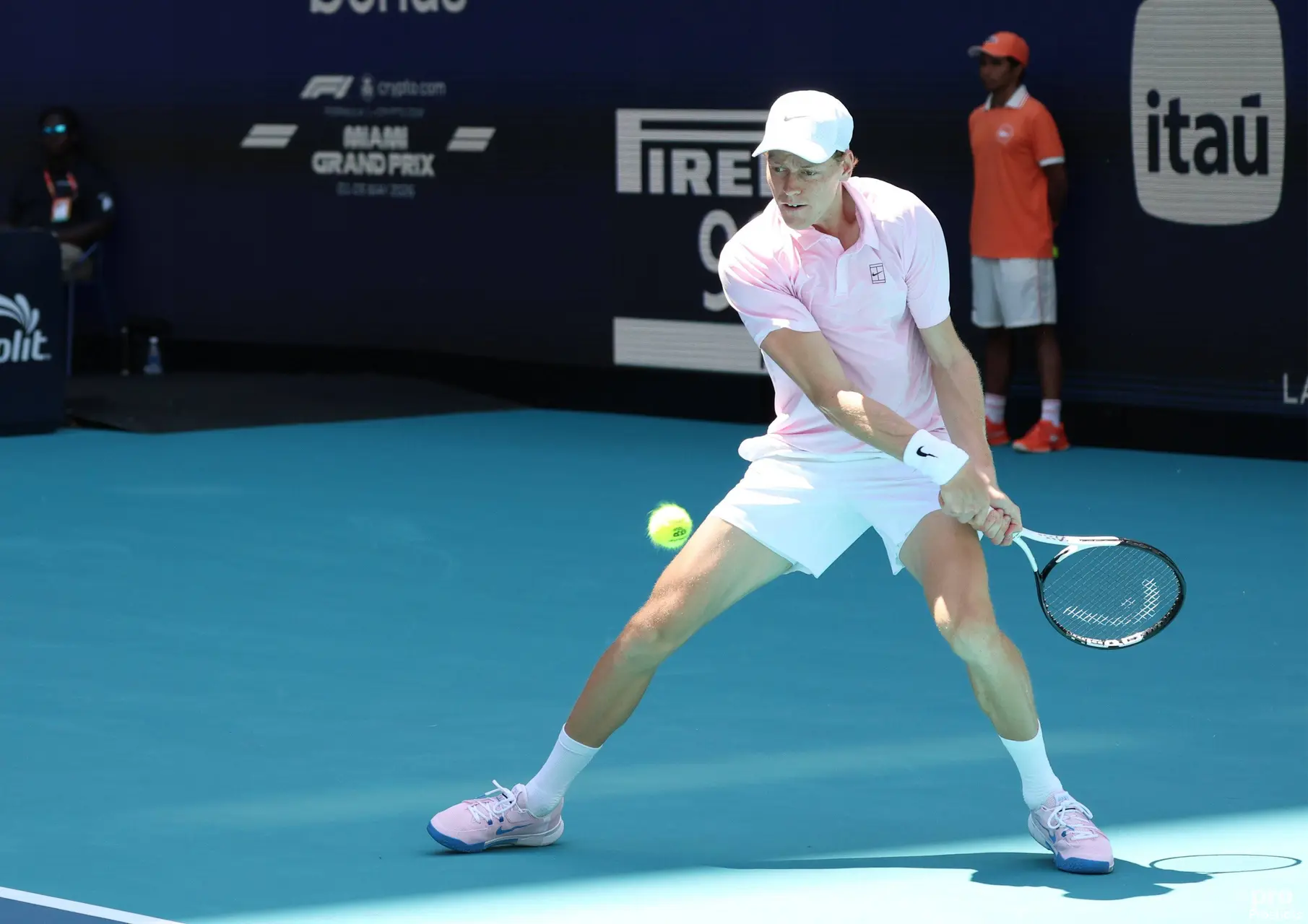
There are bad matches in tennis. It happens. Even at the highest level, even on the biggest stages.
But what unfolded during Thursday afternoon’s session at the Miami Open wasn’t just a couple of off performances. It was something worse: a marquee session that never actually became a contest.
And for fans who paid premium prices expecting elite, competitive tennis, it felt like a bait-and-switch.
The afternoon began with what should have been a compelling men’s quarterfinal between Jannik Sinner and Frances Tiafoe. Instead, it was over almost as soon as it started. Sinner rolled 6-2, 6-2 in just 71 minutes. There were flashes from Tiafoe, but never sustained pressure, never the sense that the match might turn.
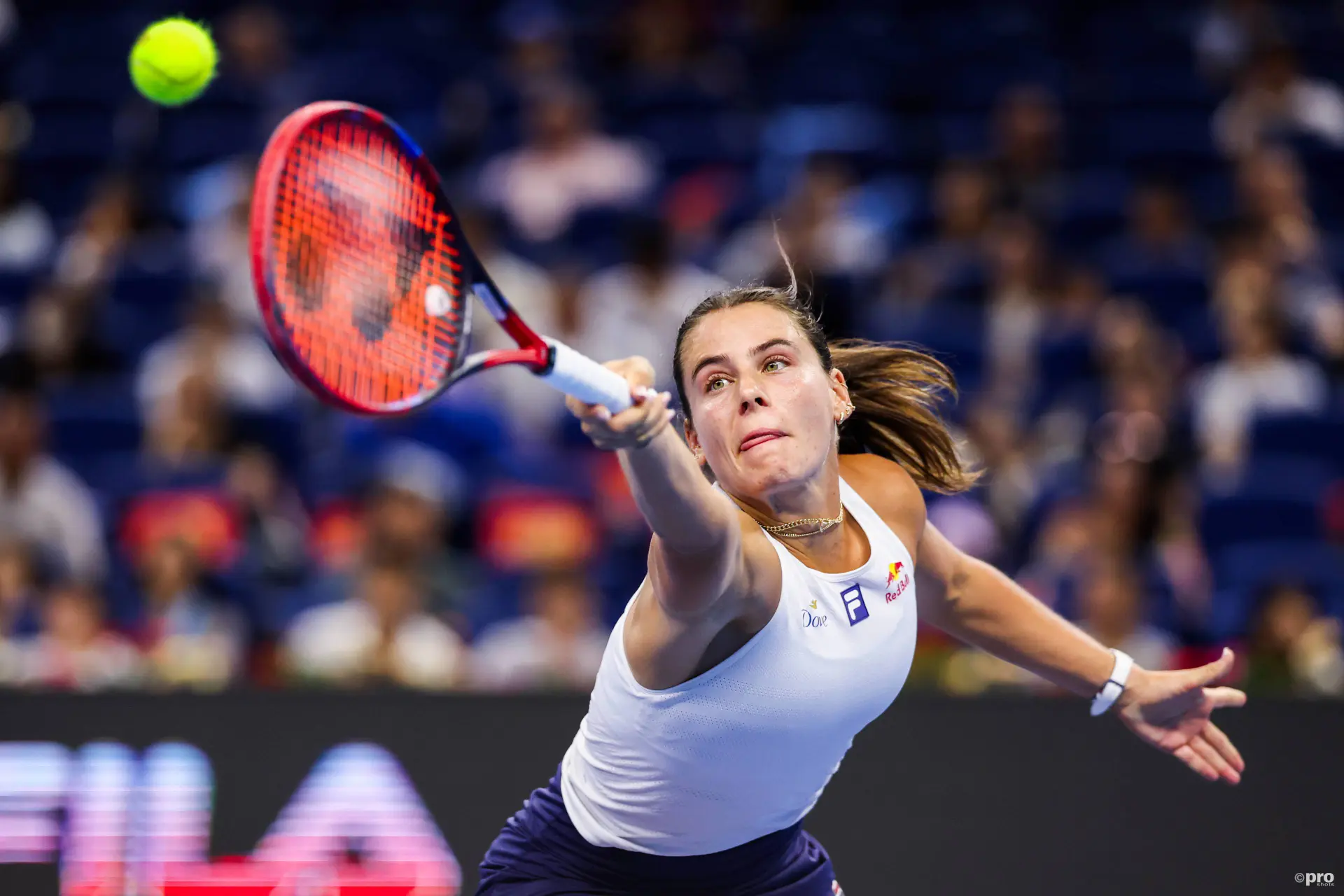
Then came the women’s semifinal between Coco Gauff and Karolína Muchová. On paper, this had all the ingredients of a high-level clash—variety versus athleticism, creativity versus power.
Instead: 6-1, 6-1. Eighty-eight minutes. No drama. No tension. No real resistance. Two matches. Under three hours combined. Not a single moment where the outcome felt in doubt. That’s not just disappointing. At a 1000-level event, it raises a fair question: what exactly are fans paying for?
The problem isn’t losing, it’s the lack of a fight
No one expects every match to be a five-set epic or a three-set thriller. Blowouts are part of sport.
But when an entire session—one that anchors the day’s ticket value—delivers two non-competitive matches back-to-back, it stops feeling like variance and starts feeling like a structural issue.
Because what fans buy into isn’t just the names on the schedule. It’s the expectation of competition. Of uncertainty. Of momentum swings and pressure moments.
Those were almost entirely absent. Tiafoe never seriously threatened Sinner. Muchová, whether due to form, fitness, or timing, never imposed herself on Gauff. These weren’t matches that slipped away—they were matches that never really began.

Frances Tiafoe never threatened Sinner.
A One-Off… or a warning sign?
It would be easy to chalk this up to an “off day” for both tours.
But that explanation feels a little too convenient.
On the ATP side, the top tier—led by players like Sinner—has begun to separate itself in a way that can produce clinical, almost ruthless scorelines. Precision and consistency are so high that if one player dips even slightly, the match can be gone in under an hour.
On the WTA side, the narrative has often been about depth and unpredictability. But unpredictability cuts both ways. It can produce thrilling upsets—or matches where one player never finds rhythm at all.
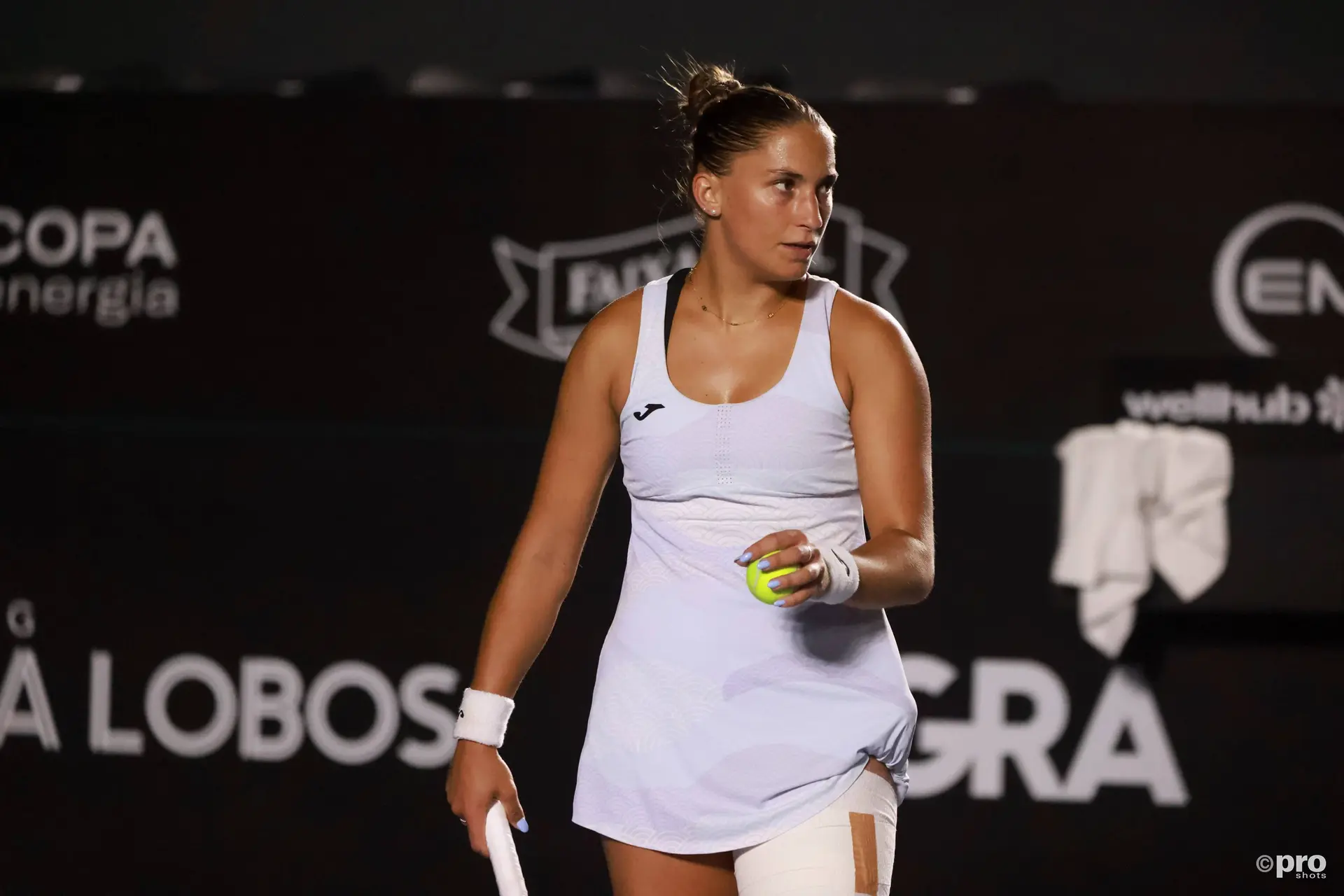
What’s increasingly rare, on both tours, are sustained rivalries where styles clash repeatedly at a high level, producing matches that feel inevitable and competitive.
Think about what fans historically gravitated toward: not just greatness, but contrast and tension. Matches where you knew both players would show up, push each other, and make the outcome uncertain deep into the contest.
Thursday afternoon didn’t offer that. Not even close.
The fan experience matters—especially at this level
The ATP Tour and WTA Tour have done an exceptional job in recent years elevating presentation, accessibility, and global reach.
But none of that replaces the core product: competitive tennis.
At a Masters 1000/Premier-level combined event like Miami, fans are paying top-tier prices. They’re not just buying access—they’re buying an experience that’s supposed to reflect the highest standard of the sport.
When that experience turns into two routine blowouts, it’s fair for those fans to feel shortchanged.
Not because their favorite player lost. But because, for long stretches, there was nothing to engage with.
Tennis doesn’t need perfection—but it needs balance
No sport can guarantee great matches every time. That’s not realistic.
But tennis, perhaps more than most, depends on balance. On the idea that even the best players can be pushed, that matches evolve, that momentum shifts.
When that balance disappears—even for a single session—the cracks become visible.
Read also
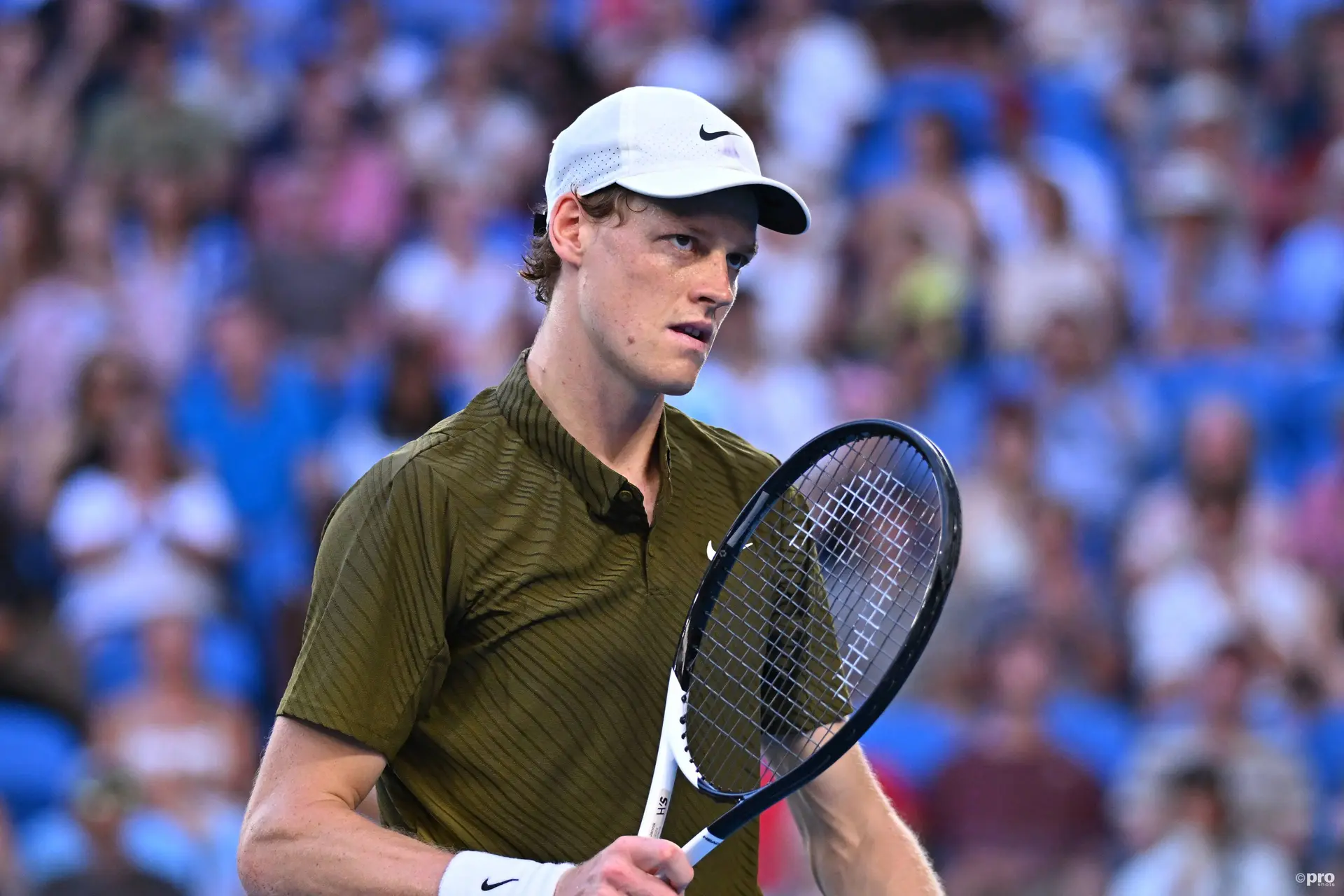
Thursday afternoon in Miami may ultimately be remembered as a blip. Just two lopsided matches on an otherwise strong tournament.
Or it may be a small but telling reminder that at the very top of both tours, dominance is starting to outpace rivalry—and that’s a problem worth paying attention to.
Because if fans stop believing they’re going to see a contest, it won’t matter how big the names are on the court.
They’ll start to wonder whether the ticket was worth it.

Aron SolomonGuest Author
A Pulitzer Prize-nominated journalist for his groundbreaking op-ed in The Independent exposing the NFL’s “race-norming” policies, Aron Solomon, JD, is a globally recognized thought leader in law, media, and strategy.
As Chief Strategy Officer for AMPLIFY, he leverages his deep expertise to shape the future of legal marketing. Aron has taught entrepreneurship at McGill University and the University of Pennsylvania and was honored as a Fastcase 50 recipient, recognizing him among the world’s top legal innovators. A prolific commentator on law, business, and culture, his insights regularly appear in Newsweek, The Hill, Crunchbase News, and Literary Hub.
He has also been featured in The New York Times, Fast Company, Fortune, Forbes, CBS News, CNBC, USA Today, ESPN, TechCrunch, BuzzFeed, Venture Beat and countless other leading global media outlets. We are proud to have Aron on board at TennisUpToDate, where his deep tennis expertise enriches the site with sharp, original columns that connect the sport to wider cultural debates.
claps 2visitors 2
Just In

Popular News
Latest Comments
- Two Things: 1. Stop allowing these Spoiled Trust-Fund Elitists to behave badly. Your little hand-slaps do not deter them. 2. STOP the incessantly annoying "towel wiping" nonsense!!!!
 mandoist15-10-2026
 - A healthy Qinwen may be hard to stop next season. She was already scaring her opponents before her medical leave(s). Unfortunately, Zheng insisted on singing again. On the positive side -- Mirra did not sing!! ;~}mandoist11-10-2026
- Where is it written that athletes, entertainers... People in general... are mandated to keep looking at -- or even using [anti]Social Media? Public & private figures consistently complain and reveal their concerns about negativity and violence thrown at them -- yet they insist on participating. Avoid it, don't use it, don't read it. It's okay to occasionally look up at the World instead beating your eyes & thumbs to death on The Inventions out there.mandoist11-10-2026
- great articlestennisseserver07-10-2026
- Medvedev was leading Djokovic 7-5, 3-5 when an attempted return..' NO you ignorants, Djokovic was leading .weiss05-10-2026
- No more bullshit "Wildcards" to these two. Qualify like everyone else -- there will be cameras there, too. Time to scream... WTF ????!!!!mandoist29-09-2026
- Let's not BS the general public -- Sabalenka started showing cracks in her game last season. Her losses and near-losses started at about the same time she began being distracted by Fame (constant Selfies, making TV commercials, magazine shoots, endless Social Media nonsense, etc., etc.) One would think even Saba could recognize the parallels with others who failed before her -- Raducanu, Giorgi, Bouchard to name a few.mandoist25-09-2026
- Gross!! Hey Raducanu, Giorgi, and Bouchard -- reserve a seat at your Social Media Selfie table for Saba + Naomi. They're heading in your direction soon enough.mandoist24-09-2026
- And then these same players will complain about how lengthy their season’s were and need more time-off. I’m all for more tennis but the amount of tennis we get now is actually kind of crazy! We all need a break, especially the players.DaveyWavey23-09-2026
- You should do a comparison article for "different kinds of justice" the courts decide for tennis players. I can think of at least three players who received very small bans of a few months, however Tara Moore has been fighting for her literal survival the past few years. It seems odd considering she is not a "name" player, unlike the other cases.DaveyWavey22-09-2026

Loading