"Mac is a joke, 66 years old no one’s been good at tennis as long as him": Andy Roddick marvels at 'absurd level' of John McEnroe
Tennis News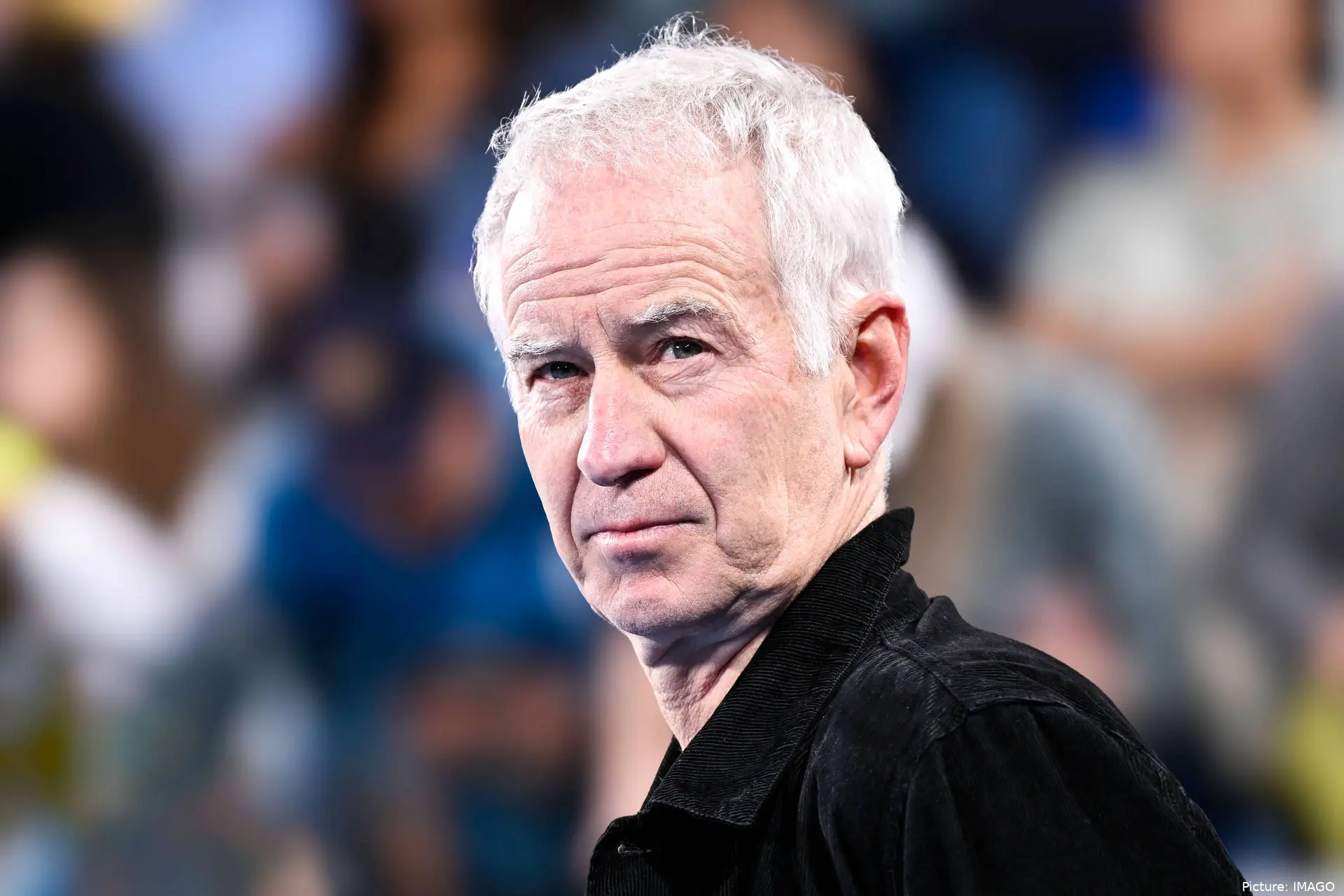
Andy Roddick and Jon Wertheim covered a lot of ground on the latest episode of Served, from Jack Draper’s long-awaited return to the realities of staying healthy on tour, before the conversation shifted to John McEnroe’s longevity and a tongue-in-cheek jab at Sam Querrey and John Isner’s Nothing Major podcast.
Draper, Qinwen and the week of the comeback
Roddick began by pointing to the significance of seeing young stars back on court on Served. “What one’s after a gold medal and one’s after a Masters, so, Draper,” Roddick said, as Wertheim quickly added, “Qinwen Zheng.”
Draper has already logged Davis Cup action in Oslo, while Zheng returned in Doha, where she “beat Sofia Kenin to start the week in Qatar.” “That’s not easy,” Wertheim said of returning after extended time away. “To come back and win after being off for that long, that’s a pretty good effort by both of them.”
Roddick also noted that Arthur Fils was returning in Rotterdam. “But those are big names, names you want to see healthy,” he said. “They’re all exciting, they all add something. There are storylines, they come from massive markets, all of which are important to tennis.”
Read also
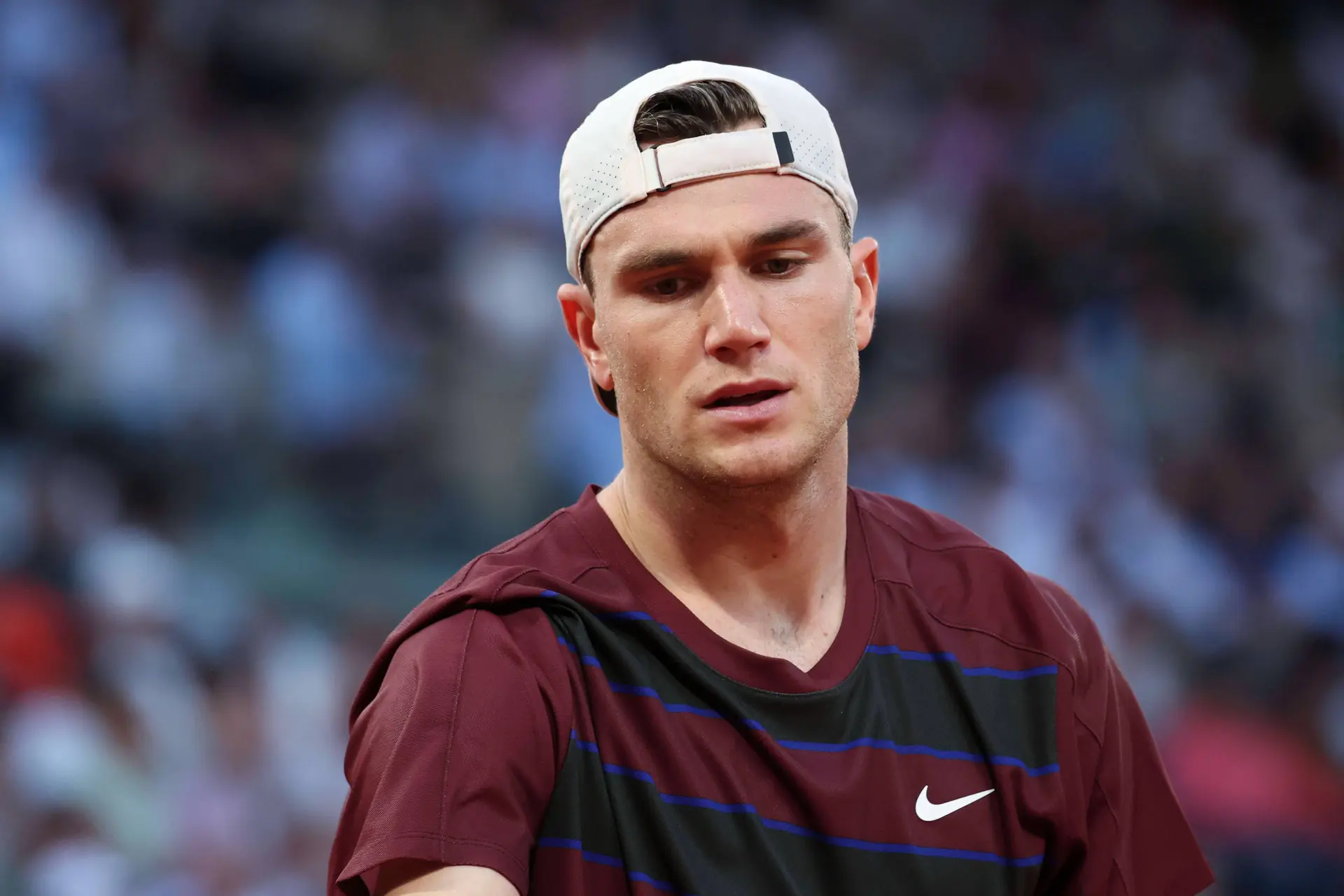
Draper, however, has not had a straightforward path back. “And you said Draper hadn’t played a match since August,” Wertheim prompted.
“I mean, he kind of played one match, but then he was out before he tried to play Wimbledon,” Roddick said. “He hasn’t been fully healthy since, it feels like almost Madrid last year, maybe the first week of the French Open.”
The ranking consequences are inevitable. "His ranking is going to drop because he front-loaded a bunch of points,” Roddick explained. “Obviously, I don’t think he’s going to get back to what he was March, April, May last year, so there’s going to be like a 20-something next to his name at some point. But he’s still one of the guys who can build, and not saying challenge the big two, but disrupt the tennis world and maybe sneak something out in some way, shape, or form.”
Wertheim framed the situation as both hopeful and concerning. “The good news is these are young players, we talked about this with Holger as well, maybe they’ll get these years back on the back end of their career,” he said. “What’s problematic is that these are young players. When you’re 21, 22, 23 years old, remember Draper a year ago beat Carlos and won Indian Wells. He was the hottest act in tennis, and it’s pretty early to have an injury that takes you out for six months.”
Roddick agreed on one key point. “It’s just good to see people back and healthy.”
“There are levels to it”
The conversation then pivoted to a broader discussion about injuries among the under-25 cohort. “With Holger, with Fonseca, we’ve had a lot of injuries,” Wertheim noted. “Carlos and Jannik are tremendous, but the under-25 crowd has been hit pretty hard with injuries lately.”
Roddick drew a clear distinction between misfortune and preparation. “Let’s disconnect here, draw a line. This conversation isn’t about Draper, Fils, Qinwen,” he said. “But you see a lot of players say, ‘Oh, I’ve just been hurt. I’ve been unlucky.’ And I look at it and a lot of the time I’m like, ‘You have a reputation for not putting in the physical work off the court.’ So you’re not unlucky sometimes, sometimes it’s massively unlucky, but there are levels to it.”
For Roddick, elite durability is deliberate. “The better you want to be, the fitter you have to be. It takes time, even away from the court. You can’t skip massage, you can’t skip stretching, you can’t skip icing after every practice.”
He detailed the routine from his own career. “We used to go from practice and sit in the training room with ice for 45 minutes every day, every practice, every single time. Then you go back into the city and have a full program that might run two hours, and you don’t skip days. That’s after you’ve set the table for training for six weeks.”
The objective, he said, was simple. “I’d do December and say, okay, I’m going to maintain through March, through Indian Wells and Miami, then reset and go through making yourself into body armor. There are levels to it.”
He cited John Isner as an example. “I played with Isner the other day. He’s in there stretching for half an hour beforehand. With that massive body, he was still able to play as long as he did. He was very smart about the way he trained. He’s like, I’m not going to be out there running three and four hundreds, my body doesn’t need that. If I’m playing long rallies, that’s my fault.”
The consistency mattered. “He was so diligent, every practice stretching for however long, and avoided these massive big-body injuries. When Novak avoids injury for as long as he has and is that good, that’s not an accident.”
McEnroe at 66
Wertheim then asked about a viral clip. “Did you say you were with John? I saw a video of a guy in his forties serving bombs. AI is doing its thing. Were you in Dallas?”
“I was in Dallas,” Roddick replied. “We played a tour event there, it’s a huge dome, Cowboys facility practice court. They built the stadium and had the practice court under one dome, it looks like a winter sport.”

Andy Roddick marvels at level of John McEnroe.
But the real headline was John McEnroe. “Biggest takeaway, Mac is a joke, 66 years old. No one’s been good at tennis as long as him. It’s absurd. He hits these little slick shots, 115 to the corners.”
Roddick teamed with Sam Querrey. “I played with Sam, who doesn’t volley as well as John McEnroe. Sam Querrey, we were hacking volleys everywhere. Mac is great. Isner knows how to hit a return now, which is crazy.”
“They’re so tall,” Roddick echoed. “Sam is huge, John is four inches taller than Sam. I feel tiny walking into a tennis event now.”
The Nothing Major “Beef”
The episode closed with some playful cross-podcast ribbing. “I think Andy was taking a little dig at our friends from the Nothing Major Podcast,” Wertheim said.
Roddick leaned into it. “We have it. I’m sorry, are we the fun police?”
A clip rolled in which Roddick mock-congratulated Querrey and Isner. “I’d also like to congratulate Sam and John. I think your podcast is super cute. I just want to take it and put it in my pocket. I know you guys are trying a little hard, so I think it’s just fantastic.”
Context, Roddick insisted, mattered. “We posted it with no context, because of course we would. But I didn’t start the fight, just so we’re clear. I hopefully ended the fight, but I did not start the fight.”
He stressed the friendship behind the sarcasm. “We’re friends. We’ve been friends for years. I genuinely love hanging out with Sam and John. They’re great. I like what they do. Their show is different than ours, ours is different than theirs.”
The spark, according to Roddick, was the “number one” claim. “But they were saying they’re the number one. Sam’s about to answer a question, and John knows that they’ve told people they’re the number one. Okay, listen, you don’t get your own math. Come on.”
When Querrey doubled down, Roddick could not resist. “Sam goes, ‘Yeah, it’s great, we have the number one podcast,’ and he says it. I just see John grin and look at me, like, I just dig.”
In the end, Roddick maintained it was self-defense. “The comment without context seems like I got aggressive, which I did, but I was playing defense. I’m just a sensitive soul that played defense. Not a bully, just a sensitive little guy.”


Samuel GillEditor-in-Chief
Samuel Gill is the Chief Content Officer (CCO) of TennisUpToDate.com, a role he has held since 2020. He is responsible for editorial governance across the platform, including setting content standards, overseeing accuracy and consistency, and guiding long-term editorial strategy. Since joining, he has contributed more than 10,000 articles and editorial pieces across the TennisUpToDate network, playing a central role in the daily operation and development of the site.
Based in Leicester, Samuel has a broad background in tennis media. In his current role, he works closely with editors and writers to ensure coverage meets clear journalistic standards, with particular attention to verification, consistency, and timely updates when new information becomes available.
claps 0visitors 0
Just In


Popular News
Latest Comments
- A healthy Qinwen may be hard to stop next season. She was already scaring her opponents before her medical leave(s). Unfortunately, Zheng insisted on singing again. On the positive side -- Mirra did not sing!! ;~}
 mandoist11-10-2026
 - Where is it written that athletes, entertainers... People in general... are mandated to keep looking at -- or even using [anti]Social Media? Public & private figures consistently complain and reveal their concerns about negativity and violence thrown at them -- yet they insist on participating. Avoid it, don't use it, don't read it. It's okay to occasionally look up at the World instead beating your eyes & thumbs to death on The Inventions out there.mandoist11-10-2026
- great articlestennisseserver07-10-2026
- Medvedev was leading Djokovic 7-5, 3-5 when an attempted return..' NO you ignorants, Djokovic was leading .weiss05-10-2026
- No more bullshit "Wildcards" to these two. Qualify like everyone else -- there will be cameras there, too. Time to scream... WTF ????!!!!mandoist29-09-2026
- Let's not BS the general public -- Sabalenka started showing cracks in her game last season. Her losses and near-losses started at about the same time she began being distracted by Fame (constant Selfies, making TV commercials, magazine shoots, endless Social Media nonsense, etc., etc.) One would think even Saba could recognize the parallels with others who failed before her -- Raducanu, Giorgi, Bouchard to name a few.mandoist25-09-2026
- Gross!! Hey Raducanu, Giorgi, and Bouchard -- reserve a seat at your Social Media Selfie table for Saba + Naomi. They're heading in your direction soon enough.mandoist24-09-2026
- And then these same players will complain about how lengthy their season’s were and need more time-off. I’m all for more tennis but the amount of tennis we get now is actually kind of crazy! We all need a break, especially the players.DaveyWavey23-09-2026
- You should do a comparison article for "different kinds of justice" the courts decide for tennis players. I can think of at least three players who received very small bans of a few months, however Tara Moore has been fighting for her literal survival the past few years. It seems odd considering she is not a "name" player, unlike the other cases.DaveyWavey22-09-2026
- PRIZE MONEY & POINTS Winner - $185,500 Finalist - $114,500 Semi-Finalist - $66,003 Quarter-Finalist - $35,000 Round of 16 - $18,045 Round of 32 - $13,005 Winner - 500 Finalist - 325 Semi-Finalist - 195 Quarter-Finalist - 108 Round of 16 - 60 Round of 32 - 1DaveyWavey20-09-2026

Loading
