The US Open exposes a trend nobody is talking about: WTA stars are now more consistent than ATP players
Tennis News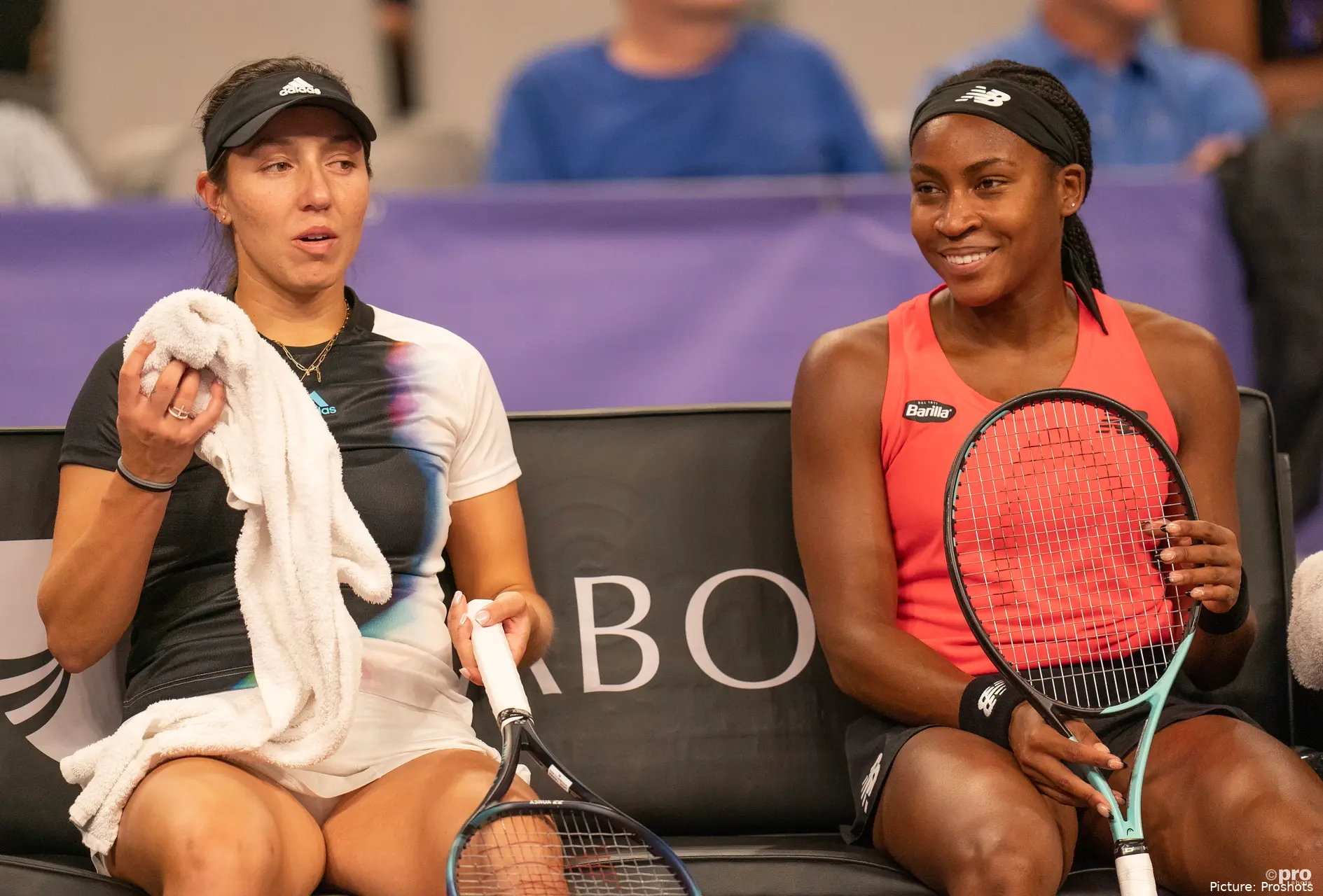
For years, consistency at the top of the sport appeared to be one of the clearest differences between the ATP and WTA Tours. The men's game was dominated by a relatively predictable group of players, while the women's draws regularly produced unexpected names and early exits among the leading seeds.
That trend has gradually changed. Over recent seasons, the WTA's leading players have become increasingly reliable at Grand Slams and WTA 1000 tournaments, with the world's top names regularly reaching the latter stages of the biggest events.
The 2026 US Open provides perhaps the clearest example yet. As the tournament reaches the Round of 16, the women's draw has retained far more of its established hierarchy than the men's, where early surprises and unexpected eliminations have dramatically altered the picture.
The numbers tell the story. Only six top-20 players remain in the men's draw, including just four members of the top 10. On the women's side, eight top-10 players have reached the second week — including the entire top six — while 11 of the 16 remaining players come from the top 20.
The numbers show a growing difference
The gap becomes even clearer when expanding the comparison to the top 30. Nine men's top-30 players have reached the fourth round, compared with 14 women.
That means almost half of the men's Round of 16 consists of players ranked outside the world's top 30. Seven such players have made it through. In the women's draw, only two players ranked outside the top 30 have achieved the same feat.
It is a remarkable contrast considering how frequently the opposite narrative has surrounded the two tours. The WTA was long associated with unpredictable draws and early upsets, while the ATP's biggest events often followed a more familiar pattern, with the leading seeds gradually working their way towards the latter stages.
This year in New York, however, it is the women who have largely protected their positions. The biggest ranking surprises on the women's side are Zheng Qinwen and Taylor Townsend, although neither is quite as unexpected as their current positions might initially suggest.

Zheng, the former world No. 4, has spent much of the past year dealing with injuries and her ranking does not necessarily reflect her actual level when healthy. With confidence and physical fitness, the Chinese star has already demonstrated that she belongs among the most consistent players in the top 10 — and potentially even higher.
Townsend may have entered the fourth round with fewer singles credentials than most of the remaining players, but she is hardly an unknown quantity. A former junior world No. 1 and top-50 player, she has also established herself as one of the best doubles players in the world.
More importantly, she has previous experience of making deep runs at Flushing Meadows, making another strong US Open campaign less surprising than her ranking alone would suggest.
Ranking breakdown of the remaining players (Round of 16)
| Ranking group | ATP | WTA |
| Top 5 | 2 | 5 |
| Top 10 | 4 | 7 |
| Top 20 | 6 | 11 |
| Top 30 | 9 | 14 |
| Unseeded players | 5 | 2 |
The men's draw tells a very different story
The ATP picture is considerably more chaotic. Arthur Gea entered the tournament as a lucky loser, while Botic van de Zandschulp, Stefanos Tsitsipas and Karen Khachanov have all reached the second week despite starting the tournament outside the top 40.
Tsitsipas and Khachanov, in particular, demonstrate why rankings do not always tell the full story. Both have spent significant periods competing at the highest level of the sport and possess the experience and pedigree of players capable of reaching the latter stages of Grand Slams.

Still, seven players ranked outside the top 30 making the Round of 16 represents a striking level of disruption among the men's seeds.
The women's draw has only two such players. One of them, meanwhile, is a particularly misleading statistical anomaly: the reigning Olympic champion and a top-five player only a year ago before undergoing surgery.
That distinction is perhaps the most important one. The WTA has not simply avoided upsets because the leading players received easier paths. Rather, the vast majority of its established elite has performed as expected, while the few lower-ranked names still alive have legitimate explanations for being capable of competing above their current ranking.
As the US Open moves into its second week, the contrast could hardly be clearer. The men's tournament has become increasingly unpredictable, with almost half of the remaining field coming from outside the top 30. The women's event, meanwhile, looks remarkably close to what the rankings suggested before the tournament began.
For a sport that spent years associating consistency with the ATP and unpredictability with the WTA, this US Open offers a rather convincing argument that the roles may now be reversing.
Ranking of the remaining US Open contenders (Round of 16)
| Position (by Rank) | Women's player | WTA Rank | Men's player | ATP Rank |
| 1 | Aryna Sabalenka | 1 | Alexander Zverev | 2 |
| 2 | Elena Rybakina | 2 | Carlos Alcaraz | 3 |
| 3 | Jessica Pegula | 3 | Daniil Medvedev | 8 |
| 4 | Coco Gauff | 4 | Ben Shelton | 9 |
| 5 | Mirra Andreeva | 5 | Frances Tiafoe | 12 |
| 6 | Linda Noskova | 6 | Learner Tien | 15 |
| 7 | Iga Swiatek | 8 | Tommy Paul | 21 |
| 8 | Marta Kostyuk | 11 | Luciano Darderi | 22 |
| 9 | Naomi Osaka | 13 | Francisco Cerundolo | 25 |
| 10 | Iva Jovic | 14 | Tomas Martin Etcheverry | 32 |
| 11 | Sorana Cirstea | 17 | Alexander Blockx | 34 |
| 12 | Anna Kalinskaya | 23 | Alex Michelsen | 46 |
| 13 | Anastasia Potapova | 25 | Karen Khachanov | 50 |
| 14 | Emma Navarro | 27 | Stefanos Tsitsipas | 53 |
| 15 | Taylor Townsend | 96 | Botic van de Zandschulp | 70 |
| 16 | Zheng Qinwen | 121 | Arthur Gea | 87 |
The numbers expose the ATP's inconsistency problem
Among the men, the absence of Jannik Sinner and Novak Djokovic's early exit appeared to open up the draw considerably, although they are not the only top-10 players already out of contention. Third seed Felix Auger-Aliassime and sixth seed Alex de Minaur both fell in the second round, while Flavio Cobolli (fifth seed) and Taylor Fritz (ninth seed) suffered defeats in the third round.
Those ranked slightly further down did not fare much better. Several names expected to make deep runs were eliminated during the first week, including Arthur Fils (No. 11), Rafael Jodar (No. 13) and Lorenzo Musetti (No. 14), all of whom suffered early exits. Other big names - such as Bublik, Nakashima, Mensik and Ruud - also failed to reach the second week despite being ranked inside the top 20.
Read also


The trend suggests that, on the men's side, the only truly consistent players are Jannik Sinner, Carlos Alcaraz and Alexander Zverev — players for whom it is rare to see an early accident at a major tournament.
On the women's side, there are considerably more names who have remained consistent, at least when it comes to progressing through several rounds at the biggest events. Sabalenka, Gauff, Rybakina, Swiatek, Pegula and Andreeva lead that group, while players such as Muchova, Anisimova, Shnaider and Cirstea have also built their rankings around multiple deep runs.
The numbers tell the story. Nowadays, women's tennis is where we see consistency, whereas in the men's game, it seems like a toss-up as to which players will make deep runs in any given tournament. When the favorites falter—even the top 10 (or top 5) are no guarantee of going far.

Cristhián AvilaTennis Journalist
Cristhián Ávila is a tennis journalist based in Santiago, Chile, and has been part of the TennisUpToDate team since early 2023. He covers the ATP and WTA Tours as well as all four Grand Slams, producing breaking news, match reports, analysis, and regular liveblogs from major tournaments.
His reporting combines statistical analysis with clear explanation, helping readers understand tactical developments, player form, and broader storylines across the tour. Working fluently in both Spanish and English, Cristhián collaborates with an international editorial team and contributes to comprehensive global coverage. As part of his work, he has conducted interviews and media interactions with leading figures in the sport, including Caroline Wozniacki and John McEnroe.
In his journalism, Cristhián places strong emphasis on careful sourcing, editorial accuracy, and updating articles promptly when new, verified information becomes available. His coverage is grounded in research, context, and direct engagement with professional tennis.
claps 0visitors 0
Just In

Popular News

Latest Comments
- Perhaps convenient tennis tour sex is not a strong enough experience in which to base a marriage?
 mandoist19-10-2026
 - Fight the Good Fight... Tennis (sports in general) need more Humans such as yourself.mandoist18-10-2026
- When is WTA going to mandate Genetic Testing (DNA) ???mandoist18-10-2026
- Hey, Dan... you just wake up from a coma? Regardless -- Thanks for the comedy this morning!mandoist18-10-2026
- Two Things: 1. Stop allowing these Spoiled Trust-Fund Elitists to behave badly. Your little hand-slaps do not deter them. 2. STOP the incessantly annoying "towel wiping" nonsense!!!!mandoist15-10-2026
- A healthy Qinwen may be hard to stop next season. She was already scaring her opponents before her medical leave(s). Unfortunately, Zheng insisted on singing again. On the positive side -- Mirra did not sing!! ;~}mandoist11-10-2026
- Where is it written that athletes, entertainers... People in general... are mandated to keep looking at -- or even using [anti]Social Media? Public & private figures consistently complain and reveal their concerns about negativity and violence thrown at them -- yet they insist on participating. Avoid it, don't use it, don't read it. It's okay to occasionally look up at the World instead beating your eyes & thumbs to death on The Inventions out there.mandoist11-10-2026
- great articlestennisseserver07-10-2026
- Medvedev was leading Djokovic 7-5, 3-5 when an attempted return..' NO you ignorants, Djokovic was leading .weiss05-10-2026
- No more bullshit "Wildcards" to these two. Qualify like everyone else -- there will be cameras there, too. Time to scream... WTF ????!!!!mandoist29-09-2026

Loading