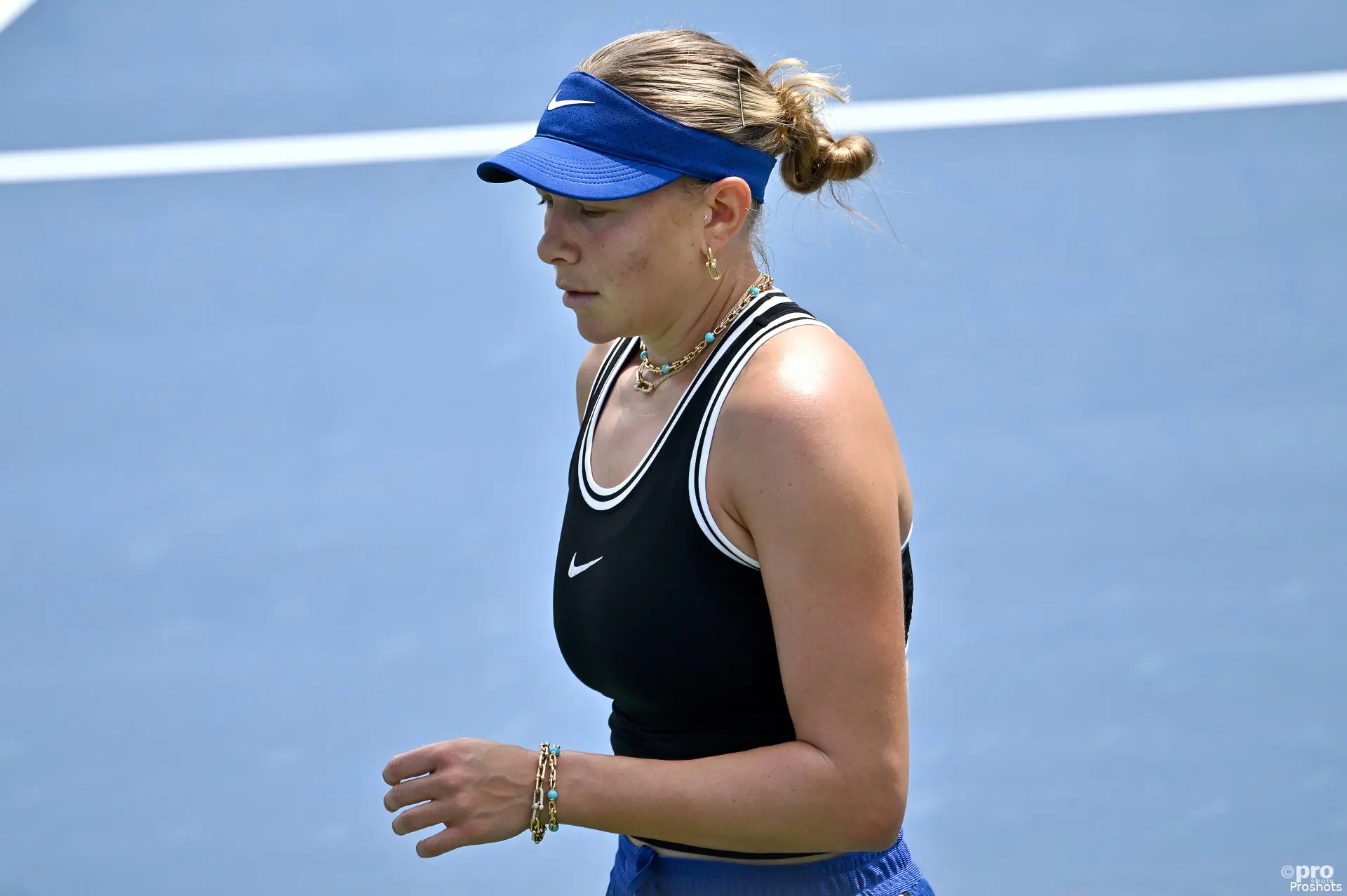
A year ago, Amanda Anisimova was playing in the US Open final, her second consecutive Grand Slam final, and it looked like she had definitively made the leap needed to establish herself among the elite of the WTA Tour. On Saturday, she was out in the US Open third round, beaten 6-2, 7-5 by Anastasia Potapova, and dropping out of the world's top 10 in the process.
The whiplash is jarring even by the standards of a career that has already survived one genuine crossroads — and it raises a fair question about whether last year's stunning run to two Grand Slam finals was the arrival of Anisimova's real level, or a peak this version of her simply isn't built to sustain.
A career that's already survived one wrong turn
This isn't the first time Anisimova's trajectory has bent sharply off course. She reached the French Open semifinal in 2019 at just 17, beating defending champion Simona Halep along the way, and looked like one of the most exciting teenage talents in the sport. She quickly established herself around the top 20 as a teenager, and it seemed like only a matter of time before she climbed even higher and became a genuine Grand Slam contender.
In 2023, she stepped away from tennis entirely, citing the toll the sport had taken on her mental health. Anisimova was just 21 and had already spent several years at the elite level, but she had yet to become a serious part of the conversation around the biggest titles.
Instead, she had established herself as a player capable of making several rounds at WTA 1000 events and Grand Slams, although she remained far from threatening the dominance of players such as Aryna Sabalenka and Iga Swiatek. That break, and the fact that she came back from it at all, is part of what made 2025 feel like such a genuine triumph rather than a simple return to form.
The remarkable turnaround of 2025
Anisimova's comeback season was, by any measure, spectacular. After several months spent trying to settle back into the highest level, she put together a remarkable run to win her first WTA 1000 title at the Qatar Open in February, beating Jelena Ostapenko in the final for her third career title.
Then came Wimbledon, where she reached her first Grand Slam final, including an upset of world No. 1 Aryna Sabalenka along the way — and one of the more brutal results in recent Grand Slam history: a 6-0, 6-0 final defeat to Iga Swiatek that lasted just 57 minutes.
Most players would have needed months to recover from a scoreline like that on the sport's biggest stage. Anisimova needed about six weeks — she arrived at the US Open and beat Swiatek in the quarterfinal, 6-4, 6-3, calling it a "dream" to come back from Wimbledon that way, before reaching the final itself, where she lost to Aryna Sabalenka. The run carried her to a career-high ranking of world No. 3 in January 2026.

2026: a season that's stuttered from the start
Almost nothing since has gone to plan. Jessica Pegula has beaten Anisimova three separate times this year alone — in the Australian Open quarterfinal, in Dubai, and again in Cincinnati — and Anisimova's only semifinal appearance of the entire season came at that same Dubai event. Indian Wells ended in a loss to Victoria Mboko, the Canadian Open in a loss to Elina Svitolina, and the French Open in a third-round exit to Diane Parry.
Her coaching setup has mirrored the instability on court: she split with Hendrik Vleeshouwers, the Dutch coach behind her entire 2025 breakthrough, partnered briefly with German coach Sebastian Sachs, then reunited with Vleeshouwers again for the North American hard-court swing — a lot of change for a player trying to rediscover a level she'd only just found.
Anisimova's 2026 season at a glance (Grand Slams and WTA 1000 torunaments)
| Tournament | Result |
| Australian Open | Quarterfinal |
| Qatar Open | Second Round |
| Dubai | Semifinal — her best result of the season |
| Indian Wells | Round of 16 |
| Miami Open | Round of 16 |
| Rome Open | Withdrew |
| Madrid Open | Withdrew |
| Roland Garros | Third Round |
| Wimbledon | Third round |
| Canadian Open | Round of 16 |
| Cincinnati Open | Quarterfinals |
| US Open | Third round |
The unforced error problem
There's a specific, measurable explanation sitting underneath the run of results. Over the past 52 weeks, Anisimova has hit the fifth-most unforced errors of any player on the WTA Tour, and no player anywhere on tour has recorded a higher unforced-error rate than she has in that same span.
That's not simply an unlucky sequence of tough draws — it's a pattern showing up match after match, and it lines up exactly with a season defined by leads not held and matches that got away rather than opponents who were simply too good. Against Potapova, Anisimova produced 46 unforced errors compared to just 17 from her opponent. Her aggressive baseline game and devastating forehand can overwhelm opponents, but they also give them too many free points when she misses more often than she hits.
Perhaps that ability to be one of the biggest strikers on the Tour puts additional pressure on her to constantly play aggressively and search for winners from different positions on the court. Yes, it often works and produces spectacular points. But it also costs her plenty of errors, and in a sport like tennis, those mistakes can ultimately weigh more heavily than the big shots.
The Potapova loss, and what it means
Saturday's defeat fit that pattern precisely. Potapova broke early in the first set and never let go of it, closing it out 6-2, then survived a tighter second set to finish the job 7-5 in an hour and 39 minutes on Louis Armstrong Stadium — good enough to send last year's runner-up home in the third round and end her stay in the top 10.
It's also becoming something of a habit for Potapova specifically: she beat Coco Gauff at the same stage of the French Open back in June, building a reputation as one of the players most comfortable knocking out the tour's leading Americans at the majors that matter most.
Read also
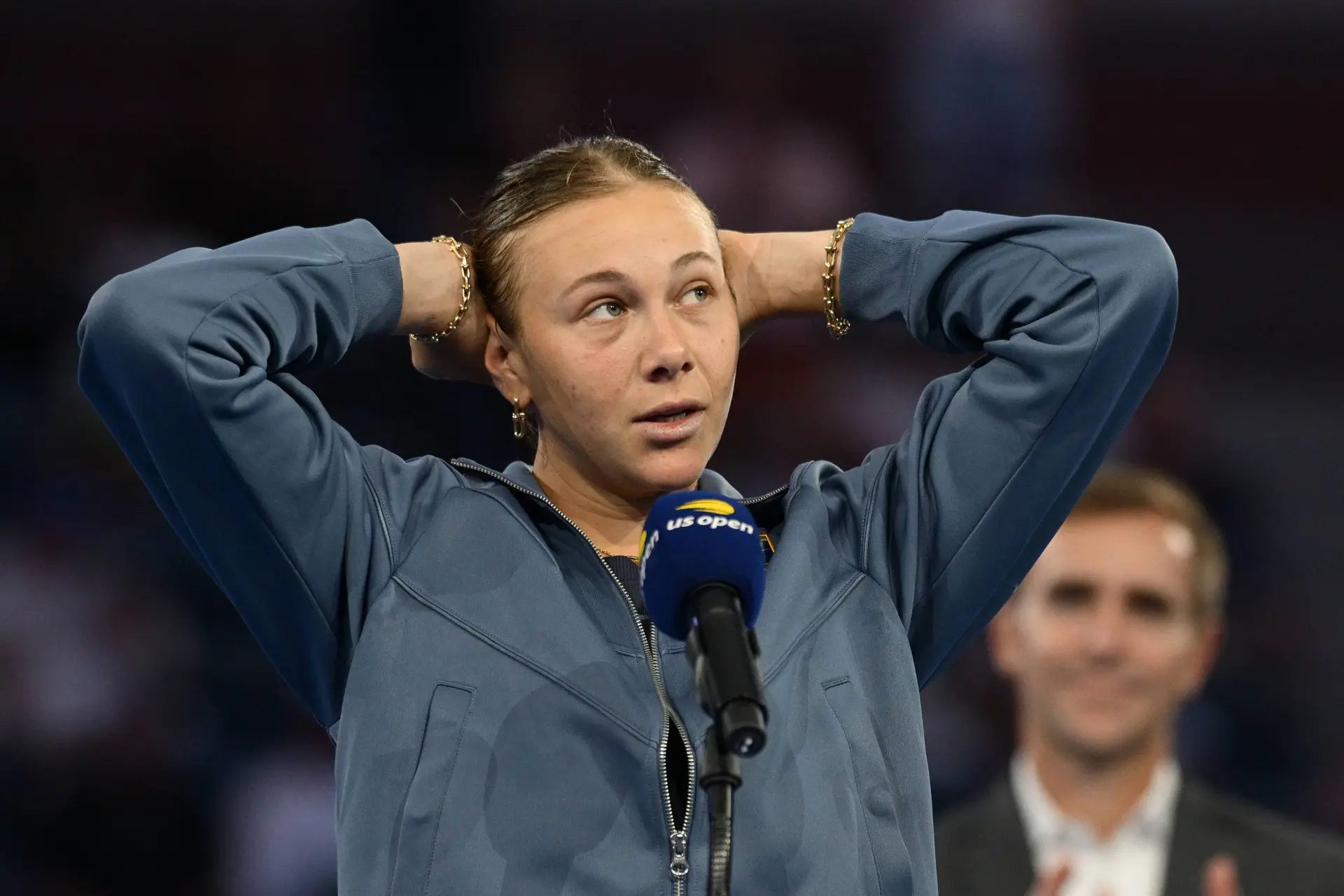
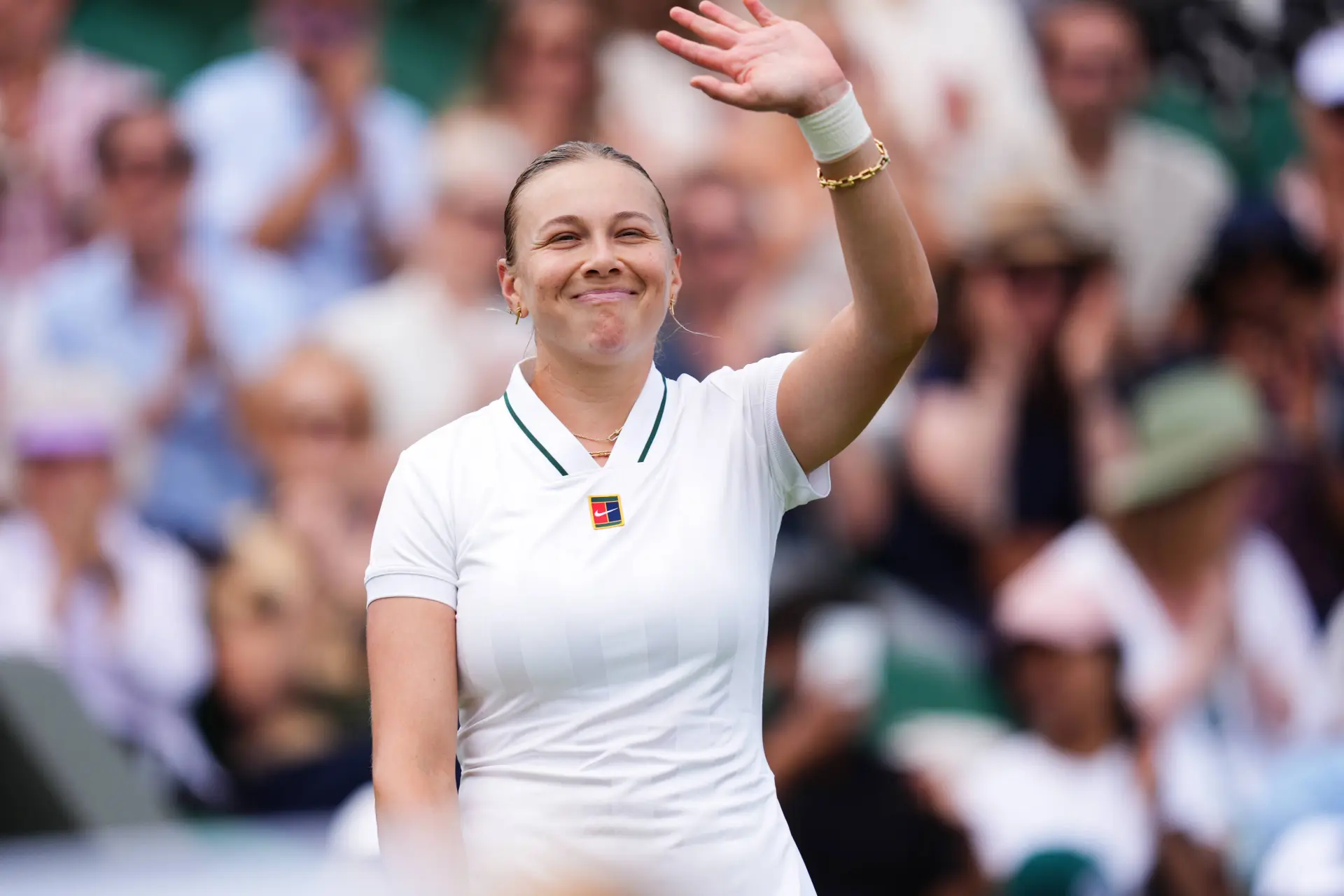
None of this means Anisimova's story is heading the way of a cautionary tale. She has already shown, twice now, that she can walk away from tennis's lowest moments and come back stronger — from a mental health break in 2023 to a career-high ranking eighteen months later, and from a 6-0, 6-0 Grand Slam final defeat to a US Open final six weeks after that.
The unforced-error numbers point to something specific and fixable rather than a talent that's disappeared. But after a season this unsettled, with a coaching situation still finding its footing and a ranking sliding back out of the top 10, the question in the headline isn't rhetorical. Right now, nobody — including, probably, Anisimova herself — knows which version of this year turns out to be the real one.

Cristhián AvilaTennis Journalist
Cristhián Ávila is a tennis journalist based in Santiago, Chile, and has been part of the TennisUpToDate team since early 2023. He covers the ATP and WTA Tours as well as all four Grand Slams, producing breaking news, match reports, analysis, and regular liveblogs from major tournaments.
His reporting combines statistical analysis with clear explanation, helping readers understand tactical developments, player form, and broader storylines across the tour. Working fluently in both Spanish and English, Cristhián collaborates with an international editorial team and contributes to comprehensive global coverage. As part of his work, he has conducted interviews and media interactions with leading figures in the sport, including Caroline Wozniacki and John McEnroe.
In his journalism, Cristhián places strong emphasis on careful sourcing, editorial accuracy, and updating articles promptly when new, verified information becomes available. His coverage is grounded in research, context, and direct engagement with professional tennis.
claps 0visitors 0
Just In

Popular News
Latest Comments
- Fight the Good Fight... Tennis (sports in general) need more Humans such as yourself.
 mandoist18-10-2026
 - When is WTA going to mandate Genetic Testing (DNA) ???mandoist18-10-2026
- Hey, Dan... you just wake up from a coma? Regardless -- Thanks for the comedy this morning!mandoist18-10-2026
- Two Things: 1. Stop allowing these Spoiled Trust-Fund Elitists to behave badly. Your little hand-slaps do not deter them. 2. STOP the incessantly annoying "towel wiping" nonsense!!!!mandoist15-10-2026
- A healthy Qinwen may be hard to stop next season. She was already scaring her opponents before her medical leave(s). Unfortunately, Zheng insisted on singing again. On the positive side -- Mirra did not sing!! ;~}mandoist11-10-2026
- Where is it written that athletes, entertainers... People in general... are mandated to keep looking at -- or even using [anti]Social Media? Public & private figures consistently complain and reveal their concerns about negativity and violence thrown at them -- yet they insist on participating. Avoid it, don't use it, don't read it. It's okay to occasionally look up at the World instead beating your eyes & thumbs to death on The Inventions out there.mandoist11-10-2026
- great articlestennisseserver07-10-2026
- Medvedev was leading Djokovic 7-5, 3-5 when an attempted return..' NO you ignorants, Djokovic was leading .weiss05-10-2026
- No more bullshit "Wildcards" to these two. Qualify like everyone else -- there will be cameras there, too. Time to scream... WTF ????!!!!mandoist29-09-2026
- Let's not BS the general public -- Sabalenka started showing cracks in her game last season. Her losses and near-losses started at about the same time she began being distracted by Fame (constant Selfies, making TV commercials, magazine shoots, endless Social Media nonsense, etc., etc.) One would think even Saba could recognize the parallels with others who failed before her -- Raducanu, Giorgi, Bouchard to name a few.mandoist25-09-2026

Loading