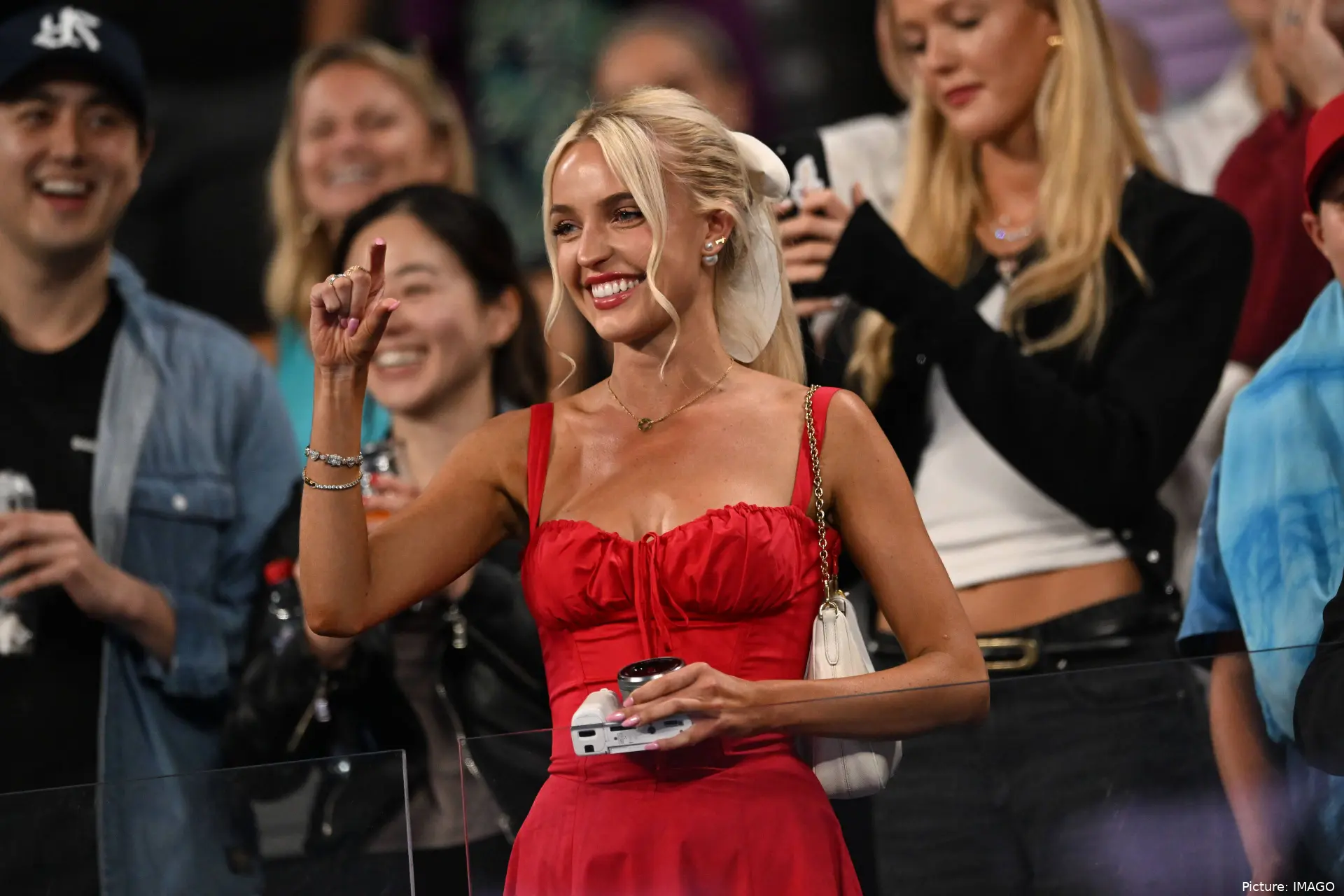
Listen. No one dislikes influencers and influencer culture more than me. I am, however, capable of recognizing an exception.
In tennis, there is one amazing influencer who has been fantastic for the game. And she even spoke out against influencers this week who didn’t understand tennis etiquette. That is Morgan Riddle. She’s amazing. I hear she used to let a tennis player date her :)
But this U.S. Open has shown us what happens when influencer culture at a major sporting event runs rampant.
Ring lights during matches. People filming content while points are being played. Talking at precisely the moments when everyone who has watched tennis for more than 15 minutes knows you are supposed to stop talking.
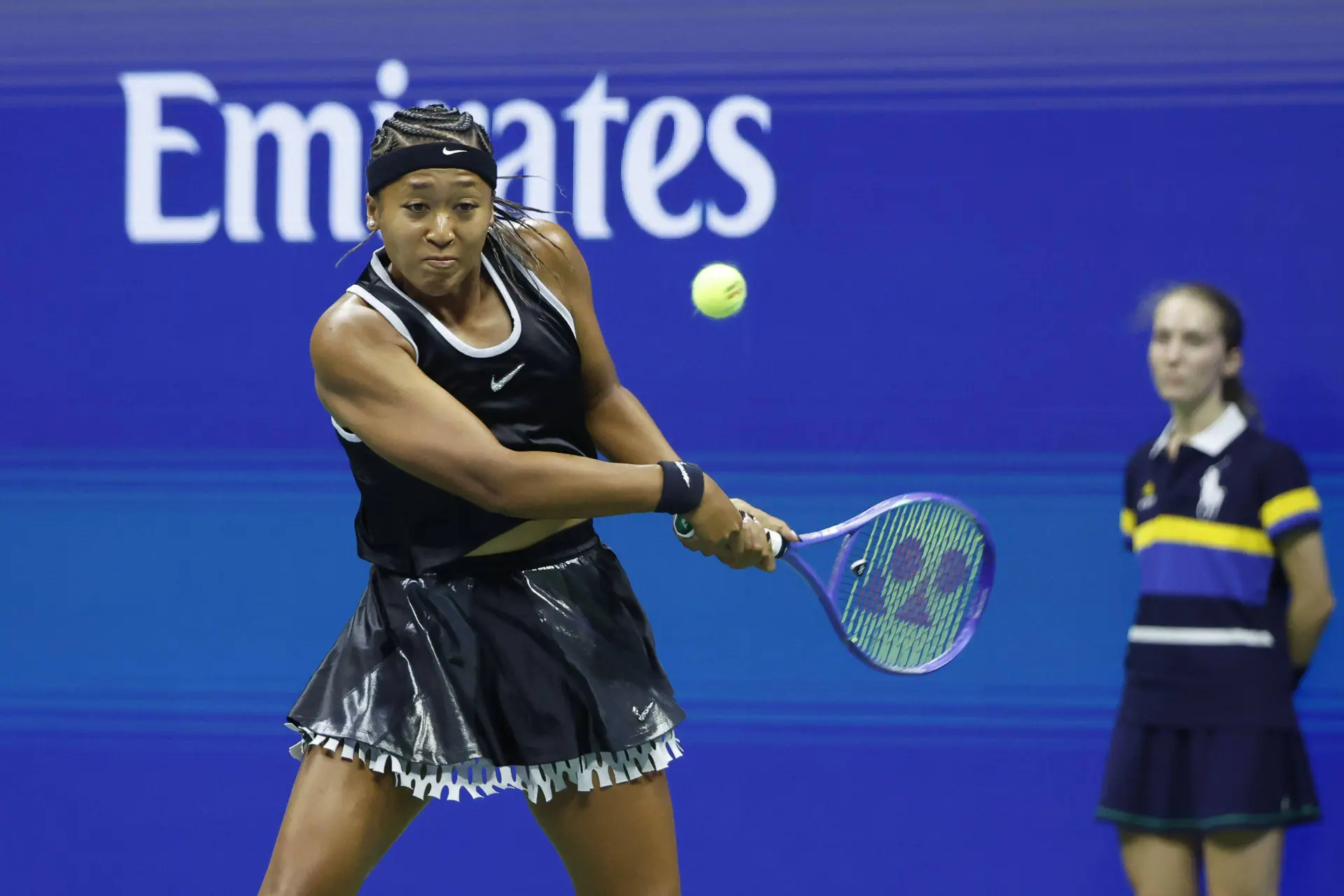
Players have noticed. Naomi Osaka has had a match interrupted by people creating content in a suite. Coco Gauff has talked about the need to teach newcomers tennis etiquette. Jessica Pegula has made essentially the same point. The USTA has now put messages on screens reminding people not to disrupt play.
And Wimbledon, watching all of this from across the Atlantic, has apparently decided it wants absolutely no part of it. Good for Wimbledon. Sort of. Because here comes the part where I become deeply annoying.
We cannot have everything. I don’t want Saudi money in tennis. I really don’t want Saudi money in tennis.
I don’t particularly want tennis inventing or extending some fake Asian swing in the fall because somebody has calculated that another few weeks of tournaments will generate another mountain of money.

Naomi Osaka has spoken throughout about the issue that happened in her game.
There are plenty of things happening around professional tennis that make me uncomfortable because it increasingly feels as though every tradition, schedule and principle has a price attached to it. But then I look at the prize money at this U.S. Open.
The man who wins the singles title will receive $5.5 million. The woman who wins the singles title will receive $5.5 million. That is extraordinary.
You don’t even have to win the tournament. Make the quarterfinals and you earn $780,000. Think about that for a second.
There are players walking around Flushing Meadows right now who have already earned more money during this tournament than many extremely successful people will earn over several years.
And I love that. Professional tennis is brutally difficult. Careers can be short. Players pay coaches, trainers, physios, agents and travel expenses. There is no guaranteed salary waiting for you after a bad month. There is no five-year contract protecting you if your wrist suddenly stops cooperating.
Influencers caring = enormous success
So when tennis becomes wealthy enough to reward its players this way, I consider that an enormous success. But money like this does not magically appear.
The U.S. Open isn’t handing out $5.5 million checks because somebody found a forgotten bag of cash underneath Arthur Ashe Stadium.
The money comes because tennis has become an enormous entertainment product. It comes from television. It comes from sponsors. It comes from luxury suites. It comes from corporate hospitality. It comes from brands desperate to attach themselves to the U.S. Open.
And, yes, increasingly, it comes because tennis has become culturally relevant to millions of people who may not know the difference between a kick serve and a kitchen appliance.
Some of those people follow tennis through TikTok. Some discovered players through Instagram.
Some care about what Frances Tiafoe is wearing before they care about his forehand. Some know Morgan Riddle better than they know half the ATP Top 50.
Tennis wanted those people. More importantly, tennis wanted the companies that want those people.
And now they’re here. So perhaps the problem isn’t that influencers have invaded tennis.
Perhaps tennis invited them. The USTA reportedly credentialed around 100 content creators for this year’s U.S. Open, roughly twice as many as last year. That wasn’t an administrative accident. It was a business decision.
And from a business perspective, it makes perfect sense. The U.S. Open wants younger fans. It wants social engagement. It wants people posting from the grounds. It wants celebrities in suites and fashion coverage and viral moments and food videos and TikToks showing millions of people that Flushing Meadows is the coolest place in New York for two weeks.
Then someone actually brings a ring light and everyone acts shocked. Come on, now. This doesn’t mean tennis has to tolerate stupidity.
If someone turns on a bright light while Naomi Osaka is trying to serve, take it away. If people are screaming during points, remove them. If a creator is given credentials, give them a 90-second explanation of tennis etiquette before handing over the lanyard.
This is not complicated. There is a huge difference between welcoming new audiences and allowing those audiences to interfere with the competition itself.
Morgan Riddle actually made essentially this point. The answer isn’t necessarily to keep newcomers out. It is to teach them how to behave once they get in.
That strikes me as much healthier than deciding that only people who can explain the difference between a let and a hindrance are worthy of entering the gates. Because tennis has spent decades complaining that it needs to grow. Well, congratulations. It’s growing. And growth is messy.
Wimbledon can choose a different path. In fact, I hope it does. Part of what makes the four majors wonderful is that they don’t feel identical.
Let Wimbledon be Wimbledon. Let everyone wear white. Let strawberries and cream remain inexplicably important. Let somebody politely confiscate a ring light at the gate and send it directly back to Los Angeles.
But the U.S. Open is something else. It is loud. It is commercial. It is celebrity-driven. It is excessive. It is New York/Noo Yawk. And this year it is paying its champions $5.5 million each.
Those things are not entirely unrelated. There is a larger bargain being made throughout professional sports right now. We want athletes to make more money. We want bigger events. We want better facilities. We want enormous prize pools. We want global television audiences. We want brands pouring money into the game.
But we’d also prefer that none of the commercial machinery required to produce those things ever become visible.
That’s not realistic. You don’t get the money without some of the nonsense. The challenge for tennis isn’t keeping influencer culture outside the gates. That battle is already over. The challenge is taking the enormous audience and commercial power that culture can bring to the sport without allowing the sport itself to become secondary to the content being created around it.
Protect the points. Protect the players. Protect the things that make tennis tennis.
Read also
But after that? Maybe we all need to loosen up a little. If we want $5.5 million champions (ardently raises both hands), sometimes we’re going to have to put up with a ring light.

Aron SolomonGuest Author
A Pulitzer Prize-nominated journalist for his groundbreaking op-ed in The Independent exposing the NFL’s “race-norming” policies, Aron Solomon, JD, is a globally recognized thought leader in law, media, and strategy.
As Chief Strategy Officer for AMPLIFY, he leverages his deep expertise to shape the future of legal marketing. Aron has taught entrepreneurship at McGill University and the University of Pennsylvania and was honored as a Fastcase 50 recipient, recognizing him among the world’s top legal innovators. A prolific commentator on law, business, and culture, his insights regularly appear in Newsweek, The Hill, Crunchbase News, and Literary Hub.
He has also been featured in The New York Times, Fast Company, Fortune, Forbes, CBS News, CNBC, USA Today, ESPN, TechCrunch, BuzzFeed, Venture Beat and countless other leading global media outlets. We are proud to have Aron on board at TennisUpToDate, where his deep tennis expertise enriches the site with sharp, original columns that connect the sport to wider cultural debates.
claps 0visitors 0
Just In

Popular News
Latest Comments
- Perhaps convenient tennis tour sex is not a strong enough experience in which to base a marriage?
 mandoist19-10-2026
 - Fight the Good Fight... Tennis (sports in general) need more Humans such as yourself.mandoist18-10-2026
- When is WTA going to mandate Genetic Testing (DNA) ???mandoist18-10-2026
- Hey, Dan... you just wake up from a coma? Regardless -- Thanks for the comedy this morning!mandoist18-10-2026
- Two Things: 1. Stop allowing these Spoiled Trust-Fund Elitists to behave badly. Your little hand-slaps do not deter them. 2. STOP the incessantly annoying "towel wiping" nonsense!!!!mandoist15-10-2026
- A healthy Qinwen may be hard to stop next season. She was already scaring her opponents before her medical leave(s). Unfortunately, Zheng insisted on singing again. On the positive side -- Mirra did not sing!! ;~}mandoist11-10-2026
- Where is it written that athletes, entertainers... People in general... are mandated to keep looking at -- or even using [anti]Social Media? Public & private figures consistently complain and reveal their concerns about negativity and violence thrown at them -- yet they insist on participating. Avoid it, don't use it, don't read it. It's okay to occasionally look up at the World instead beating your eyes & thumbs to death on The Inventions out there.mandoist11-10-2026
- great articlestennisseserver07-10-2026
- Medvedev was leading Djokovic 7-5, 3-5 when an attempted return..' NO you ignorants, Djokovic was leading .weiss05-10-2026
- No more bullshit "Wildcards" to these two. Qualify like everyone else -- there will be cameras there, too. Time to scream... WTF ????!!!!mandoist29-09-2026

Loading