“It’s really important how you go to bed”: Carlos Alcaraz discusses the unusual routine that helped transform his form
ATP
Carlos Alcaraz's return to the US Open has quickly gone from a question mark to one of the most convincing stories of the tournament. After nearly five months away from competitive tennis because of a wrist injury, the defending champion has reached the quarterfinals without dropping a set.
Alcaraz completed his fourth straight-sets victory in New York by beating Tommy Paul 6-4, 6-3, 6-4, extending his record to 12-0 in sets at this year's tournament. His return has been particularly impressive given that the US Open is his first singles event since April, when his wrist injury forced him out of action.
The 23-year-old has looked increasingly comfortable with every match. What began as a cautious return has quickly turned into another deep Grand Slam run, with Alcaraz now two victories away from returning to the US Open final and three from successfully defending his title.
Yet his experience over the past five months has also forced him to think beyond the immediate tournament. Rather than simply trying to fit as much tennis as possible into every season, Alcaraz is increasingly conscious of what he needs to do if he wants to remain at the highest level for years to come.
Alcaraz prioritizes longevity over a packed schedule
The Spaniard was asked whether his extended absence could influence the way he approaches breaks in the future. His answer was deliberately open-ended, reflecting the unpredictable nature of the tennis calendar and the different demands placed on players throughout a season.
“Well, I don't know. I mean, it depends," the former world No. 1 said at press conference. "Tennis can be so unpredictable because you don't know how many matches you're going to win, if the tournaments are going to last one match or seven. So you never know.
“It's going to depend on how I feel physically, how I feel mentally, if I need long breaks at the beginning of the year, in the middle or at the end.”

For Alcaraz, the important point is that those decisions cannot be made simply by looking at the calendar. His physical condition and mental state will determine when he needs to step away, particularly if the objective is to sustain his career well beyond his current peak.
That is why the Spaniard is already thinking about the next 10 or 15 years rather than only the next tournament. After seeing how quickly an injury can remove him from competition, protecting his body and mental health has become part of the equation when considering his future schedule.
“So we will see, because I really want to have a really long career, you know, for the next 10 or 15 years. So I just really want to take care of my mental health and my body right now if I still want to play such a long career.
“So right now, I don't know. It's going to depend, but what I'm sure about is I'm going to take it.”
The comments come after a period in which Alcaraz had little choice but to step away. His wrist injury ruled him out of several tournaments, leaving him with no competitive matches between April and his return at the US Open.
Instead of trying to rush his way back into the schedule, he has now produced four straight-sets victories in New York. The run has given him an opportunity to rebuild his confidence while simultaneously showing that a longer absence does not necessarily mean a slow return to his best tennis.
The routine that helped change Alcaraz's form
His preparation for each match has also included smaller adjustments designed to make sure he arrives on court feeling right. One example came after his earlier match against Wu Yibing, when Alcaraz was satisfied with the result but not with the quality of his ball-striking.
Rather than simply accepting the performance and moving on, he went back onto the practice court for a few minutes. The purpose was not to work through another intensive session, but to regain the feeling he wanted to take into his next match.

“Well, I would say for us, for tennis players, it's really important how you go to bed. In terms of feeling, when you just win the match, especially when you win the match but you don't feel like you've been hitting the ball well, it's better to go back to the practice court and just hit for five, 10 minutes.
“Just hit some balls when you're not nervous or you're not thinking about anything else, just hitting the ball, and finish — or leave the court — with a good feeling, hitting the ball, coming to the next round.
“So that's what I felt the other day. I just left happy with my feeling when I left the practice court. And then coming here, I think everybody saw the difference about my form.”
Read also
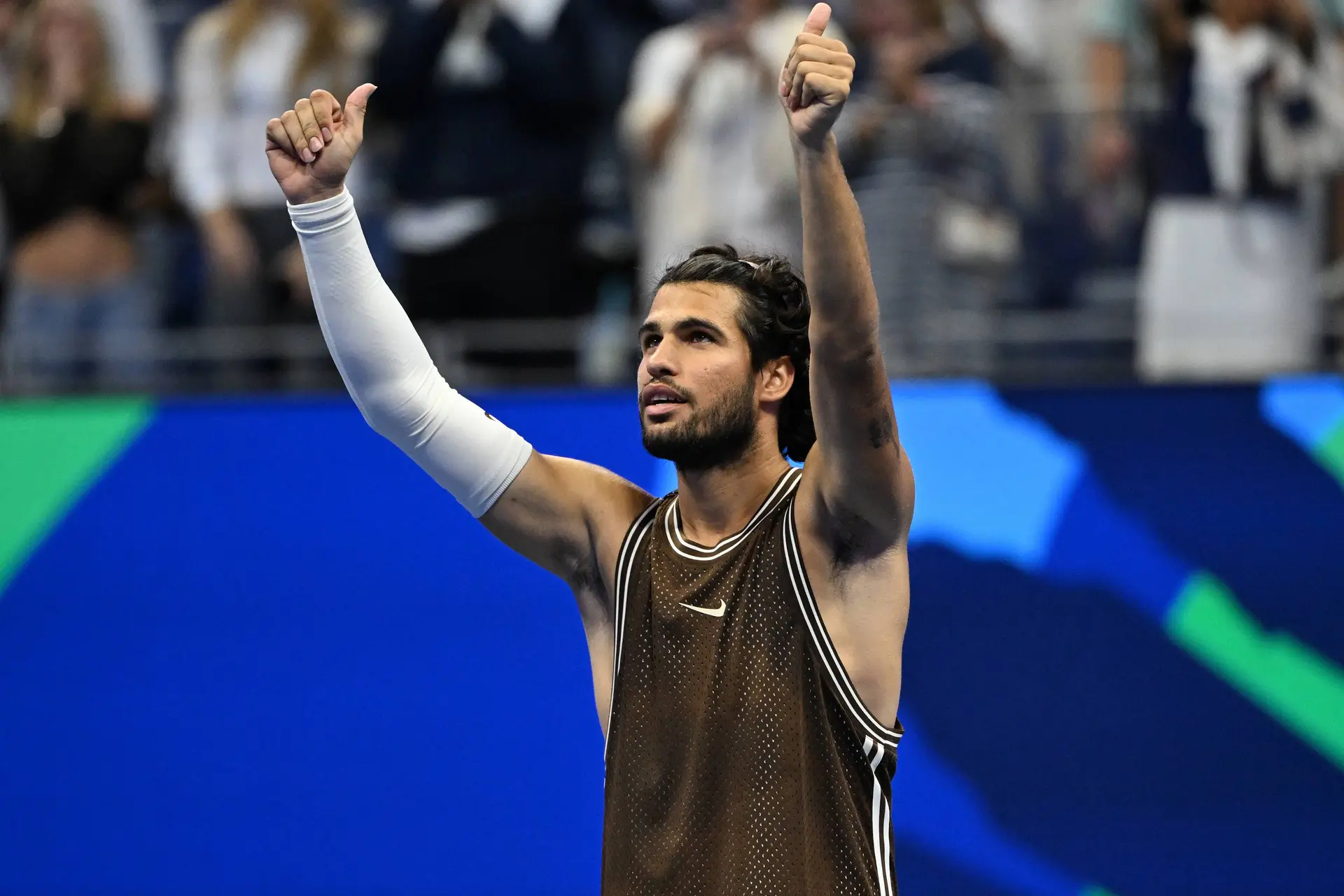
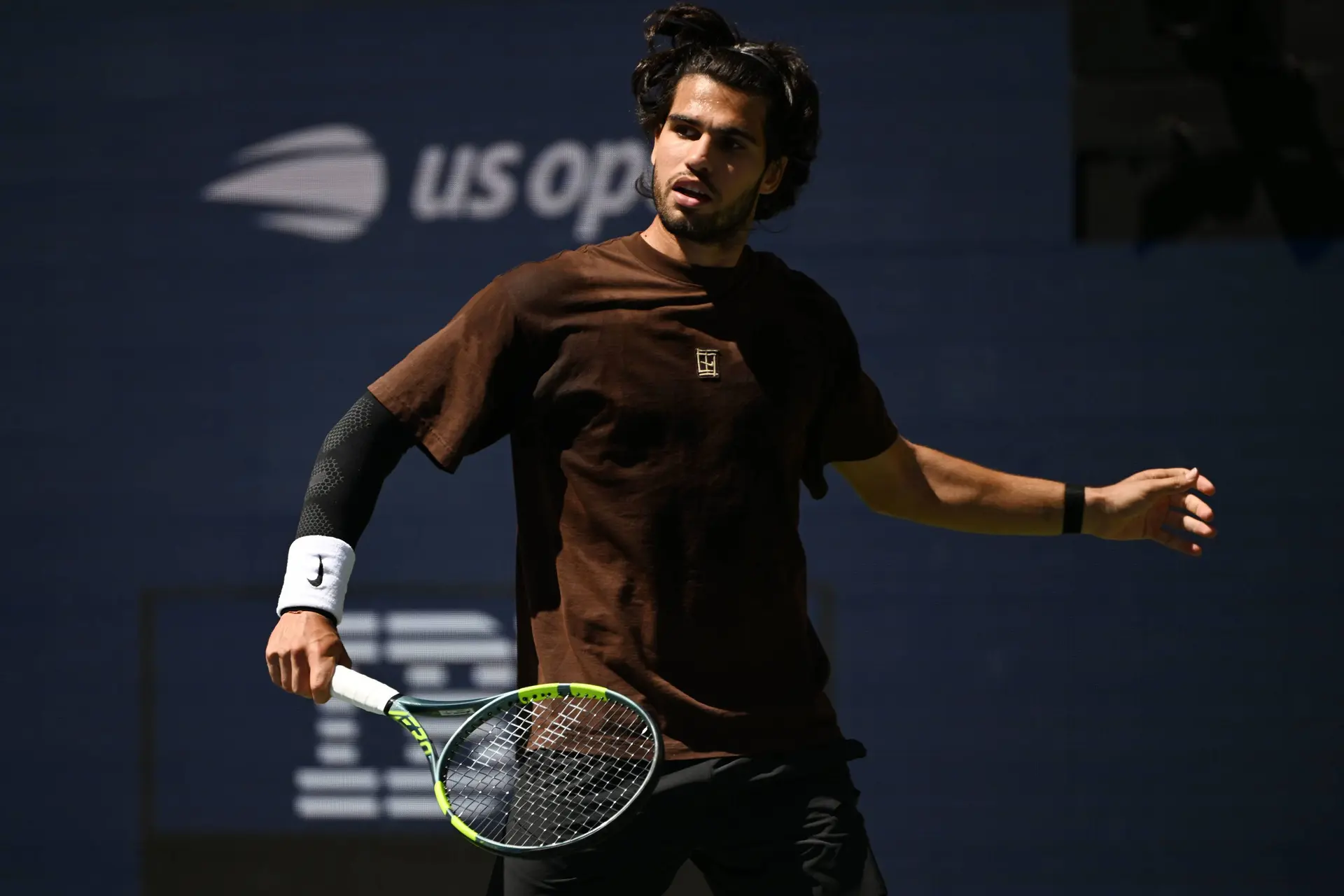
Four matches into his comeback, Alcaraz has given himself little reason to question the decision to return at a Grand Slam. He is 12-0 in sets, into another US Open quarterfinal and playing with the freedom that was missing when he first stepped back onto the court.
But perhaps the biggest change is happening away from the scoreboard. After being forced to spend almost five months away from competition, Alcaraz is now looking at the calendar differently. He does not know yet when those longer breaks might come, but he knows why he may need them: because, as he put it, he wants to still be playing “for the next 10 or 15 years.”

Cristhián AvilaTennis Journalist
Cristhián Ávila is a tennis journalist based in Santiago, Chile, and has been part of the TennisUpToDate team since early 2023. He covers the ATP and WTA Tours as well as all four Grand Slams, producing breaking news, match reports, analysis, and regular liveblogs from major tournaments.
His reporting combines statistical analysis with clear explanation, helping readers understand tactical developments, player form, and broader storylines across the tour. Working fluently in both Spanish and English, Cristhián collaborates with an international editorial team and contributes to comprehensive global coverage. As part of his work, he has conducted interviews and media interactions with leading figures in the sport, including Caroline Wozniacki and John McEnroe.
In his journalism, Cristhián places strong emphasis on careful sourcing, editorial accuracy, and updating articles promptly when new, verified information becomes available. His coverage is grounded in research, context, and direct engagement with professional tennis.
claps 2visitors 1
Just In


Popular News

Latest Comments
- Perhaps convenient tennis tour sex is not a strong enough experience in which to base a marriage?
 mandoist19-10-2026
 - Fight the Good Fight... Tennis (sports in general) need more Humans such as yourself.mandoist18-10-2026
- When is WTA going to mandate Genetic Testing (DNA) ???mandoist18-10-2026
- Hey, Dan... you just wake up from a coma? Regardless -- Thanks for the comedy this morning!mandoist18-10-2026
- Two Things: 1. Stop allowing these Spoiled Trust-Fund Elitists to behave badly. Your little hand-slaps do not deter them. 2. STOP the incessantly annoying "towel wiping" nonsense!!!!mandoist15-10-2026
- A healthy Qinwen may be hard to stop next season. She was already scaring her opponents before her medical leave(s). Unfortunately, Zheng insisted on singing again. On the positive side -- Mirra did not sing!! ;~}mandoist11-10-2026
- Where is it written that athletes, entertainers... People in general... are mandated to keep looking at -- or even using [anti]Social Media? Public & private figures consistently complain and reveal their concerns about negativity and violence thrown at them -- yet they insist on participating. Avoid it, don't use it, don't read it. It's okay to occasionally look up at the World instead beating your eyes & thumbs to death on The Inventions out there.mandoist11-10-2026
- great articlestennisseserver07-10-2026
- Medvedev was leading Djokovic 7-5, 3-5 when an attempted return..' NO you ignorants, Djokovic was leading .weiss05-10-2026
- No more bullshit "Wildcards" to these two. Qualify like everyone else -- there will be cameras there, too. Time to scream... WTF ????!!!!mandoist29-09-2026

Loading