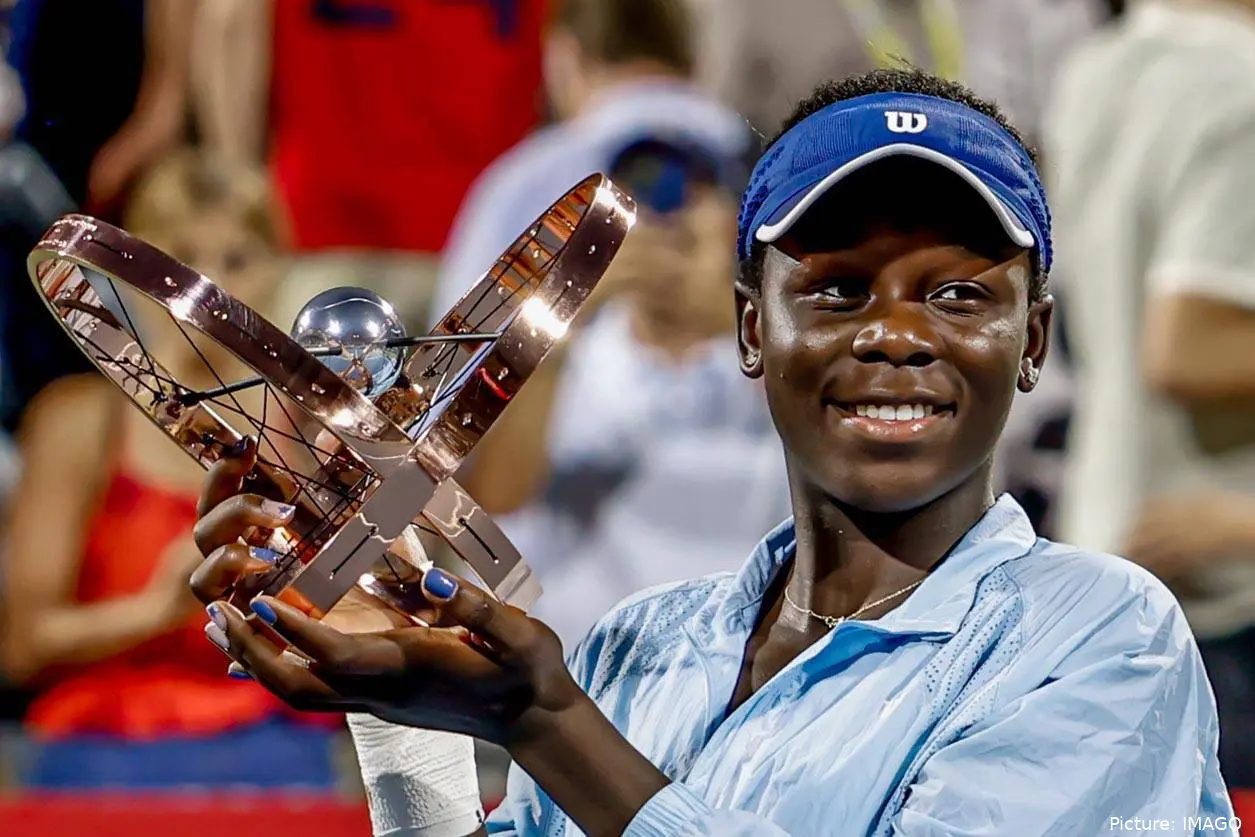
Every generation in women’s tennis is haunted by comparisons. In the late 1990s, Martina Hingis was a Grand Slam champion at 16. Serena and Venus Williams bent the sport around their teenage power. Maria Sharapova conquered Wimbledon before she could legally drive alone in some U.S. states. By those standards, today’s WTA rankings tell a very different story.
Scan the current top 20 and you’ll find just one teenager: Mirra Andreeva, the 18-year-old Russian whose precocity has already turned heads. Everyone else in that elite circle is older, more seasoned, and in many cases already decorated with Slam titles and WTA 1000 trophies.
But here’s the catch: while the list may look like a generational bottleneck, the pipeline is anything but dry. Beneath the surface, an impressive roster of teenagers is gathering force—players most casual fans haven’t heard of yet but inevitably will.
The lone teen in the top 20
Mirra Andreeva isn’t just holding a spot for the youth movement—she’s spearheading it. Already a second-week fixture at majors and fearless against higher-ranked opponents, she has combined an old soul’s patience with a teenager’s fearlessness. What makes her particularly dangerous is her ability to win points in multiple ways: she can defend like a wall or step in and rip winners.
At 18, Andreeva is WAY ahead of schedule. But she is, as some would argue, showing signs this year that she is either peaking or has a lower ceiling than expected. Yet no other player under 20 currently resides in the sport’s upper echelon, a reality that raises eyebrows in a game that has historically celebrated teenage prodigies.
The quiet storm building beneath
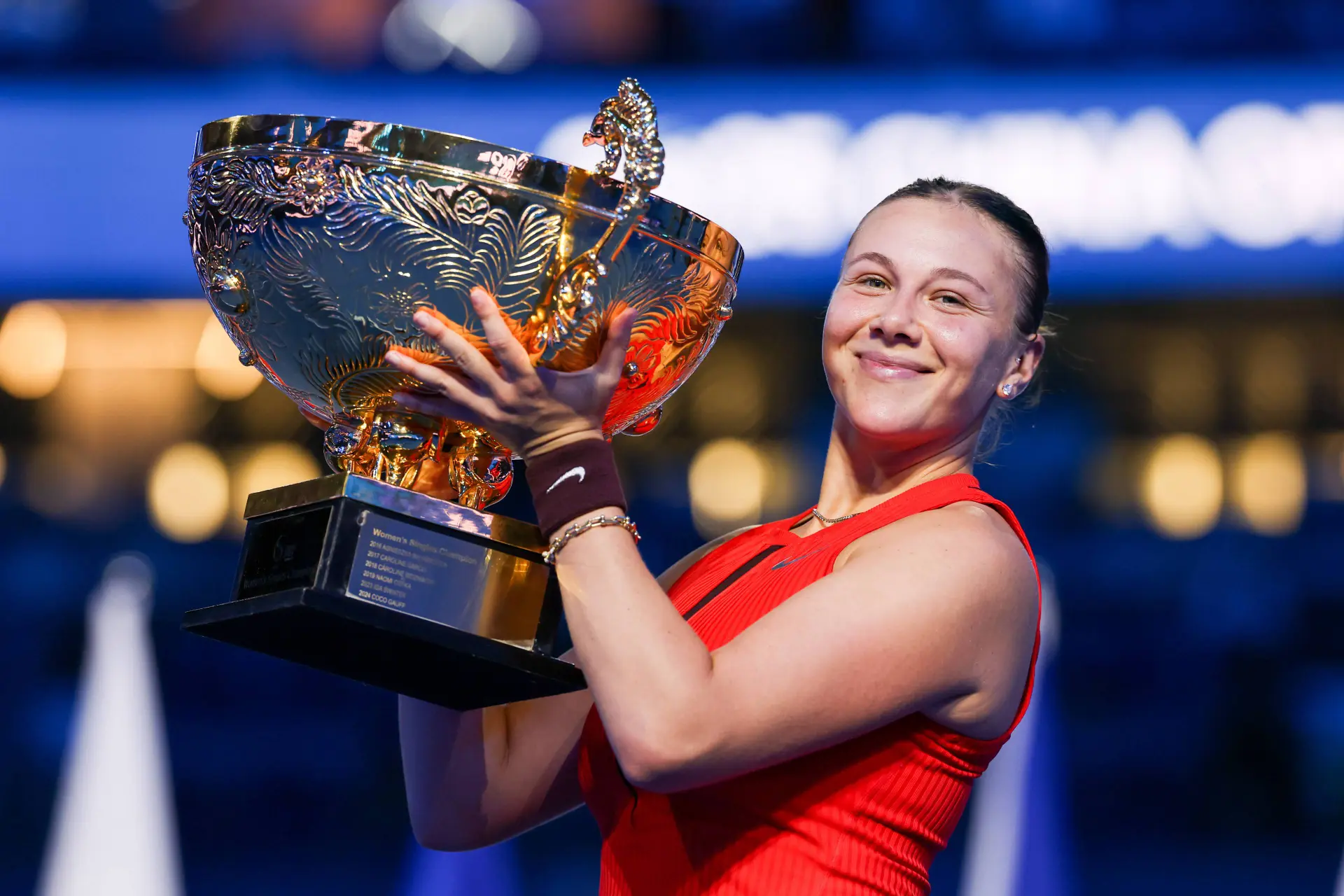
The absence of more teenagers in the top 20 shouldn’t be misread as weakness. Instead, it signals a shift in developmental pacing on the women’s side. Many of the brightest prospects are still accumulating experience on the ITF circuit, the junior slams, or the lower tiers of the WTA Tour. That doesn’t diminish their talent—it only delays their breakout moments.
Take Maya Joint, the Australian-Canadian teenager who blends a free-flowing lefty game with raw athleticism. She has already shown the ability to adapt across surfaces, a rare commodity in players still finding their professional footing. Her trajectory feels less like a question of “if” than “when.”
Or Iva Jovic, the American teenager who has been pegged for stardom since her junior days. Jovic brings a mix of ball-striking power and tactical awareness that belies her age. If U.S. tennis has been looking for its next big star to follow Coco Gauff, Jovic might be the answer waiting in the wings.
Canada, still basking in the glow of Bianca Andreescu’s 2019 U.S. Open title, has another hopeful in Victoria Mboko. At just 18, Mboko has drawn comparisons to her compatriots Leylah Fernandez and Andreescu for her fight, her balance between defense and offense, and her appetite for pressure moments.
Then there’s Tereza Valentová, a Czech teenager forged in a nation that seems to produce top-20 players on a conveyor belt. With players like Petra Kvitová and Karolína Plíšková nearing the twilight of their careers, Valentová represents the next Czech wave. And if history is any guide, when the Czech system identifies a talent, the WTA eventually feels the impact.
Sara Bejlek, also Czech, is another on-the-cusp name. A left-hander with a versatile arsenal, Bejlek has already tasted main-draw Grand Slam competition. Though still raw, she’s logging the kinds of reps that can make a player dangerous quickly once confidence clicks.
The historical lens
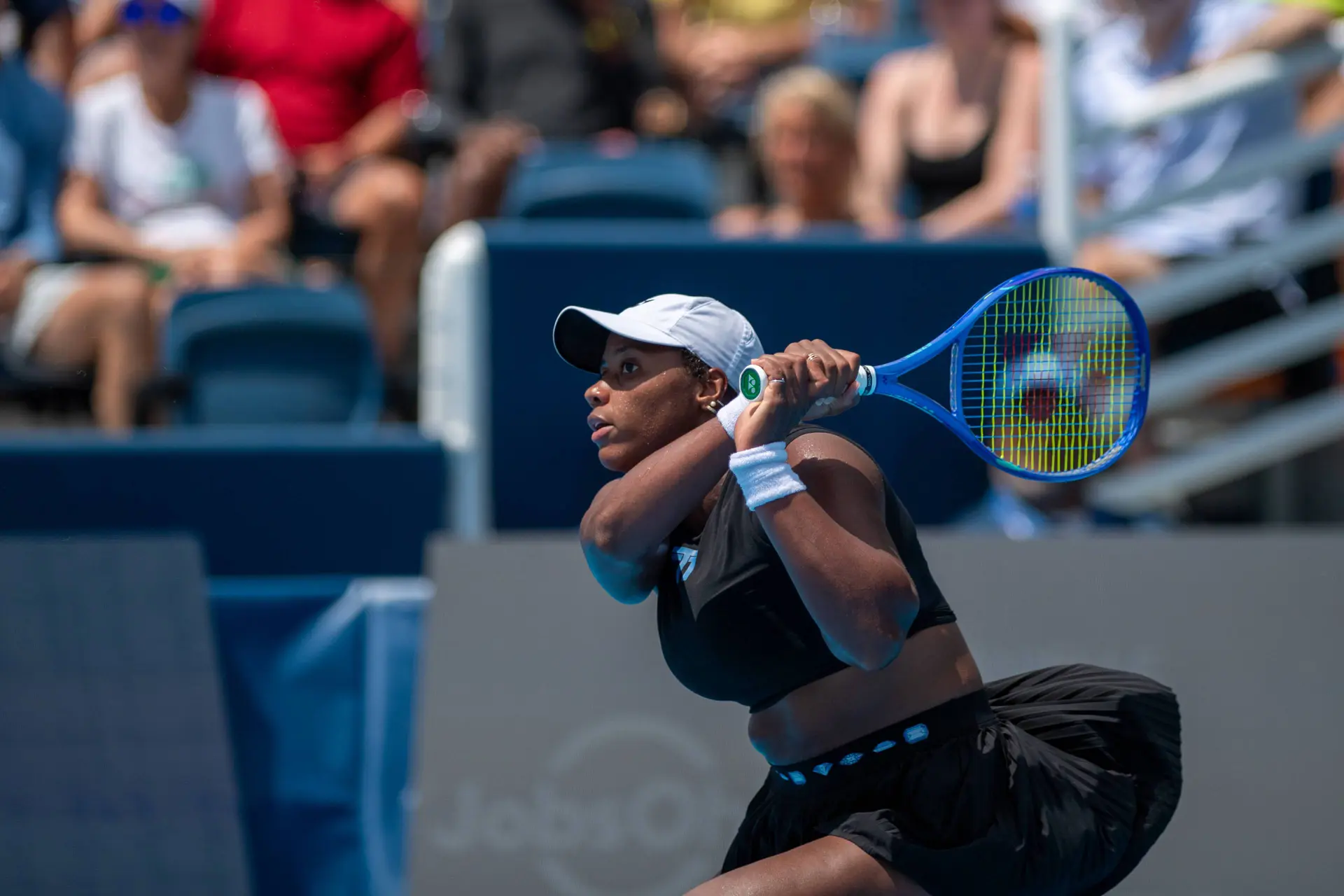
It’s easy to forget that tennis careers, especially on the women’s side, have elongated. Where once players peaked at 20 or 21, now the arc stretches deeper into the late 20s or even early 30s. Serena Williams, Venus Williams, and more recently Petra Kvitová and Simona Halep demonstrated that staying power. Iga Świątek, still only 24, already has four Slams and years ahead to add more.
So the relative scarcity of teenagers in the top 20 isn’t a sign of decline—it’s an evolution of timelines. Players are taking longer to build the strength, experience, and mental resilience required to break through in an increasingly physical sport.
At the same time, the sport’s history suggests that breakthroughs can come suddenly. Sharapova’s Wimbledon title in 2004 shocked everyone but her inner circle. Hingis’s run in the 1990s was unprecedented. Coco Gauff went from teenage talent to U.S. Open champion in what felt like the blink of an eye.
Why you’ll know these names soon
The common thread for this next generation is opportunity. The WTA is in an era of parity, with multiple champions and rotating Slam winners. That volatility means a teenager who strings together two hot weeks can find herself in the final rounds of a major—and on the radar of every casual fan.
Andreeva has already offered the template. One deep run at Wimbledon, another at Roland Garros, and suddenly she’s not just a teenager with potential—she’s a fixture on tour. Players like Joint, Jovic, Mboko, Valentová, and Bejlek are all one hot streak away from joining her.
The marketing side of the WTA will also seize the moment. Tennis is hungry for fresh faces, and sponsors know the value of discovering the “next big thing” early. Expect these teenagers to be spotlighted at combined events, given wild cards into main draws, and positioned to gain traction with fans who are just now learning their names.
The takeaway
If you look at the top 20 today, you might assume women’s tennis is a closed shop for seasoned veterans and established stars. But the real story is more nuanced. Behind Mirra Andreeva stands a class of teenagers with the tools to reshape the sport over the next decade.
Fans may not recognize all of them yet. But as with every previous generation, recognition comes quickly once the results arrive. If Hingis, Sharapova, and Gauff taught us anything, it’s that teenage breakthroughs are unpredictable but inevitable.
So remember these names—Joint, Jovic, Mboko, Valentová, Bejlek. They may be footnotes now, but in two or three years, they could be household fixtures. Women’s tennis has always thrived on its ability to reinvent itself with youthful brilliance. This era will be no exception.

Aron SolomonGuest Author
A Pulitzer Prize-nominated journalist for his groundbreaking op-ed in The Independent exposing the NFL’s “race-norming” policies, Aron Solomon, JD, is a globally recognized thought leader in law, media, and strategy.
As Chief Strategy Officer for AMPLIFY, he leverages his deep expertise to shape the future of legal marketing. Aron has taught entrepreneurship at McGill University and the University of Pennsylvania and was honored as a Fastcase 50 recipient, recognizing him among the world’s top legal innovators. A prolific commentator on law, business, and culture, his insights regularly appear in Newsweek, The Hill, Crunchbase News, and Literary Hub.
He has also been featured in The New York Times, Fast Company, Fortune, Forbes, CBS News, CNBC, USA Today, ESPN, TechCrunch, BuzzFeed, Venture Beat and countless other leading global media outlets. We are proud to have Aron on board at TennisUpToDate, where his deep tennis expertise enriches the site with sharp, original columns that connect the sport to wider cultural debates.
claps 2visitors 2
Just In

Popular News
Latest Comments
- A healthy Qinwen may be hard to stop next season. She was already scaring her opponents before her medical leave(s). Unfortunately, Zheng insisted on singing again. On the positive side -- Mirra did not sing!! ;~}
 mandoist11-10-2026
 - Where is it written that athletes, entertainers... People in general... are mandated to keep looking at -- or even using [anti]Social Media? Public & private figures consistently complain and reveal their concerns about negativity and violence thrown at them -- yet they insist on participating. Avoid it, don't use it, don't read it. It's okay to occasionally look up at the World instead beating your eyes & thumbs to death on The Inventions out there.mandoist11-10-2026
- great articlestennisseserver07-10-2026
- Medvedev was leading Djokovic 7-5, 3-5 when an attempted return..' NO you ignorants, Djokovic was leading .weiss05-10-2026
- No more bullshit "Wildcards" to these two. Qualify like everyone else -- there will be cameras there, too. Time to scream... WTF ????!!!!mandoist29-09-2026
- Let's not BS the general public -- Sabalenka started showing cracks in her game last season. Her losses and near-losses started at about the same time she began being distracted by Fame (constant Selfies, making TV commercials, magazine shoots, endless Social Media nonsense, etc., etc.) One would think even Saba could recognize the parallels with others who failed before her -- Raducanu, Giorgi, Bouchard to name a few.mandoist25-09-2026
- Gross!! Hey Raducanu, Giorgi, and Bouchard -- reserve a seat at your Social Media Selfie table for Saba + Naomi. They're heading in your direction soon enough.mandoist24-09-2026
- And then these same players will complain about how lengthy their season’s were and need more time-off. I’m all for more tennis but the amount of tennis we get now is actually kind of crazy! We all need a break, especially the players.DaveyWavey23-09-2026
- You should do a comparison article for "different kinds of justice" the courts decide for tennis players. I can think of at least three players who received very small bans of a few months, however Tara Moore has been fighting for her literal survival the past few years. It seems odd considering she is not a "name" player, unlike the other cases.DaveyWavey22-09-2026
- PRIZE MONEY & POINTS Winner - $185,500 Finalist - $114,500 Semi-Finalist - $66,003 Quarter-Finalist - $35,000 Round of 16 - $18,045 Round of 32 - $13,005 Winner - 500 Finalist - 325 Semi-Finalist - 195 Quarter-Finalist - 108 Round of 16 - 60 Round of 32 - 1DaveyWavey20-09-2026

Loading