"Don’t think today’s win or loss is going to make or break my career": Iva Jovic looks at bigger picture as dream Melbourne run ends wellbeaten vs Sabalenka
WTA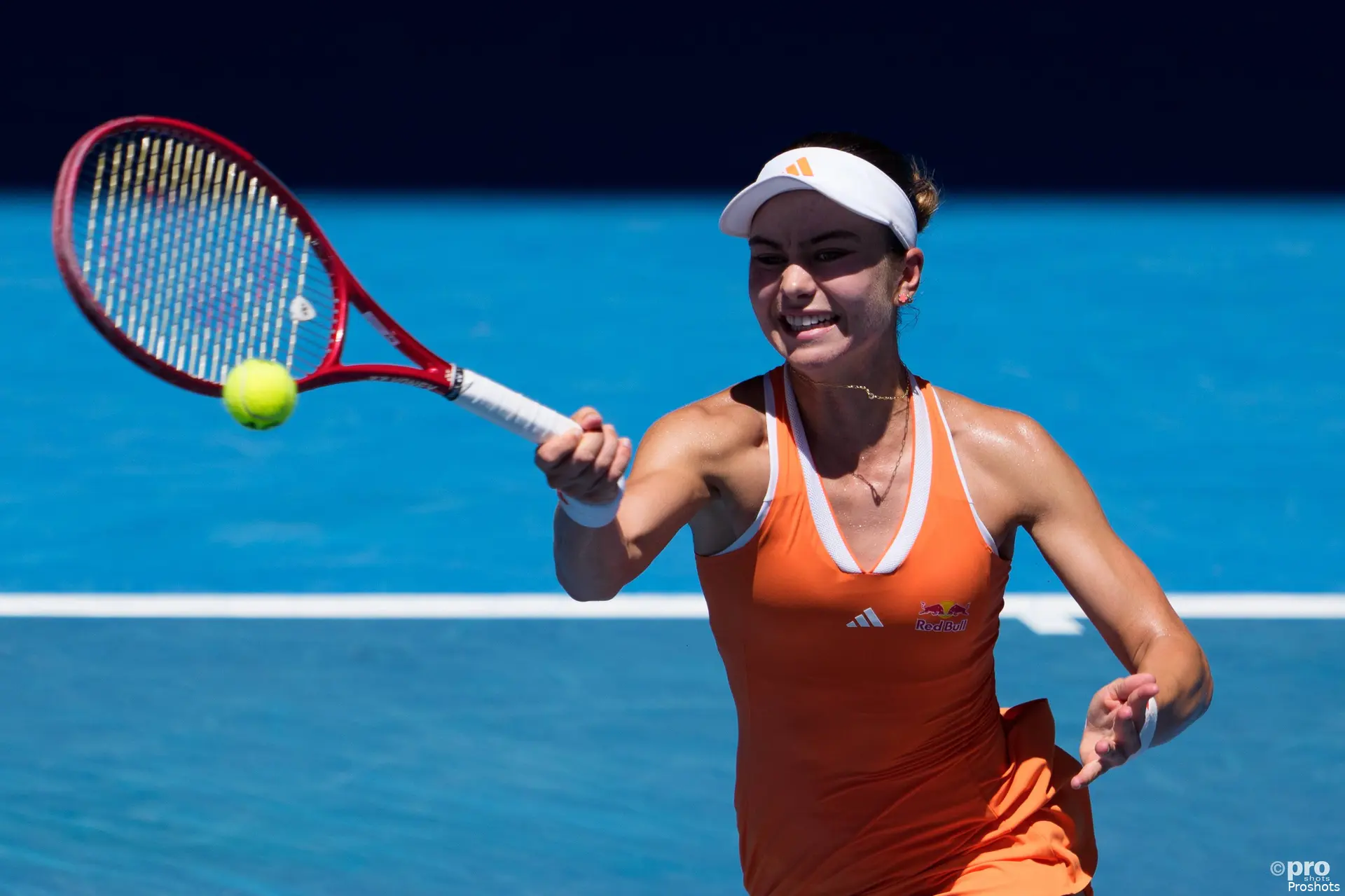
Eighteen-year-old Iva Jovic’s remarkable Australian Open campaign ended in the quarter-finals, where she was defeated 6–3, 6–0 by world No. 2 Aryna Sabalenka on Rod Laver Arena. Despite the loss, the young American rises into the WTA top 20 for the first time, capping a breakthrough tournament and announcing herself as a player to watch in the years ahead.
“Considering the position I was in coming into the tournament, I obviously have to be happy with this result,” Jovic said in her press conference. “It’s hard whenever you lose, so it’s not what I wanted today, but overall I’m happy.”
Facing Sabalenka in her first meeting, Jovic admitted she struggled to adapt to the aggressive style of one of the game’s most powerful players. “I went into the match not really knowing how it was going to look in person, having not hit with her before,” she explained. “She brought a great level, which is what you expect considering all her achievements. I tried to bring that middle ground, but I think I need to be able to adapt to different game styles and what’s necessary. I wasn’t able to do that today, but so much credit to her for the level she produced.”
Jovic also reflected on her approach to coaching during matches, particularly with on-court coaching now permitted at Grand Slams. “It’s very situational,” she said. “I don’t have a lot of experience yet with on-court coaching, but in general I’ve never been someone who goes to the coaches too much. I usually like to figure things out on my own, so it’s more encouragement than lots of tactical stuff. Then if something is obviously going wrong, you give more specific advice.”
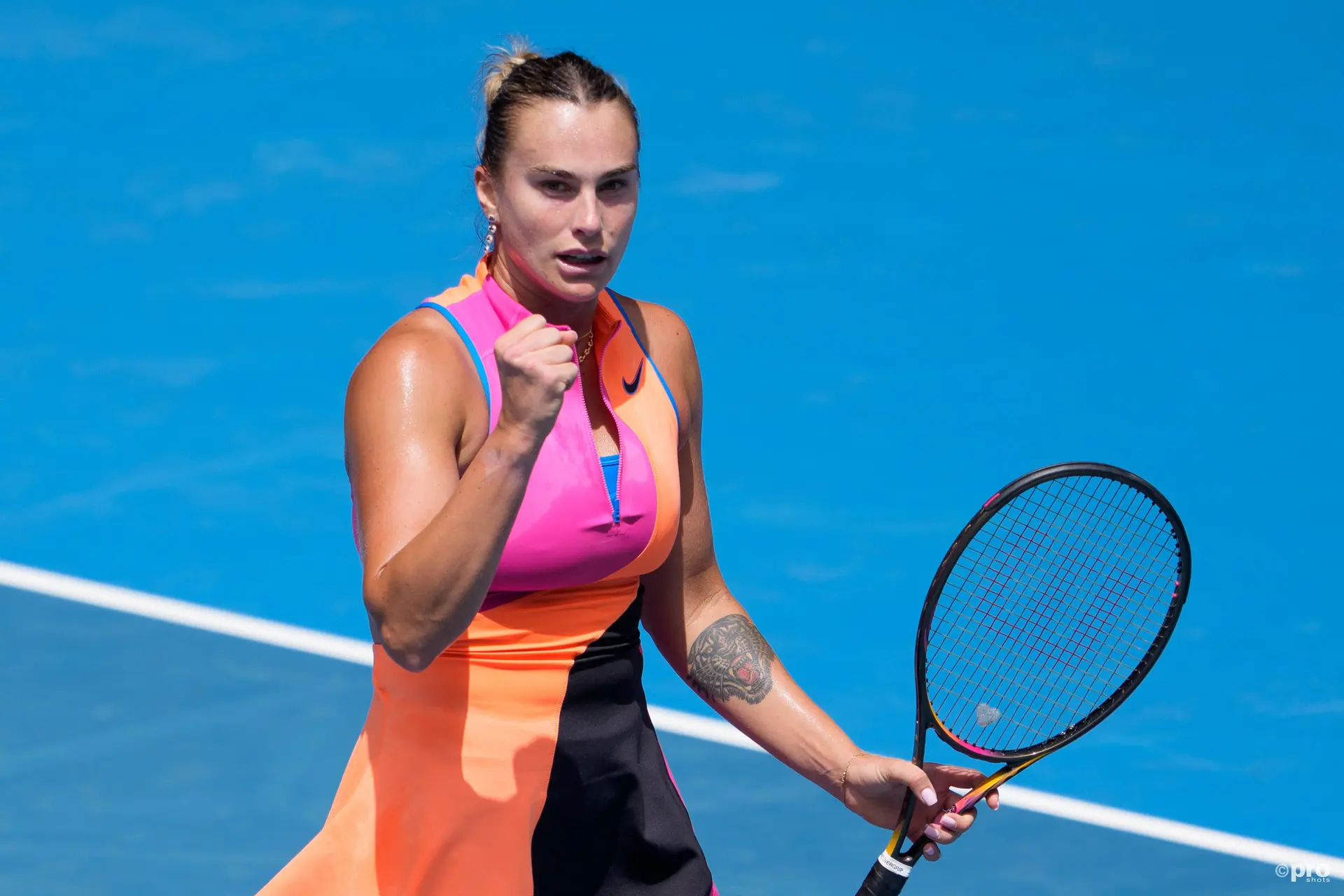
The sweltering heat added another challenge in Melbourne, with temperatures approaching 35 degrees Celsius during the match. “Yeah, it was very hot,” she said. “I’m maybe not used to that heat — I’m spoiled with the weather in Los Angeles, but I think I’m getting better at playing in those conditions. You have to be very fit and able to last in those matches, but I don’t think it played too much of a factor today. Melbourne is tough because one day can be very cold and the next very hot, so you really have to be ready for all conditions.”
Jovic also highlighted the inspiration she draws from Novak Djokovic, with whom she has been in contact during the tournament. “He did text me with some more tips throughout the rounds,” she said. “I don’t even know what day it is anymore, but we’ve been in communication and I feel like we’ve built a bit of a relationship, which is amazing.
“The way Novak almost suffocates opponents is really impressive, playing the big moments well, showing he can defend and attack, and being there every single point. I think the way he approaches matches is very impressive, and hopefully one day I can emulate that.”
Throughout her run in Melbourne, Jovic remained composed, taking each match as it came. “Honestly, it didn’t feel that different,” she said. “Every match at this level is really cool, and it’s a dream just to be here. It’s the quarter-finals, but ultimately I hope to be in many quarter-finals, so I don’t think today’s win or loss is going to make or break my career.”
Roof closure and what's next?
Reflecting on her opponent, Jovic praised Sabalenka’s resilience and ability to turn challenges into motivation. “It was tough, Aryna played very well, and while I could have done some things differently, that’s tennis,” she said. “What she’s done in her career is amazing and very inspiring, especially how she’s turned negative experiences into motivation. I hope to get more chances to play her.”
Jovic also touched on the roof closure policy during extreme heat. “They told me at the beginning of the match that they might close it, or that we might start with it closed,” she said. “I think it can be tricky if you have to close it during the match — it’s easier if you start either open or closed. That’s the rule and there’s nothing I can do about it, but ideally, if it starts one way, it stays that way.”
Looking ahead, Jovic is focused on refining her game for the season ahead. “I already talked to my coach about it,” she said. “There are definitely a couple of things that I need to get right back to working on for the next tournaments. When you play players like Aryna, who hit such a big ball and don’t let you really get into the match from the beginning, you have to accept that and adjust to that tempo. You can’t choose how it’s going to play — it’s quick-fire, it’s short points, and you have to match that extreme. I was trying to drift a bit in the middle, and that obviously doesn’t work. Now I know for next time. Hopefully I can change things, but there’s always a next time, which is nice.”

Samuel GillEditor-in-Chief
Samuel Gill is the Chief Content Officer (CCO) of TennisUpToDate.com, a role he has held since 2020. He is responsible for editorial governance across the platform, including setting content standards, overseeing accuracy and consistency, and guiding long-term editorial strategy. Since joining, he has contributed more than 10,000 articles and editorial pieces across the TennisUpToDate network, playing a central role in the daily operation and development of the site.
Based in Leicester, Samuel has a broad background in tennis media. In his current role, he works closely with editors and writers to ensure coverage meets clear journalistic standards, with particular attention to verification, consistency, and timely updates when new information becomes available.
claps 0visitors 0
Just In

Popular News


Latest Comments
- Does Sinner need that 4.5 mil? I doubt it. He can make that with three modelling gigs!😅🤣Rapunzel21-10-2026
- Did "People Magazine" purchase this website? This nonstop storyline is bullshit.
 mandoist21-10-2026
 - Listen... this is of no concern to anyone but these two. Deal with your own issues -- most of us have our own. Thanks, media, for these insignificant follow-ups which are meaningless.mandoist21-10-2026
- This is so very very sad, for all three of them. I truly thought they had an unbreakable bond, but life throws up so many differing challenges. Having your homeland suffering in such a terrible way, makes happiness lose out to guilt as well. Our thoughts are with them. X💔bjsexton20-10-2026
- I have lost all respect for Svitolina! Could she not have waited until he had played at the Paris Masters!!! She is selfish and don't give a damn about Gael. That is NOT how love is demonstrated Elina!!Rapunzel19-10-2026
- Perhaps convenient tennis tour sex is not a strong enough experience in which to base a marriage?mandoist19-10-2026
- Fight the Good Fight... Tennis (sports in general) need more Humans such as yourself.mandoist18-10-2026
- When is WTA going to mandate Genetic Testing (DNA) ???mandoist18-10-2026
- Hey, Dan... you just wake up from a coma? Regardless -- Thanks for the comedy this morning!mandoist18-10-2026
- Two Things: 1. Stop allowing these Spoiled Trust-Fund Elitists to behave badly. Your little hand-slaps do not deter them. 2. STOP the incessantly annoying "towel wiping" nonsense!!!!mandoist15-10-2026

Loading