
Elena Rybakina arrived at the US Open with a chance to become world No.1, but the ranking opportunity is secondary to a much more immediate concern after an injury scare in Cincinnati. The Kazakh retired at 1-4 against Iga Swiatek in the quarter-finals, just one week after losing to the Pole in the Toronto final, leaving her with only days to recover before the final Grand Slam of the season.
Rybakina did not play for an entire week after Cincinnati and initially had no clear idea whether she would make it to New York. She consulted different doctors, worked in the gym and gradually returned to the court, with the injury affecting her ability to walk in the days immediately after her retirement. Her arrival in New York therefore represents a considerably faster recovery than even her own team expected.
The ranking situation adds another layer. If defending champion Aryna Sabalenka fails to win the US Open, Rybakina will become No.1 as long as neither Jessica Pegula nor Coco Gauff wins the title. The 2-time Grand Slam champion therefore does not need to win the tournament, or even necessarily go deep, to reach the top, but she insisted that the ranking is not where her attention lies after the Cincinnati scare.
Instead, Rybakina is focused on getting through the final practices and making sure she can compete without compromising her recovery. She said she feels well now, although adjustments are still being made, and her comments revealed just how uncertain the situation was only days ago.
Read also
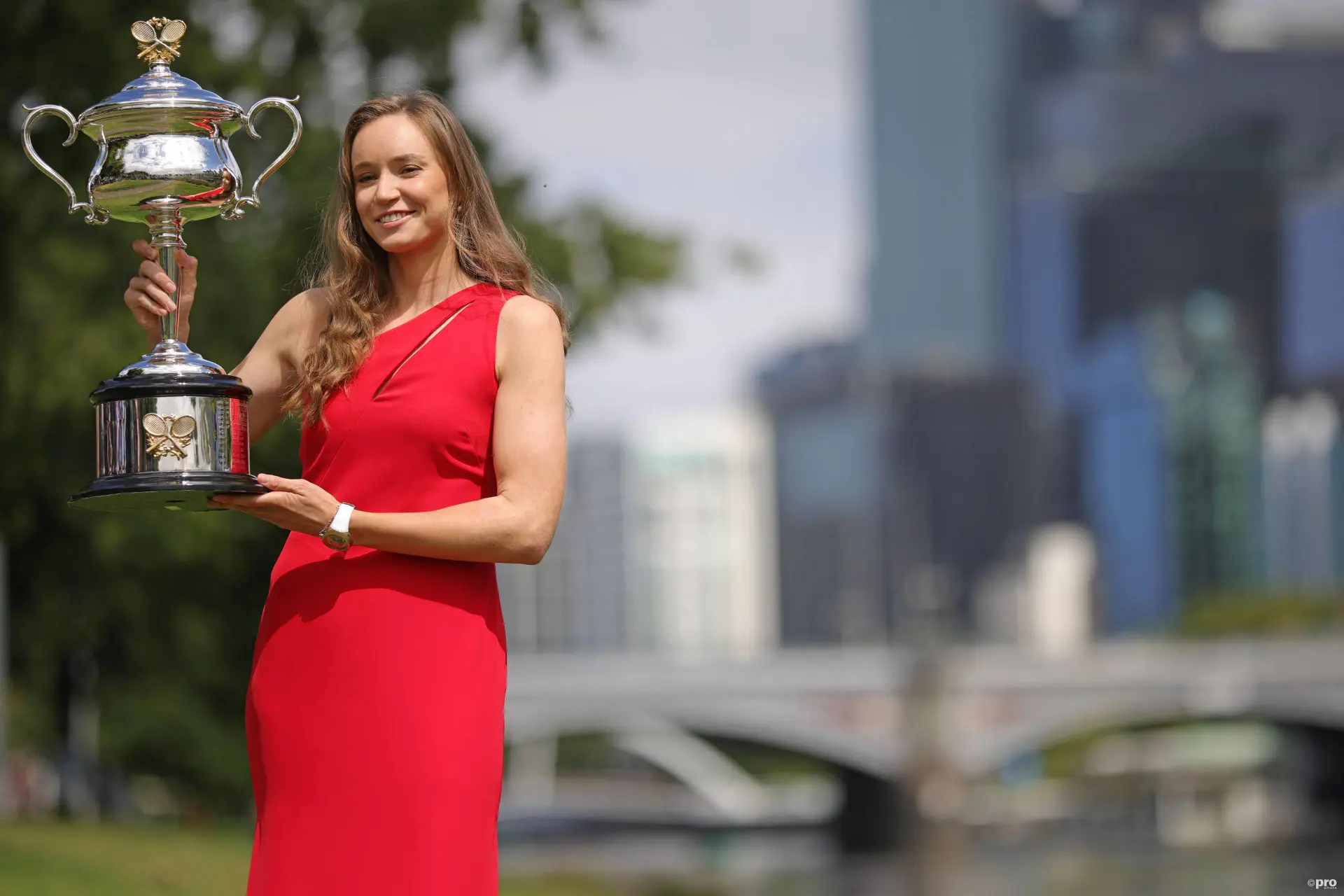
“No one expected” Rybakina to be here
The contrast between Cincinnati and New York is stark. Rybakina had been unable to walk without pain for several days after the retirement, yet she is now back on court and preparing to compete. Her recovery involved medical consultations, gym work and a gradual return to tennis, with the team monitoring how the foot responded at every stage.
“Well, I didn't play for exact week and we consulted with different doctors. I've been doing the recovery and slowly started to go on the court and yeah, just a lot of gym," she said at press conference. "And it wasn't easy because we didn't know exactly how the foot is going to react, since it was very painful for me to go and serve on that much in Cincinnati, because I wanted to try once more. And then for a couple of days, it was painful to even walk.”

Elena Rybakina of Kazakhstan celebrates after defeating Liudmila Samsonova 6-4, 4-6, 6-4, during round of 16 National Bank Open
The timetable was never straightforward. Rybakina said the injury was particularly painful when it happened and that nobody knew whether she would be able to compete at the US Open.
“I didn't know how it's going to be going, to be honest. And since in the moment it happened, it was very painful," she added. "And as I said, I couldn't even walk for the next few days without pain. So of course, I was already upset and no one knew how it's going to go.
Read also
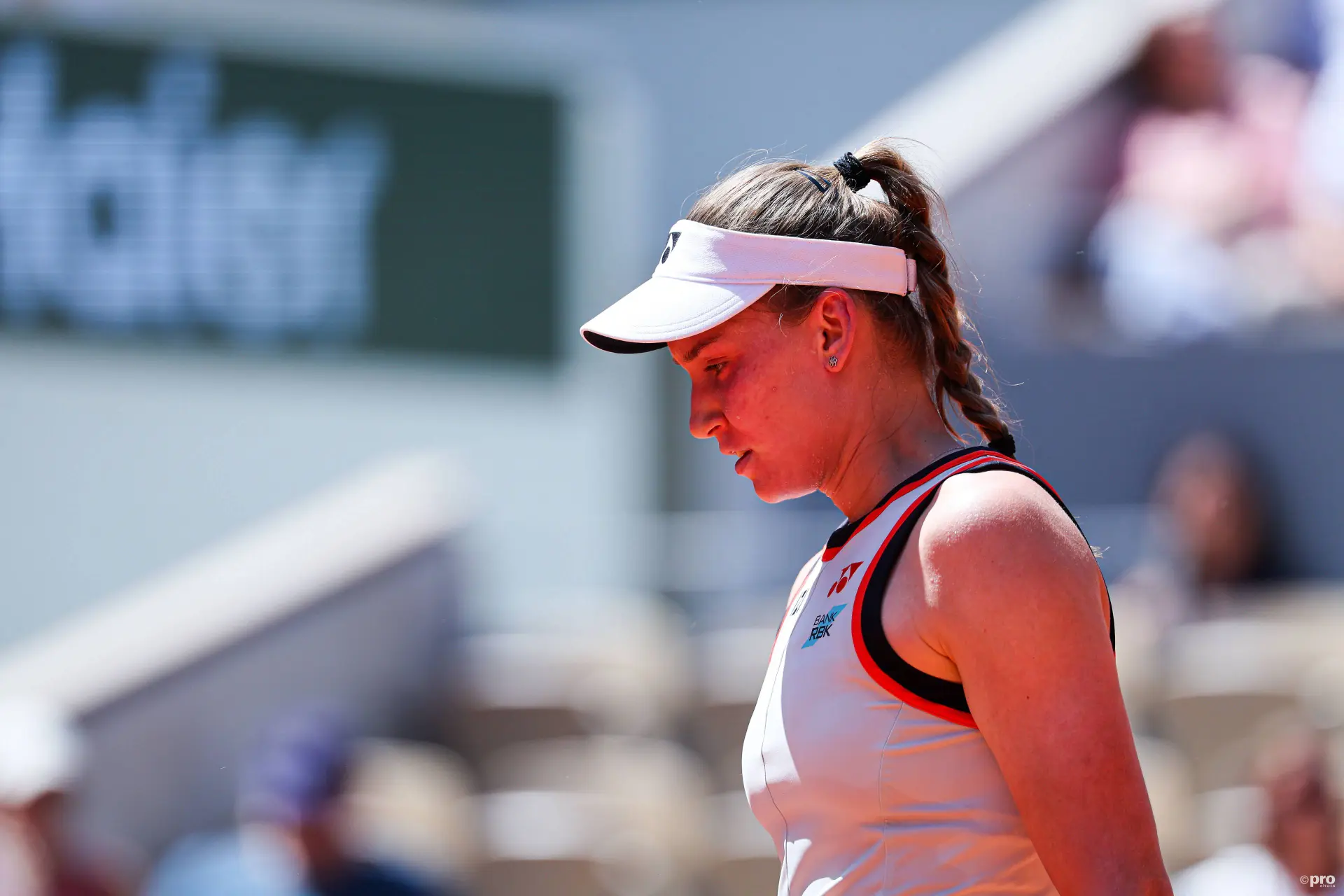
"We were just waiting day by day," Rybakina stated. "And being here today in this situation, it's really an amazing improvement and no one expected.”
Rybakina has also made clear that reaching the court is not enough. She wants to be certain that the injury is under control before competing, even with a Grand Slam and the No.1 ranking opportunity waiting. “But for now, it's been well. And as I said, I always want to go on court when I'm 100% sure. And it's the last slam of the year. So I think everyone will want to try and yeah, try to compete.”
The ranking can wait — and so can the calendar
Rybakina's ranking opportunity is unusually favourable. Sabalenka is defending the title and therefore carries the biggest points burden, while Pegula and Gauff can also move into contention by winning the tournament.
Rybakina, however, said she does not actively calculate the standings, despite knowing the scenarios through media coverage. “I don't check the ranking exactly, the point situation, but from media mostly, I know where I should get, how the others should play."
"It's all the different scenarios. But for me, especially now, when I had this injury last week, I feel like the most important just try to stay healthy, play much of the time, because this is not the last tournament of the year.”
The Cincinnati injury also sharpened Rybakina's criticism of the modern schedule. The WTA has expanded several major events, but she argued that additional tournament days do not necessarily provide players with better recovery.
“It's not even the amount of hours you stay on the court. It's just all these changes, travel. And then, yeah, it's becoming longer. But at the same time, you're still playing a lot in a row, and especially these late matches.”
That puts Rybakina's US Open comeback into a wider context. She arrives with a realistic route to the No.1 ranking, but also with a recent reminder of how quickly the schedule can turn a strong run into an injury problem. For now, she is taking the same approach that guided her recovery: one practice, and one day, at a time.

Cristhián AvilaTennis Journalist
Cristhián Ávila is a tennis journalist based in Santiago, Chile, and has been part of the TennisUpToDate team since early 2023. He covers the ATP and WTA Tours as well as all four Grand Slams, producing breaking news, match reports, analysis, and regular liveblogs from major tournaments.
His reporting combines statistical analysis with clear explanation, helping readers understand tactical developments, player form, and broader storylines across the tour. Working fluently in both Spanish and English, Cristhián collaborates with an international editorial team and contributes to comprehensive global coverage. As part of his work, he has conducted interviews and media interactions with leading figures in the sport, including Caroline Wozniacki and John McEnroe.
In his journalism, Cristhián places strong emphasis on careful sourcing, editorial accuracy, and updating articles promptly when new, verified information becomes available. His coverage is grounded in research, context, and direct engagement with professional tennis.
claps 0visitors 0
Just In

Popular News
Latest Comments
- A healthy Qinwen may be hard to stop next season. She was already scaring her opponents before her medical leave(s). Unfortunately, Zheng insisted on singing again. On the positive side -- Mirra did not sing!! ;~}
 mandoist11-10-2026
 - Where is it written that athletes, entertainers... People in general... are mandated to keep looking at -- or even using [anti]Social Media? Public & private figures consistently complain and reveal their concerns about negativity and violence thrown at them -- yet they insist on participating. Avoid it, don't use it, don't read it. It's okay to occasionally look up at the World instead beating your eyes & thumbs to death on The Inventions out there.mandoist11-10-2026
- great articlestennisseserver07-10-2026
- Medvedev was leading Djokovic 7-5, 3-5 when an attempted return..' NO you ignorants, Djokovic was leading .weiss05-10-2026
- No more bullshit "Wildcards" to these two. Qualify like everyone else -- there will be cameras there, too. Time to scream... WTF ????!!!!mandoist29-09-2026
- Let's not BS the general public -- Sabalenka started showing cracks in her game last season. Her losses and near-losses started at about the same time she began being distracted by Fame (constant Selfies, making TV commercials, magazine shoots, endless Social Media nonsense, etc., etc.) One would think even Saba could recognize the parallels with others who failed before her -- Raducanu, Giorgi, Bouchard to name a few.mandoist25-09-2026
- Gross!! Hey Raducanu, Giorgi, and Bouchard -- reserve a seat at your Social Media Selfie table for Saba + Naomi. They're heading in your direction soon enough.mandoist24-09-2026
- And then these same players will complain about how lengthy their season’s were and need more time-off. I’m all for more tennis but the amount of tennis we get now is actually kind of crazy! We all need a break, especially the players.DaveyWavey23-09-2026
- You should do a comparison article for "different kinds of justice" the courts decide for tennis players. I can think of at least three players who received very small bans of a few months, however Tara Moore has been fighting for her literal survival the past few years. It seems odd considering she is not a "name" player, unlike the other cases.DaveyWavey22-09-2026
- PRIZE MONEY & POINTS Winner - $185,500 Finalist - $114,500 Semi-Finalist - $66,003 Quarter-Finalist - $35,000 Round of 16 - $18,045 Round of 32 - $13,005 Winner - 500 Finalist - 325 Semi-Finalist - 195 Quarter-Finalist - 108 Round of 16 - 60 Round of 32 - 1DaveyWavey20-09-2026

Loading