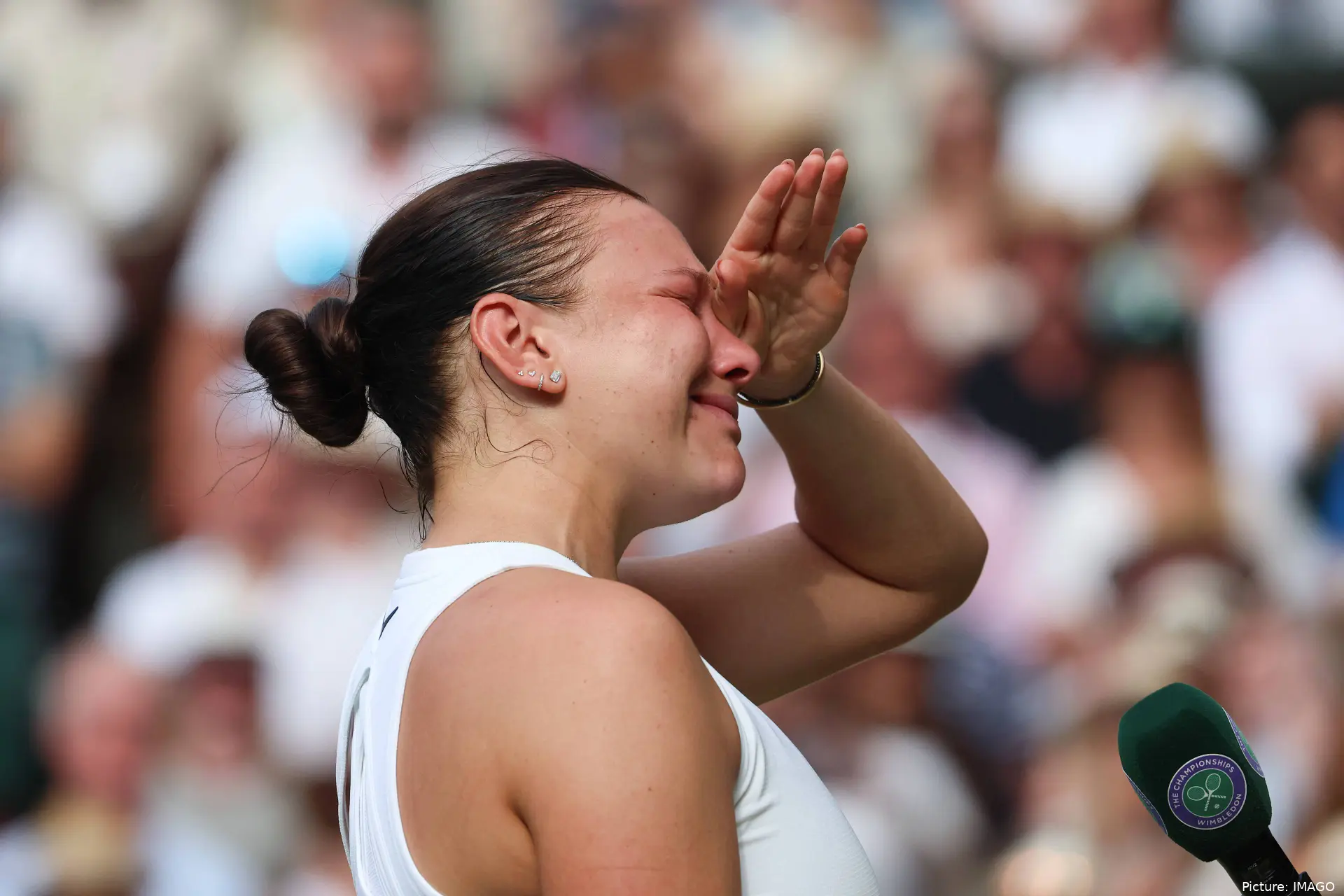
Rick Vleeshouwers, coach of Amanda Anisimova during her 2025 breakout season, has pointed to the Wimbledon final defeat to Iga Swiatek — a 6-0, 6-0 loss in under an hour — as the clearest example of performance breakdown in a year that otherwise included two WTA 1000 titles and two Grand Slam finals.
Speaking on the Diary of a Professional Tennis Coach podcast, Vleeshouwers said the American’s season combined elite peak level with structural inconsistency, producing both title runs and extreme downturns within the same campaign.
He described the Wimbledon final as a physical and mental collapse that began before the match started, rather than a purely tactical failure on court. “Her ceiling was incredibly high, but the floor was too low. So we had to get the floor higher so her base level was higher. She already had that massive talent, but the goal was to make that talent workable so she can play week in, week out.”
The coach specifically referenced the nature of the Wimbledon defeat — a double bagel against Swiatek — as a turning point in how he assessed preparation and readiness in Grand Slam finals.
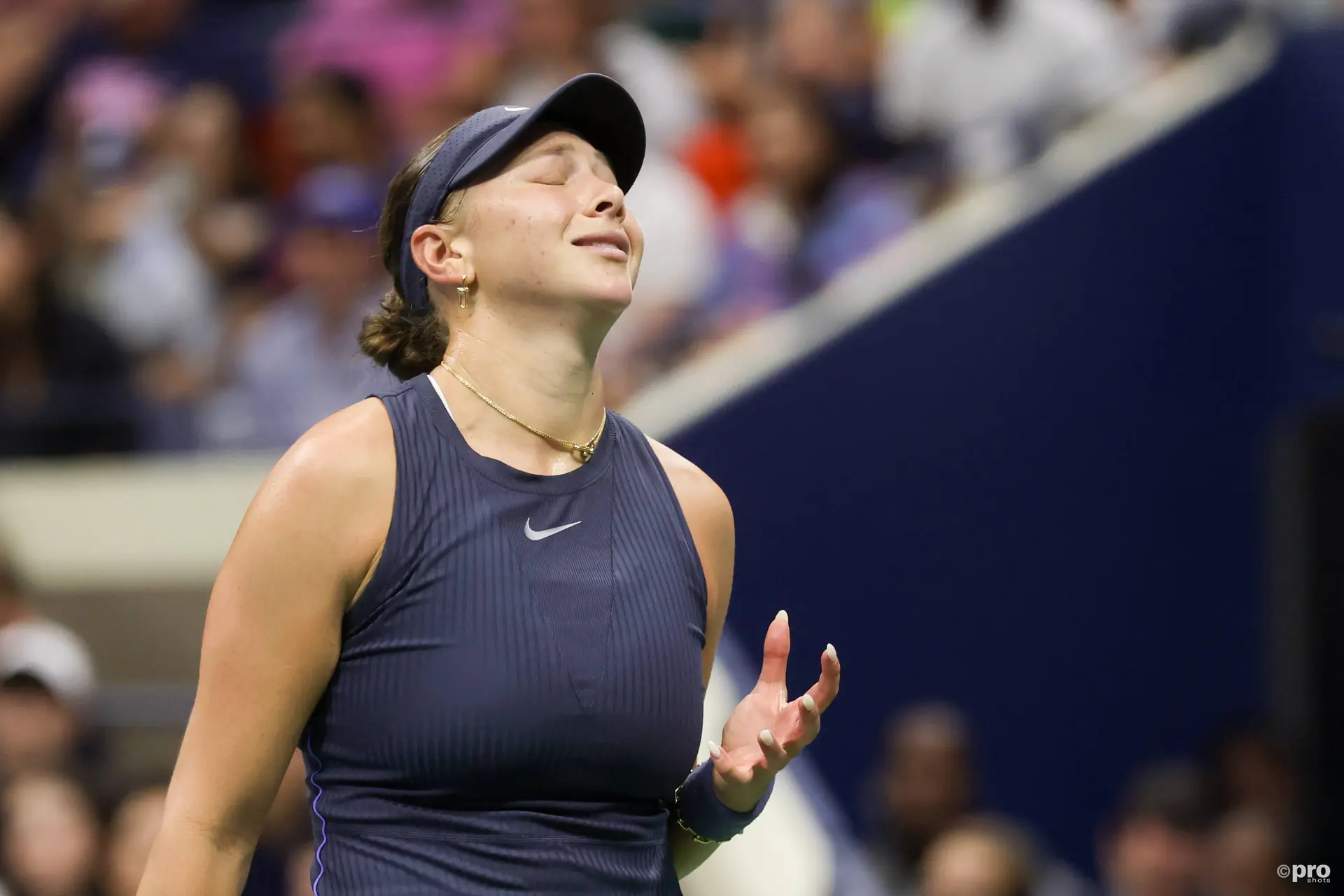
Wimbledon final collapse and physical breakdown
Vleeshouwers described the Wimbledon final as a match decided before the first ball, with Anisimova entering visibly depleted after a physically demanding run to the title match. The 6-0, 6-0 scoreline against Swiatek, he argued, reflected a breakdown in physical readiness rather than purely technical mismatch.
He said the decision not to train between the semi-final and final was a key factor in the collapse, removing match rhythm at a critical stage of a two-week Grand Slam. “We were not ready physically, mentally doesn’t matter what the reason is. I didn’t see Amanda in that match. So please feel horrible about it in the next days. But it’s going to pass, because if you look in the mirror, you weren’t that day.”

He added that warning signs appeared during warm-up, when Anisimova reportedly struggled with basic physical output before stepping on court against the world No.1. “She came to me and said, I can barely stand on my feet. So at that point I already knew this is going to be a difficult one.”
Swiatek dominated the final from the opening games, repeatedly breaking serve and not allowing Anisimova to establish rhythm or extend rallies — a sharp contrast to her earlier Wimbledon wins that season, where she had controlled matches through aggressive first-strike patterns.
!["Maybe Wim [Fissette] or somebody could be the next step for Amanda” - Kim Clijsters believes Iga Swiatek's former coach could be perfect match for Anisimova](https://r.testifier.nl/Acbs8526SDKI/resizing_type:fill/width:1920/height:1280/plain/https://s3-newsifier.ams3.digitaloceanspaces.com/tennisuptodate.com/images/2026-01/anisimovaauso-697286d245fa2.jpg@webp)
Season structure: Doha title, US Open final and inconsistency at the top level
Across 2025, Anisimova combined two WTA 1000 titles (Doha and Beijing) with two Grand Slam final appearances at Wimbledon and the US Open, in a season that also included 48 match wins and a rapid climb into the highest competitive tier of the tour.
Vleeshouwers pointed to Doha as an example of peak efficiency under constrained preparation, with reduced training load due to injury management but immediate competitive success across the draw. “We went to Doha and she was with me on the practice time, like every day, just one hour. We kept it very simple, light.”

He said that despite the limited preparation block, the level reached during that tournament confirmed the player’s capacity to win at WTA 1000 level when physical conditions were stable and decision-making remained simple.
However, he stressed that replicating that level week after week remained the central limitation in her profile, particularly in Grand Slams where recovery windows are shorter and opponent quality increases round by round.
At the US Open, Anisimova rebuilt momentum after the Wimbledon 6-0, 6-0 defeat to Swiatek, progressing through a high-quality draw that included Beatriz Haddad Maia, a quarter-final rematch victory over Swiatek, and a semi-final win over Naomi Osaka decided in two tiebreak sets.
The final, however, ended in a three-set defeat to Aryna Sabalenka, marking her second Grand Slam final loss of the season. “She is a very competitive fighter. She can really fight her way through matches if she is into it," he added. “Her base level was already enough to beat 75–80% of players she plays.”
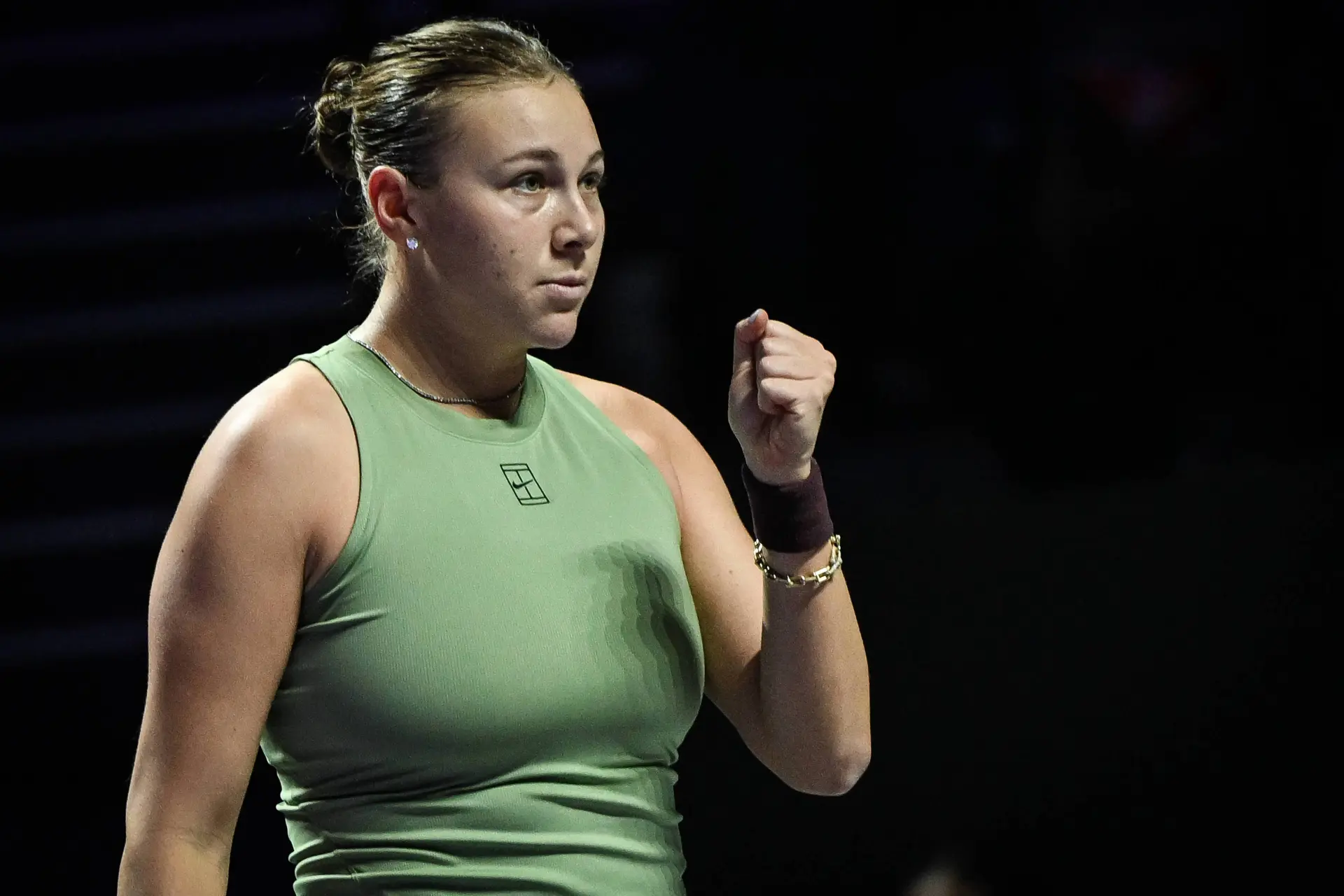
Structural limits and coaching split after breakthrough year
Across the season, Anisimova recorded 48 match wins and established herself as one of the most improved players on tour, but Vleeshouwers said the underlying issue remained consistency rather than peak performance.
He estimated her baseline level was strong enough to defeat a large majority of opponents, but not yet stable enough for repeated success in Grand Slam finals or against top-ranked players like Swiatek and Sabalenka. “She already had that massive talent, but the goal was to make that talent workable so she can play week in, week out. We worked on shot tolerance, because she was missing a lot of easy balls.”

The coach also pointed to increasing external pressure and “too many voices” around the player’s environment during the peak of her success as a contributing factor to instability later in the season.
Despite the eventual separation after 2025, he described the partnership as one of the most productive phases of his career, defined by rapid progression from early-round inconsistency to Slam-final appearances within a single season. “We spent so much time together… it was a rollercoaster ride, but with good energy. The trophies were clearly the result of good work and being in that environment.”

Cristhián AvilaTennis Journalist
Cristhián Ávila is a tennis journalist based in Santiago, Chile, and has been part of the TennisUpToDate team since early 2023. He covers the ATP and WTA Tours as well as all four Grand Slams, producing breaking news, match reports, analysis, and regular liveblogs from major tournaments.
His reporting combines statistical analysis with clear explanation, helping readers understand tactical developments, player form, and broader storylines across the tour. Working fluently in both Spanish and English, Cristhián collaborates with an international editorial team and contributes to comprehensive global coverage. As part of his work, he has conducted interviews and media interactions with leading figures in the sport, including Caroline Wozniacki and John McEnroe.
In his journalism, Cristhián places strong emphasis on careful sourcing, editorial accuracy, and updating articles promptly when new, verified information becomes available. His coverage is grounded in research, context, and direct engagement with professional tennis.
claps 0visitors 0
Just In

Popular News
Latest Comments
- great articlestennisseserver07-10-2026
- Medvedev was leading Djokovic 7-5, 3-5 when an attempted return..' NO you ignorants, Djokovic was leading .weiss05-10-2026
- No more bullshit "Wildcards" to these two. Qualify like everyone else -- there will be cameras there, too. Time to scream... WTF ????!!!!
 mandoist29-09-2026
 - Let's not BS the general public -- Sabalenka started showing cracks in her game last season. Her losses and near-losses started at about the same time she began being distracted by Fame (constant Selfies, making TV commercials, magazine shoots, endless Social Media nonsense, etc., etc.) One would think even Saba could recognize the parallels with others who failed before her -- Raducanu, Giorgi, Bouchard to name a few.mandoist25-09-2026
- Gross!! Hey Raducanu, Giorgi, and Bouchard -- reserve a seat at your Social Media Selfie table for Saba + Naomi. They're heading in your direction soon enough.mandoist24-09-2026
- And then these same players will complain about how lengthy their season’s were and need more time-off. I’m all for more tennis but the amount of tennis we get now is actually kind of crazy! We all need a break, especially the players.DaveyWavey23-09-2026
- You should do a comparison article for "different kinds of justice" the courts decide for tennis players. I can think of at least three players who received very small bans of a few months, however Tara Moore has been fighting for her literal survival the past few years. It seems odd considering she is not a "name" player, unlike the other cases.DaveyWavey22-09-2026
- PRIZE MONEY & POINTS Winner - $185,500 Finalist - $114,500 Semi-Finalist - $66,003 Quarter-Finalist - $35,000 Round of 16 - $18,045 Round of 32 - $13,005 Winner - 500 Finalist - 325 Semi-Finalist - 195 Quarter-Finalist - 108 Round of 16 - 60 Round of 32 - 1DaveyWavey20-09-2026
- Pegula withdrew from this Singapore event
 tennishappens19-09-2026
 - Serena Williams chose her tournaments. It's not such a bad idea.MuswellHillbilly17-09-2026

Loading