“I don’t really see how it connects”: Aryna Sabalenka responds to questions on diamonds and prize money messaging after Roland Garros win
WTA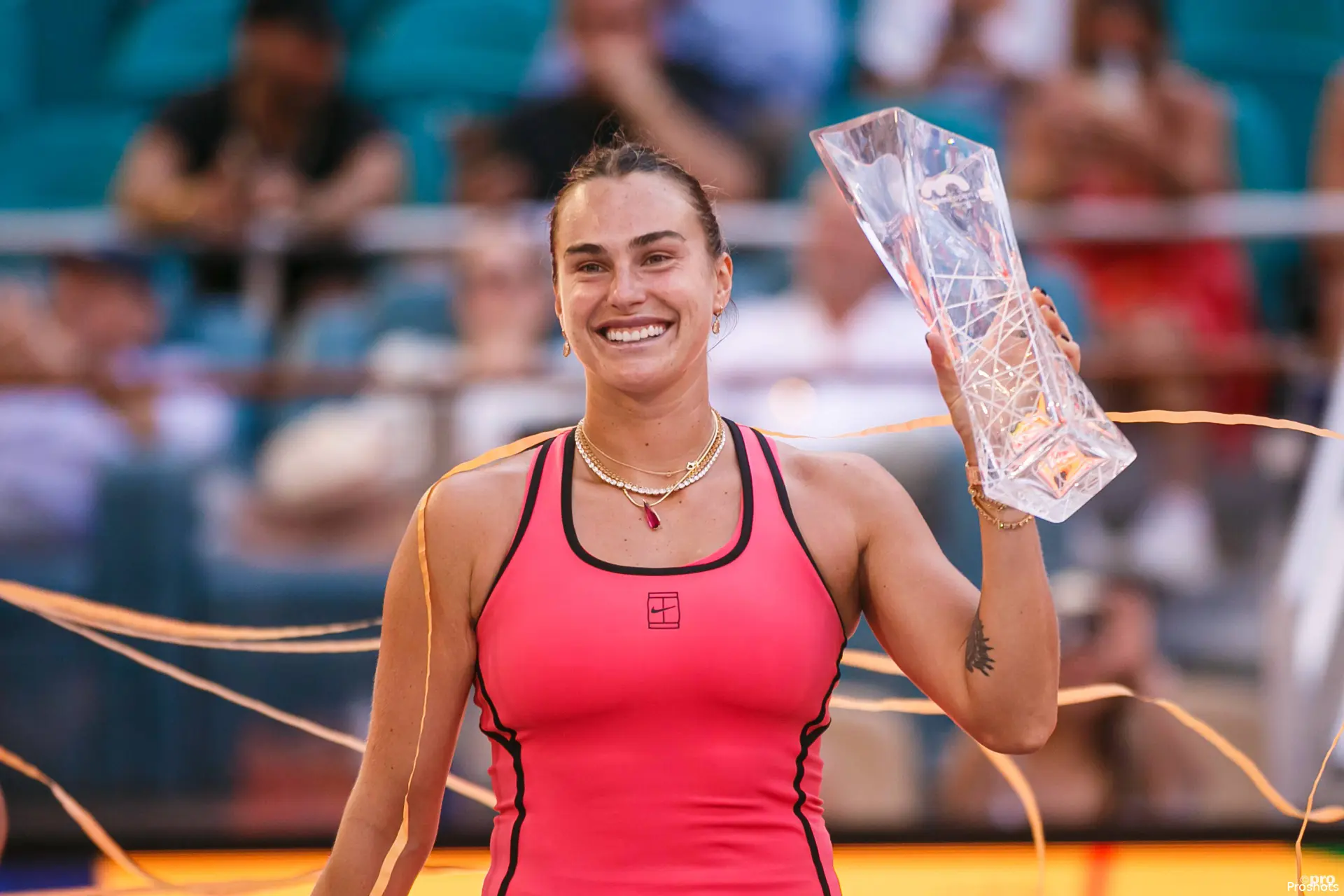
Aryna Sabalenka’s opening-round win at Roland Garros was quickly framed by questions over her on-court image and jewellery choices, as the World No. 1 addressed repeated references to her appearance following a 6-4, 6-2 victory over Jessica Bouzas Maneiro in Paris.
The world No. 1, who hit 29 winners but also produced 25 unforced errors in a high-risk baseline performance, was drawn into a post-match discussion that extended beyond tennis, focusing on her use of black attire and multiple necklaces in hot conditions at Roland Garros.
Now holding a 23-8 career record at the tournament, Sabalenka continues her pursuit of a first Grand Slam title outside hard courts, with her consistency in majors reflected in 12 semifinal appearances across her last 13 Slam events.
“I’m super happy to be through. I feel like it was a tricky first-round opponent,” she said in press conference. “I’m happy with the level I played, happy with the fight I brought, and just happy to be through this first-round match.”
Read also
Jewellery, image and controlled presentation
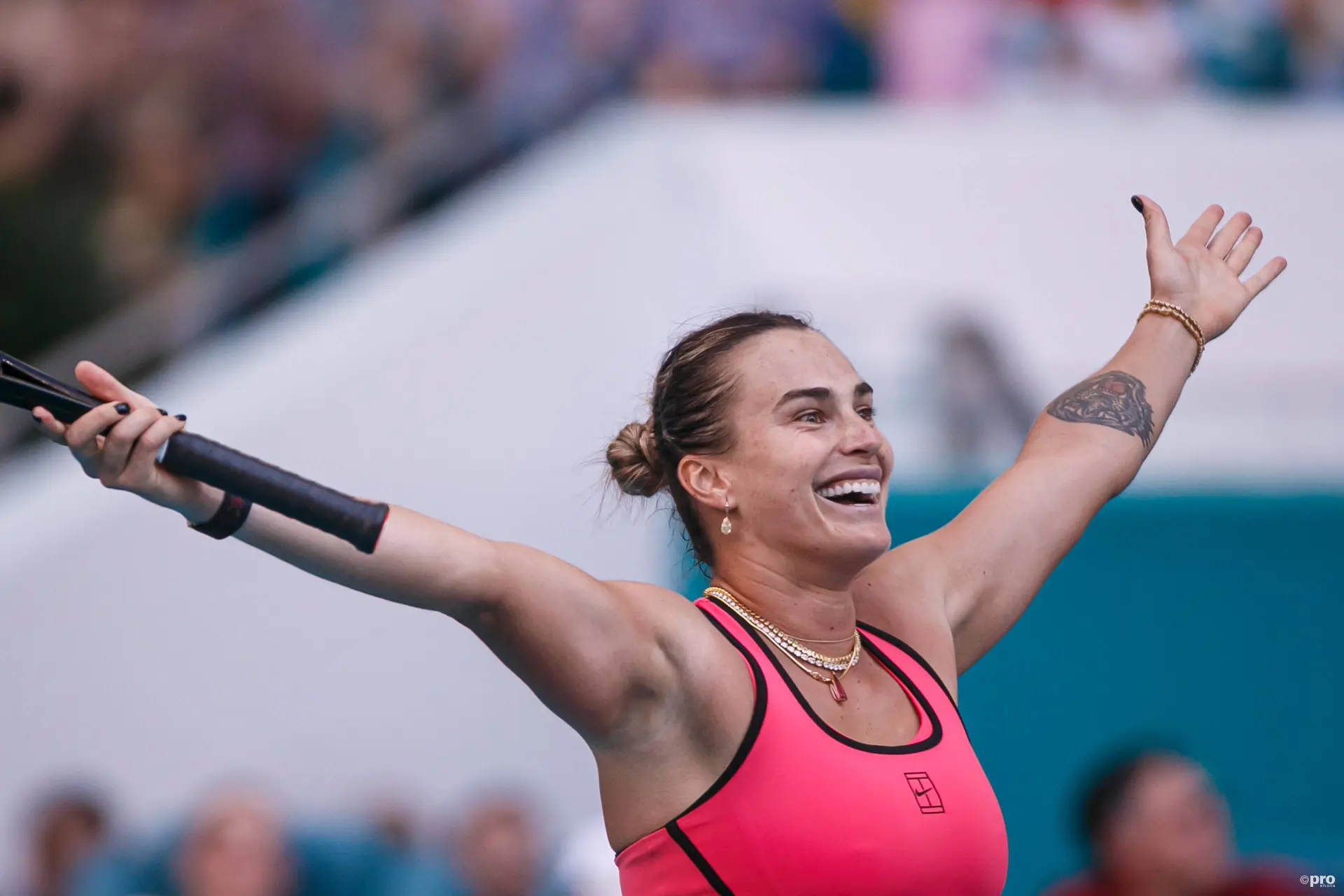
The post-match press conference in Roland Garros centred heavily on Sabalenka’s on-court presentation, particularly her decision to compete in black attire and wear jewellery in high temperatures. She was asked whether she really felt comfortable with the outfit she used in her opening round, which included a black dress and two necklaces.
“I don’t like to take it easy. I like to challenge myself,” she began saying. “At the same time, the dress is super light. I don’t feel the dress on me. I thought it was going to be super hot wearing black, but it doesn’t feel like black on me, so I feel pretty comfortable.”
Aryna Sabalenka, back on Chatrier ⭐️#RolandGarros pic.twitter.com/e8vMwp5mQG
— Roland-Garros (@rolandgarros) May 26, 2026
“And the diamonds, I don’t really feel the heaviness of them, but I can imagine how it looks from the outside. Actually, there was supposed to be a third necklace, but I thought it was probably too much, so I decided to keep it to just two.”
The four-time Grand Slam champion also returned to the discussion around prize money distribution at Grand Slams, after a journalist raised comparisons between her calls for increased prize money and her use of expensive jewellery on court, suggesting a possible contradiction in her stance.
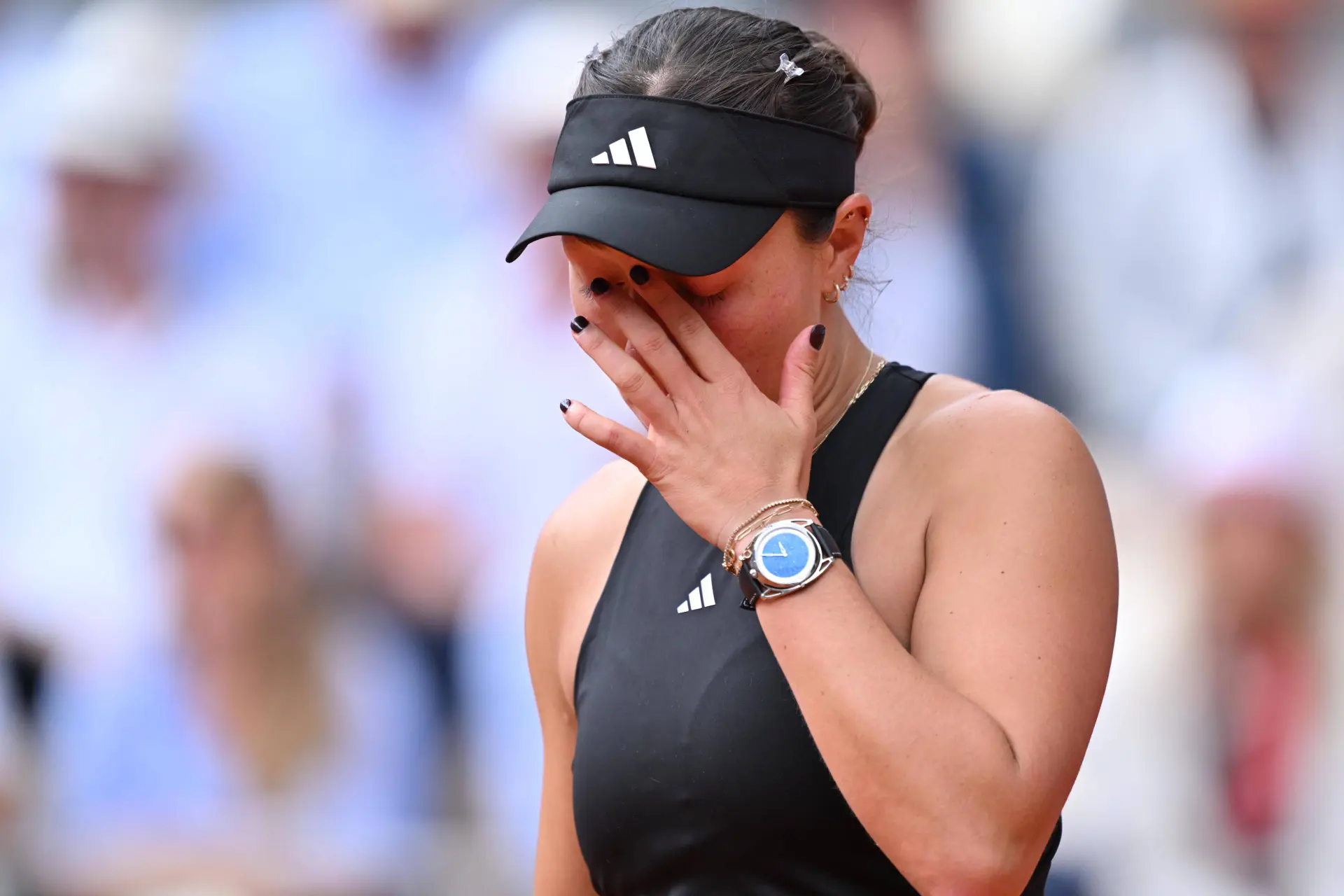
“I don’t really see how it’s possible to connect those two completely different things,” the Belarusian said. “As I said before, prize money is not about me at all. It’s about fighting for players, especially lower-ranked players who are really struggling to survive in the tennis world. It has nothing to do with me personally fighting for prize money. Everyone knows that I’m okay.”
“We’re fighting for a fair percentage of the revenues, and also for lower-ranked players, players coming back from injuries, and the next generation to be more comfortable coming into the top level. So it’s not about me.”

Competitive framing and Swiatek context
While much of the attention centred on off-court narrative, Sabalenka also reflected briefly on her competitive position after a straight-sets opening win. The performance followed a familiar pattern: high winner output combined with elevated error count, consistent with her aggressive baseline identity.
Read also
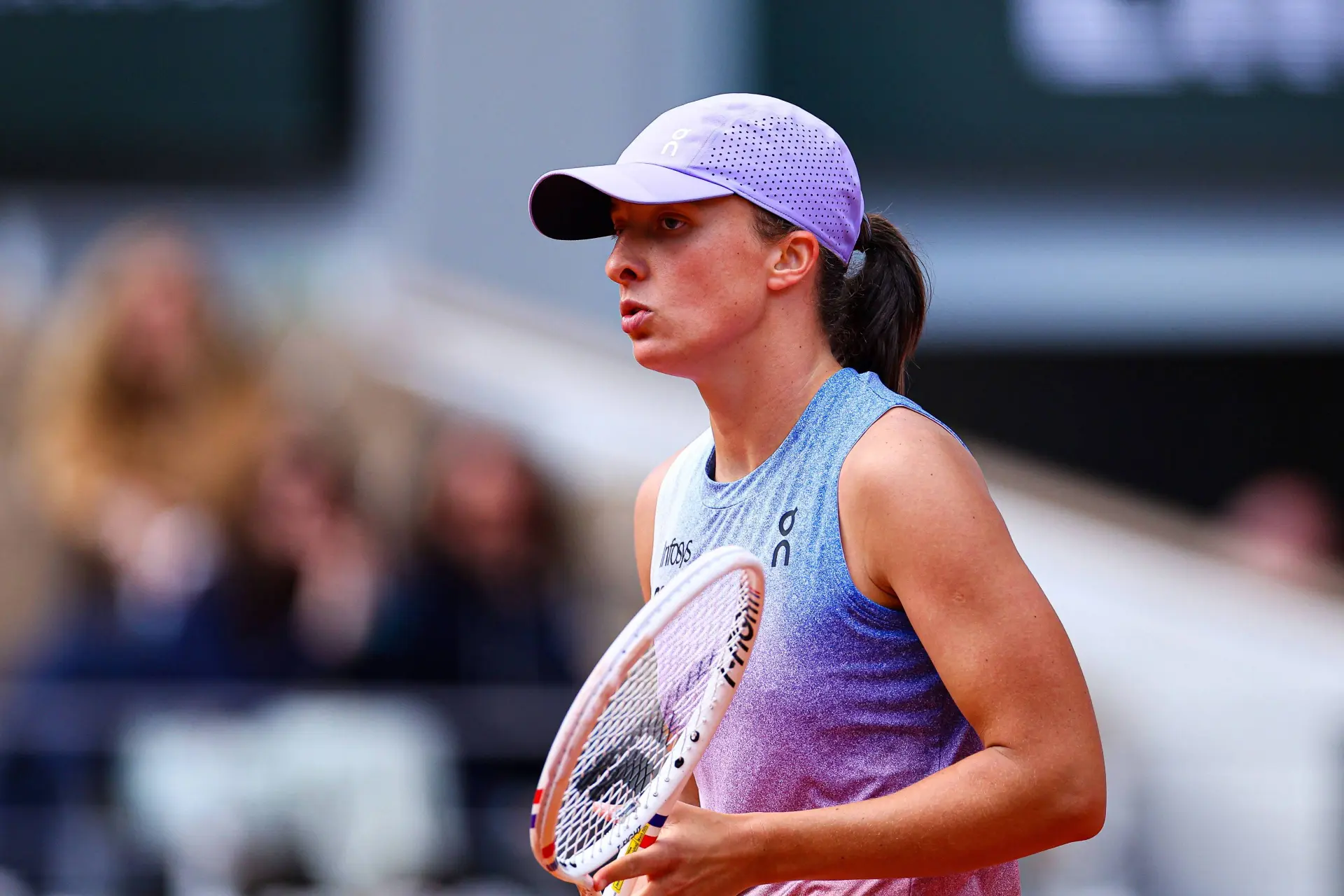
She also addressed Iga Swiatek’s position in the draw, maintaining her assessment of the Polish player as one of the key contenders in Paris. “Of course, always. She’s such a great player,” she commented on the four-time Roland Garros champion. “I love to see that she’s always open to new things, bringing in a new coach and trying to find what worked really well for her before.”
“Maybe she felt a little lost, but I can see that she’s getting better, improving, and getting back on track. Of course, I always consider her one of the favourites.”

Cristhián AvilaTennis Journalist
Cristhián Ávila is a tennis journalist based in Santiago, Chile, and has been part of the TennisUpToDate team since early 2023. He covers the ATP and WTA Tours as well as all four Grand Slams, producing breaking news, match reports, analysis, and regular liveblogs from major tournaments.
His reporting combines statistical analysis with clear explanation, helping readers understand tactical developments, player form, and broader storylines across the tour. Working fluently in both Spanish and English, Cristhián collaborates with an international editorial team and contributes to comprehensive global coverage. As part of his work, he has conducted interviews and media interactions with leading figures in the sport, including Caroline Wozniacki and John McEnroe.
In his journalism, Cristhián places strong emphasis on careful sourcing, editorial accuracy, and updating articles promptly when new, verified information becomes available. His coverage is grounded in research, context, and direct engagement with professional tennis.
claps 0visitors 0
Just In

Popular News
Latest Comments
- Does Sinner need that 4.5 mil? I doubt it. He can make that with three modelling gigs!😅🤣Rapunzel21-10-2026
- Did "People Magazine" purchase this website? This nonstop storyline is bullshit.
 mandoist21-10-2026
 - Listen... this is of no concern to anyone but these two. Deal with your own issues -- most of us have our own. Thanks, media, for these insignificant follow-ups which are meaningless.mandoist21-10-2026
- This is so very very sad, for all three of them. I truly thought they had an unbreakable bond, but life throws up so many differing challenges. Having your homeland suffering in such a terrible way, makes happiness lose out to guilt as well. Our thoughts are with them. X💔bjsexton20-10-2026
- I have lost all respect for Svitolina! Could she not have waited until he had played at the Paris Masters!!! She is selfish and don't give a damn about Gael. That is NOT how love is demonstrated Elina!!Rapunzel19-10-2026
- Perhaps convenient tennis tour sex is not a strong enough experience in which to base a marriage?mandoist19-10-2026
- Fight the Good Fight... Tennis (sports in general) need more Humans such as yourself.mandoist18-10-2026
- When is WTA going to mandate Genetic Testing (DNA) ???mandoist18-10-2026
- Hey, Dan... you just wake up from a coma? Regardless -- Thanks for the comedy this morning!mandoist18-10-2026
- Two Things: 1. Stop allowing these Spoiled Trust-Fund Elitists to behave badly. Your little hand-slaps do not deter them. 2. STOP the incessantly annoying "towel wiping" nonsense!!!!mandoist15-10-2026

Loading