“I got beaten by Petra, and it was probably for the best”: Eugenie Bouchard reflects on 2014 Wimbledon heartbreak
WTA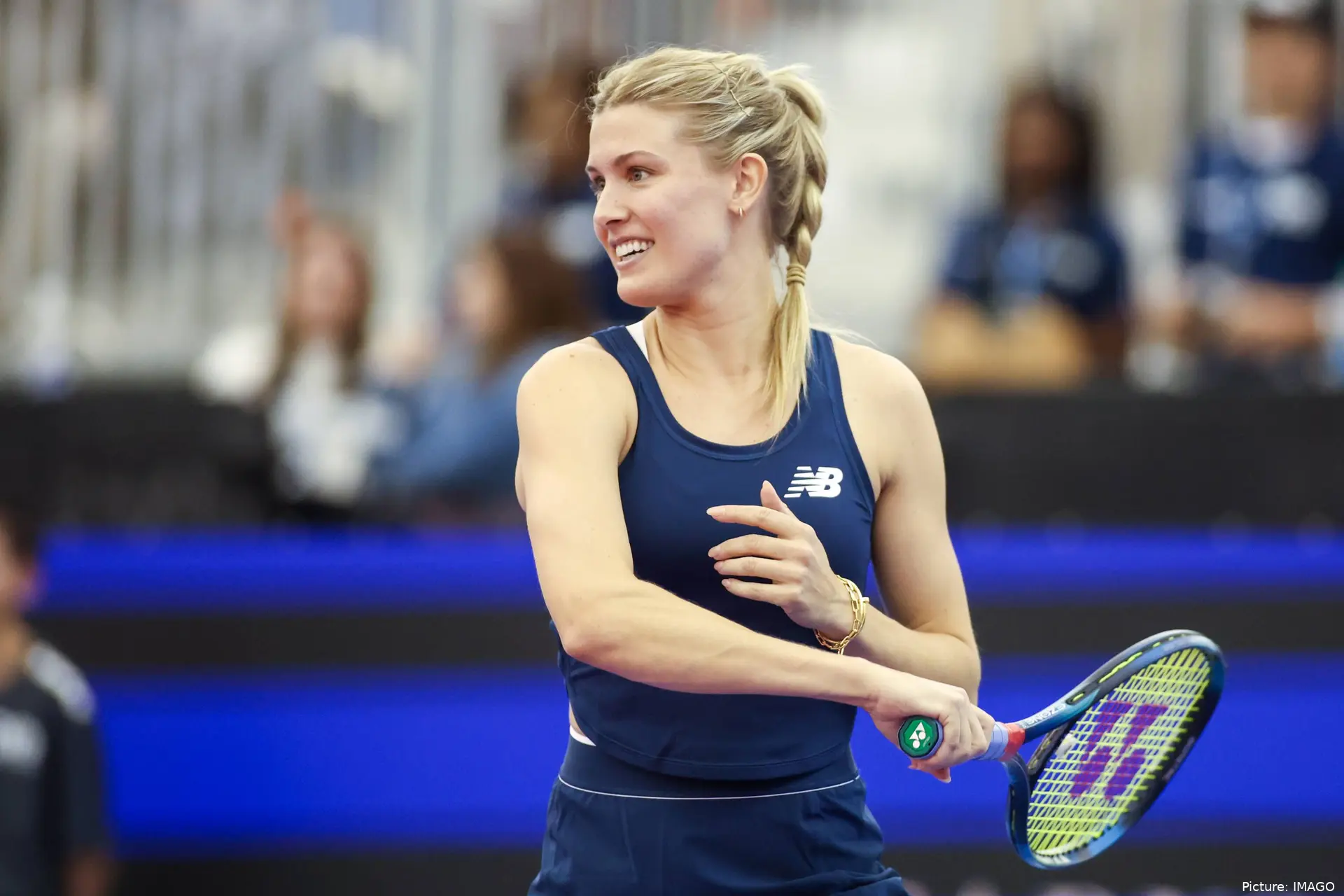
The former Wimbledon finalist Eugenie Bouchard provided an in-depth account of the pressures associated with early career success in professional tennis, in a recent interview on Tennis Insider Club – the podcast hosted by former WTA Finals champion Caroline Garcia.
The Canadian rose to fame in 2013, becoming WTA Newcomer of the Year after reaching her first WTA final at just 18 years old and jumping from No. 145 to No. 32 by the end of the year. By 2014, her tennis had become a reality: she reached the semifinals of the Australian Open and Roland Garros, then advanced to the Wimbledon final, where she lost to Czech Petra Kvitova. “My goal has always been to win at Grand Slam, so ultimately, doing anything was kind of expected,” Bouchard said, reflecting on her early trajectory.
Bouchard had been identified as a generational talent since her junior career. In 2012, she won the Wimbledon junior title; a year later, she reached the third round of Wimbledon, defeating former No. 1 and 12th seed Ana Ivanovic, and by 2014 she contested her first—and only—Grand Slam final while also achieving the highest ranking of her career at No. 5. “At such a young age, just being thrown into that and doing well, I was definitely not processing it. Years later, I’m like, okay, processing—it happened. I’m still processing with my therapist.”
Early achievements brought both recognition and pressure. Following her Wimbledon final in 2014, Bouchard faced heightened expectations from fans and media. “I made the finals of a Grand Slam, and everyone assumed I’d win one next year,” she mentioned. “Only the greatest of all time—like Serena or Djokovic—do that consistently. It’s hard, and people take it for granted. Every player goes through this.”

“You have an amazing result, and suddenly you’re constantly compared to it. People say, don’t read things online, but with my job, I had to go to press conferences. Reporters would ask about losing six matches in a row or criticize a non-tennis photo shoot,” added Bouchard. “You can try to delete things, but you’re still aware. Even if you don’t want to know, it reaches you somehow.”
The pressure of early success and Grand Slam finals
Bouchard described the immediate scrutiny following her rise in 2014, including commentary on social media and press interactions. “When I made the Wimbledon finals, I was taking selfies, and everyone loved it. Then I lost in the first round another time, took selfies, and everyone hated it. Same behavior, judged differently. When you win, you can do whatever you want. When you lose, every move is scrutinized. It’s human nature.”
The Wimbledon final itself was a pivotal moment in her career. Bouchard lost in straight sets to Petra Kvitova, who was 24th in the WTA rankings at the time, but already knew how to lift the trophy at SW19, having won in 2011. “It was brutal. I still haven’t rewatched the finals; it’s too painful,” Bouchard admitted to her former colleague Caroline Garcia with a laugh. “I got killed, which maybe was a blessing in disguise. Coming so close and losing, replaying break points and match points in your head…”
“I got beaten by Petra, and it was probably for the best. In the moment, everything felt normal. I was putting my head down, working hard, playing well, and enjoying the ride. I believed in myself and had been working toward this every day for years. It was a relief for all the hard work, really trusting myself, and showing myself I could do it. Looking back, wow, I did something crazy, but at the time, I was just in my little bubble.”
Beyond match results, Bouchard highlighted the challenges of ranking volatility. After reaching No. 5 in 2014, she dropped to No. 20 by the end of 2015, reflecting both inconsistent performance and external pressures. Coaching changes and the demands of sponsorship obligations contributed to this fluctuation. “I wish I had kept Nick Saviano as my coach for stability. Trying new coaches added instability, which didn’t help short-term success.”
Stress, mental health, and life on Tour
The Canadian noted that public discussion of mental health in tennis was limited at the time. Admitting to working with a therapist could be viewed as a weakness, potentially affecting opponents’ perception. “Even admitting you had a therapist was like… people thought you were crazy or weak,” she said, highlighting the stigma that existed within professional tennis circles.
Bouchard also discussed the physical effects of stress on preparation, particularly relating to nutrition and pre-match anxiety. She described how her body reacts under high pressure. “I’ve always been okay with food, but stress before matches made it hard to eat. Some people eat when stressed; I shut down. My stomach would knot, and I couldn’t keep anything down,” added the WTA Nurmeberg Cup 2014 champion.
“I had to force myself to eat, even pasta before matches, guided by my agent. Seeing Serena nervous helped—it normalized it. Stress makes my body shut down, which is instinctive. Fight or flight. The brain prioritizes survival.”

Her advice for young athletes emphasizes focusing on trusted guidance and ignoring external noise. “I would tell my 15-year-old self: don’t listen to outside noise. Only your core team matters. People who know 2% of you shouldn’t influence decisions affecting 100% of your life.”
Finally, Bouchard described the ongoing importance of therapy and self-awareness in maintaining emotional stability. Regular work with a therapist has helped her manage reactions and maintain perspective amid the constant pressures of professional tennis. “At such a young age, just being thrown into that and doing well, I was definitely not processing it. Years later, I’m like, okay, processing—it happened. I’m still processing with my therapist.”

Cristhián AvilaTennis Journalist
Cristhián Ávila is a tennis journalist based in Santiago, Chile, and has been part of the TennisUpToDate team since early 2023. He covers the ATP and WTA Tours as well as all four Grand Slams, producing breaking news, match reports, analysis, and regular liveblogs from major tournaments.
His reporting combines statistical analysis with clear explanation, helping readers understand tactical developments, player form, and broader storylines across the tour. Working fluently in both Spanish and English, Cristhián collaborates with an international editorial team and contributes to comprehensive global coverage. As part of his work, he has conducted interviews and media interactions with leading figures in the sport, including Caroline Wozniacki and John McEnroe.
In his journalism, Cristhián places strong emphasis on careful sourcing, editorial accuracy, and updating articles promptly when new, verified information becomes available. His coverage is grounded in research, context, and direct engagement with professional tennis.
claps 0visitors 0
Just In




Popular News
Latest Comments
- No more bullshit "Wildcards" to these two. Qualify like everyone else -- there will be cameras there, too. Time to scream... WTF ????!!!!
 mandoist29-09-2026
 - Let's not BS the general public -- Sabalenka started showing cracks in her game last season. Her losses and near-losses started at about the same time she began being distracted by Fame (constant Selfies, making TV commercials, magazine shoots, endless Social Media nonsense, etc., etc.) One would think even Saba could recognize the parallels with others who failed before her -- Raducanu, Giorgi, Bouchard to name a few.mandoist25-09-2026
- Gross!! Hey Raducanu, Giorgi, and Bouchard -- reserve a seat at your Social Media Selfie table for Saba + Naomi. They're heading in your direction soon enough.mandoist24-09-2026
- And then these same players will complain about how lengthy their season’s were and need more time-off. I’m all for more tennis but the amount of tennis we get now is actually kind of crazy! We all need a break, especially the players.DaveyWavey23-09-2026
- You should do a comparison article for "different kinds of justice" the courts decide for tennis players. I can think of at least three players who received very small bans of a few months, however Tara Moore has been fighting for her literal survival the past few years. It seems odd considering she is not a "name" player, unlike the other cases.DaveyWavey22-09-2026
- PRIZE MONEY & POINTS Winner - $185,500 Finalist - $114,500 Semi-Finalist - $66,003 Quarter-Finalist - $35,000 Round of 16 - $18,045 Round of 32 - $13,005 Winner - 500 Finalist - 325 Semi-Finalist - 195 Quarter-Finalist - 108 Round of 16 - 60 Round of 32 - 1DaveyWavey20-09-2026
- Pegula withdrew from this Singapore event
 tennishappens19-09-2026
 - Serena Williams chose her tournaments. It's not such a bad idea.MuswellHillbilly17-09-2026
- This child is just too fragile. Step away from tennis for a year. Get healthy, get fit; train hard;ranking be damned, and come back as strong contender. Anisimova did it. So can Emma.Rapunzel17-09-2026
- Double standards, what can be said!? Venus is p**ing on media and public. Can't face defeat. Cowerdness! Shouldn't be given any other wild cards ever. That's gross disrespect.DragosJacob16-09-2026

Loading