“I trust God’s timing”: Bianca Andreescu opens up on mindset shift after repeated injuries
WTAWednesday, 06 May 2026 at 08:30
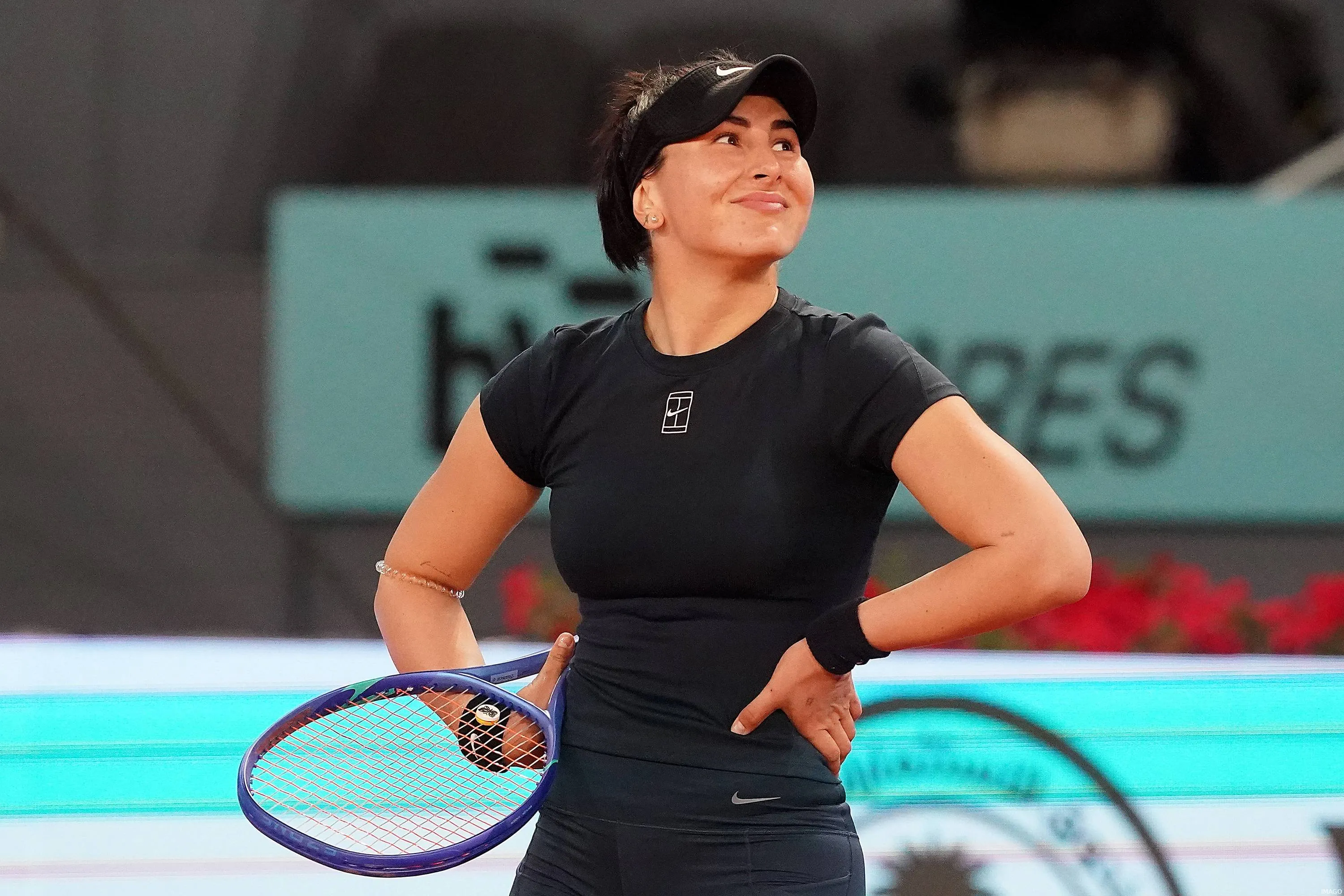
Bianca Andreescu returned to the main draw of a WTA 1000 event for the second time this year, after successfully winning her Rome Open debut against Sofia Kenin, in a duel between Grand Slam champions. The Canadian won 6-4, 7-5 in a match where she had to come back from a break down in both sets.
The 2019 US Open champion is operating in a prolonged rebuild phase, where performance is measured in stability rather than streaks, following several seasons disrupted by injury and limited tournament continuity.
Since her breakthrough in New York, Andreescu has not been able to complete multiple uninterrupted seasons on the WTA Tour. Knee issues in earlier years and an emergency appendectomy in early 2025 contributed to extended absences.
With a ranking outside the top 100, Andreescu has required a wildcard to enter the main draw in Rome. In recent months, the Canadian has appeared in several lower-category tournaments to regain confidence, including a title and a final at W35 level, as well as another final in a WTA 125 event.
Read also
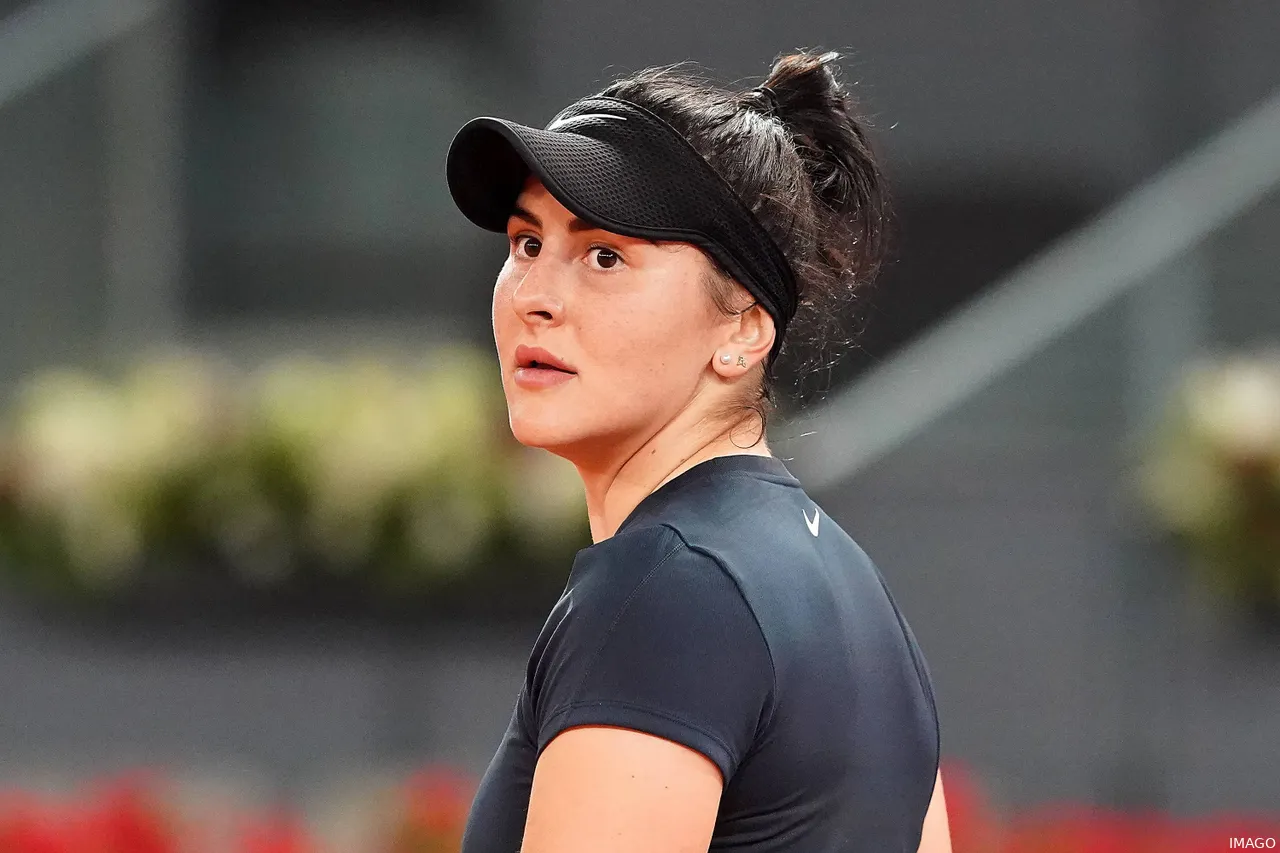
Match context and tactical readjustment
The Canadian has been competing in lower-level tournaments to obtain more matches that can give her confidence regarding her current form. Two months ago, after receiving a wildcard in Charleston, she had been eliminated on the green clay courts in straight sets by Kenin. This time, she was able to take revenge and secure the victory, also in straight sets.
“Yeah, I played her a month ago, so I feel like that helped me a little bit, and I feel like these courts suit me a bit better,” Andreescu said to Tennis Channel after the match. “I know green clay is a little bit faster, so I had more time to prepare my shots. And also the motivation of losing to her a month ago gave me a bit of extra oomph. She’s a great player, and I’m just super happy I was able to pull through.”
The Canadian has achieved the best results of her career on hard court—including the US Open and two WTA 1000 titles—but she says there is no surface that feels especially comfortable for her.
“It depends on the day,” the former world No. 4 said. “Sometimes your forehand is better than your backhand and vice versa. Sometimes your serve is just all over the place. I started developing love for grass, and grass is obviously very fast. So I guess it depends on the day.”
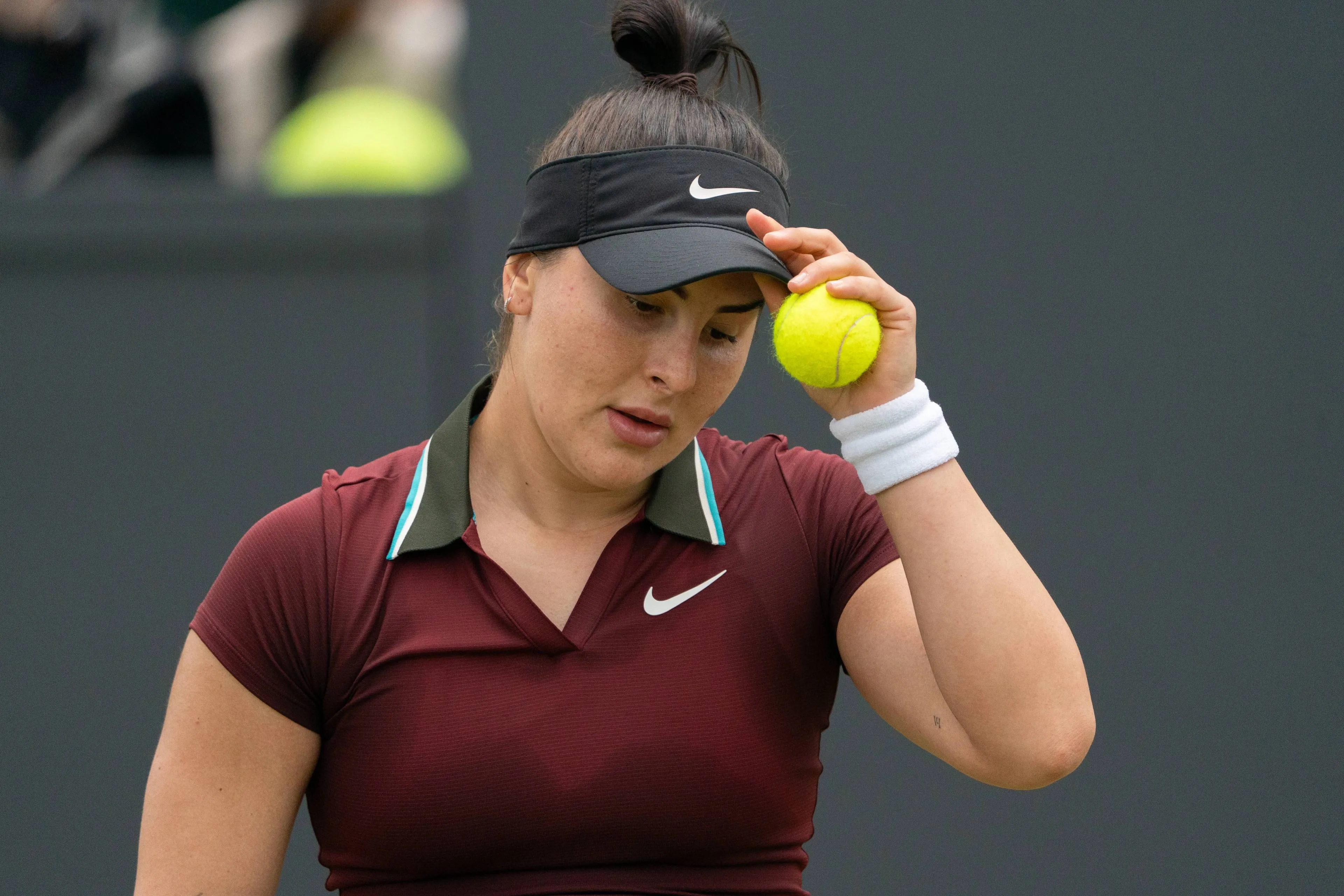
Injuries, process mindset and physical efficiency
Andreescu’s current career phase is shaped by repeated physical interruptions that have limited her ability to build long-term competitive rhythm. Since her US Open title in 2019, her seasons have been repeatedly affected by injuries and extended breaks, preventing sustained ranking progression and match accumulation. More recently, her 2025 season was delayed by emergency appendectomy surgery.
“I think it’s really just focusing on the process and really trusting in God’s timing, because I do really love this sport,” Andreescu claimed. “I’ve had some tough moments, but I’ve learned to appreciate the sport a little bit more. I’m very grateful to even be here. I have the wildcard here, which is incredible. So just looking at the brighter side of tennis, because it can definitely get quite dull.”
She also detailed ongoing work on movement efficiency, a key adjustment aimed at reducing physical load across matches while maintaining competitiveness in longer rallies.
“I’ve been putting in a lot of work in the gym and on the tennis court, specifically working on being more efficient with my movement,” the 2019 US Open champion said. “There are times where I feel like I take some unnecessary extra steps. And I think that’s helping me preserve energy. So just being more efficient, and it worked today.”
Support system and next competitive step
Beyond performance metrics, Andreescu continues to emphasise the role of her family as a stabilising factor during periods of disruption. She highlighted her mother as a consistent influence throughout her career setbacks and recovery cycles.
“She’s my shining light, my saving grace in many moments,” Andreescu said. “Through thick and thin, she’s always been super positive and very supportive. She knows what she wants and stands up for what she believes in. If I can be half the woman that she is, I’ll be happy.”
Looking ahead, Andreescu now turns to a matchup against Belinda Bencic, a player with a structured baseline game and recent competitive consistency. While acknowledging the challenge, she maintained a process-driven approach rather than result forecasting.
“It’s all about effort and intention for me,” she said. “If I can give the best that I can with what I have that day and implement what I’ve been working on with my coach, that’s all that matters. We can’t control the results, but it would be nice to win.”
So far, she has two previous meetings against Bencic, with a 1-1 head-to-head record. However, their only clay-court meeting was a straight-sets win for the Swiss player four years ago at Roland Garros 2022 (6-2, 6-4). Andreescu will be under pressure to win if she does not want to drop in the rankings, as she is defending the fourth round reached in 2025, where she defeated players such as Donna Vekic (20th) and Elena Rybakina (11th), before being eliminated by Zheng Qinwen.


claps 0visitors 0
Just In

Popular News

Latest Comments
- The girl needs professional help... and I don't mean sports.
- The way the current tennis players perform today, especially in the WTA, they should not be given any extra money. Let them boycott. They do not look like professionals. More balls land out of bounds and into the net than anything.
- Way past time for chair umps to REGAIN CONTROL over these entitled 'Special People'.
- WTF is this here for????
- Doubt she recalls which 'man' she acquired those underwear from... but the label probably has "ATP" on it.
- I've lately been thinking everyone is pointing to the wrong location for "illness" and constant "injury". Perhaps some 'couch time' is in order at this point?
- She has long outlived this shitshow she started. So, according to this lucky winner, ALL THE WORLD's CITIZENS should shun one another while forced to live under threatening, insane Leaders and Regimes? A sad individual who thinks she's changing the World with her ridiculous shunning of Russian opponents. Must be a hard life worrying about Ukraine from her balcony overlooking Monte Carlo? WTA needs to take a REAL stand here. Otherwise ban flags and handshakes by Russia, China, Israel, Iran, USA..... (Get the picture??)
- They still with that crap??? These Ukrainians need to just stop. Your Russian opponents have nothing to do with the war against your country. They didn't start it and by you not shaking their hands certainly won't end it. All this bitterness and unforgiveness will not augur well for these silly women.
- Tennis knows it has a huge problem with Hi-Tech line calls on clay. They've admitted so behind closed doors. However they do nothing except make a rule that no one can argue a call; no matter the proof. Perhaps the new WTA CEO will take a stand??
- "Accused" ?? They've been doing this regularly at tourneys... and yelling over the opponent standing right in front of them. Last season as well, when at one point Coco asked them to stop.


Loading