"When Carlos isn’t there, the divide is just so obvious": Andy Roddick marvels over Madrid brilliance of Jannik Sinner without Alcaraz
ATP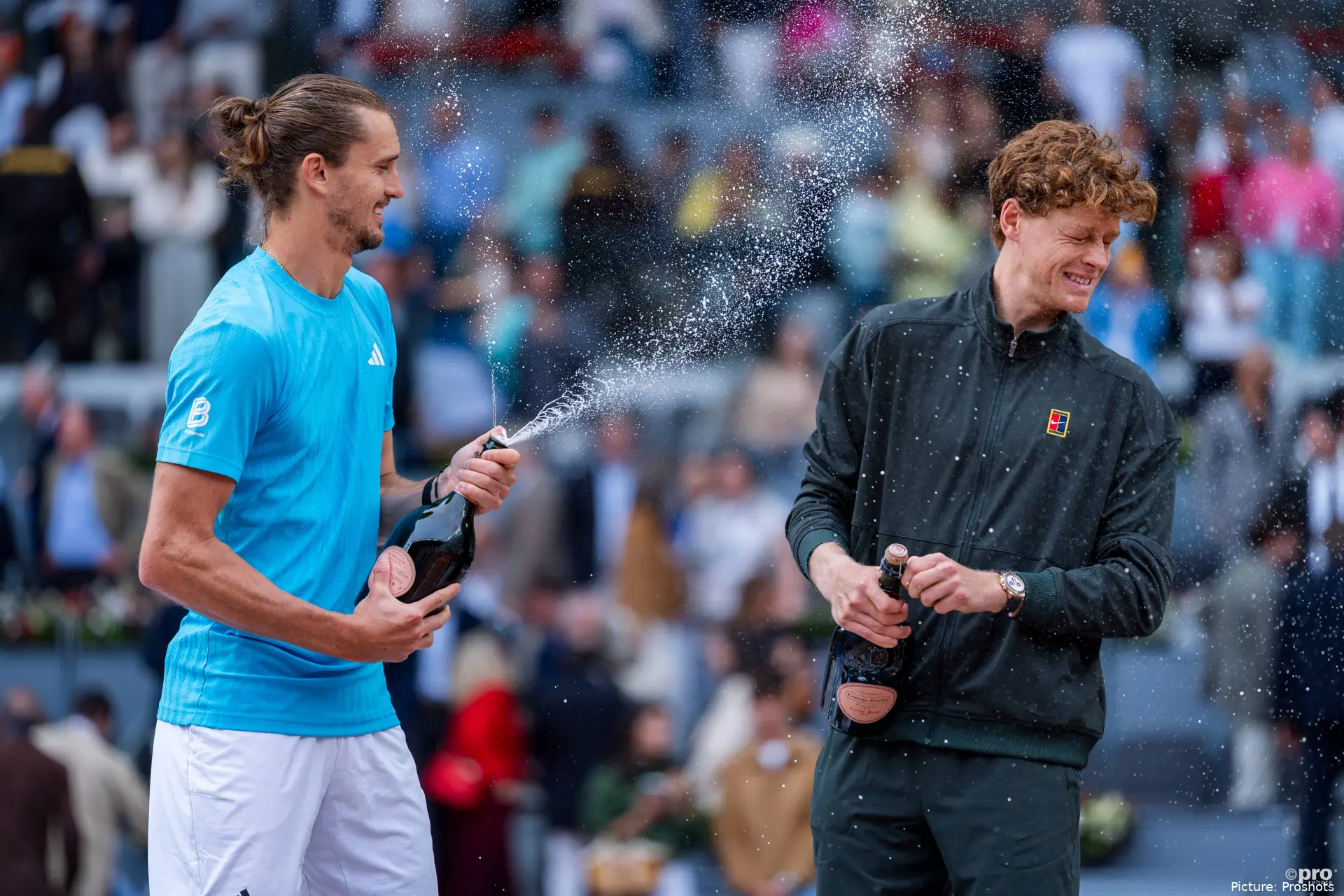
Andy Roddick and Served Podcast Producer Mike reflected on Jannik Sinner’s latest dominant run at the Madrid Open, and the conversation quickly turned into just how far ahead the Italian now sits from the rest of the field.
Mike summed up the final against Alexander Zverev in simple terms. “It wasn’t very long,” he said. He added a light-hearted example to underline just how one-sided the match felt. “When we sat down to watch it, my daughter asked, ‘How far into the match are you?’ I said, ‘About 20 minutes.’ She goes, ‘How much longer?’ because she wanted to go outside. I was like, ‘It looks like probably about 20 more minutes.’”
The dominance, as discussed throughout the podcast, reflects a growing gap at the top, particularly when Carlos Alcaraz is not in the draw. “It makes you think also, when the other one isn’t there, when Carlos isn’t there, the divide is just so obvious,” Roddick explained.
He pointed out that while Zverev had success against Sinner earlier in his career, that dynamic has now completely shifted. “Sinner’s obviously improved. It’s absurd to watch him four years ago and then now, the strength, the movement, everything that he does, the serve, everything, he plays like a full grown-up now.”

Gulf in class huge and constant improvement from Sinner
There was once a question over whether Sinner would break through at Grand Slam level. "There was a conversation where it’s like, is Sinner going to break out in a Slam? The answer to that was yes, but now he can just…” What has followed is a level beyond that initial breakthrough. Sinner’s base level alone makes him incredibly difficult to deal with. “His base setting, where he just goes and bullies you off the court, is great, and he would win five more Slams doing that,” Roddick said.
However, it is the added layers to his game that have elevated him further. “The way that he can pick apart matches strategically, he’s added in. He added in the little choppy dropshot off the forehand side, hits it crosscourt 95% of the time, but you just have to cover things.” He has also expanded his variation on the backhand side. “He’s started hitting one-handed backhand dropshots up the line and cross more of this tournament than I’d ever seen before.”

No Alcaraz shows Sinner's class above the rest.
Roddick highlighted the analytical insight of Jim Courier when discussing Sinner’s development. “I was texting with Jim Courier, who is the best commentator in the world for information. I watch Jim commentate and I’m going, ‘Oh, I didn’t think of that, that’s interesting.’ He’s fantastic. I hope I can be half as informative as Jim is.”
Sinner now possesses a complete toolbox. “Jannik’s now getting to the place where he has all of these options, and I don’t even know that he needs to use them, but it’s this intimidating thing where you know he has them anyway. He just has them sitting there in his back pocket.”
Roddick described how Sinner has effectively merged elements from the greatest players. “He’s taken all these different parts of other people’s games. He now switches directions like Novak does. He’s adopted the drop shots from Carlos.”
What has improved and the records he has taken
His serve has also undergone major refinement. “He’s changed his serve twice in the last three years. The first serve percentage has gone up a ton this year, second serve’s better, he’s hitting his spots better.” A crucial factor is disguise. “That’s one of the secrets of the greatest servers, being able to hit different serves off the same toss so they’re not reading it before you hit it.”
Despite his success, Sinner continues to evolve. “This guy’s in constant shape-shifter mode,” Roddick said. That adaptability was clear in how he approached different opponents. Against Arthur Fils in the semi-finals, Sinner applied relentless pressure. “Fils has been playing amazing, and Jannik dismantled him from the word go.”
He explained the tactical approach. “He was three feet inside the court taking second serves, and it was on Fils’ feet before he could adjust. Then he just pinned him on the backhand side, would not let him out of jail.” Whenever Fils tried to adapt, Sinner countered. “When you start cheating, I’m going to burn you line. If someone can pick off corners, switch directions, and they hit it bigger than anyone on earth, what do you do?”
The pressure becomes overwhelming. “If that’s the shot you have to hit to win the point and everything else is a struggle, that’s depressing when you’re in a matchup like that.” Sinner’s control was evident throughout. “For those last two matches, Sinner didn’t face a single break point in either match. He was in every service game, every return game.”
In the final, he adjusted again. “He didn’t let Zverev get set on two balls in a row.” Roddick explained why that mattered. “If you don’t hit the pressure shot perfectly, that next ball is on you with no notice, and then you’re scrambling.” Once control is established, it is difficult to escape. "Once he gets ahold of you, it’s really hard to get out of that equation.” The contrast between matches stood out. “He beat Fils and Zverev back to back completely different ways.”
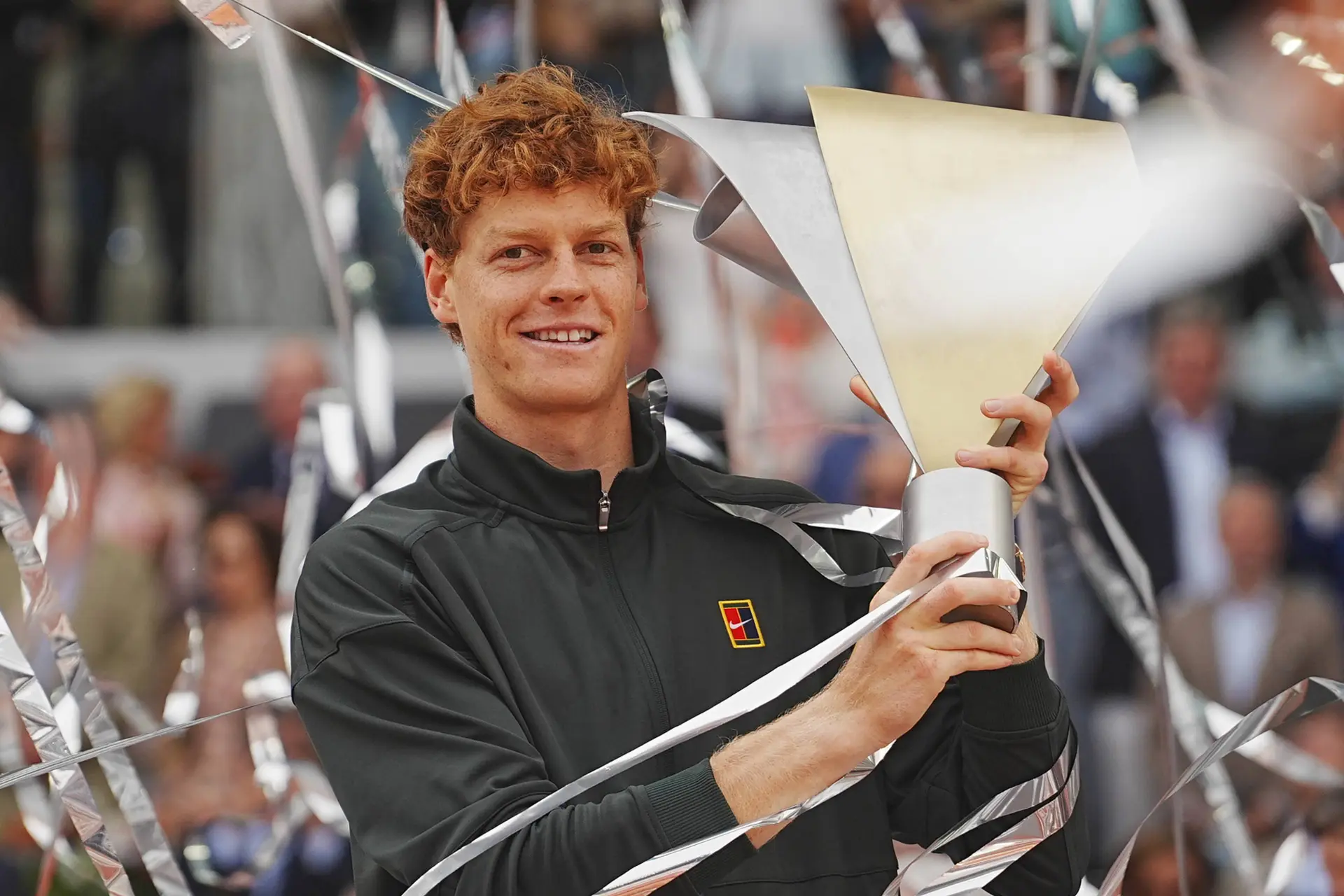
The scorelines underlined the dominance. “Two and four, and one and two… those are scorelines you win when you’re playing a state tournament when you’re 14.” Mike then put the achievements into context. “It’s a historic run. He’s the first man ever to win five consecutive Masters 1000 titles. Djokovic won four three times, Nadal won four once, neither reached five. He’s won the last three Masters of 2026 without dropping a set, first man ever to do that, and he’s won eight of nine Masters events so far.”
The milestones continue. “He’s the fourth man to reach the final of all nine Masters 1000 events, joining Federer, Nadal and Djokovic, and he did it at 24, younger than any of those guys.” Roddick summed up the scale of it all. “It’s ridiculous… at some point you’re like, okay, let’s get back to sanity.”

Samuel GillEditor-in-Chief
Samuel Gill is the Chief Content Officer (CCO) of TennisUpToDate.com, a role he has held since 2020. He is responsible for editorial governance across the platform, including setting content standards, overseeing accuracy and consistency, and guiding long-term editorial strategy. Since joining, he has contributed more than 10,000 articles and editorial pieces across the TennisUpToDate network, playing a central role in the daily operation and development of the site.
Based in Leicester, Samuel has a broad background in tennis media. In his current role, he works closely with editors and writers to ensure coverage meets clear journalistic standards, with particular attention to verification, consistency, and timely updates when new information becomes available.
claps 0visitors 0
Just In


Popular News
Latest Comments
- A healthy Qinwen may be hard to stop next season. She was already scaring her opponents before her medical leave(s). Unfortunately, Zheng insisted on singing again. On the positive side -- Mirra did not sing!! ;~}
 mandoist11-10-2026
 - Where is it written that athletes, entertainers... People in general... are mandated to keep looking at -- or even using [anti]Social Media? Public & private figures consistently complain and reveal their concerns about negativity and violence thrown at them -- yet they insist on participating. Avoid it, don't use it, don't read it. It's okay to occasionally look up at the World instead beating your eyes & thumbs to death on The Inventions out there.mandoist11-10-2026
- great articlestennisseserver07-10-2026
- Medvedev was leading Djokovic 7-5, 3-5 when an attempted return..' NO you ignorants, Djokovic was leading .weiss05-10-2026
- No more bullshit "Wildcards" to these two. Qualify like everyone else -- there will be cameras there, too. Time to scream... WTF ????!!!!mandoist29-09-2026
- Let's not BS the general public -- Sabalenka started showing cracks in her game last season. Her losses and near-losses started at about the same time she began being distracted by Fame (constant Selfies, making TV commercials, magazine shoots, endless Social Media nonsense, etc., etc.) One would think even Saba could recognize the parallels with others who failed before her -- Raducanu, Giorgi, Bouchard to name a few.mandoist25-09-2026
- Gross!! Hey Raducanu, Giorgi, and Bouchard -- reserve a seat at your Social Media Selfie table for Saba + Naomi. They're heading in your direction soon enough.mandoist24-09-2026
- And then these same players will complain about how lengthy their season’s were and need more time-off. I’m all for more tennis but the amount of tennis we get now is actually kind of crazy! We all need a break, especially the players.DaveyWavey23-09-2026
- You should do a comparison article for "different kinds of justice" the courts decide for tennis players. I can think of at least three players who received very small bans of a few months, however Tara Moore has been fighting for her literal survival the past few years. It seems odd considering she is not a "name" player, unlike the other cases.DaveyWavey22-09-2026
- PRIZE MONEY & POINTS Winner - $185,500 Finalist - $114,500 Semi-Finalist - $66,003 Quarter-Finalist - $35,000 Round of 16 - $18,045 Round of 32 - $13,005 Winner - 500 Finalist - 325 Semi-Finalist - 195 Quarter-Finalist - 108 Round of 16 - 60 Round of 32 - 1DaveyWavey20-09-2026

Loading