"When I wrote the letter, I was crying for three or four days—like a baby" - Diego Schwartzman explains thoughts behind emotional retirement decision
ATP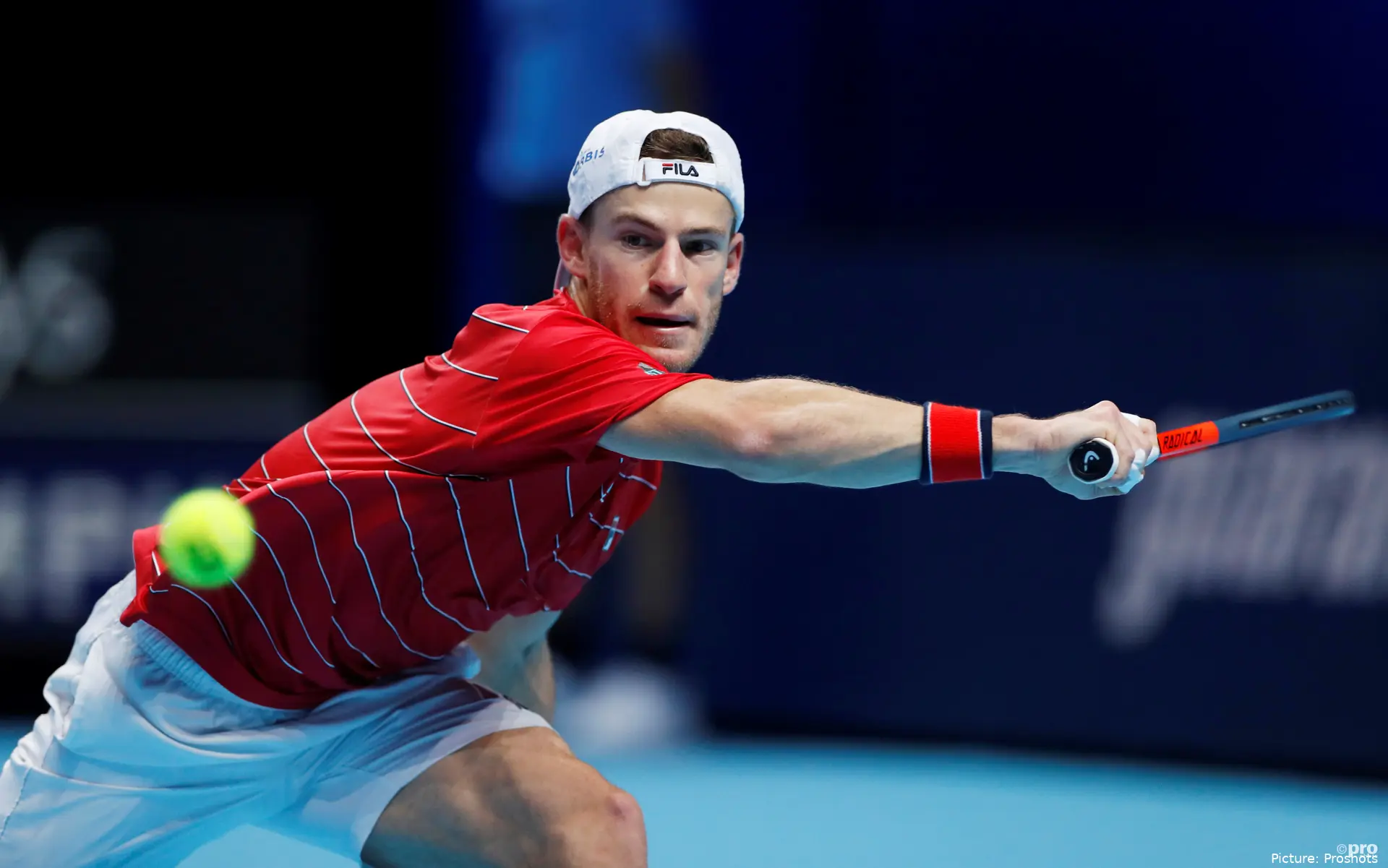
Diego Schwartzman was once a familiar name on the ATP Tour. His peak came between 2010 and 2021 where he made a Grand Slam semi-final, a Masters 1000 final while clambering into the top 10 in the world. Despite this, good things do not last forever and the choice to retire from tennis became a lot clearer.
Speaking on the Tennis Insider Club, he discussed his first steps into tennis, his best memories while playing during the global pandemic, when he started to lose the enjoyment and pride in being a tennis player and the overall decision which saw him leave the sport in an emotional manner.
How he first got into tennis
Not coming from a tennis household, football was the main sport in the Schwartzman household. "It’s a good question because nobody in my family played tennis before," he began. "My mom and dad used to play sometimes on weekends in Buenos Aires, but everyone in my family loves football. I don’t know why I started. When I was very young—six or seven years old—I used to go to the club on weekends and play everything. I played all kinds of sports as a kid. Then, when I was around 10 or 11, I started playing team matches against other clubs, and I realized I was playing a bit better. That’s when everything started."
As he rose through the ranks, he was in a very esteemed academy in Buenos Aires. However, the financial strain on his parents was rising. "It was very tough for my family financially. Coming from Argentina, traveling is very expensive in the early years," he commented.
"It’s extremely important. I think 90% of players need help from outside—private sponsors, friends, anyone who can support you financially. Sometimes those people ask for a percentage if you succeed, but that’s okay. Without that help, it’s impossible to even try. Completely impossible. At 14 or 15, you have to make big decisions: whether to continue school, how to travel, and whether your family will seek financial support."
He played most of his early tennis in his native South America but then decided to switch course and make the long trip to Europe. "At the beginning, when I played Futures, I was lucky because there were many tournaments in Argentina and Brazil. Then I made an important move with my coach Sebastián Prieto, who also coached Juan Martín del Potro.
"We decided to go to Europe to play Challengers. South America can be good financially, but the conditions are inconsistent—altitude, sea level, different surfaces—it’s messy. In Europe, I often stayed in Spain between tournaments. I like Spain—it’s similar to Argentina, even better in some ways. The food, the language—it feels like home."
There was no specific goals, just progression up the ranks. "I tried to be realistic. I’m small compared to other players, and I didn’t have the same power. So I focused on improving and building confidence. I made good decisions with my team—investing in coaching and support. I also chose players similar to me and thought, 'If they can win Challengers, why can’t I?'"

Diego Schwartzman in action
Being 5 ft 7 in, the former world number eight is short for a tennis player. Nevertheless, this was not a huge problem as he looked to adapt. "Yes and no. When I walked onto the court, I wasn’t thinking about it. Maybe off the court, yes," he acknowledged.
"I felt my level was improving, and at that time tennis wasn’t as dominated by power and serve as it is now. I was playing many weeks on clay, so I didn’t feel that difference so much. But I knew I had to improve many things—return, movement, details that other players maybe weren’t thinking about. I also had to be better off the court: eating better, sleeping better, doing everything better, because I needed my legs more than others."
Best memory in tennis amid COVID-19 struggles
The global pandemic was a weird period for Schwartzman, among many other people not just on the ATP and WTA Tour. He did struggle to cope with what was going on, but the fact that there were no crowds played its part in him enjoying some of his best tennis.
"For me, I actually played very well during that period. 2020 was one of my best years. I reached the semi-finals at Roland Garros in 2020, made the final in Rome the week before, and then had strong results indoors. I won tournaments and then won Buenos Aires at the start of 2021. So yes, it was tough without crowds, but I also played some of my best tennis."
There were still a lot of obstacles to clamber over and strict instructions to obey as COVID-19 ruthlessly spread. "The tests were constant stress. I played the ATP Finals in London in 2020—huge stadium, zero people. It was crazy. It feels like it was ages ago, but also very recent. When I look at pictures from that time—flying to Cincinnati with massive masks, face coverings—I was so scared. You could arrive at a tournament, test positive, and be stuck in your room for two weeks. No tournament, nothing. It was terrible."
There is no certain tennis achievement or memory that Schwartzman cherishes above the other. "It’s how people see me now—players and people around tennis," he said. "How I behaved on and off the court. I pushed myself to the limit for many years. Now I see that people enjoyed watching me, and I enjoyed it too. That’s my best memory."
Falling out of love with tennis
The descend which brought an end to his tennis career was not a sudden one but did come at a time where the Argentine was enjoying a fruitful period of form on court. "It’s very tough. When you have the decision inside you, it’s still hard to actually make it, because everyone is saying something different," he stated. "For me, it really started in 2022. I was playing almost my best level—I had a great first half of the year and was winning a lot of matches, including at Wimbledon.
"But after Wimbledon, I started struggling mentally. I was cramping after 40-minute matches, making double faults, cramping my fingers at night, sleeping badly, having stomach problems—everything. I kept asking myself, 'What’s happening?' Step by step, it got worse. I even started to feel scared of things like flying. Everything just felt bad. The second half of that year was very tough for me."
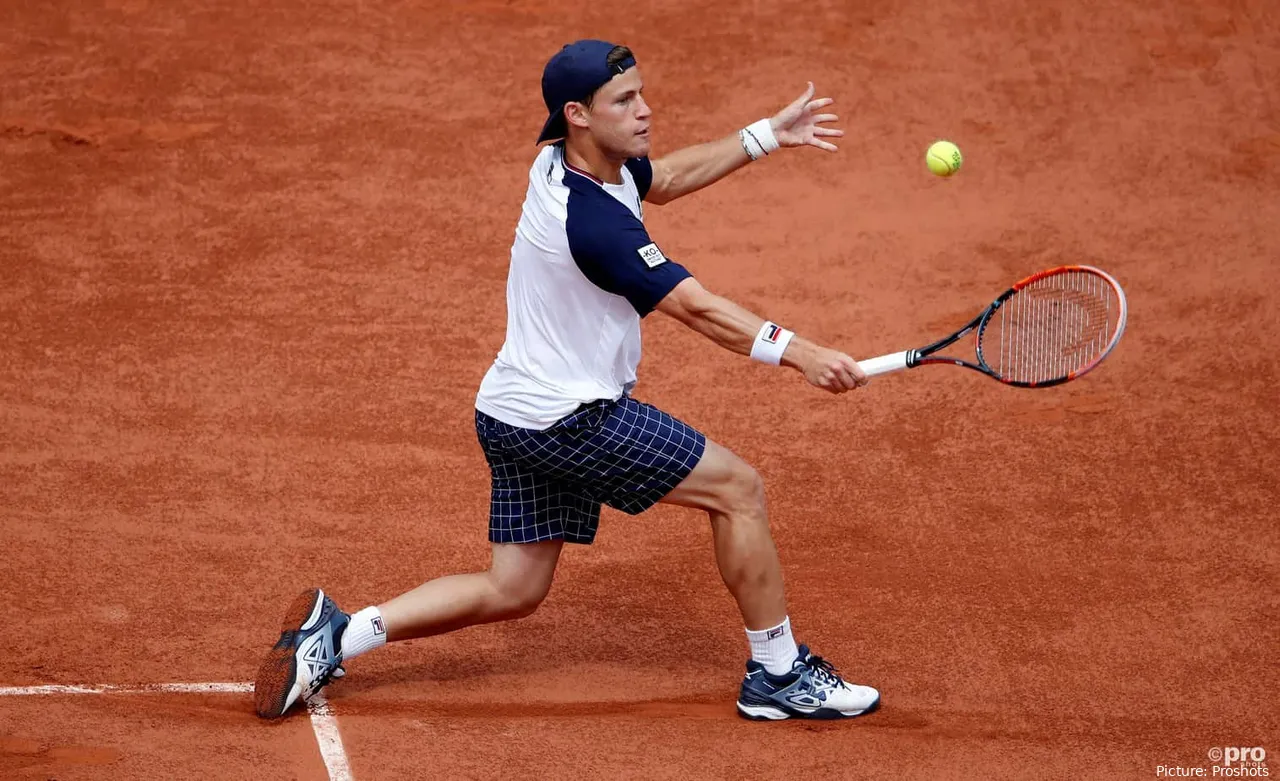
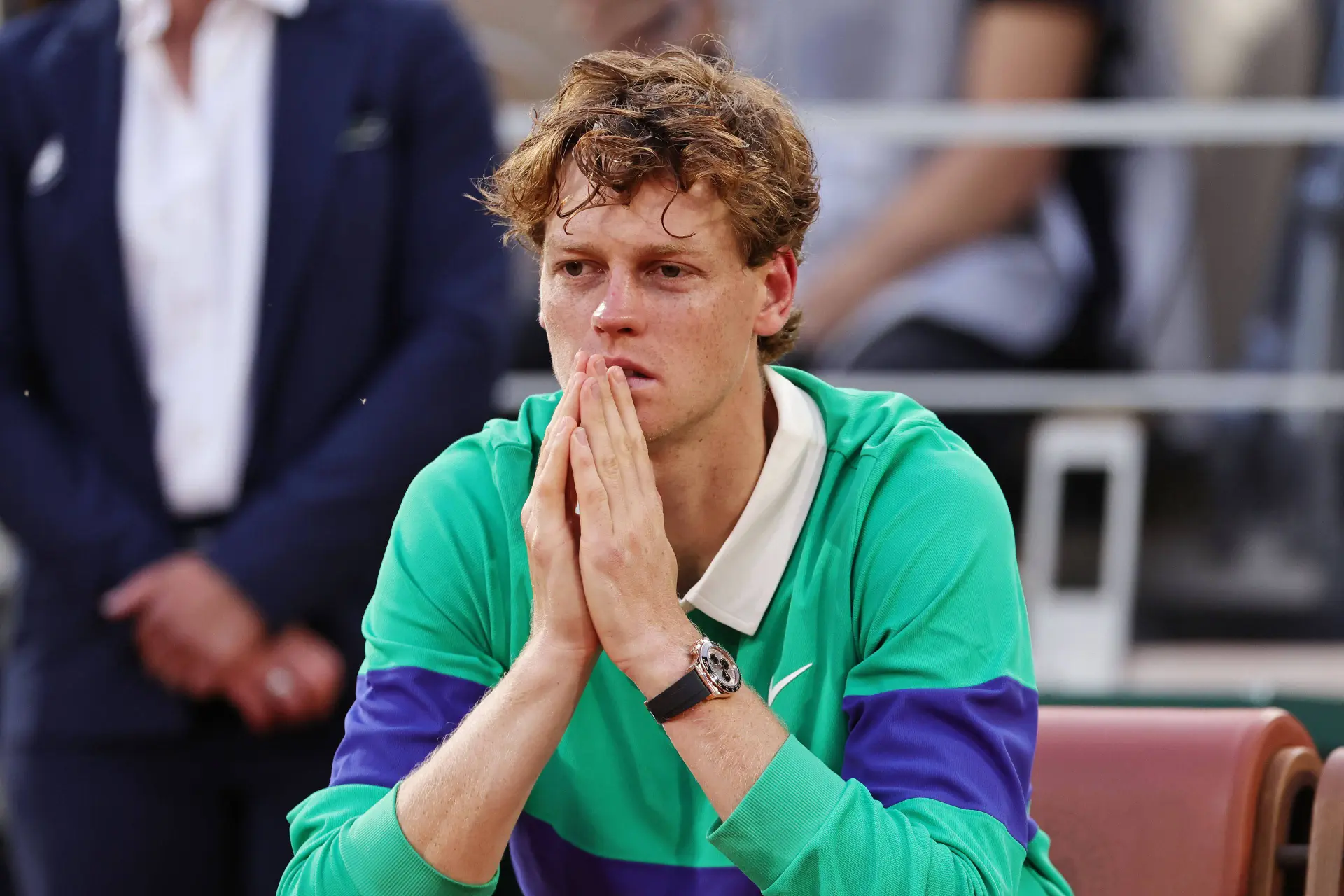
Diego Schwartzman soon fell out of love with the sport, not enjoying it as much as he once did
The realisation soon came apparent that he was not enjoying it anymore. "In 2023, I started to realise it more clearly. I was winning matches, but afterwards—especially in Grand Slams, where you have a day off—I would think, “What the hell, I have to go back on court again?”
I wasn’t enjoying winning anymore, and that was a big warning sign. When you don’t enjoy winning, it feels like you’re almost done."
He spoke to his team about it, but even they could see the signs that something was not quite right. "They knew something wasn’t right. I wasn’t happy—it was tough to practice, tough to feel fresh, tough to compete.
I started breaking rackets again—things that show you’re struggling mentally. People told me to stop for a month and go home, but when you’re in that situation, it’s hard to see things clearly."
Help was on the way from a psychologist who earthed the true but hard feelings inside of Schwartzman. "I worked with a psychologist for three or four months because of the anxiety I was feeling.
After one month, he told me honestly, 'You don’t want to play anymore—that’s why you have all these problems.' Inside, I already knew it. But how do you say that to your team or your family? You’re 30 years old and suddenly you say, 'I don’t want to play anymore'? It’s not easy."
He attempted to play through it, but that feeling stuck around. "Day after day, week after week, the feeling stayed. You don’t sleep well, you have anxiety, you arrive at tournaments and just want to go home.
That’s when you realise it’s real. But at the beginning, it’s confusing—you don’t know if it’s just a bad moment or something deeper."
Read also
Announcing his retirement
The inevitable outcome of retirement soon came around for Schwartzman. Whilst not an easy decision, it made sense with his enjoyment and motivation having been almost fully extinguished.
"Everyone enjoys being at the top, of course. But when you start winning matches and it doesn’t feel good, then something is wrong—and that’s tough," he admitted. "Also, every year the calendar on the ATP and WTA gets worse. There are more exhibitions, more opportunities to earn money outside the tour, so players want to play them while they have a good ranking. Then you go back to the tour again.
It’s a combination of everything. When you start at 12 or 13 years old and then you’re 31 or 32, it becomes very difficult to keep doing it."
He made this official, planning his next steps while purposely ending at his home country's tournament in Buenos Aires for a poetic send-off. "I think I made a smart decision," he said. "After Roland Garros in 2024, I wrote a letter saying it would be my last year and that I would retire in Buenos Aires in February 2025.
That helped, because I knew this was my final season. I planned to play the Grand Slams and maybe a few more tournaments if I received wild cards. If not, I would go home and start my new life."
After a first round exit at the 2024 US Open, he had that final tournament on home soil left. This gave him a window to picture what life away from tennis would look like. "After the US Open last year, I didn’t play for about 80 days. Then I started preparing just to play Buenos Aires at a good level.
Around that time, I began thinking about what I wanted to do next."
Then fate would have it, an opening emerged. "Then someone from the Australian Open player relations team contacted me.
I thought it was a good option—to stay involved in tennis but in a different way, maybe behind the scenes. I made some moves, and this year everything came together. Maybe even more than I expected."
While this opened the door to many new things, retiring from his profession was not an easy process to go through. "When I wrote the letter, I was crying for three or four days—like a baby. I’m very sensitive.
But while writing it, I kept telling myself, 'Okay, now I’m making the decision. It’s done.' Some players retire and then come back, but for me, it was final.
I sent the letter to my family first, then to my friends. It was tough—but honestly, after that, I felt super happy. I felt relieved, and almost like a young guy again—like going from 45 back to 30. It was a strange feeling."

Diego Schwartzman is now retired
Lucas MichaelTennis Journalist
Lucas Michael is a tennis journalist based in Cambridge, UK, specializing in comprehensive coverage of the ATP and WTA tours. For the past 1.5 years, he has been a core contributor to TennisUpToDate, where he has authored more than 3,000 data-driven match reports, deep-dive analysis pieces, and engaging liveblogs.
Lucas pairs real-time statistical analysis with on-the-ground reporting, frequently traveling to tournaments to cover the action firsthand from the press box and player press conferences. This blend of advanced metrics and direct access allows him to provide sharp context regarding player form, tactical trends, and breaking tour developments.
He holds a BA (Hons) in Sports Journalism. Grounded in core journalistic ethics, Lucas places a strict emphasis on meticulous sourcing, editorial accuracy, and a commitment to updating live content swiftly as verified information emerges.
claps 0visitors 0
Just In

Popular News
Latest Comments
- A healthy Qinwen may be hard to stop next season. She was already scaring her opponents before her medical leave(s). Unfortunately, Zheng insisted on singing again. On the positive side -- Mirra did not sing!! ;~}
 mandoist11-10-2026
 - Where is it written that athletes, entertainers... People in general... are mandated to keep looking at -- or even using [anti]Social Media? Public & private figures consistently complain and reveal their concerns about negativity and violence thrown at them -- yet they insist on participating. Avoid it, don't use it, don't read it. It's okay to occasionally look up at the World instead beating your eyes & thumbs to death on The Inventions out there.mandoist11-10-2026
- great articlestennisseserver07-10-2026
- Medvedev was leading Djokovic 7-5, 3-5 when an attempted return..' NO you ignorants, Djokovic was leading .weiss05-10-2026
- No more bullshit "Wildcards" to these two. Qualify like everyone else -- there will be cameras there, too. Time to scream... WTF ????!!!!mandoist29-09-2026
- Let's not BS the general public -- Sabalenka started showing cracks in her game last season. Her losses and near-losses started at about the same time she began being distracted by Fame (constant Selfies, making TV commercials, magazine shoots, endless Social Media nonsense, etc., etc.) One would think even Saba could recognize the parallels with others who failed before her -- Raducanu, Giorgi, Bouchard to name a few.mandoist25-09-2026
- Gross!! Hey Raducanu, Giorgi, and Bouchard -- reserve a seat at your Social Media Selfie table for Saba + Naomi. They're heading in your direction soon enough.mandoist24-09-2026
- And then these same players will complain about how lengthy their season’s were and need more time-off. I’m all for more tennis but the amount of tennis we get now is actually kind of crazy! We all need a break, especially the players.DaveyWavey23-09-2026
- You should do a comparison article for "different kinds of justice" the courts decide for tennis players. I can think of at least three players who received very small bans of a few months, however Tara Moore has been fighting for her literal survival the past few years. It seems odd considering she is not a "name" player, unlike the other cases.DaveyWavey22-09-2026
- PRIZE MONEY & POINTS Winner - $185,500 Finalist - $114,500 Semi-Finalist - $66,003 Quarter-Finalist - $35,000 Round of 16 - $18,045 Round of 32 - $13,005 Winner - 500 Finalist - 325 Semi-Finalist - 195 Quarter-Finalist - 108 Round of 16 - 60 Round of 32 - 1DaveyWavey20-09-2026

Loading