“I’m keeping my expectations low”: Iga Swiatek embraces uncertainty ahead of Wimbledon title defence
WTA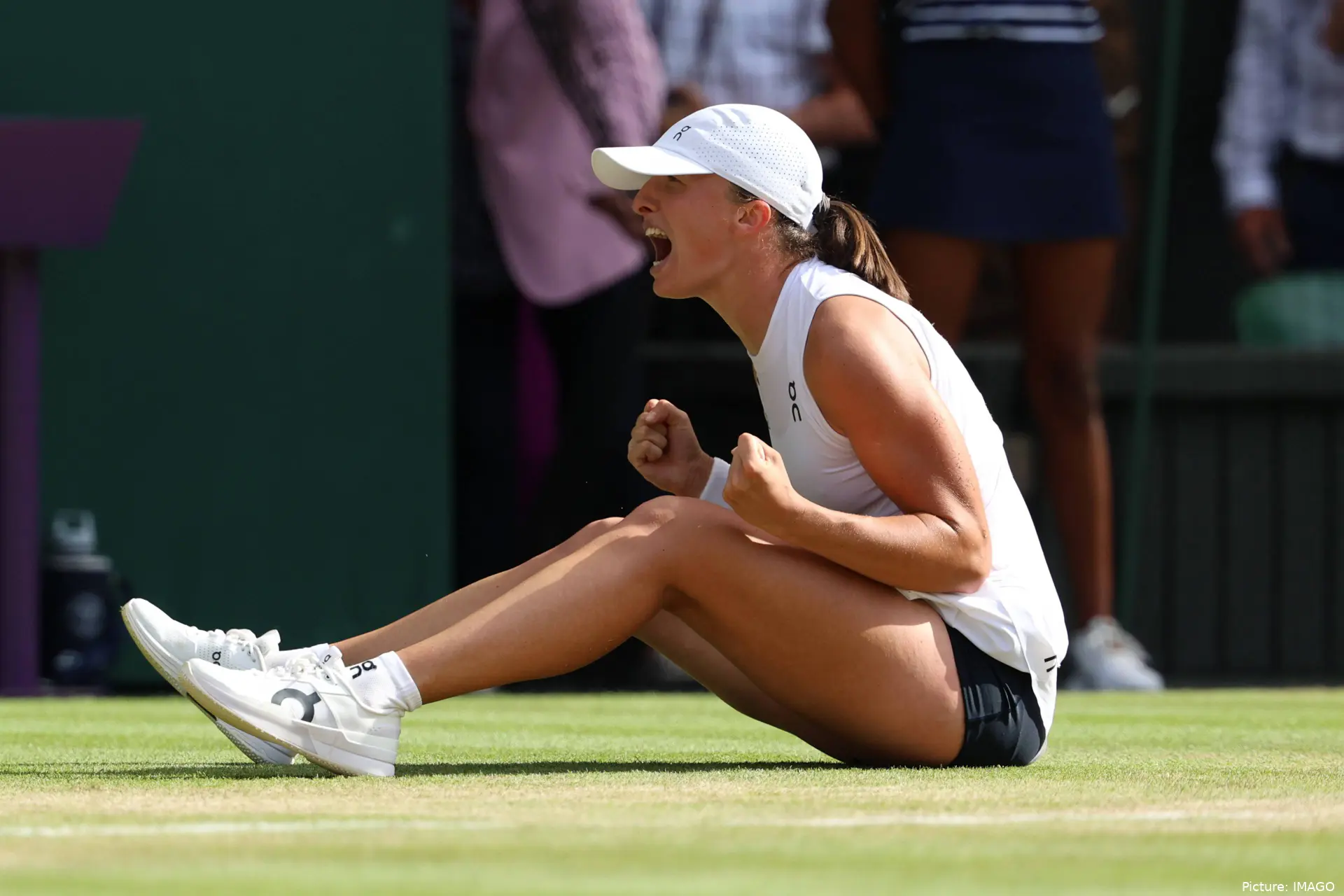
Iga Swiatek arrives at Wimbledon as she prepares to defend her title amid doubts over her recent level. The Pole did not produce strong results during the clay swing, including an early exit in the fourth round of Roland Garros, and failed to register a win in her grass-court warm-up before arriving in London.
The 25-year-old enters the All England Club as the defending champion, but unlike last year, optimism is more limited. Swiatek is aware she does not carry the same level of dominance as in previous seasons. A year ago, that absence of expectations arguably worked in her favour, as she arrived at SW19 quietly and went on to lift the trophy after a dominant 6-0, 6-0 win over Amanda Anisimova in the final.
Her preparation for the grass season has been limited and inconsistent, highlighted by a surprise defeat to Emma Navarro in the last 16 at Bad Homburg. Against that backdrop, Swiatek has acknowledged uncertainty in her level, describing a process-focused approach rather than high expectations as she begins her title defence.
The world No. 3 enters the tournament under ranking pressure, defending 2,000 points from her 2025 triumph. That total could result in a significant drop in the standings if she fails to reach another deep run at the All England Club.
Swiatek: “It’s not going to be smooth” ahead of title defence
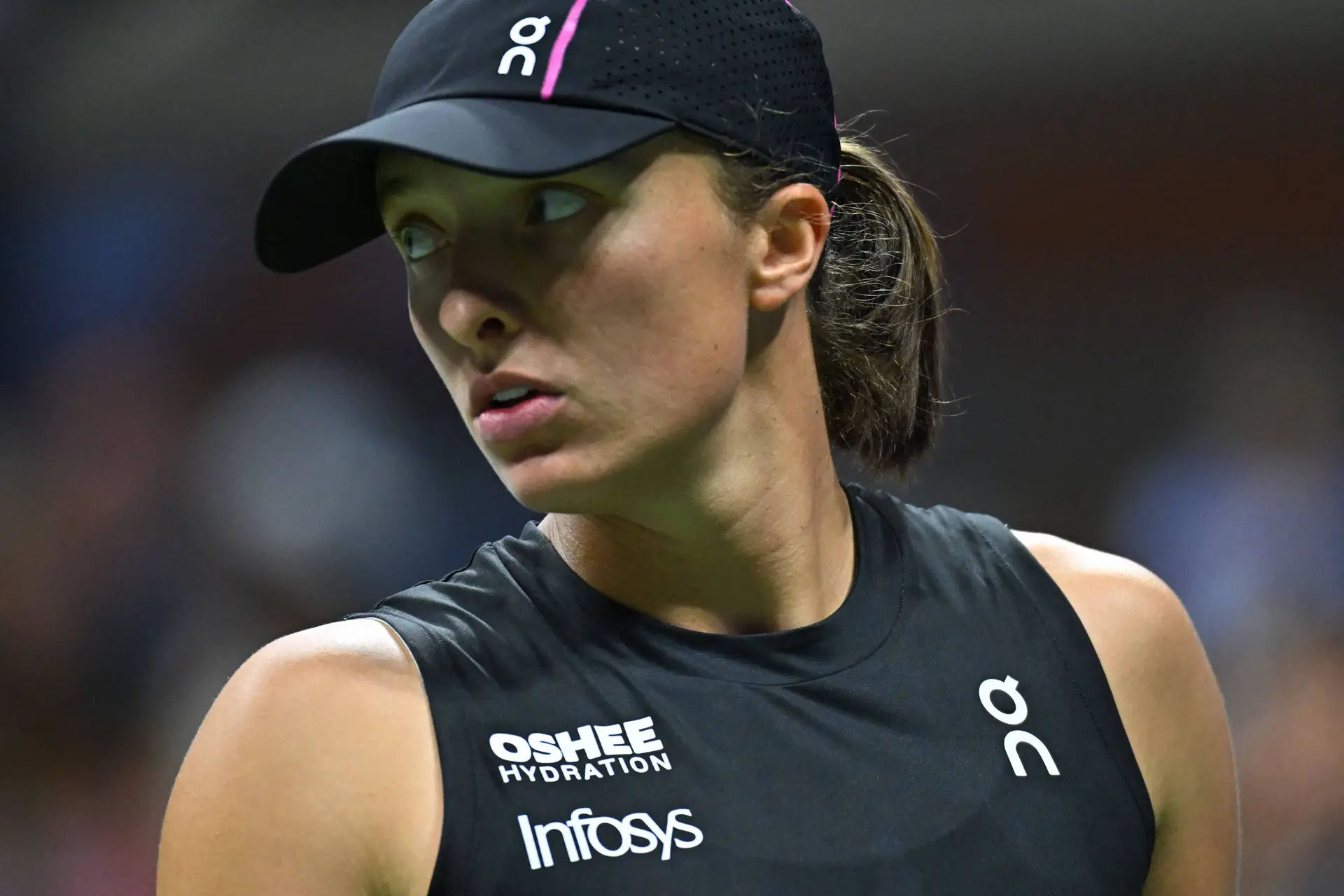
In her pre-tournament press conference, Swiatek was candid about the unique challenge of returning to Wimbledon as defending champion, suggesting that past success does not necessarily translate into stability the following year.
"For sure it's a tournament that creates maybe different challenges when you come back as the defending champion because of the whole thing that is happening around it," Swiatek told reporters on Saturday.
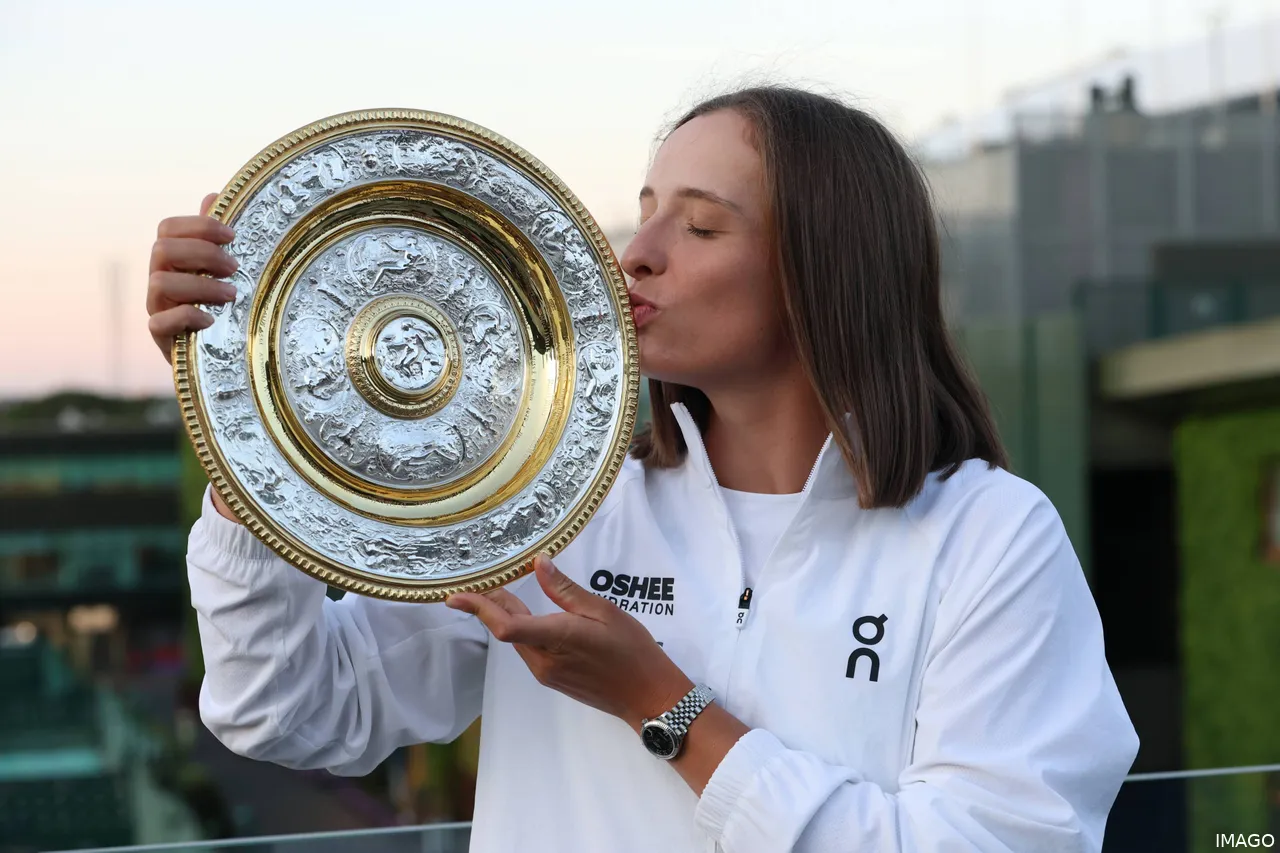
Iga Swiatek kisses Wimbledon trophy after coming out on top at SW19
She also questioned why repeated success at a single tournament is so difficult, even for players with multiple Grand Slam titles. "I think there were players that won this tournament that already have won many tournaments and Grand Slams. Why particularly it's hard to repeat that, I have no idea."
Swiatek enters this edition seeded No. 3 and will open her campaign against American Taylor Townsend on Tuesday. She also stressed the importance of gradually adapting to conditions rather than relying on past form.
"I feel like I'm starting from a totally different position and I'm really in a place that I'm keeping my expectations low," the 25-year-old said. "Even though everybody is talking about this (being the defending champion), I feel like I need to play matches and I need to adjust. It's not going to be smooth because of last year."
Grass-court form and ranking pressure shape outlook
Swiatek’s 2026 season has so far lacked a title or final appearance since September 2025, when she won the Korea Open, marking an extended gap compared to previous years of sustained success.
Her clay-court swing also produced relatively modest results by her standards, including a semi-final exit in Rome and a fourth-round finish at Roland Garros, reinforcing a broader pattern of inconsistency compared to earlier peaks in her career.
The Polish player’s only grass-court warm-up came in Bad Homburg, where she lost in the first round to Emma Navarro, raising further questions about her adaptation to faster surfaces ahead of Wimbledon.
Despite this, Swiatek referenced her 2025 Wimbledon experience as evidence that early doubts do not necessarily determine final outcomes, pointing to her ability to build form progressively through the tournament.
"When I watch myself from last year, I remember that I was just so focused on the goal, didn't have many doubts," Swiatek said. "At the beginning of the tournament, obviously you don't know what your level is. You need to figure it out in the early matches. I could progress match by match."
Swiatek’s projected draw could also present early challenges, with a potential second-round clash against former Wimbledon finalist Karolína Plíšková depending on results, further increasing the importance of early adaptation rather than immediate dominance.

Cristhián AvilaTennis Journalist
Cristhián Ávila is a tennis journalist based in Santiago, Chile, and has been part of the TennisUpToDate team since early 2023. He covers the ATP and WTA Tours as well as all four Grand Slams, producing breaking news, match reports, analysis, and regular liveblogs from major tournaments.
His reporting combines statistical analysis with clear explanation, helping readers understand tactical developments, player form, and broader storylines across the tour. Working fluently in both Spanish and English, Cristhián collaborates with an international editorial team and contributes to comprehensive global coverage. As part of his work, he has conducted interviews and media interactions with leading figures in the sport, including Caroline Wozniacki and John McEnroe.
In his journalism, Cristhián places strong emphasis on careful sourcing, editorial accuracy, and updating articles promptly when new, verified information becomes available. His coverage is grounded in research, context, and direct engagement with professional tennis.
claps 0visitors 0
Just In

Popular News
Latest Comments
- great articlestennisseserver07-10-2026
- Medvedev was leading Djokovic 7-5, 3-5 when an attempted return..' NO you ignorants, Djokovic was leading .weiss05-10-2026
- No more bullshit "Wildcards" to these two. Qualify like everyone else -- there will be cameras there, too. Time to scream... WTF ????!!!!
 mandoist29-09-2026
 - Let's not BS the general public -- Sabalenka started showing cracks in her game last season. Her losses and near-losses started at about the same time she began being distracted by Fame (constant Selfies, making TV commercials, magazine shoots, endless Social Media nonsense, etc., etc.) One would think even Saba could recognize the parallels with others who failed before her -- Raducanu, Giorgi, Bouchard to name a few.mandoist25-09-2026
- Gross!! Hey Raducanu, Giorgi, and Bouchard -- reserve a seat at your Social Media Selfie table for Saba + Naomi. They're heading in your direction soon enough.mandoist24-09-2026
- And then these same players will complain about how lengthy their season’s were and need more time-off. I’m all for more tennis but the amount of tennis we get now is actually kind of crazy! We all need a break, especially the players.DaveyWavey23-09-2026
- You should do a comparison article for "different kinds of justice" the courts decide for tennis players. I can think of at least three players who received very small bans of a few months, however Tara Moore has been fighting for her literal survival the past few years. It seems odd considering she is not a "name" player, unlike the other cases.DaveyWavey22-09-2026
- PRIZE MONEY & POINTS Winner - $185,500 Finalist - $114,500 Semi-Finalist - $66,003 Quarter-Finalist - $35,000 Round of 16 - $18,045 Round of 32 - $13,005 Winner - 500 Finalist - 325 Semi-Finalist - 195 Quarter-Finalist - 108 Round of 16 - 60 Round of 32 - 1DaveyWavey20-09-2026
- Pegula withdrew from this Singapore event
 tennishappens19-09-2026
 - Serena Williams chose her tournaments. It's not such a bad idea.MuswellHillbilly17-09-2026

Loading