“I’m not stubborn enough to force my game on clay": Naomi Osaka explains adjustment after Rome win over Eva Lys
WTA
Naomi Osaka advanced at the Rome Open 2026 after a physically uneven but competitive three-set win over Eva Lys, reinforcing a central theme of her clay-court season: adaptation rather than imposition. The 15th seed was pushed to 6-4, 4-6, 6-3 in a match defined by fluctuating momentum and extended baseline exchanges before her experience ultimately proved decisive.
For much of Osaka’s career, clay has been her most problematic surface, with limited deep runs compared to her success on hard courts. However, the past two seasons have shown gradual improvement, with more consistent movement patterns and reduced reliance on first-strike dominance. The Rome win fits into that broader pattern of incremental adjustment rather than a structural breakthrough.
Her preparation for the tournament also came under unusual conditions. Osaka arrived in Rome shortly after attending the Met Gala in New York, compressing travel, recovery and training into a narrow window before competition.
Despite only two practice days, she managed to stabilise her level sufficiently to progress into the third round, where she will face 19th seed Diana Shnaider in her bid for a third consecutive Round of 16 appearance in Rome.
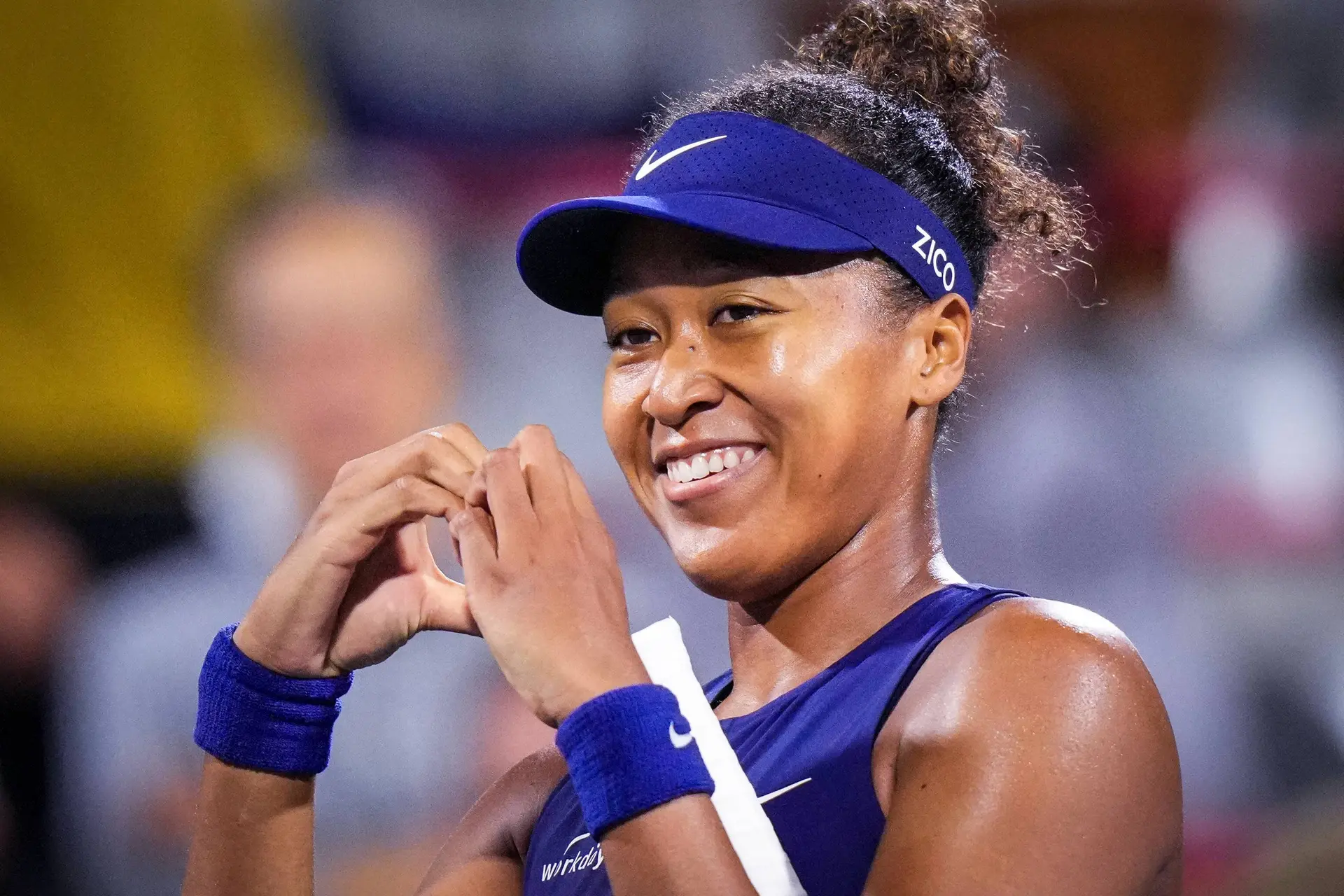
“I just told myself to try as hard as I could every point”
The match was shaped by instability on serve and repeated shifts in control, particularly in the second and third sets. Neither player was able to establish sustained dominance from the baseline, turning the contest into a series of short momentum swings decided by marginal execution.
“I just told myself to try as hard as I could every point,” Osaka said to Tennis Channel. “She was playing really well and returning really well. For me, I just hoped that I had enough experience to pull through, and I guess that’s what ended up happening.”
The final set featured multiple breaks of serve, reflecting a match that remained open deep into the closing stages. Osaka’s ability to remain competitive through those swings ultimately separated her in the final games. “I guess that’s what ended up happening.”

Naomi Osaka contemplating her next move at the 2025 US Open
“I’m not stubborn enough to force my game on the surface”
Osaka’s broader clay evolution continues to be defined by controlled adjustment rather than tactical reinvention. Instead of attempting to replicate hard-court patterns, she has increasingly prioritised movement efficiency and physical tolerance in longer rallies.
“I’m not stubborn enough to try to force my game on the surface,” she said. “This year I’ve been adjusting a little bit more. I think I’ve been fortunate enough to play some good matches.”

That shift is closely tied to emotional regulation, which she identified as a key variable in performance stability. Osaka noted that her level can fluctuate when frustration builds, particularly in matches with extended baseline patterns and repeated break opportunities.
“I want to be a lot more physical. I want to be a fighter. For me, I feel like sometimes I dip a little when I get disappointed in myself, so just trying to be a lot more level.”
Statistically, Osaka remains one of the most successful active players with 13 career finals and 7 titles, including 4 Grand Slams. However, clay as a surface on which she has not reached a final. Her best results on the surface include quarter-finals in Madrid and Rome during her world No.1 period - back in 2019 - alongside a WTA 125 title in Saint-Malo one year ago.
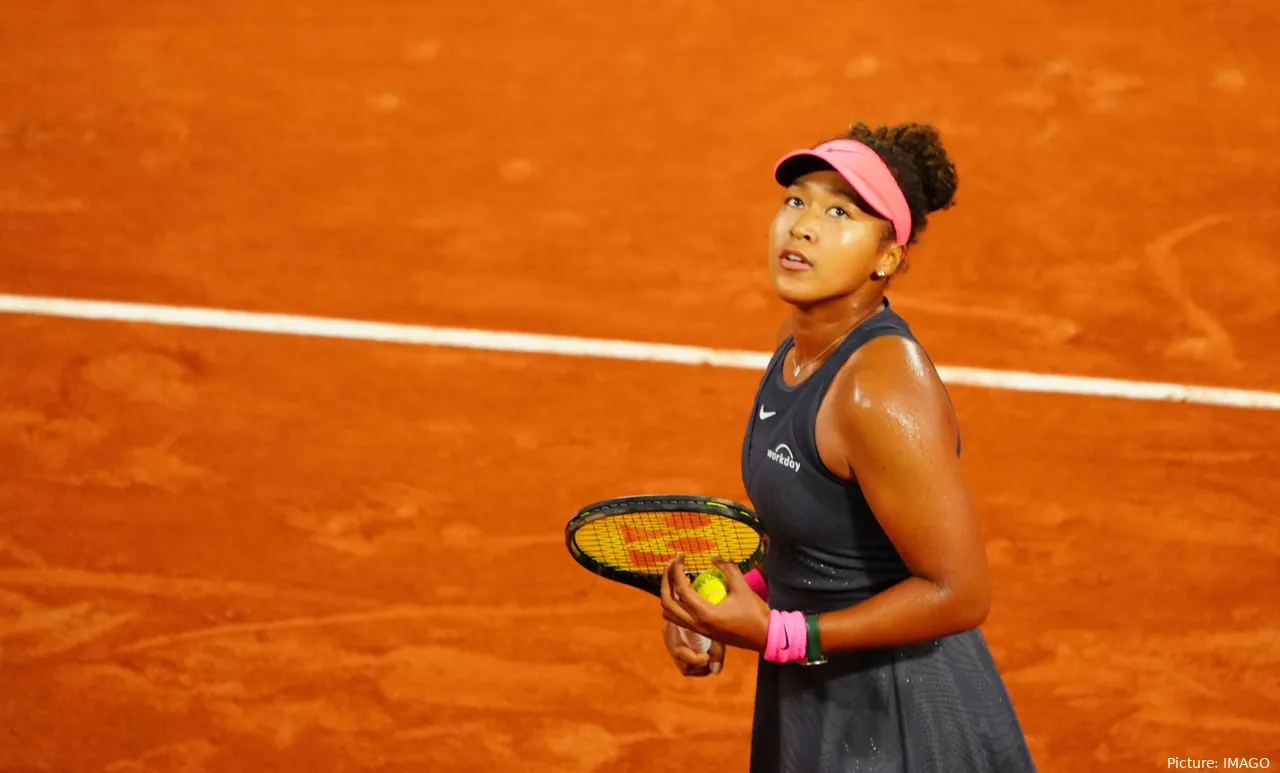
“Honestly, I want to be a little more aggressive on the returns”
Looking ahead, Osaka identified return positioning and aggression as the primary tactical adjustment after a more cautious approach in Rome compared to Madrid. The difference, she suggested, was partly psychological, driven by unfamiliarity with her opponent.
“Honestly, I just want to be a little more aggressive on the returns if I can. In Madrid I did that pretty well, but here I was a little nervous because I’ve never played her before. I was more trying to start the rallies, but if I can be more aggressive from the first ball, that would help.”
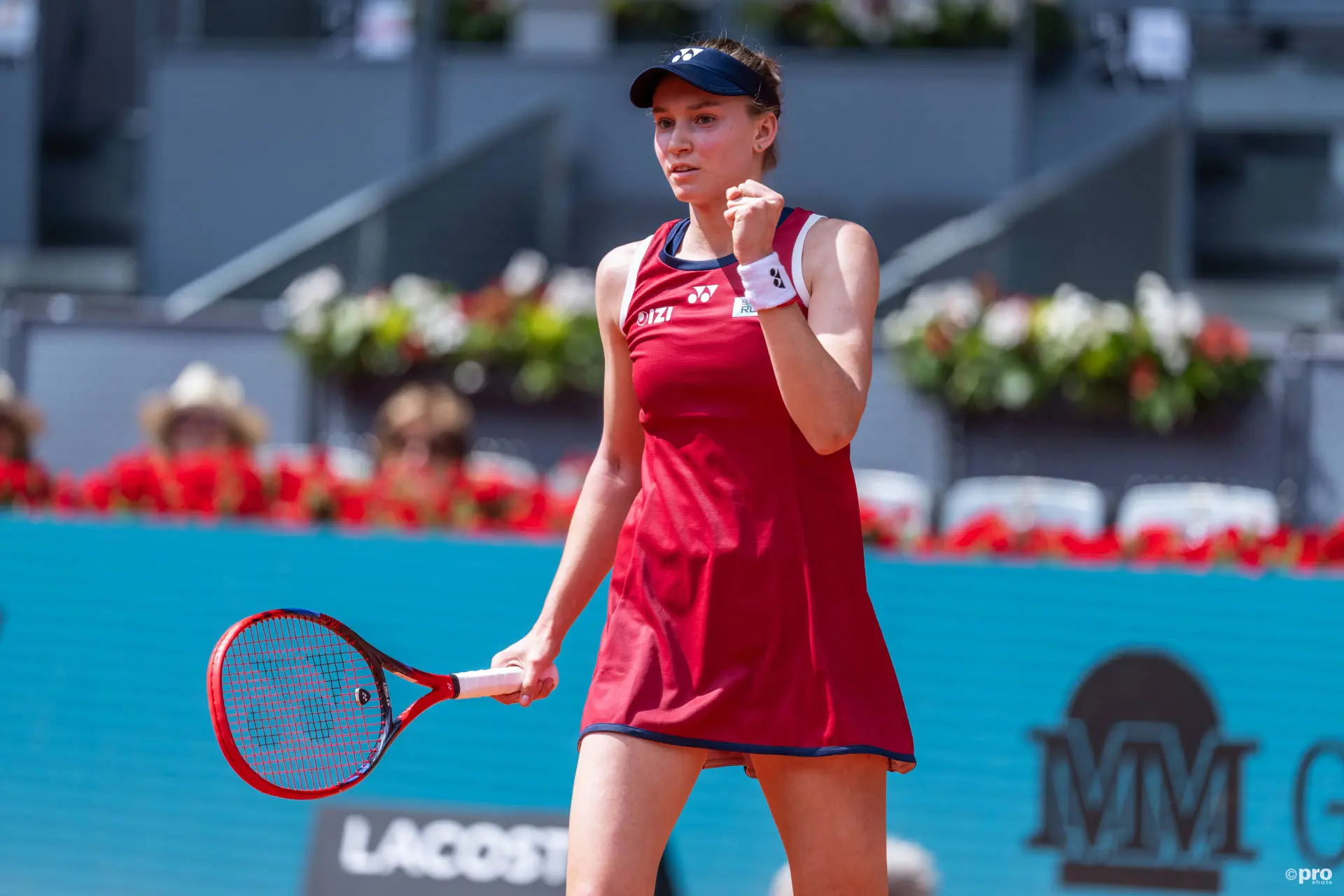
Her next opponent, Diana Shnaider, introduces a specific tactical challenge due to her left-handed profile. Osaka acknowledged that she initially underweighted the adjustment required before referencing previous experience against similar opponents.
“I just found that out now when you told me,” she said with a laugh. “I mean, I’ve played Petra Kvitová a couple of times, so I can think about that, even though it was years ago. Lefties are definitely tough. It takes a minute to get used to, but hopefully it’ll be a good match.”

Cristhián AvilaTennis Journalist
Cristhián Ávila is a tennis journalist based in Santiago, Chile, and has been part of the TennisUpToDate team since early 2023. He covers the ATP and WTA Tours as well as all four Grand Slams, producing breaking news, match reports, analysis, and regular liveblogs from major tournaments.
His reporting combines statistical analysis with clear explanation, helping readers understand tactical developments, player form, and broader storylines across the tour. Working fluently in both Spanish and English, Cristhián collaborates with an international editorial team and contributes to comprehensive global coverage. As part of his work, he has conducted interviews and media interactions with leading figures in the sport, including Caroline Wozniacki and John McEnroe.
In his journalism, Cristhián places strong emphasis on careful sourcing, editorial accuracy, and updating articles promptly when new, verified information becomes available. His coverage is grounded in research, context, and direct engagement with professional tennis.
claps 0visitors 0
Just In


Popular News



Latest Comments
- Does Sinner need that 4.5 mil? I doubt it. He can make that with three modelling gigs!😅🤣Rapunzel21-10-2026
- Did "People Magazine" purchase this website? This nonstop storyline is bullshit.
 mandoist21-10-2026
 - Listen... this is of no concern to anyone but these two. Deal with your own issues -- most of us have our own. Thanks, media, for these insignificant follow-ups which are meaningless.mandoist21-10-2026
- This is so very very sad, for all three of them. I truly thought they had an unbreakable bond, but life throws up so many differing challenges. Having your homeland suffering in such a terrible way, makes happiness lose out to guilt as well. Our thoughts are with them. X💔bjsexton20-10-2026
- I have lost all respect for Svitolina! Could she not have waited until he had played at the Paris Masters!!! She is selfish and don't give a damn about Gael. That is NOT how love is demonstrated Elina!!Rapunzel19-10-2026
- Perhaps convenient tennis tour sex is not a strong enough experience in which to base a marriage?mandoist19-10-2026
- Fight the Good Fight... Tennis (sports in general) need more Humans such as yourself.mandoist18-10-2026
- When is WTA going to mandate Genetic Testing (DNA) ???mandoist18-10-2026
- Hey, Dan... you just wake up from a coma? Regardless -- Thanks for the comedy this morning!mandoist18-10-2026
- Two Things: 1. Stop allowing these Spoiled Trust-Fund Elitists to behave badly. Your little hand-slaps do not deter them. 2. STOP the incessantly annoying "towel wiping" nonsense!!!!mandoist15-10-2026

Loading