"It’s not about controlling your emotions—it’s about mastering them" - Aryna Sabalenka's performance coach encourages expressive emotions of World No.1 on court
WTA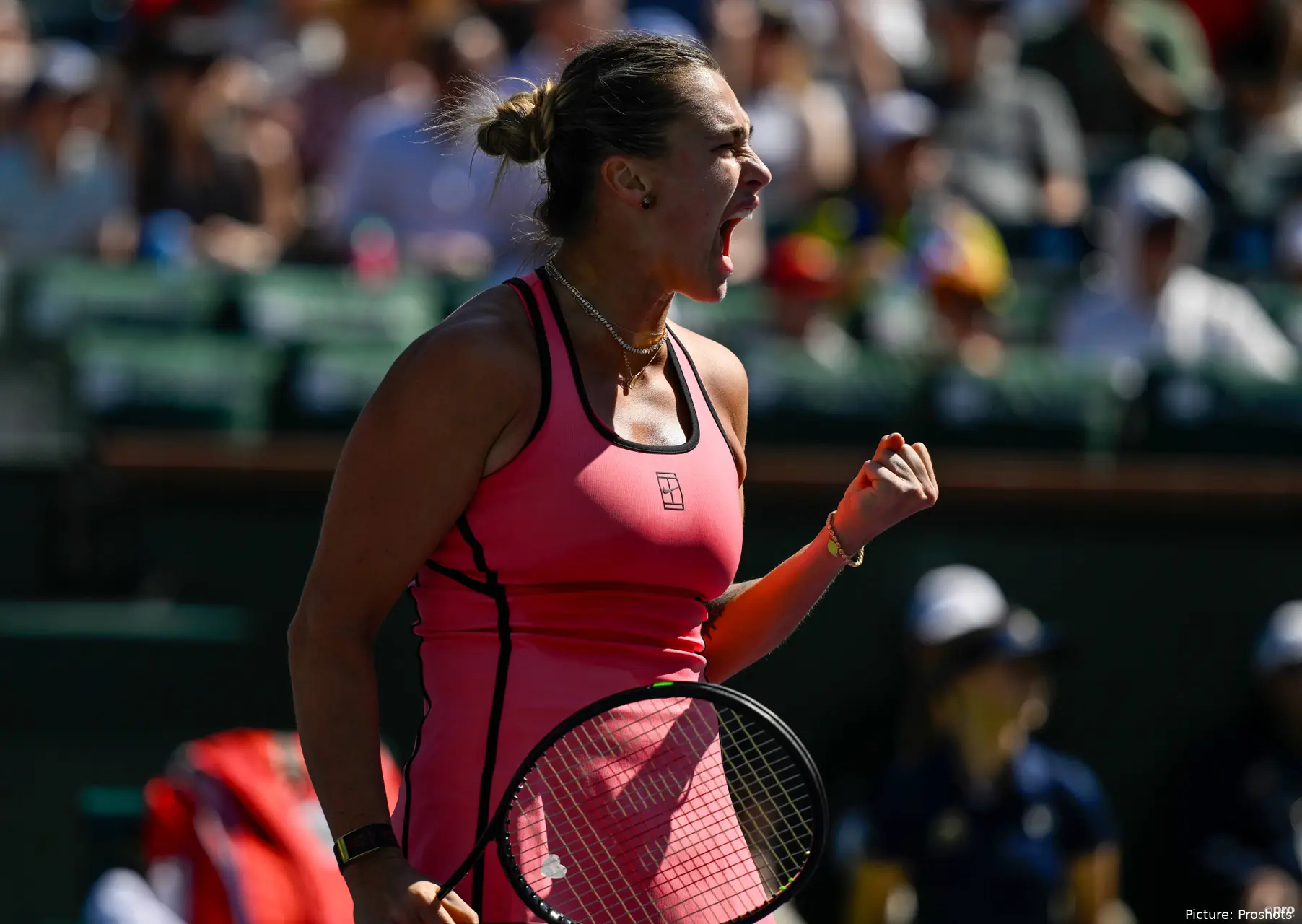
Being a performance coach for any tennis player is a hugely crucial aspect in developing their game. For Jason Stacy, there is an added bit of pressure with him overlooking world number one and four-time Grand Slam champion Aryna Sabalenka. When speaking to Andy Roddick on Served, he discussed his role in the team, how they communicate, and her daily routine at tournaments.
Managing her minutes on court
Sabalenka had an extremely busy Sunshine swing. She won both the Indian Wells and Miami Open titles, cementing her dominance on the WTA Tour. In turn, the Belarusian played a hefty amount of tennis in this period and has opted to skip the Stuttgart Open. While this seems to be like a break before her title defence at the Madrid Open, Stacey debunked this, with the process continuing away from the court.
"Time doesn’t stop for excellence," he stated. "The process is the process—win or lose. We always review what we’ve just done: what worked well, what needs improvement, and what the plan is moving forward. We look at the short term—the next few weeks—and also the long term: are we still on the right path?"
The process never stops. After their title triumphs, it was not long before they were analysing what areas she could improve. "It’s the same flow no matter what happens. After Miami, we had maybe two or three days off—but not really, because there were obligations like photo shoots and interviews. Now we’re back training—on court a couple of times a day and in the gym once or twice a day, just grinding away. We’re also adding some new things to her game."
A busy clay swing is set to commence. Sabalenka has a lot of points to defend, including those from the Madrid Open forementioned, plus the final at Roland Garros. She will be looking to get some big titles on the board and continue her imperious form, but her condition must be monitored with a lot of tennis being played out.

"A big focus right now is managing her energy, especially going into the European season," he commented. "Last year was an important lesson. A couple of years ago, she was very consistent, getting deep into tournaments. Then last year, it was almost like if she entered a tournament, she’d make the final—or win it. That’s a lot of matches."
They are looking to learn from last year's busy schedule. "Going into the clay season last year, she had Brisbane, the Australian Open, then Indian Wells (final), Miami (win), and then straight into Stuttgart. After that it was finals, finals, finals, quarters—and then the French Open final. By the time she got to the French Open, she was exhausted. She had played so many matches that her energy was depleted, and her ability to control emotions and stay focused just wasn’t there anymore."
Stacy's role in the team
Stacey explained his role as a performance coach. There were two parts to it: physically and mentally. "Physically, my job is to make sure she can show up to practice and perform everything that’s asked of her—without any modification or limitation," he said. "No matter what, she needs to be able to do what her coach Anton needs from her. That’s the goal."
He continued: "Mentally, it’s very similar. It’s about managing her environment—how she handles emotions, energy, and everything going on internally and externally."
Described as the 'babysitter', his job also includes overseeing everyone else, making sure other members of Sabalenka's team are doing the right things and are on track. "A big part of my job is also making sure we have the right people doing the right things at the right time," he explained. "A simple way to put it—I’m basically the babysitter. That’s what they call me. Day to day, it’s the fitness side, but also using the body to train the mind. That’s often the most reliable way to ensure mental readiness."
He is also in regular communication with her main coach, Anton Dubrov. "Anton and I are constantly communicating—daily, sometimes several times a day—about what we’re seeing, how she’s feeling, any small signs or even gut feelings about movement or energy. We’re always checking in, making sure we’re aligned and not missing anything."
Keeping an eye on Sabalenka's expressive emotions
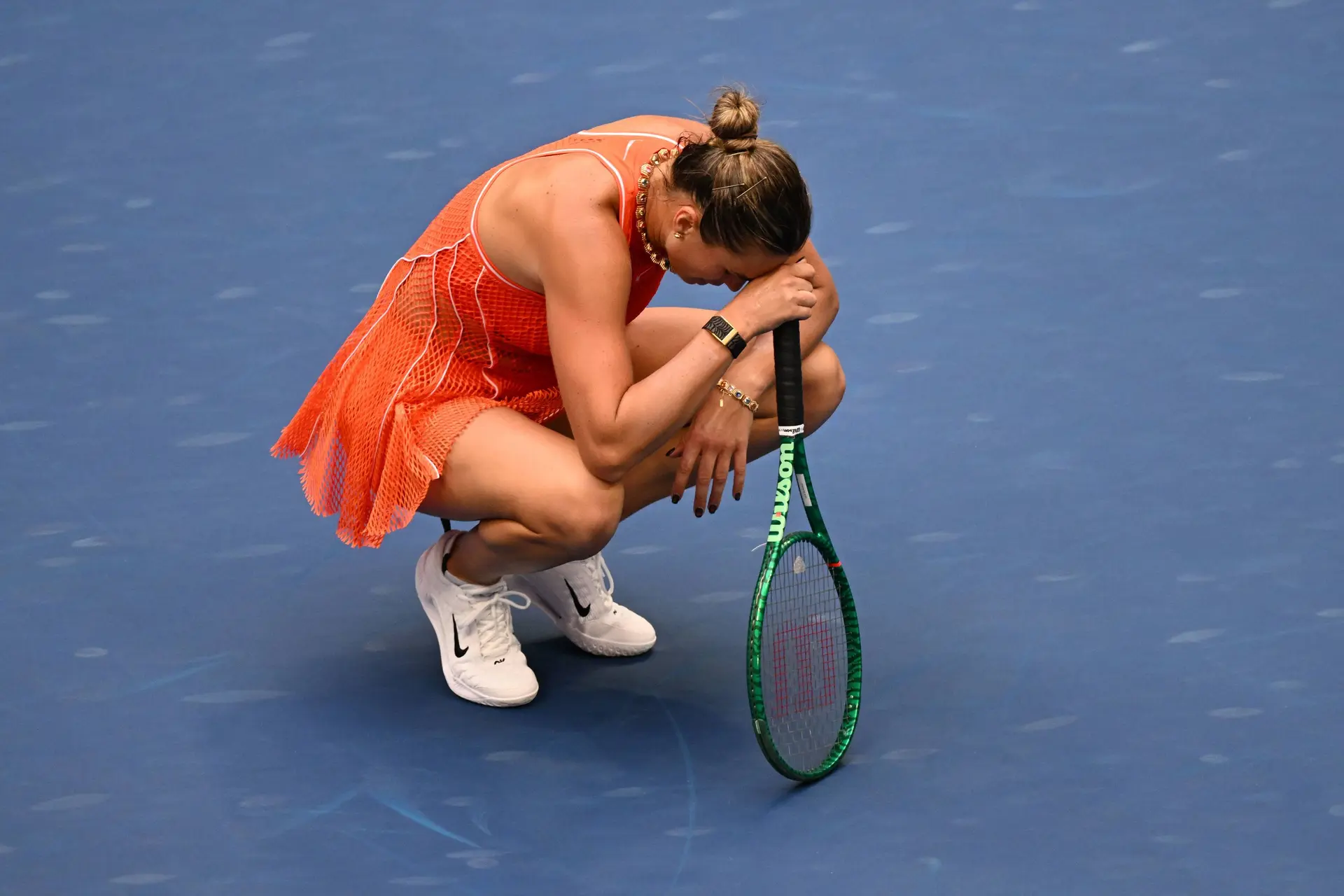
Sabalenka is a very expressive and colourful character on court, not afraid to unveil her raw emotions. This is in contrast to players like her rival Elena Rybakina, who gives away nothing from the other side of the court.
Stacy is fine about this expression of emotions, but notes how important it is to get them right. "Honestly, that idea always bothered me—that everyone has to 'control emotions' in the same way, be stoic, keep everything in," he said. "There is a time and place for that, and it depends on the individual and the situation. It’s not about controlling your emotions—it’s about mastering them. You have to meet the person where they are. Understand who they are. It’s about recognising what makes you who you are, and sometimes just reminding yourself of that."
The environment created around Sabalenka allows her to be herself and show whatever emotions feeling at that current time. This is where Stacy comes in, analysing these emotions and whether they are the right ones.
"We try to create an environment where she has the freedom to be herself—to make mistakes, to explore, to fail, to win," he explained. "But at the same time, there has to be awareness: are these emotions helping or hurting? Are they an asset or a liability? That’s been a big part of our work over the last few years. From day one, we started identifying patterns—what reactions were costing her energy or matches, and what traits were actually strengths."
Communicating among the team
Communication is crucial between her team. Sabalenka, Dubrov and Stacy are a very tight circle who speak among each other regularly and know each other inside out.
"It’s gotten to the point where Aryna can say something to me and know Anton will understand, or say something to Anton and know I’ll know," he admitted. "And Anton and I both know that she knows. So we don’t have to repeat everything—it’s just understood."
There is no strict system when it comes to key conversations; none of it is scheduled with the similar motive of just speaking her mind when the opportunity arises. "It could be during a workout, treatment, practice, or even driving somewhere. So it’s important that if something is shared, we’re all aligned on it. Everyone else on the team understands that anything going to Aryna is filtered through us first—based on timing and context. It’s not a rigid system, just an understanding of what works best."
When passing on advice to the world number one, it is important that Stacy knows when to pass on this to her. "There’s never a fixed endpoint because things are always changing. It comes down to awareness—everyone on the team being aware of themselves and how they show up, and helping Aryna become more self-aware too," he asserted. "We have systems in place so we don’t introduce things unless the timing is right—even if we really want to. That takes trust and patience."
It is not an easy process. "Sometimes you feel like, 'I have to say this right now,' but if you do it at the wrong time, the value is lost. You miss the opportunity." Practice and trust are hugely crucial. "That’s hard—it takes experience. I’ve been doing this for decades, and it still requires patience. It goes back to trust. If you build that trust within the team, you know the right moment will come."

Aryna Sabalenka is the world number one
Daily routine at tournament
While it can alter slightly whether it is a training block or a tournament, there are some priorities that Sabalenka has implemented throughout her career.
"She’s very consistent with nutrition—what she eats and her supplementation," he commented. "That might vary slightly depending on where we are or what we’re working on, but overall it’s very structured. Her sleep is a big priority—she’s very disciplined about that now. Movement is daily. But that doesn’t always mean structured training. Sometimes I’ll just tell her: go shopping, walk around, go to the beach—just move your body."
He listed her routine at a tournament. "During tournaments, the routine is more structured: Wake up, breakfast, gym and warm-up, practice, back to the gym for fitness, eat, recover and repeat. It’s a cycle of eat, sleep, train, practice, and communicate."
Sabalenka will have the final word before the match with Dubrov. "Before matches, Anton will speak with her—anywhere from five minutes to half an hour—but we keep it simple. We don’t go into too much detail. We also don’t really “humanise” the opponent beforehand. It’s more: this is the opponent, this is the plan, these are your strengths, and how they apply to their weaknesses. That’s it. After the match, then you shake hands and acknowledge the person. Before that, it’s just competition."
Lucas MichaelTennis Journalist
Lucas Michael is a tennis journalist based in Cambridge, UK, specializing in comprehensive coverage of the ATP and WTA tours. For the past 1.5 years, he has been a core contributor to TennisUpToDate, where he has authored more than 3,000 data-driven match reports, deep-dive analysis pieces, and engaging liveblogs.
Lucas pairs real-time statistical analysis with on-the-ground reporting, frequently traveling to tournaments to cover the action firsthand from the press box and player press conferences. This blend of advanced metrics and direct access allows him to provide sharp context regarding player form, tactical trends, and breaking tour developments.
He holds a BA (Hons) in Sports Journalism. Grounded in core journalistic ethics, Lucas places a strict emphasis on meticulous sourcing, editorial accuracy, and a commitment to updating live content swiftly as verified information emerges.
claps 0visitors 0
Just In

Popular News
Latest Comments
- A healthy Qinwen may be hard to stop next season. She was already scaring her opponents before her medical leave(s). Unfortunately, Zheng insisted on singing again. On the positive side -- Mirra did not sing!! ;~}
 mandoist11-10-2026
 - Where is it written that athletes, entertainers... People in general... are mandated to keep looking at -- or even using [anti]Social Media? Public & private figures consistently complain and reveal their concerns about negativity and violence thrown at them -- yet they insist on participating. Avoid it, don't use it, don't read it. It's okay to occasionally look up at the World instead beating your eyes & thumbs to death on The Inventions out there.mandoist11-10-2026
- great articlestennisseserver07-10-2026
- Medvedev was leading Djokovic 7-5, 3-5 when an attempted return..' NO you ignorants, Djokovic was leading .weiss05-10-2026
- No more bullshit "Wildcards" to these two. Qualify like everyone else -- there will be cameras there, too. Time to scream... WTF ????!!!!mandoist29-09-2026
- Let's not BS the general public -- Sabalenka started showing cracks in her game last season. Her losses and near-losses started at about the same time she began being distracted by Fame (constant Selfies, making TV commercials, magazine shoots, endless Social Media nonsense, etc., etc.) One would think even Saba could recognize the parallels with others who failed before her -- Raducanu, Giorgi, Bouchard to name a few.mandoist25-09-2026
- Gross!! Hey Raducanu, Giorgi, and Bouchard -- reserve a seat at your Social Media Selfie table for Saba + Naomi. They're heading in your direction soon enough.mandoist24-09-2026
- And then these same players will complain about how lengthy their season’s were and need more time-off. I’m all for more tennis but the amount of tennis we get now is actually kind of crazy! We all need a break, especially the players.DaveyWavey23-09-2026
- You should do a comparison article for "different kinds of justice" the courts decide for tennis players. I can think of at least three players who received very small bans of a few months, however Tara Moore has been fighting for her literal survival the past few years. It seems odd considering she is not a "name" player, unlike the other cases.DaveyWavey22-09-2026
- PRIZE MONEY & POINTS Winner - $185,500 Finalist - $114,500 Semi-Finalist - $66,003 Quarter-Finalist - $35,000 Round of 16 - $18,045 Round of 32 - $13,005 Winner - 500 Finalist - 325 Semi-Finalist - 195 Quarter-Finalist - 108 Round of 16 - 60 Round of 32 - 1DaveyWavey20-09-2026

Loading