Geneva Open Day Four Round-up | Taylor Fritz knocked out, Ruud advances, as Wawrinka loses tight tie-break contest
ATP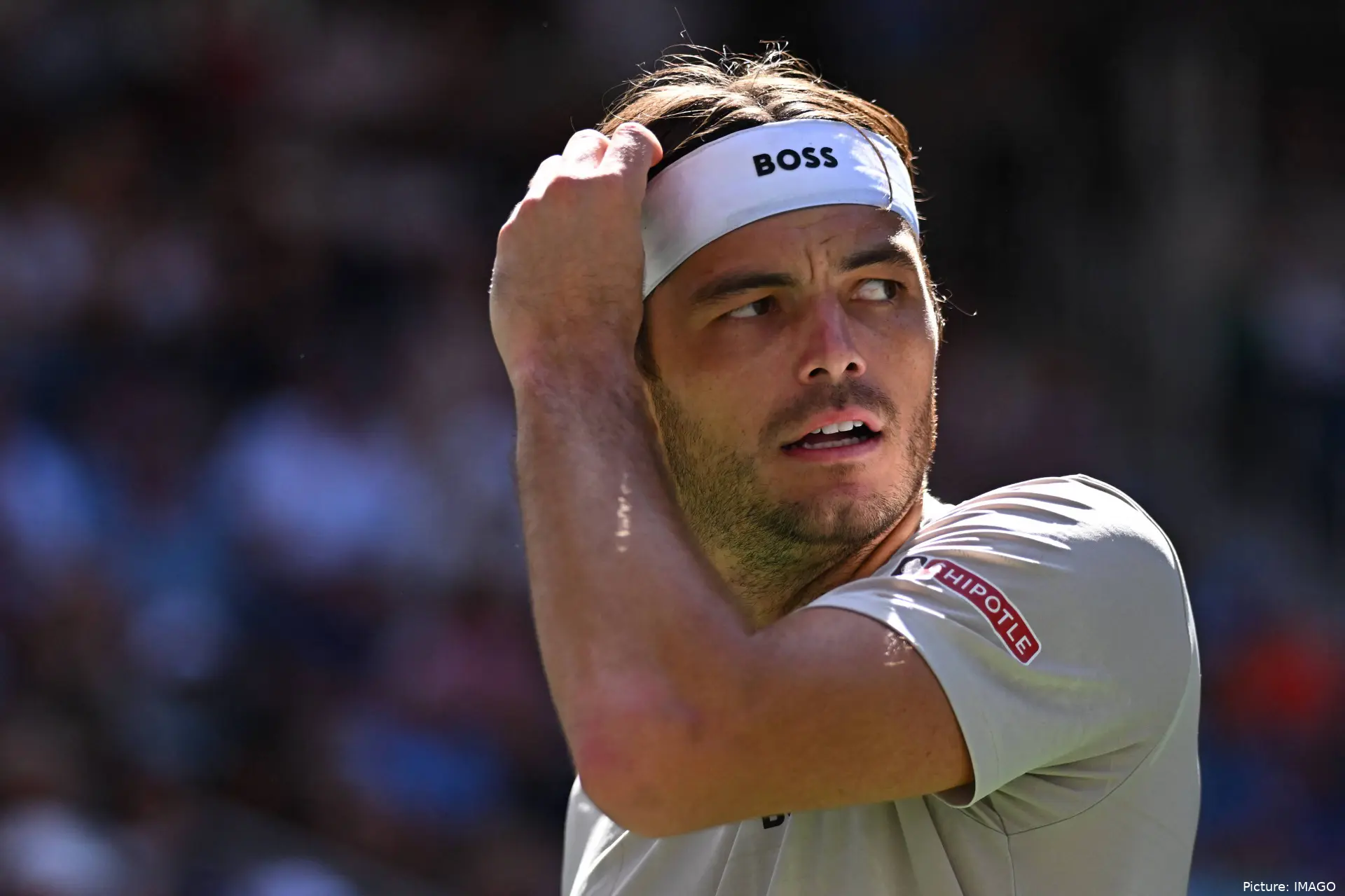
The Geneva Open Round of 16 delivered a series of straight-sets and tie-break finishes, led by Alex Michelsen’s win over Stan Wawrinka, Casper Ruud’s comeback against Raphael Collignon, and Alexei Popyrin’s victory over top seed Taylor Fritz. Mariano Navone and Jaume Munar also progressed after controlled performances, shaping a compact but decisive day in Geneva.
Across the Round of 16, matches were defined by serving efficiency and return pressure in key moments. Several seeded players were forced out as the draw opened up, while Ruud and Michelsen maintained steady progression through structurally controlled victories.
Alex Michelsen holds firm in dual tie-break win over Stan Wawrinka
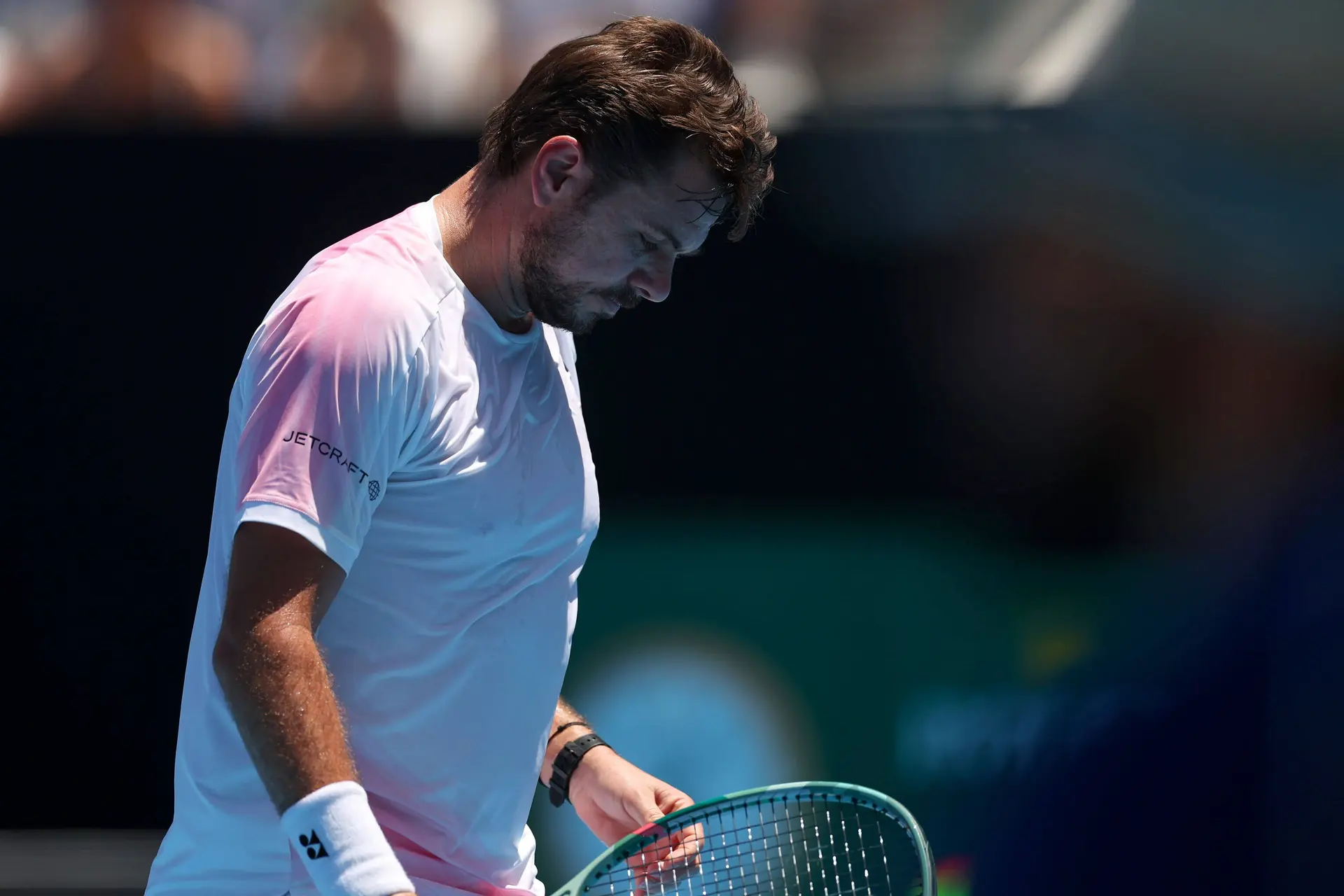
Alex Michelsen def. Stan Wawrinka 7-6, 7-6
Michelsen advanced through a high-tension serving contest against Stan Wawrinka, where both sets were decided exclusively in tie-breaks. The early phase was defined by hold-dominant patterns, with neither player generating a break point, forcing extended reliance on first-strike tennis in the Geneva Open Round of 16.
The match structure remained stable until both tie-breaks, where Michelsen produced cleaner second-serve execution and more consistent depth on return positioning. Wawrinka maintained serve efficiency but lacked variation in neutral rallies, allowing Michelsen to stabilise baseline exchanges under pressure.
Michelsen’s superior tie-break execution proved decisive, as he converted both mini-break opportunities while limiting unforced errors in high-pressure points. He progresses to the next round of the Geneva Open, where his return efficiency will again be tested against more aggressive serving profiles on quicker first-strike patterns.

Stan Wawrinka at 2025 Australian Open
Ruud overturns Collignon after early setback
Casper Ruud def. Raphael Collignon 6-7(2), 6-2
Casper Ruud recovered from a tightly contested opening set loss, where Raphael Collignon edged a tie-break 7-2 after a sequence of extended holds. Early exchanges were shaped by Collignon’s first-serve dominance, which initially limited Ruud’s ability to apply consistent return pressure in the Geneva Open Round of 16.
The tactical shift emerged at the start of the second set, where Ruud increased depth on return positioning and extended baseline rallies to neutralise Collignon’s serve patterns. This adjustment forced shorter service games and created multiple break opportunities that were previously absent.
Ruud’s control of second-serve points and improved return depth translated into a decisive 6-2 second set, securing momentum across longer exchanges. He advances within the Geneva Open draw and continues to position himself as a structured contender in the clay-courts.

Alexei Popyrin breaks down Taylor Fritz
Alexei Popyrin def. Taylor Fritz 6-4, 6-4
Popyrin produced a measured straight-sets win over top seed Taylor Fritz, taking early control through return pressure that disrupted Fritz’s baseline rhythm. The opening phase showed limited variation from Fritz, who struggled to convert first-serve platforms into free points in the Geneva Open Round of 16.
The key adjustment came through Popyrin’s return positioning, which consistently targeted Fritz’s second serve and reduced his service-game stability. This created repeated break scenarios that defined both sets without requiring extended tie-break resolution.
Statistically, Fritz’s reduced efficiency on serve allowed Popyrin to maintain scoreboard control across both sets, particularly in neutral rallies where he dictated tempo. The result sends Popyrin into the next round, where he will face Casper Ruud, marking a significant draw shift in Geneva following a series of seeded exits.

Taylor Fritz at 2025 ATP Finals
Mariano Navone neutralises Cameron Norrie
Mariano Navone def. Cameron Norrie 6-4, 6-4
Navone delivered a structured baseline performance against Cameron Norrie, securing two identical set scorelines through consistent return pressure. The opening exchanges were defined by Navone’s ability to extend rallies and force defensive positioning from Norrie in the Geneva Open Round of 16.
The decisive factor was Navone’s control of service-return balance, particularly in mid-set phases where he converted break opportunities while maintaining high first-serve stability. Norrie’s inability to reverse momentum in extended rallies limited his tactical options.
Navone’s consistency across both sets ensured a controlled progression, with minimal fluctuation in service holds. He advances further in the draw, where he will face Jaume Munar in the next round, reflecting a matchup shaped by structured baseline efficiency and steady return patterns.

Stefanos Tsitsipas eliminated by Learner Tien in straight tie-breaks
Learner Tien def. Stefanos Tsitsipas 7-6, 7-6
Tsitsipas exited after two tightly contested tie-break sets against Learner Tien, with neither player able to establish a break across extended holds. The match remained on serve throughout key phases of the Geneva Open Round of 16, with service games largely untroubled on both sides.
The turning point came in both tie-breaks, where Tien produced more consistent return depth and reduced error frequency under pressure, particularly in neutral exchanges that extended beyond the first strike. Tsitsipas created set opportunities but lacked conversion efficiency in decisive moments, failing to capitalise on small margins in both sets.
Tien’s stability in high-pressure situations defined the outcome, as both sets required tie-break resolution without service breaks, ultimately rewarding cleaner execution in the most compressed phases of the match.

Learner Tien during his fourth round at the Australian Open

Samuel GillEditor-in-Chief
Samuel Gill is the Chief Content Officer (CCO) of TennisUpToDate.com, a role he has held since 2020. He is responsible for editorial governance across the platform, including setting content standards, overseeing accuracy and consistency, and guiding long-term editorial strategy. Since joining, he has contributed more than 10,000 articles and editorial pieces across the TennisUpToDate network, playing a central role in the daily operation and development of the site.
Based in Leicester, Samuel has a broad background in tennis media. In his current role, he works closely with editors and writers to ensure coverage meets clear journalistic standards, with particular attention to verification, consistency, and timely updates when new information becomes available.
claps 0visitors 0
Just In

Popular News
Latest Comments
- A healthy Qinwen may be hard to stop next season. She was already scaring her opponents before her medical leave(s). Unfortunately, Zheng insisted on singing again. On the positive side -- Mirra did not sing!! ;~}
 mandoist11-10-2026
 - Where is it written that athletes, entertainers... People in general... are mandated to keep looking at -- or even using [anti]Social Media? Public & private figures consistently complain and reveal their concerns about negativity and violence thrown at them -- yet they insist on participating. Avoid it, don't use it, don't read it. It's okay to occasionally look up at the World instead beating your eyes & thumbs to death on The Inventions out there.mandoist11-10-2026
- great articlestennisseserver07-10-2026
- Medvedev was leading Djokovic 7-5, 3-5 when an attempted return..' NO you ignorants, Djokovic was leading .weiss05-10-2026
- No more bullshit "Wildcards" to these two. Qualify like everyone else -- there will be cameras there, too. Time to scream... WTF ????!!!!mandoist29-09-2026
- Let's not BS the general public -- Sabalenka started showing cracks in her game last season. Her losses and near-losses started at about the same time she began being distracted by Fame (constant Selfies, making TV commercials, magazine shoots, endless Social Media nonsense, etc., etc.) One would think even Saba could recognize the parallels with others who failed before her -- Raducanu, Giorgi, Bouchard to name a few.mandoist25-09-2026
- Gross!! Hey Raducanu, Giorgi, and Bouchard -- reserve a seat at your Social Media Selfie table for Saba + Naomi. They're heading in your direction soon enough.mandoist24-09-2026
- And then these same players will complain about how lengthy their season’s were and need more time-off. I’m all for more tennis but the amount of tennis we get now is actually kind of crazy! We all need a break, especially the players.DaveyWavey23-09-2026
- You should do a comparison article for "different kinds of justice" the courts decide for tennis players. I can think of at least three players who received very small bans of a few months, however Tara Moore has been fighting for her literal survival the past few years. It seems odd considering she is not a "name" player, unlike the other cases.DaveyWavey22-09-2026
- PRIZE MONEY & POINTS Winner - $185,500 Finalist - $114,500 Semi-Finalist - $66,003 Quarter-Finalist - $35,000 Round of 16 - $18,045 Round of 32 - $13,005 Winner - 500 Finalist - 325 Semi-Finalist - 195 Quarter-Finalist - 108 Round of 16 - 60 Round of 32 - 1DaveyWavey20-09-2026

Loading