Psychodrama in Melbourne: Eva Lys fades away as Sorana Cirstea takes advantage in big Australian Open win
WTA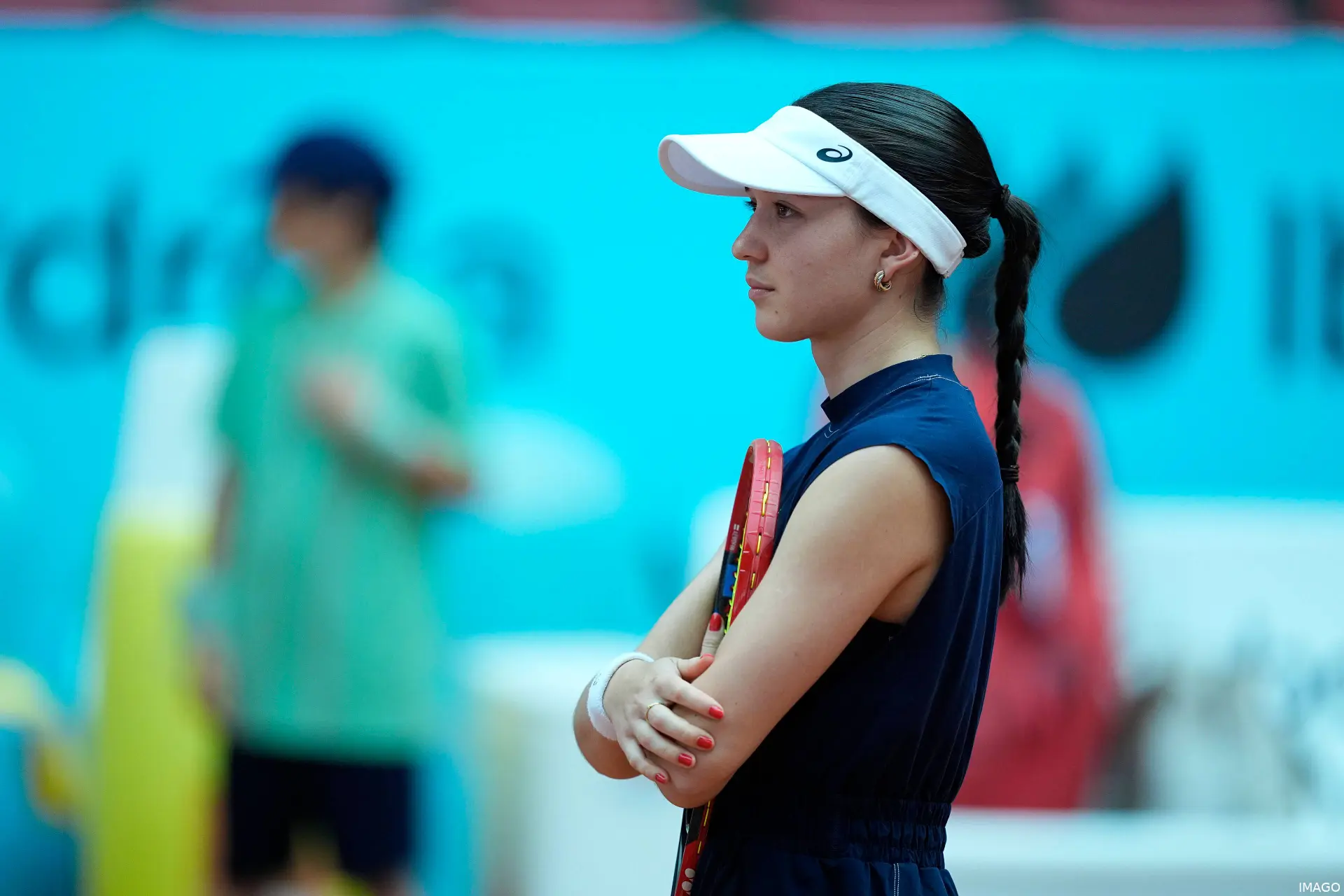
There are matches that bang on center court. And there are matches that quietly bite. In the first round of the Australian Open, Eva Lys against Sorana Cîrstea was exactly the second kind: a duel that didn't rely on spectacle, but on suspense. Control changed hands like a baton, nerves were the secret protagonist.
Cirstea turns the match against Lys - nerves of steel beat departure
Lys was initially the one who wrote the story. She played the first set with a mixture of patience and courage, 6:3, cleanly constructed. Not blindly going for it, but precise attacks when the gap appeared. Particularly striking: her sudden changes of side, those changes of direction that can turn a rally around in an instant.
Cirstea often stood well, sometimes even perfectly - and then had to regroup because Eva Lys steered the ball exactly where it became uncomfortable.

Eva Lys is being touted as the next German star - with top performances, personality off the pitch and increasing commercial commitments, she is well on her way to becoming one
The picture tilted
It wasn't that Lys completely collapsed. It was more subtle, more annoying, more dangerous: clarity was lost. Decisions took one shot too long, the mistakes crept in, the arm got a little tighter. Suddenly her tennis no longer seemed like a plan, but like a question: do I go for it or not?
Cirstea didn't need any miracles for that. She just needed that one quality that makes experienced players so brutal: she recognizes hesitation immediately. When Lys had two break points at 4:4 in the second set and was about to slam the door shut, Cirstea stood there like someone accepting an invitation. A few precise serves, a few longer rallies, a few extra balls back - and things turned around. 6:4 for the Romanian, set tied, everything open again.
The third set was a test
Cirstea went 3:1 ahead, which seemed routine, like a script she already knew. Lys kept at it, fought back, also with a bit of luck, a net roller here, a point that stuck. And it was in this phase that the most exciting thing happened: Lys switched completely. No more waiting. She took the balls earlier, went further in, played all-in.
It was electrifying for a few games because it tore the match open again and took Cirstea out of his rhythm.
Match Statistics Cirstea vs. Lys
| Cirstea | VS | Lys |
|---|---|---|
| Service | ||
| 9 | Aces | 0 |
| 3 | Double Faults | 2 |
| 59% (60/101) | 1st Service Percentage | 71% (63/89) |
| 67% (40/60) | 1st Service Points Won | 60% (38/63) |
| 47% (20/43) | 2nd Service Points Won | 54% (14/26) |
| 64% (7/11) | Break Points Saved | 55% (6/11) |
| 71% (10/14) | Service Games | 64% (9/14) |
| Return | ||
| 40% (25/63) | 1st Return Points Won | 33% (20/60) |
| 46% (12/26) | 2nd Return Points Won | 53% (23/43) |
But all-in is also all-in
The closer we got to the finish line, the narrower the ridge became. And at 4:4, it was too narrow. Cirstea did what she does so well: She didn't give Lys any clear gifts, but she posed the question anew with every ball. Will you stay brave? Will you stay precise? And at some point, the answer was one mistake too many. Break at 5:4, then a composed service game - no panic, no delay, just played to the end.
For Lys, a match like this feels doubly difficult because it's not just about the moment. In Melbourne, there are points, expectations and ranking mathematics involved. You could tell that the longer it went on, the more that also played a part.
Cirstea, on the other hand, seemed as if she wasn't letting herself be gripped by any of this - as if she was in a mode of clarity rather than a mode of fear.

Sorana Cirstea Sorana Australian Open in 2020
In the end, the result doesn't tell the whole story. Lys had this match in her hands, she had the ideas, she had the phases in which she was better. But from about halfway through, she started to struggle - not just with Cirstea, but with her own timing, her own consistency. Cirstea didn't win because she worked her magic.
Sorana Cirstea won because she knew exactly who she was in the final minutes.


Samuel GillEditor-in-Chief
Samuel Gill is the Chief Content Officer (CCO) of TennisUpToDate.com, a role he has held since 2020. He is responsible for editorial governance across the platform, including setting content standards, overseeing accuracy and consistency, and guiding long-term editorial strategy. Since joining, he has contributed more than 10,000 articles and editorial pieces across the TennisUpToDate network, playing a central role in the daily operation and development of the site.
Based in Leicester, Samuel has a broad background in tennis media. In his current role, he works closely with editors and writers to ensure coverage meets clear journalistic standards, with particular attention to verification, consistency, and timely updates when new information becomes available.
claps 0visitors 0
Just In


Popular News


Latest Comments
- Does Sinner need that 4.5 mil? I doubt it. He can make that with three modelling gigs!😅🤣Rapunzel21-10-2026
- Did "People Magazine" purchase this website? This nonstop storyline is bullshit.
 mandoist21-10-2026
 - Listen... this is of no concern to anyone but these two. Deal with your own issues -- most of us have our own. Thanks, media, for these insignificant follow-ups which are meaningless.mandoist21-10-2026
- This is so very very sad, for all three of them. I truly thought they had an unbreakable bond, but life throws up so many differing challenges. Having your homeland suffering in such a terrible way, makes happiness lose out to guilt as well. Our thoughts are with them. X💔bjsexton20-10-2026
- I have lost all respect for Svitolina! Could she not have waited until he had played at the Paris Masters!!! She is selfish and don't give a damn about Gael. That is NOT how love is demonstrated Elina!!Rapunzel19-10-2026
- Perhaps convenient tennis tour sex is not a strong enough experience in which to base a marriage?mandoist19-10-2026
- Fight the Good Fight... Tennis (sports in general) need more Humans such as yourself.mandoist18-10-2026
- When is WTA going to mandate Genetic Testing (DNA) ???mandoist18-10-2026
- Hey, Dan... you just wake up from a coma? Regardless -- Thanks for the comedy this morning!mandoist18-10-2026
- Two Things: 1. Stop allowing these Spoiled Trust-Fund Elitists to behave badly. Your little hand-slaps do not deter them. 2. STOP the incessantly annoying "towel wiping" nonsense!!!!mandoist15-10-2026

Loading