Rome Open WTA Day Eight Round-Up | Iga Swiatek dismantles Osaka, Rybakina routs Pliskova, as Gauff saves match point to advance
WTA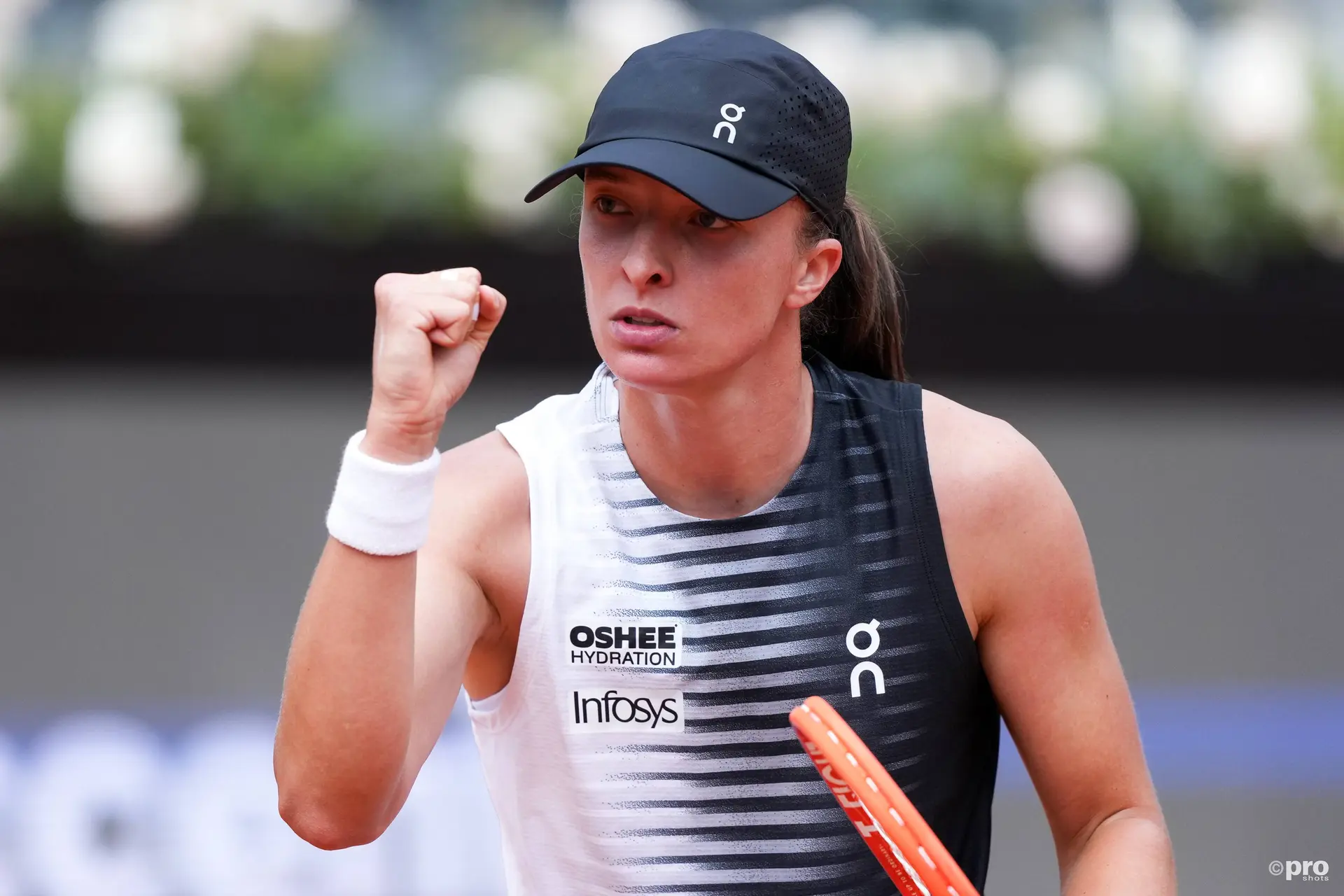
The Rome Open Round of 16 produced a consolidated set of results as the draw narrowed toward the quarter-finals, with Iga Swiatek, Jessica Pegula and Coco Gauff all progressing through contrasting matches. The Rome Open Round of 16 also featured straight-set wins for Elina Svitolina and Mirra Andreeva, alongside a comeback victory for Gauff after a prolonged baseline battle against Iva Jovic.
Across the Rome Open Round of 16, the top half of the draw continued to separate into seeded contenders and lower-ranked challengers unable to sustain first-serve efficiency under pressure. Swiatek’s control from the baseline, Pegula’s serve efficiency and Svitolina’s return pressure all shaped outcomes, with implications for a quarter-final line-up increasingly dominated by top-five seeds.
Cirstea continues strong run past Noskova
Sorana Cirstea def. Linda Noskova 6-2, 6-4
Cirstea advanced in the Rome Open Round of 16 after maintaining baseline control against Noskova, building early separation through consistent return depth. The Romanian imposed rhythm through first-strike positioning, limiting Noskova’s ability to dictate serve patterns.
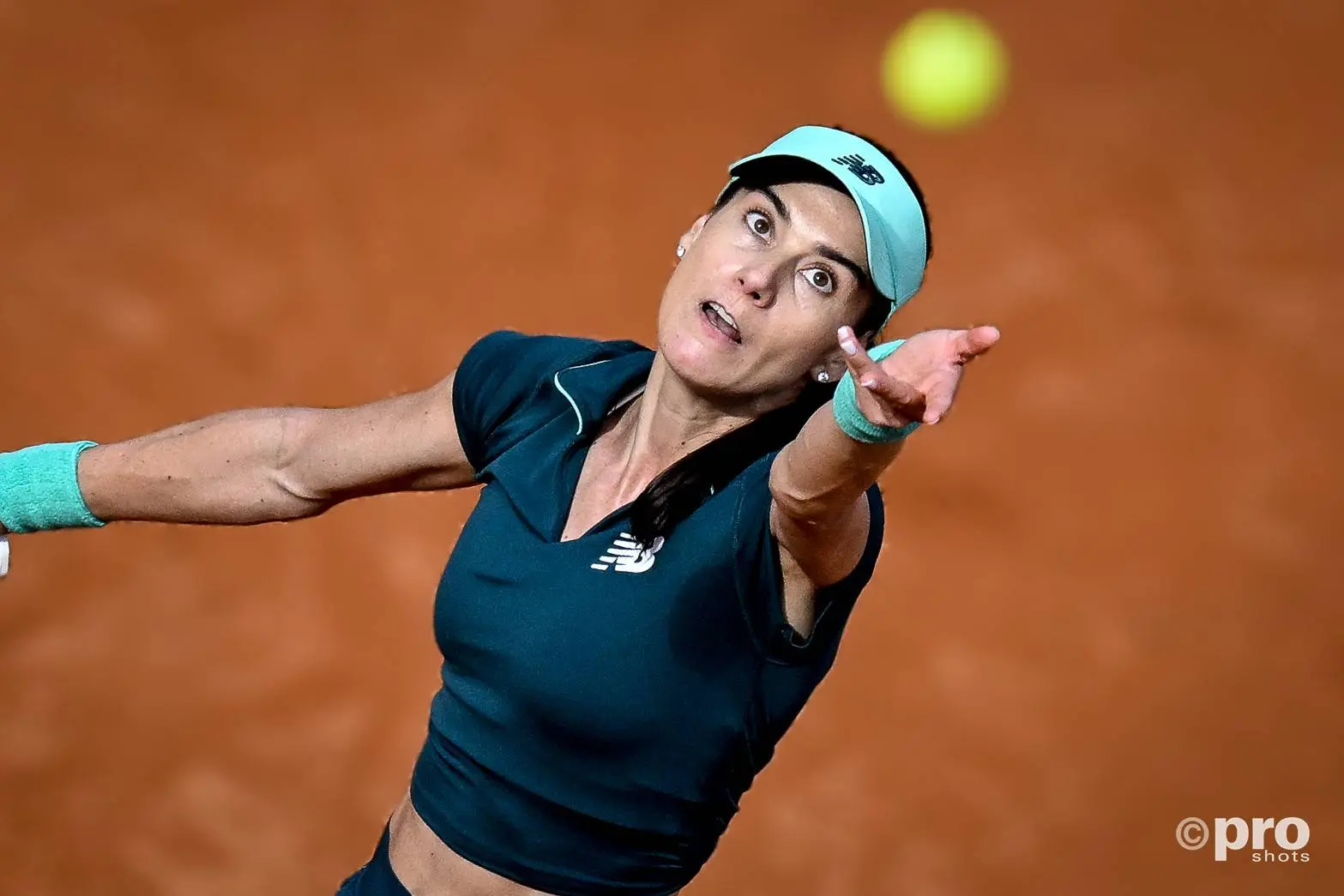
Noskova attempted to increase aggression in the second set but struggled to sustain rally tolerance against Cirstea’s defensive coverage and counterpunching depth. The match remained stable on Cirstea’s serve in key phases.
Cirstea’s ability to convert early break opportunities and maintain low unforced error counts ensured control across both sets. She progresses into the quarter-finals, extending her run in the Rome Open draw, and she will face the 2017 French open champion Jelena Ostapenko

Ostapenko overwhelms Kalinskaya in straight sets
Jelena Ostapenko def. Anna Kalinskaya 6-1, 6-2
Ostapenko advanced in the Rome Open Round of 16 through aggressive baseline timing and early return pressure that disrupted Kalinskaya’s serve rhythm. The opening set established immediate separation as Kalinskaya struggled to hold extended service games.
Ostapenko maintained high-intensity shot selection on return games, consistently shortening rallies and forcing errors through depth variation. Kalinskaya was unable to stabilise her first-serve effectiveness, leading to repeated break exposure.
The match concluded with a clear statistical imbalance in return efficiency and break conversion, allowing Ostapenko to progress without extended recovery phases. She moves into the quarter-finals of the Rome Open with minimal time on court. The encounter ended on a tense note, with visible tension between both players and no handshake at the net, underlining a strained relationship throughout and after the match.

Svitolina dominates return game to dispatch Bartunkova
Elina Svitolina def. Nikola Bartunkova 6-2, 6-3
Svitolina secured progression in the Rome Open Round of 16 through sustained return pressure and high break conversion rates. Bartunkova struggled to establish service rhythm, winning only one service game across the match, which limited her ability to construct extended holds.
Svitolina’s tactical edge came from neutralising serve patterns early and extending baseline rallies, forcing repeated defensive positions from the Czech player. Although Svitolina dropped serve four times, her return dominance compensated across both sets.
The Ukrainian converted seven breaks in total, a decisive structural advantage that ensured control throughout the match. She advances to the quarter-finals with minimal physical expenditure compared to other seeded players in the Rome Open.
Andreeva maintains efficiency against Mertens
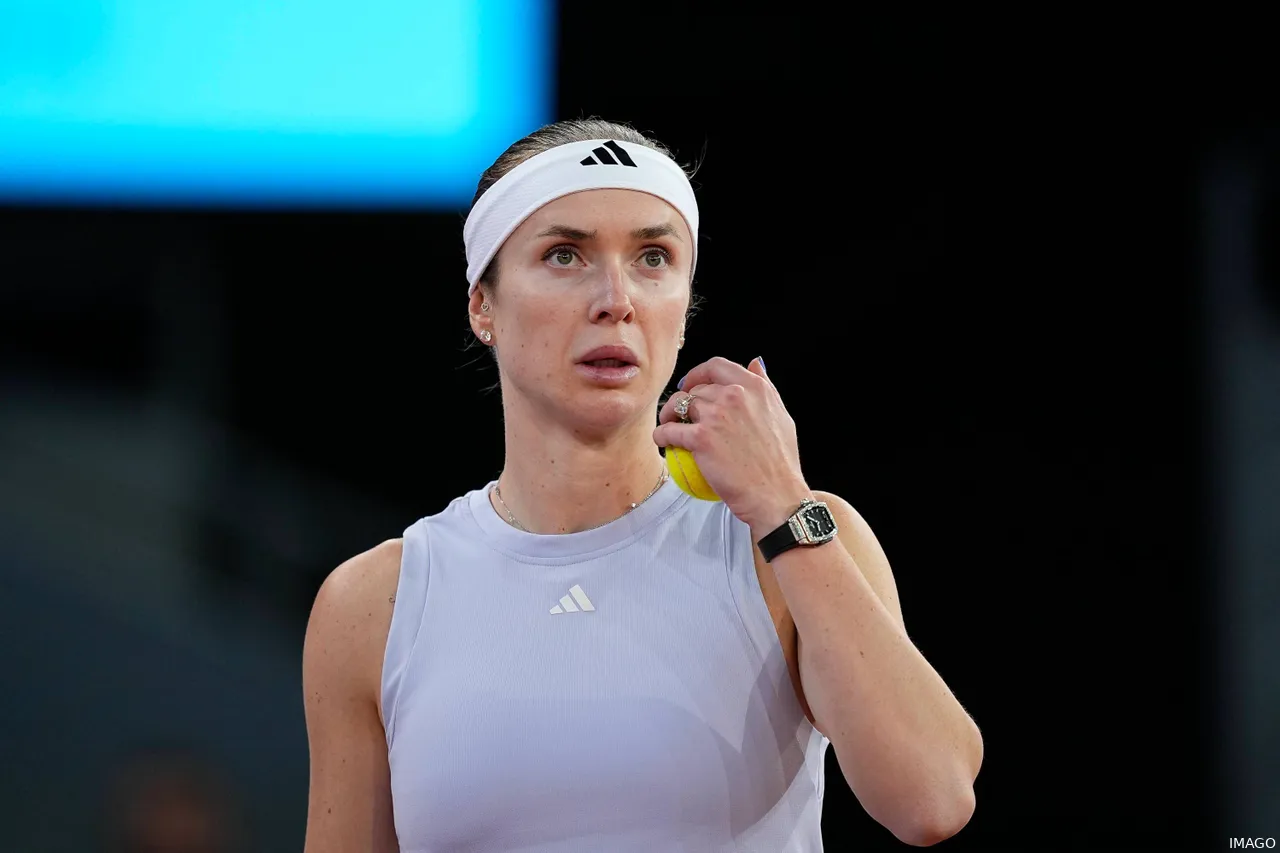
Mirra Andreeva def. Elise Mertens 6-3, 6-3
Andreeva progressed in the Rome Open Round of 16 with a controlled straight-sets win built on return stability and consistent baseline depth. Mertens attempted to extend rallies early, but struggled to consistently neutralise Andreeva’s directional changes.
The match shifted through mid-set phases where Andreeva increased pressure on second-serve returns, limiting Mertens’ ability to hold long service games. Break consolidation proved decisive in both sets as Andreeva avoided extended fluctuations.
Without requiring high-risk shot construction, Andreeva maintained a consistent error profile advantage that supported her straight-sets progression. She advances to the quarter-finals - - where she will challenge the 2025 runner-up Coco Gauff - continuing her steady run through the Rome Open draw.

Mirra Andreeva celebrating the victory in the game, she raises her arms during the Mutua Madrid Open reaching her first Madrid semifinal
Gauff overturns Jovic after mid-match momentum swing
Coco Gauff def. Iva Jovic 5-7, 7-5, 6-2
Gauff advanced in the Rome Open Round of 16 after a match defined by shifting momentum and extended return exchanges against Jovic. The opening set featured aggressive baseline hitting from Jovic, who consistently targeted Gauff’s second serve to create early advantage.
The turning point arrived in the second set when Gauff improved first-serve placement and reduced rally length, forcing Jovic into higher error accumulation during extended baseline exchanges. A decisive break at the end of the second set shifted control before Gauff consolidated physically and tactically in the decider.
Gauff closed the match after surviving a match point earlier in the contest, ultimately using improved serve consistency and deeper court positioning to dominate the final set 6-2. She moves into the quarter-finals, maintaining her progression in the Rome Open draw.

Pegula edges Potapova after first-set tiebreak control
Jessica Pegula def. Anastasia Potapova 7-6, 6-2
Pegula progressed in the Rome Open Round of 16 after a first set defined by extended holding patterns and a tightly contested tiebreak. Potapova initially matched baseline intensity, saving multiple break points early, while Pegula stabilised service patterns to prevent early separation.
The match shifted in the second set as Pegula increased first-serve effectiveness and reduced unforced errors in extended rallies. Potapova’s inability to consolidate pressure moments allowed Pegula to convert both break points in the set, effectively closing structural gaps from the baseline exchanges.
Pegula recorded 81% of first-serve points won and landed 65% of first serves, a decisive factor in the second-set acceleration. She now sets up a quarter-final clash with Swiatek in the Rome Open.

Jessica Pegula of USA practices during the Mutua Madrid Open
Swiatek dismantles Osaka with return dominance
Iga Swiatek def. Naomi Osaka 6-2, 6-1
Swiatek advanced in the Rome Open Round of 16 after establishing early control through return pressure, breaking Osaka immediately and dictating baseline exchanges from the opening games. Osaka briefly stabilised her service games in the first set, but the pattern remained consistent with Swiatek attacking second serves and forcing short replies.
The tactical separation widened as Swiatek maintained depth and absorbed pace effectively, while Osaka’s first-serve percentage of 54% and 50% conversion behind it limited her ability to hold rhythm. Swiatek’s return output, combined with six breaks across the match, prevented any sustained recovery phase for the Japanese player.
Statistically, Swiatek won 59% of both service and return points, reflecting dual-phase control that defined the encounter. She advances to face Jessica Pegula in the quarter-finals of the Rome Open, a matchup that shapes the upper section of the draw.

Iga Swiatek of Poland during the match against Caty McNally of United States at the Internazionali BNL d'Italia 2026 tennis tournament
Rybakina dismantles Pliskova in one-sided progression
Elena Rybakina def. Karolina Pliskova 6-0, 6-2
Rybakina advanced in the Rome Open Round of 16 with a highly controlled performance from the opening game, immediately imposing serve pressure and baseline depth to neutralise Pliskova’s rhythm. The match opened with a 6-0 set in which the Kazakh player consistently dictated early contact, preventing the Czech from establishing any sustained service patterns.
The second set followed a brief period of resistance, with Pliskova managing to interrupt the sequence of consecutive games and generate a short-lived momentum shift through improved first-serve returns and a single break of play. However, Rybakina quickly reasserted control by stabilising her service games and reducing unforced variation in baseline exchanges, limiting any extended rallies.
Statistically, Rybakina dropped only two games across the entire match, reflecting a straight-sets progression defined by service hold consistency and return dominance in early-game phases. She moves into the quarter-finals of the Rome Open, where she will face Elina Svitolina.


Samuel GillEditor-in-Chief
Samuel Gill is the Chief Content Officer (CCO) of TennisUpToDate.com, a role he has held since 2020. He is responsible for editorial governance across the platform, including setting content standards, overseeing accuracy and consistency, and guiding long-term editorial strategy. Since joining, he has contributed more than 10,000 articles and editorial pieces across the TennisUpToDate network, playing a central role in the daily operation and development of the site.
Based in Leicester, Samuel has a broad background in tennis media. In his current role, he works closely with editors and writers to ensure coverage meets clear journalistic standards, with particular attention to verification, consistency, and timely updates when new information becomes available.
claps 0visitors 0
Just In

Popular News



Latest Comments
- Does Sinner need that 4.5 mil? I doubt it. He can make that with three modelling gigs!😅🤣Rapunzel21-10-2026
- Did "People Magazine" purchase this website? This nonstop storyline is bullshit.
 mandoist21-10-2026
 - Listen... this is of no concern to anyone but these two. Deal with your own issues -- most of us have our own. Thanks, media, for these insignificant follow-ups which are meaningless.mandoist21-10-2026
- This is so very very sad, for all three of them. I truly thought they had an unbreakable bond, but life throws up so many differing challenges. Having your homeland suffering in such a terrible way, makes happiness lose out to guilt as well. Our thoughts are with them. X💔bjsexton20-10-2026
- I have lost all respect for Svitolina! Could she not have waited until he had played at the Paris Masters!!! She is selfish and don't give a damn about Gael. That is NOT how love is demonstrated Elina!!Rapunzel19-10-2026
- Perhaps convenient tennis tour sex is not a strong enough experience in which to base a marriage?mandoist19-10-2026
- Fight the Good Fight... Tennis (sports in general) need more Humans such as yourself.mandoist18-10-2026
- When is WTA going to mandate Genetic Testing (DNA) ???mandoist18-10-2026
- Hey, Dan... you just wake up from a coma? Regardless -- Thanks for the comedy this morning!mandoist18-10-2026
- Two Things: 1. Stop allowing these Spoiled Trust-Fund Elitists to behave badly. Your little hand-slaps do not deter them. 2. STOP the incessantly annoying "towel wiping" nonsense!!!!mandoist15-10-2026

Loading