Rome Open WTA Quarterfinals Round-Up | Coco Gauff overturns Andreeva in three-set battle, Cirstea controls Ostapenko throughout
WTA
The WTA Rome Open quarter-finals continued to produce high-variance matches, with Coco Gauff emerging from a fluctuating three-set battle against Mirra Andreeva to secure her place in the semi-finals. The American recovered from a one-set deficit and multiple momentum reversals in the decider, eventually closing a tense final set after a prolonged final game that extended beyond 20 points.
Across the WTA 1000 draw in Rome, the last-eight stage has been defined by serve instability and shifting baseline control rather than straightforward dominance from seeded players. Gauff’s ability to adjust return positioning and withstand late pressure ensured progression, while the match further reinforced the increasingly fragmented competitive structure of the tournament heading into the semi-final stage.
Gauff defeats Mirra Andreeva in quarter-finals after three-set reversal
Coco Gauff def. Mirra Andreeva 4-6, 6-2, 6-4
Coco Gauff reached the Rome Open semi-finals after a three-set victory over Mirra Andreeva, in a match defined by repeated momentum shifts and extended pressure phases across all three sets.
Andreeva took the opening set 6-4 after generating higher first-serve efficiency and stabilising key service games, winning 73% of service points compared to Gauff’s 57%, which allowed her to manage an early exchange of breaks and close out the set under control.
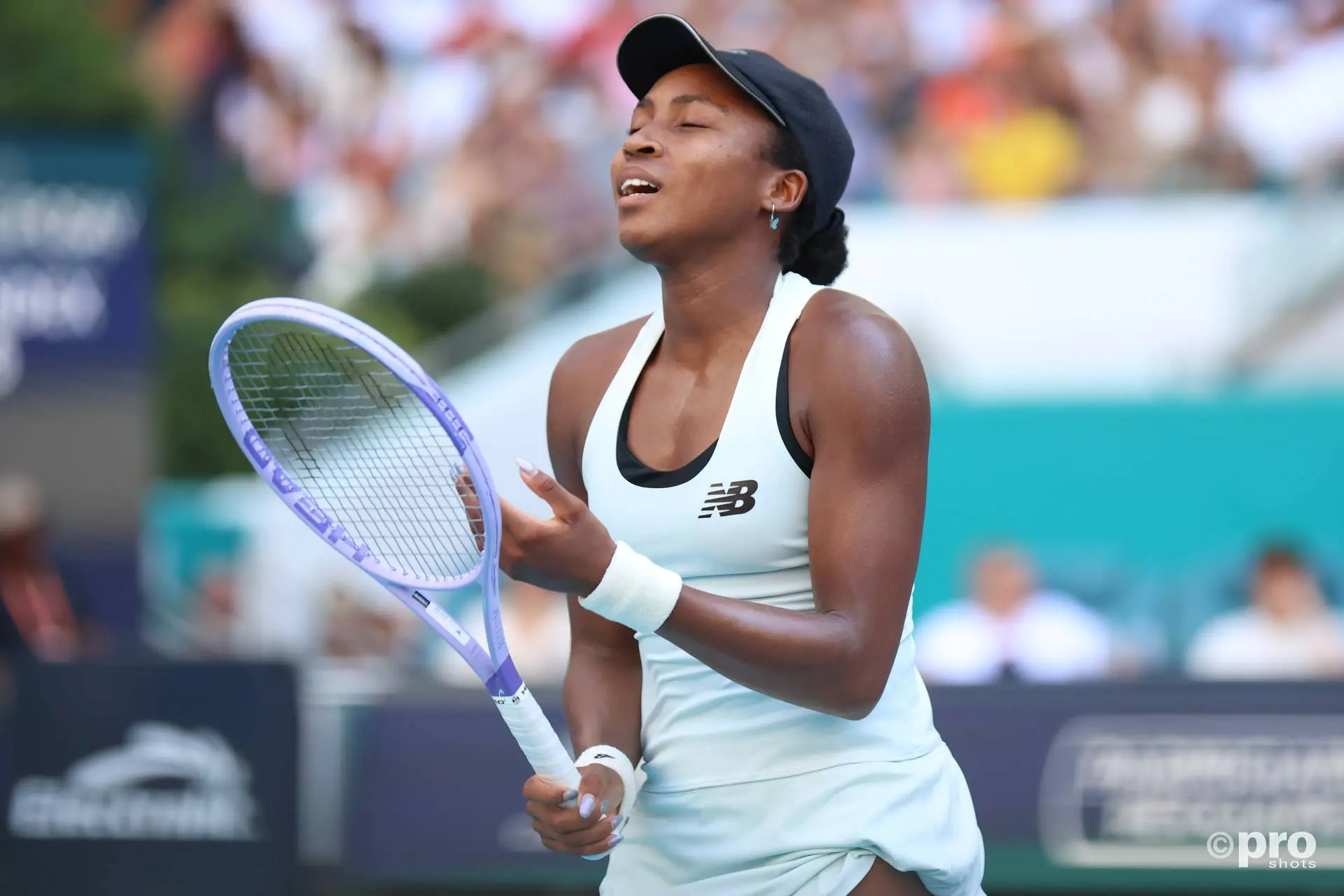
Gauff responded decisively in the second set, immediately increasing return depth and extending baseline exchanges to disrupt Andreeva’s first-strike rhythm. An early double break established a 3-1 lead, and despite a brief break-back from the Russian, the American reasserted control through consistent second-serve pressure and improved rally tolerance. Gauff moved through the set 6-2 after repeatedly forcing errors in neutral positions.
The deciding set began with Andreeva striking first through an early break, briefly rebalancing momentum, but Gauff quickly adjusted by stepping further inside the baseline on returns and targeting second serves more aggressively. This shift produced a double break sequence that turned a 0-1 deficit into a 3-1 lead, with the American consolidating through improved first-serve stability and controlled service games under pressure. Andreeva later held to stay alive at 5-3, extending the contest into a tense closing phase.
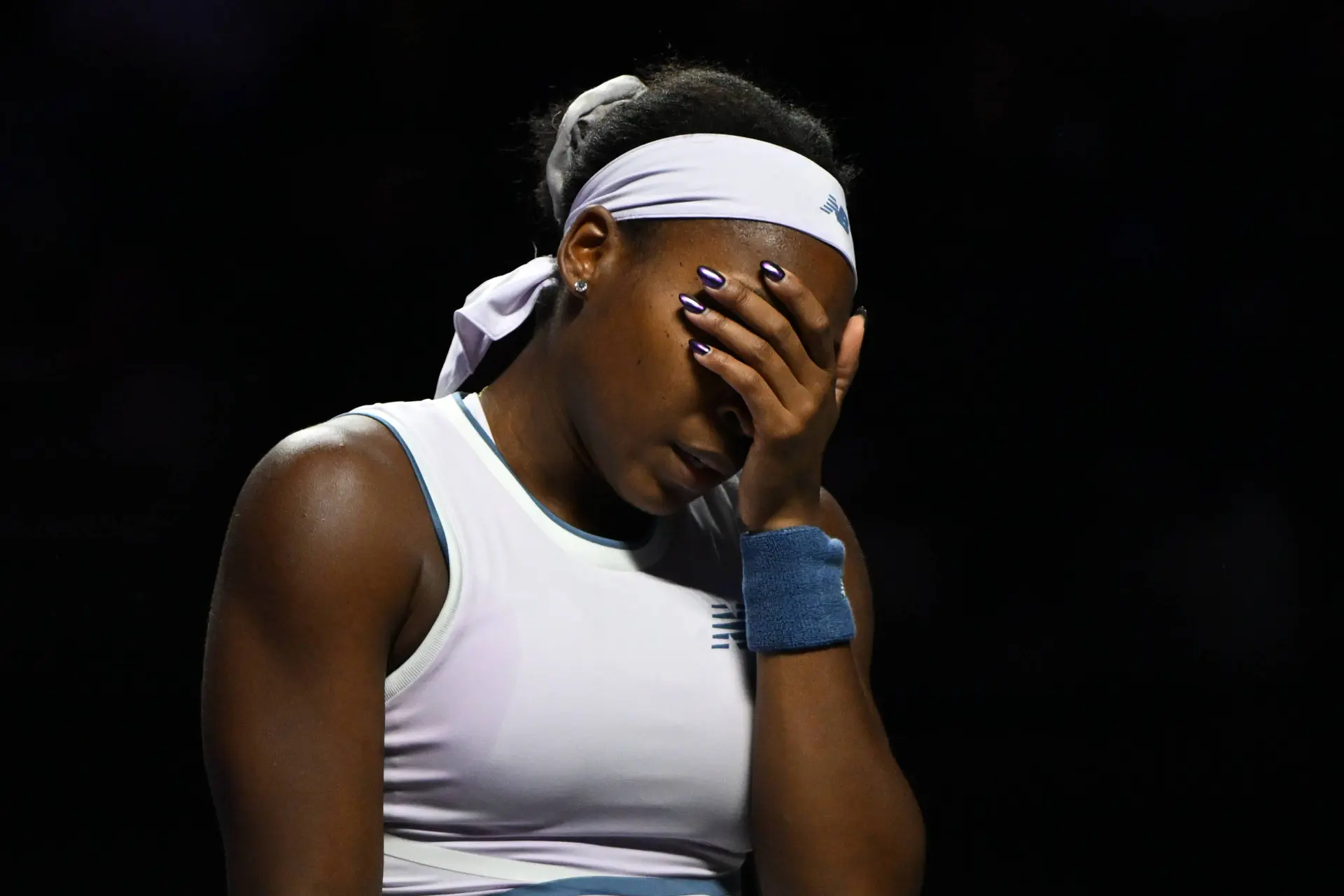
Gauff moved to the brink of victory at 5-4 but was unable to convert on two consecutive match points, as Andreeva prolonged the final set with a resilient hold that shifted pressure back onto the American.
Gauff eventually closed out the match in a dramatic final game lasting 20 points, sealing victory 6-4 when Andreeva’s backhand drifted wide after saving multiple match points. The win sends Gauff into the Rome Open semi-finals for third year in a row and fourth time in her career.

Cirstea controls Ostapenko after opening set dominance
Cirstea maintains early dominance to eliminate Ostapenko in straight sets
Sorana Cirstea def. Jelena Ostapenko 6-1, 7-6
Cirstea established immediate control through return pressure and extended baseline consistency, breaking Ostapenko repeatedly in the opening set. The Latvian’s serve lacked stability under early return depth, with Cirstea consistently targeting second serves and forcing short replies that allowed her to dictate court positioning. The result was a one-sided 6-1 set built on repeated service breaks rather than prolonged hold exchanges.
The second set developed into a more balanced contest as Ostapenko increased first-serve reliability and reduced early rally errors. This adjustment allowed her to hold serve more frequently and briefly shift momentum through a mid-set break advantage. However, she was unable to consolidate the break when serving for the set, as Cirstea immediately increased return aggression and extended baseline exchanges beyond Ostapenko’s preferred strike zones.
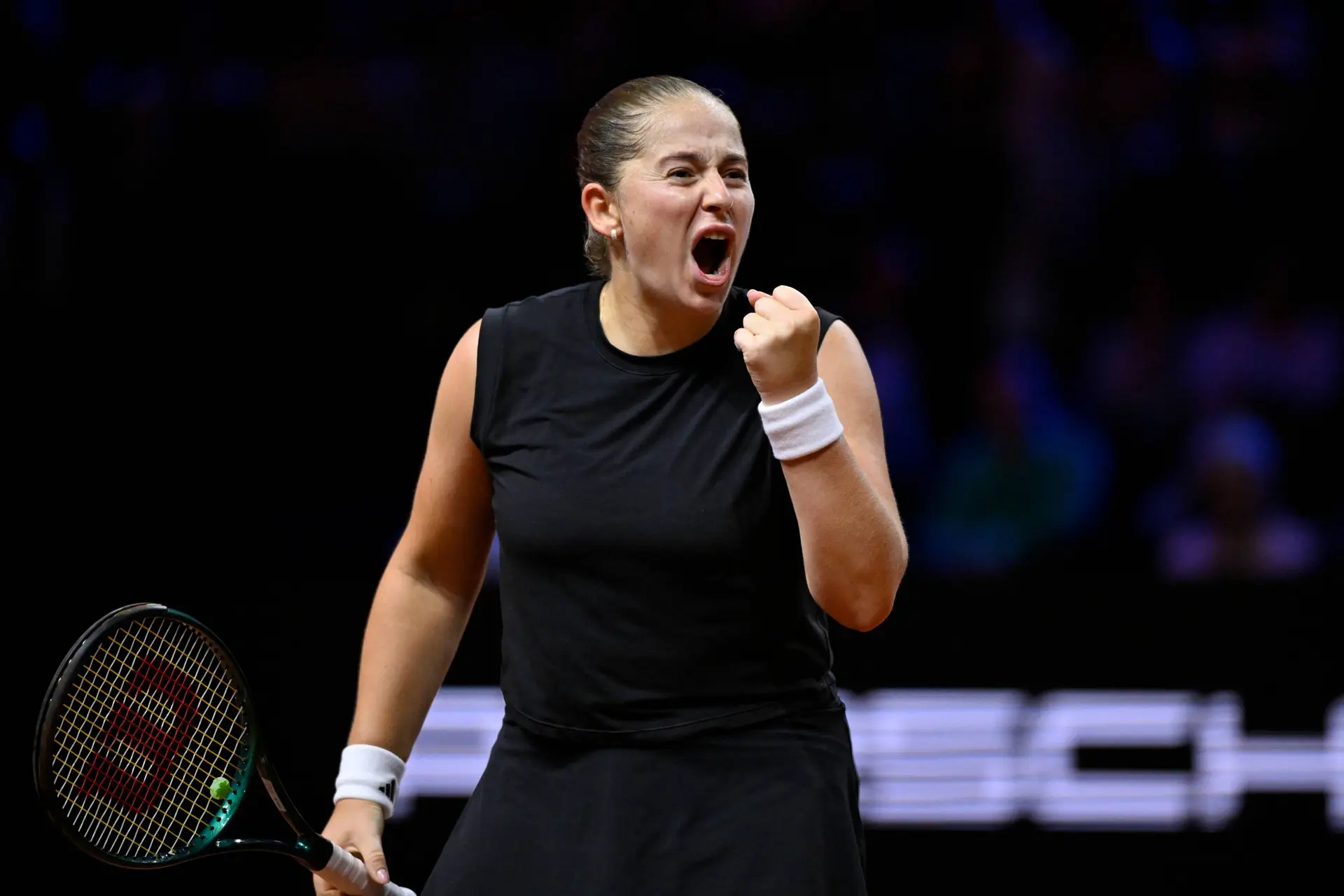
Cirstea’s tactical response focused on depth variation and neutralising first-strike attempts, particularly in second-serve return games where she consistently gained positional advantage. The Romanian’s ability to sustain longer rallies forced Ostapenko into higher-risk shot selection, increasing error frequency at key moments. These patterns ultimately pushed the set into a tie-break after neither player could fully stabilise serve under pressure.
In the tie-break, Cirstea executed a clean, error-free sequence to secure a dominant 7-0 finish, reflecting superior control in short-format pressure conditions. Her 73% first-serve points won across the match and higher break-point conversion rate were decisive in separating the players. Cirstea advances to the Rome Open semi-finals, reinforcing her position in a draw that has become increasingly open through fluctuating match dynamics.



Lucas MichaelTennis Journalist
Lucas Michael is a tennis journalist based in Cambridge, UK, specializing in comprehensive coverage of the ATP and WTA tours. For the past 1.5 years, he has been a core contributor to TennisUpToDate, where he has authored more than 3,000 data-driven match reports, deep-dive analysis pieces, and engaging liveblogs.
Lucas pairs real-time statistical analysis with on-the-ground reporting, frequently traveling to tournaments to cover the action firsthand from the press box and player press conferences. This blend of advanced metrics and direct access allows him to provide sharp context regarding player form, tactical trends, and breaking tour developments.
He holds a BA (Hons) in Sports Journalism. Grounded in core journalistic ethics, Lucas places a strict emphasis on meticulous sourcing, editorial accuracy, and a commitment to updating live content swiftly as verified information emerges.
claps 0visitors 0
Just In

Popular News


Latest Comments
- Does Sinner need that 4.5 mil? I doubt it. He can make that with three modelling gigs!😅🤣Rapunzel21-10-2026
- Did "People Magazine" purchase this website? This nonstop storyline is bullshit.
 mandoist21-10-2026
 - Listen... this is of no concern to anyone but these two. Deal with your own issues -- most of us have our own. Thanks, media, for these insignificant follow-ups which are meaningless.mandoist21-10-2026
- This is so very very sad, for all three of them. I truly thought they had an unbreakable bond, but life throws up so many differing challenges. Having your homeland suffering in such a terrible way, makes happiness lose out to guilt as well. Our thoughts are with them. X💔bjsexton20-10-2026
- I have lost all respect for Svitolina! Could she not have waited until he had played at the Paris Masters!!! She is selfish and don't give a damn about Gael. That is NOT how love is demonstrated Elina!!Rapunzel19-10-2026
- Perhaps convenient tennis tour sex is not a strong enough experience in which to base a marriage?mandoist19-10-2026
- Fight the Good Fight... Tennis (sports in general) need more Humans such as yourself.mandoist18-10-2026
- When is WTA going to mandate Genetic Testing (DNA) ???mandoist18-10-2026
- Hey, Dan... you just wake up from a coma? Regardless -- Thanks for the comedy this morning!mandoist18-10-2026
- Two Things: 1. Stop allowing these Spoiled Trust-Fund Elitists to behave badly. Your little hand-slaps do not deter them. 2. STOP the incessantly annoying "towel wiping" nonsense!!!!mandoist15-10-2026

Loading