Rome Open ATP Day Eight Round-Up | Jannik Sinner and Daniil Medvedev remain last top-10 survivors as Zverev and Musetti exit
ATP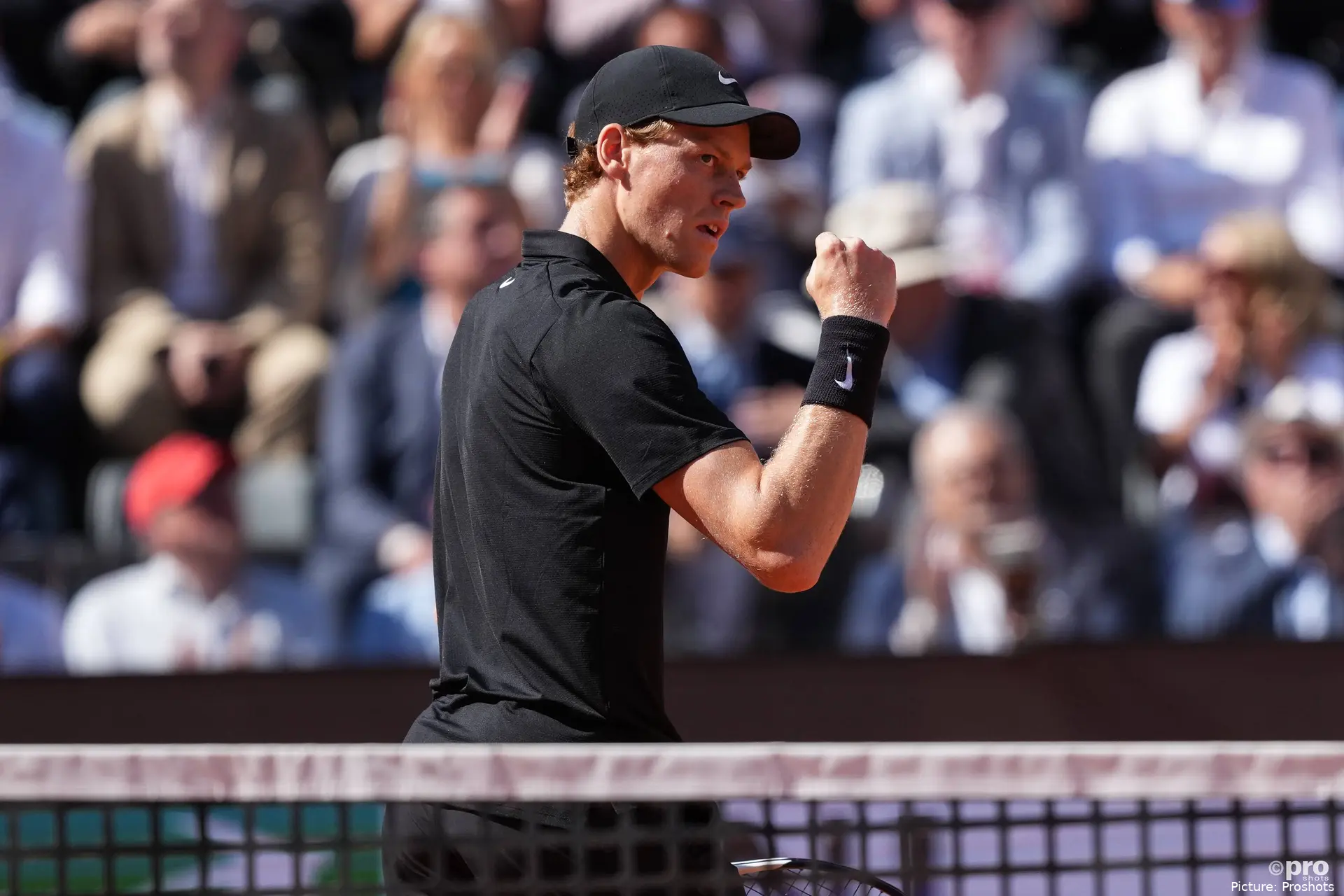
The ATP Rome Open Round of 16 delivered a full confirmation of the quarter-final lineup, with Daniil Medvedev, Jannik Sinner, Andrey Rublev, Casper Ruud, Rafael Jódar and Alexander Zverev progressing through contrasting performances. The most significant shift came in Luciano Darderi’s comeback win over Zverev, who failed to convert multiple match points in a pivotal second-set tiebreak.
Across the Rome Open Round of 16, the established hierarchy largely held, with Sinner and Medvedev advancing in controlled straight-set wins, while Rublev recovered from a slow start to secure a three-set victory. Ruud and Jódar also confirmed their places in the last eight, shaping a quarter-final draw that mixes top-seed stability with one major upset storyline.
Ruud outlasts Musetti after extended baseline control
Casper Ruud def. Lorenzo Musetti 6-3, 6-1
Ruud’s Rome Open Round of 16 performance was built on sustained baseline control rather than outright aggression, with the Norwegian repeatedly forcing Musetti into deeper court positioning. Early exchanges were relatively balanced, but Ruud’s ability to absorb pace on the backhand wing and redirect crosscourt rallies gradually reduced Musetti’s shot selection options.
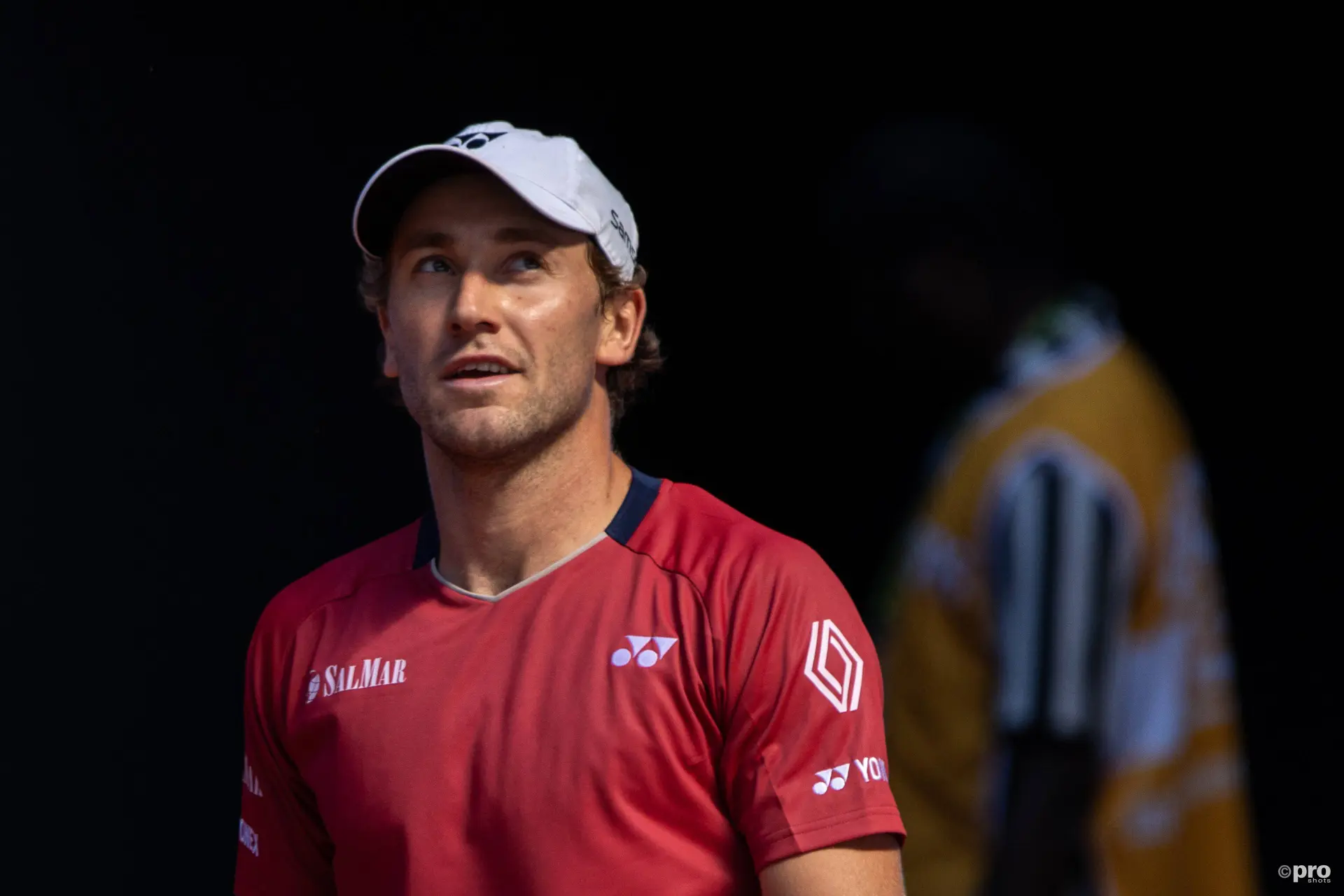
The key structural shift came in the opening game of the second set, a prolonged sequence of eight deuces and multiple break points where Ruud consistently extended rallies beyond the 10-shot threshold. Musetti generated opportunities on return, but failed to convert due to a drop in first-strike effectiveness, finishing the match with multiple missed break chances that altered momentum flow.
Statistically, Ruud’s efficiency in high-pressure games proved decisive: he won a significantly higher proportion of extended baseline points and limited Musetti’s first-serve dominance by neutralising second-serve attacks. The result sends Ruud into the Rome Open quarter-finals, where his endurance-based baseline profile becomes a critical factor against higher-ranked opposition in the next round.

Casper Ruud waving and celebrating the victory in the game the Mutua Madrid Open 2026
Jódar continues breakthrough run with controlled win over Tien
Rafael Jódar def. Learner Tien 6-1, 6-4
Jódar extended his strong Rome Open campaign with a performance built on early return pressure and rapid break construction. The opening set was effectively decided in the first five games, with Jódar winning five consecutive games through aggressive positioning on Tien’s second serve.
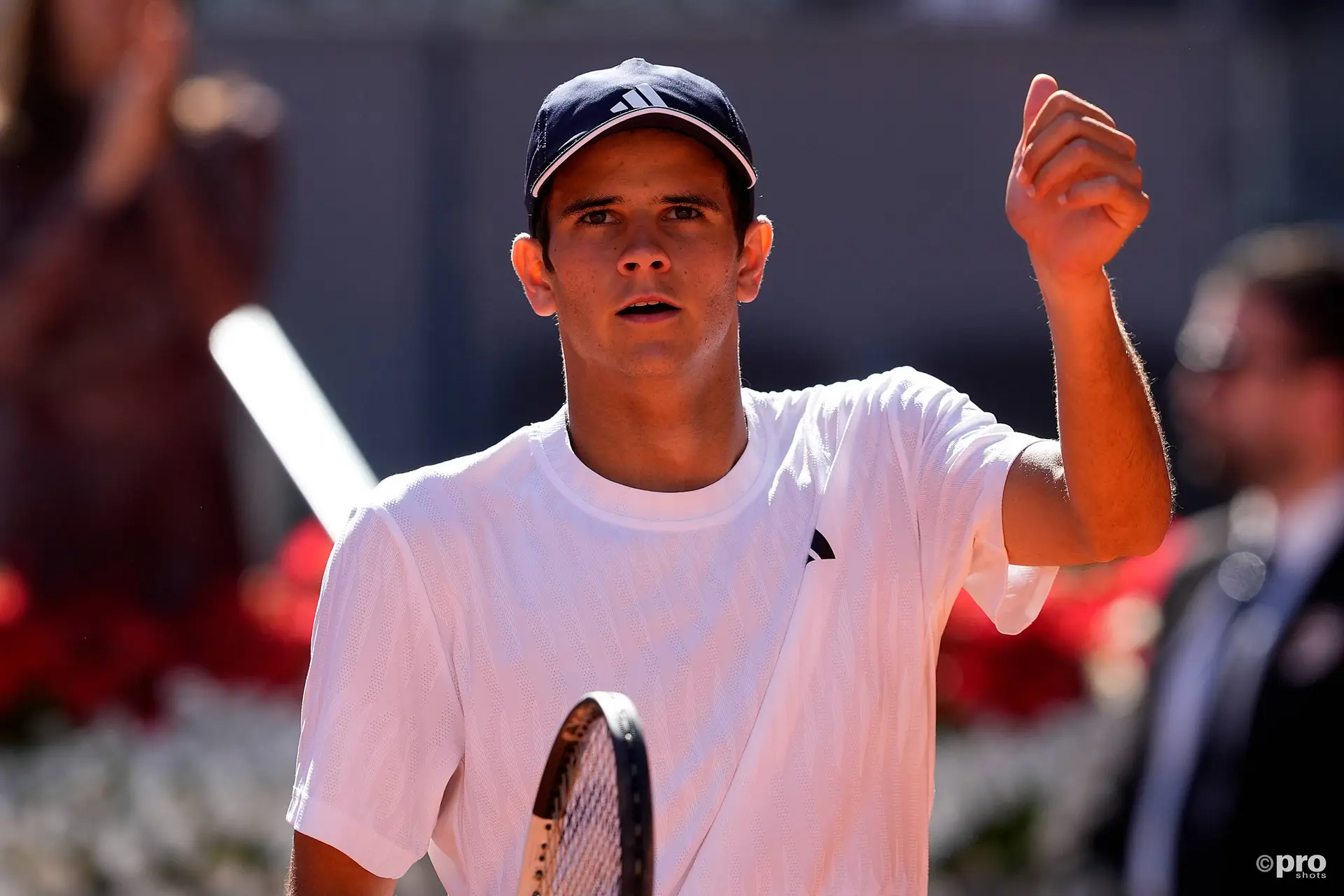
Tien briefly adjusted in the second set by increasing first-serve percentage and shortening points, which allowed him to stabilise service holds. However, Jódar responded by tightening baseline margins and improving depth on return, limiting Tien’s ability to dictate early rally structure.
From a statistical perspective, Jódar’s dominance in first-serve return points in the opening set created the foundation for the win, while his reduced unforced error count in the second prevented momentum reversal. He advances to a Rome Open quarter-final, continuing his emergence as one of the tournament’s most efficient returners in neutral conditions.
Zverev collapses after missed match points as Darderi completes turnaround
Luciano Darderi def. Alexander Zverev 1-6, 7-6, 6-0
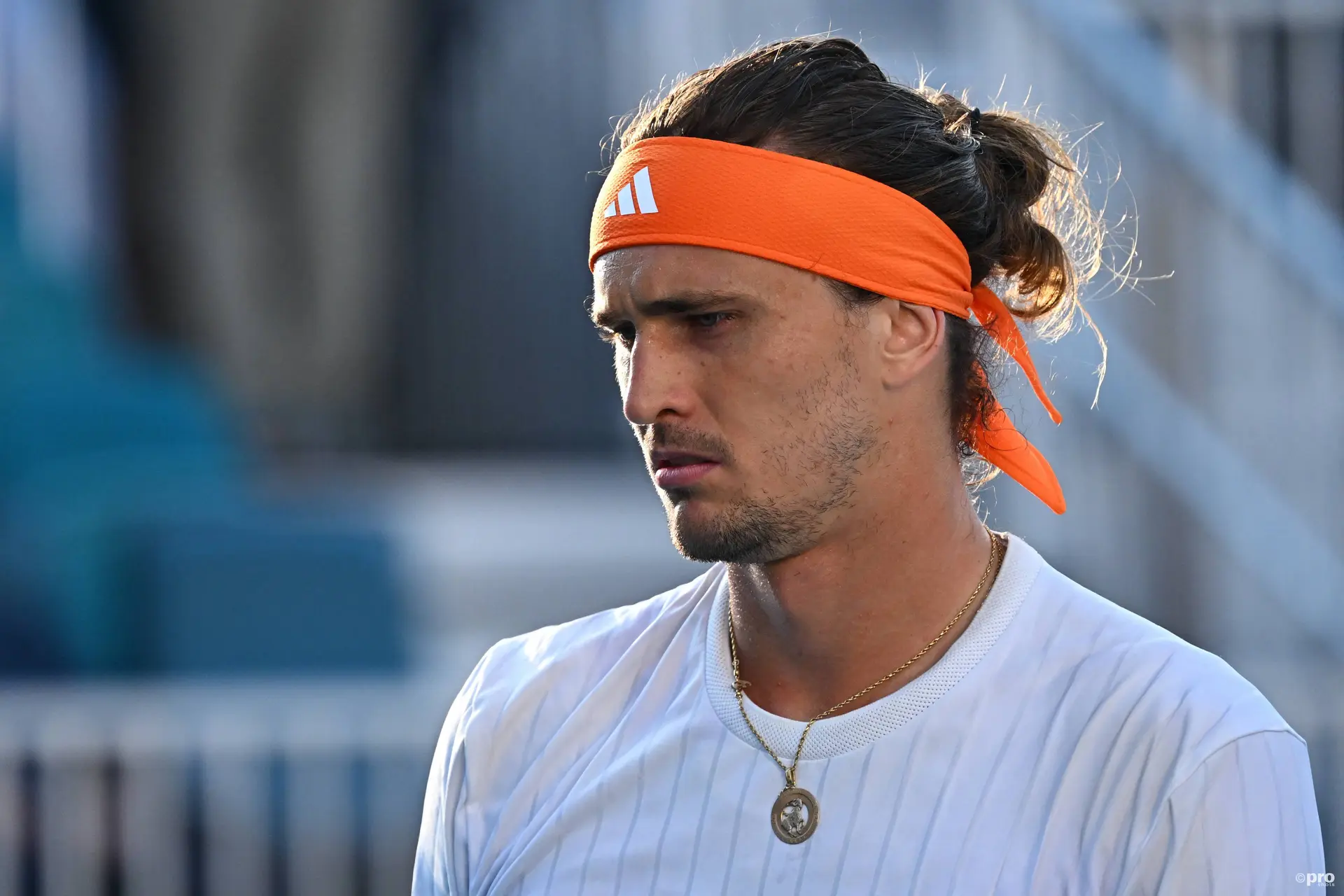
Zverev began the match with full control, dominating early baseline exchanges and breaking serve twice in the opening set. His first-serve percentage and return depth forced Darderi into defensive positions, resulting in a routine 6-1 set.

The match shifted in the second-set tiebreak, where Zverev failed to convert four match points. That phase proved decisive, as his first-serve efficiency dropped under pressure and rally construction became less stable in extended exchanges.
Darderi capitalised fully in the third set, increasing return aggression and targeting Zverev’s second serve to create short-ball opportunities. Statistically, Zverev’s collapse in break-point conversion and reduced first-serve effectiveness in key moments directly influenced the 6-0 final set. Darderi advances to his first Rome Open quarter-final, completing one of the most significant comebacks of the tournament.
Sinner maintains control in straight-set win over Pellegrino
Jannik Sinner def. Andrea Pellegrino 6-2, 6-3
Sinner’s Rome Open Round of 16 match followed a structured pattern of early return dominance and controlled service consolidation. From the opening games, he stepped inside the baseline on Pellegrino’s second serve, immediately reducing the Italian qualifier’s ability to construct neutral rallies.
The first set was effectively shaped by two early breaks, both produced through deep return positioning and immediate pressure on second-serve points. Pellegrino attempted to adjust by increasing first-serve percentage in the second set, which briefly stabilised his service games and extended rallies into mid-court exchanges.
However, the decisive phase arrived at 4-3 in the second set, where Sinner increased return depth and forced consecutive errors on backhand exchanges. He finished the match with high first-serve efficiency and strong return-point conversion, particularly on second-serve returns where he consistently gained positional advantage. The win extends Sinner’s run of consecutive Masters 1000 quarter-finals and reinforces his structural control of the Rome Open draw heading into the last eight.

Jannik Sinner of Italy celebrates during the match against Alexei Popyrin of Australia at the Internazionali BNL d'Italia 2026 tennis tournament
Rublev recovers from slow start to defeat Basilashvili
Andrey Rublev def. Nikoloz Basilashvili 3-6, 7-6, 6-2
Rublev started the Rome Open Round of 16 under immediate pressure as Basilashvili dictated early baseline exchanges, using deep returns and strong second-serve targeting to take the opening set 6-3. The Russian struggled to stabilise his first-serve rhythm, which limited his ability to control short points and forced him into extended defensive rallies.
The turning point of the match came in a tense second set where Rublev reacted strongly to an umpiring decision and received a code violation for verbal abuse, resulting in a point penalty during a critical game. That moment briefly disrupted his concentration and allowed Basilashvili to gain a break advantage, with Rublev showing visible frustration and reduced serve efficiency immediately afterwards.
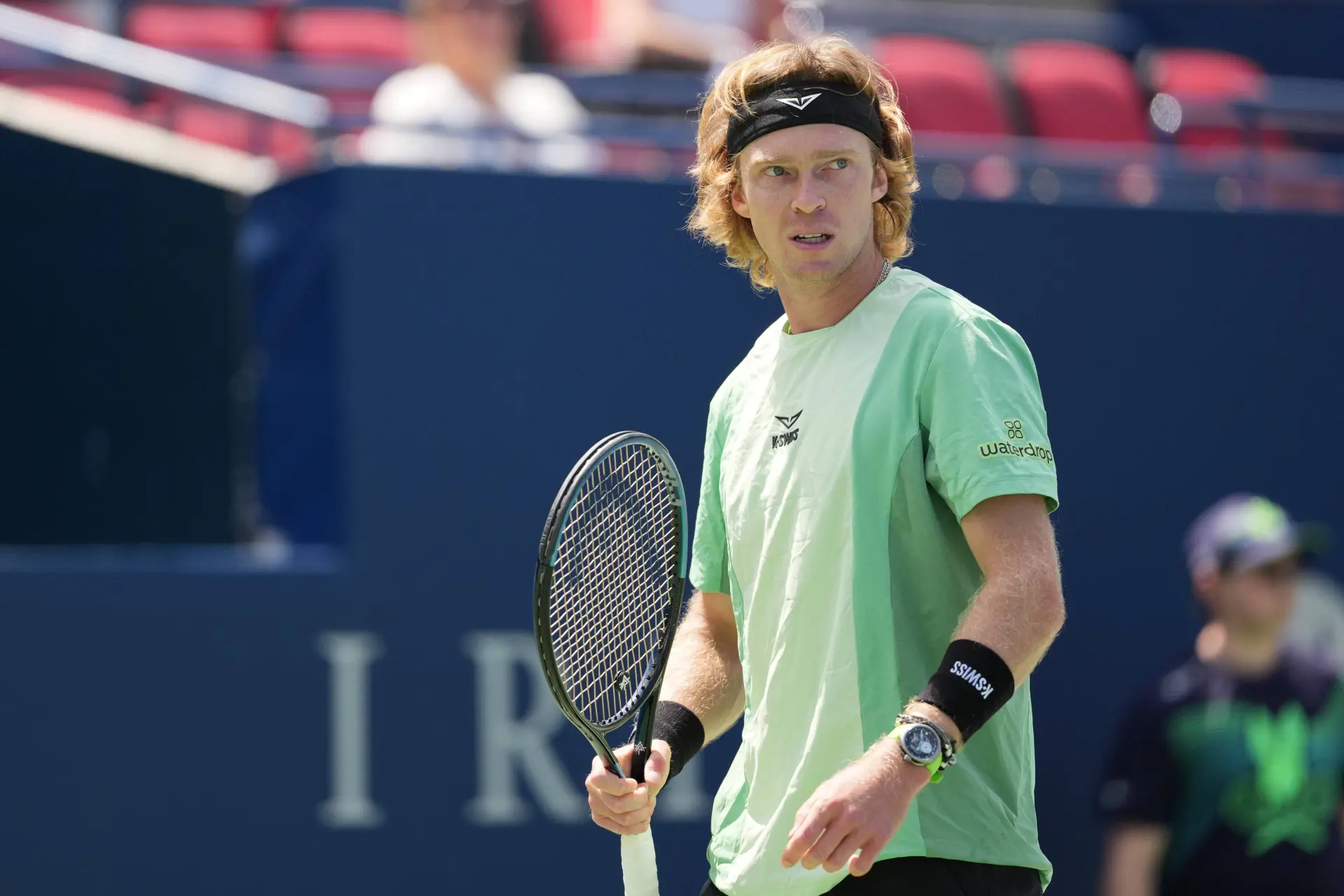
However, Rublev gradually reset his approach in the latter stages of the set, reducing unforced errors and prioritising first-serve percentage over early aggression. He recovered in the tiebreak by improving depth on return and stabilising baseline exchanges, which allowed him to regain parity in the match.
In the deciding set, Rublev’s level rose significantly, winning a higher share of first-serve points and consistently pushing Basilashvili behind the baseline. The Georgian’s resistance faded as rally length increased, and Rublev converted that physical and tactical edge into a 6-2 finish. The win sends him into the Rome Open quarter-finals against Jannik Sinner, with momentum recovered after a volatile mid-match phase.

Medvedev overcomes Tirante with controlled baseline authority
Daniil Medvedev def. Thiago Tirante 6-3, 6-2
Medvedev’s progression into the Rome Open quarter-finals was defined by incremental tactical adjustment rather than immediate dominance. Early in the match, Tirante was able to hold serve through short, aggressive exchanges, but Medvedev quickly neutralised that pattern by increasing return depth and reducing rally variability.
The first major shift occurred midway through the opening set, when Medvedev began targeting Tirante’s second serve with deeper, more central returns, forcing the Argentine into defensive positioning before the third shot of the rally. This reduced Tirante’s ability to dictate early-point structure and created repeated short-ball opportunities.
By the second set, Medvedev’s control was statistical as well as tactical. He won 69% of service points and over half of return points in the set, while also maintaining a high conversion rate on break opportunities.
Tirante’s resistance faded as rally length increased and baseline positioning deteriorated under sustained pressure. Medvedev now advances to the Rome Open quarter-finals with a match profile built on return efficiency and positional control, elements that have defined his consistency on clay in recent seasons.



Lucas MichaelTennis Journalist
Lucas Michael is a tennis journalist based in Cambridge, UK, specializing in comprehensive coverage of the ATP and WTA tours. For the past 1.5 years, he has been a core contributor to TennisUpToDate, where he has authored more than 3,000 data-driven match reports, deep-dive analysis pieces, and engaging liveblogs.
Lucas pairs real-time statistical analysis with on-the-ground reporting, frequently traveling to tournaments to cover the action firsthand from the press box and player press conferences. This blend of advanced metrics and direct access allows him to provide sharp context regarding player form, tactical trends, and breaking tour developments.
He holds a BA (Hons) in Sports Journalism. Grounded in core journalistic ethics, Lucas places a strict emphasis on meticulous sourcing, editorial accuracy, and a commitment to updating live content swiftly as verified information emerges.
claps 0visitors 0
Just In


Popular News



Latest Comments
- Does Sinner need that 4.5 mil? I doubt it. He can make that with three modelling gigs!😅🤣Rapunzel21-10-2026
- Did "People Magazine" purchase this website? This nonstop storyline is bullshit.
 mandoist21-10-2026
 - Listen... this is of no concern to anyone but these two. Deal with your own issues -- most of us have our own. Thanks, media, for these insignificant follow-ups which are meaningless.mandoist21-10-2026
- This is so very very sad, for all three of them. I truly thought they had an unbreakable bond, but life throws up so many differing challenges. Having your homeland suffering in such a terrible way, makes happiness lose out to guilt as well. Our thoughts are with them. X💔bjsexton20-10-2026
- I have lost all respect for Svitolina! Could she not have waited until he had played at the Paris Masters!!! She is selfish and don't give a damn about Gael. That is NOT how love is demonstrated Elina!!Rapunzel19-10-2026
- Perhaps convenient tennis tour sex is not a strong enough experience in which to base a marriage?mandoist19-10-2026
- Fight the Good Fight... Tennis (sports in general) need more Humans such as yourself.mandoist18-10-2026
- When is WTA going to mandate Genetic Testing (DNA) ???mandoist18-10-2026
- Hey, Dan... you just wake up from a coma? Regardless -- Thanks for the comedy this morning!mandoist18-10-2026
- Two Things: 1. Stop allowing these Spoiled Trust-Fund Elitists to behave badly. Your little hand-slaps do not deter them. 2. STOP the incessantly annoying "towel wiping" nonsense!!!!mandoist15-10-2026

Loading