“She can claim another 50 titles”: Ex-Kyrgios coach sets sky-high bar for Iga Swiatek’s career tally
WTA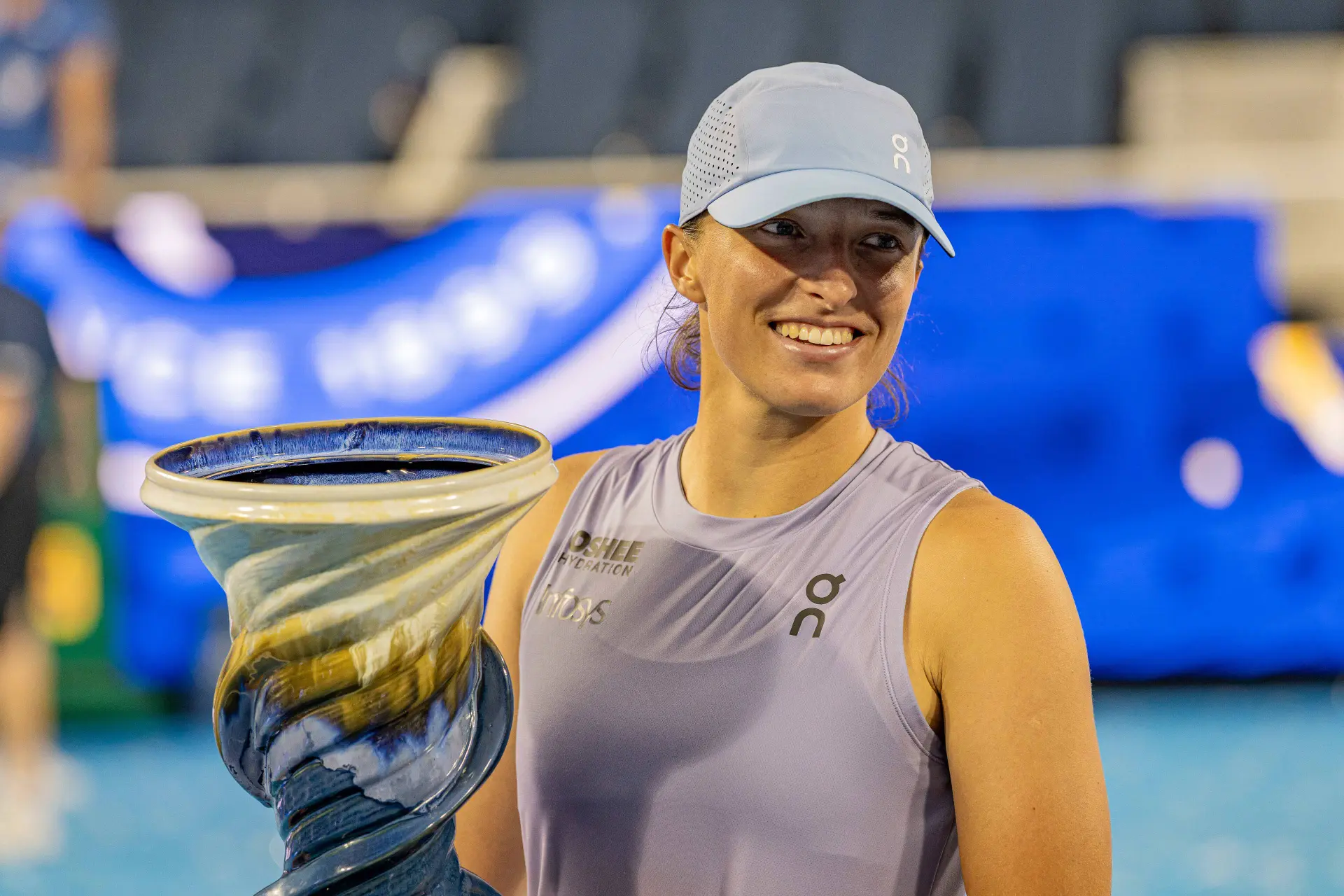
Iga Swiatek’s triumph at the Korea Open this weekend marked the 25th title of her career and her third trophy of 2025, following earlier victories at Wimbledon and Cincinnati. With the season still ongoing, the Polish star has once again underlined why she is considered one of the dominant forces in women’s tennis. Now, former Nick Kyrgios' coach, Simon Rea believes that Swiatek’s ceiling is far higher than many may imagine, suggesting she could double, even triple her current tally in the years ahead.
The 24-year-old has already built a résumé that rivals some of the sport’s all-time greats, especially considering her age. The six-time Grand Slam champion, a former world No. 1 and current world No. 2, has shown that her dominance is not confined to clay. For Rea, that versatility is key to imagining how far she could go in the next decade.
Her ability to transition from the red dirt to grass and hard courts has been a defining storyline of the past two years. Winning Wimbledon in 2025 was a milestone many thought would come later in her career, given the challenges she had shown on grass in the past. Instead, she swept past her opposition in London, proving that her evolving game could handle any test. Rea believes that this adaptability is what positions her to dominate well into her thirties.
While other players in her generation are still searching for consistency, the world No. 2 has managed to keep a steady winning pace. This, combined with her mentality and work ethic, is why experts like Rea are not afraid to project historic numbers for her career. For him, what she has achieved so far is only the beginning.
“I think she can claim another 50 titles”
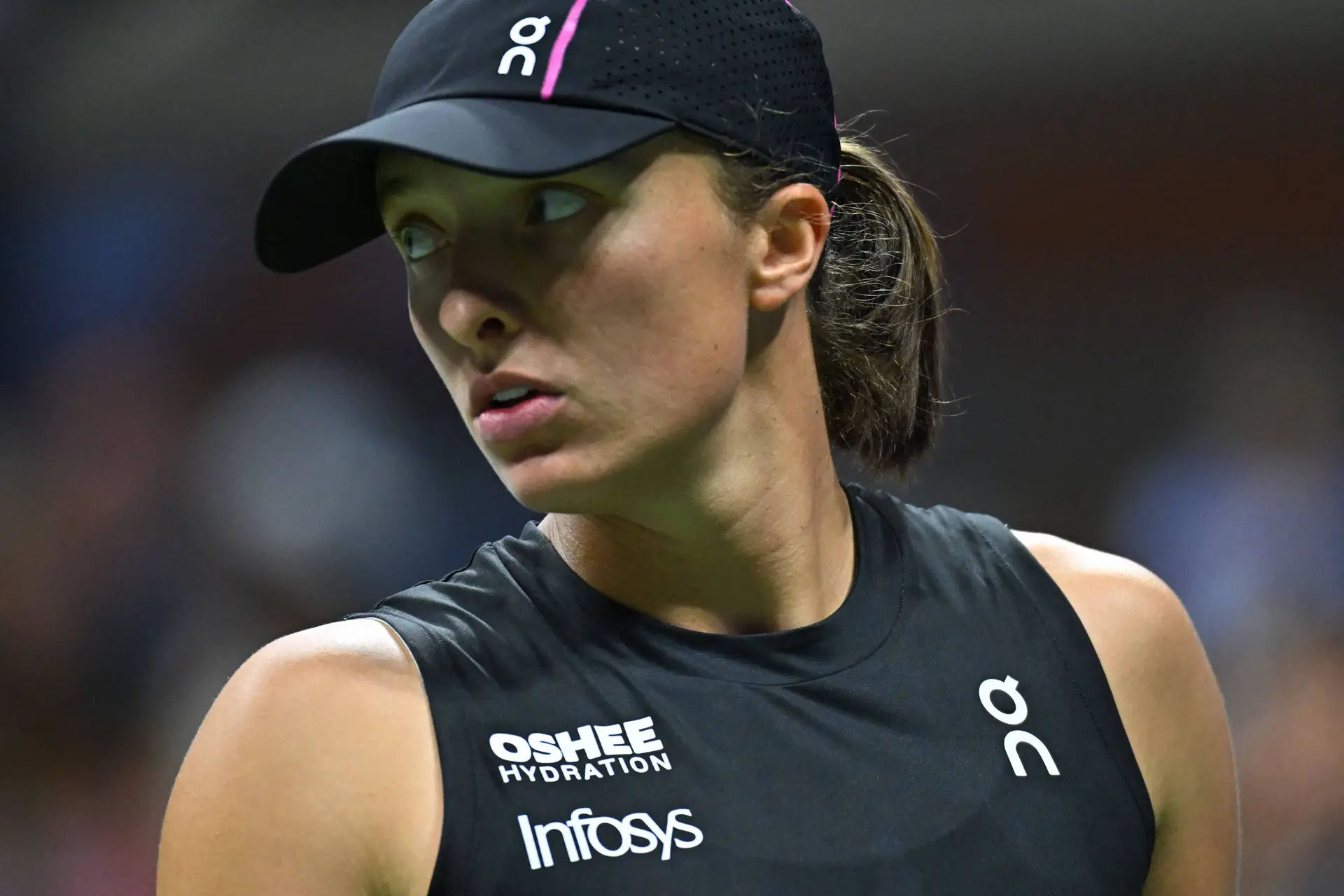
Simon Rea, who once guided Nick Kyrgios through parts of his career, was unequivocal in his praise for the Polish champion. “I think she can claim another 50 titles,” he said in Tennis Australia podcast. “It’s easy to sit here and throw the number out. The remarkable part is looking at some of the numbers around those great champions of our sport and how many titles they’ve collected over the journey.”
For Rea, the challenge lies not in imagining the possibilities but in the day-to-day grind required to make them reality. “That’s the hard part, getting to work and fulfilling the 50,” he explained. “But I think she could average five titles a year for the next decade. I can comfortably see that.”
Read also
Clay queen, but more than just clay
Swiatek’s dominance on clay has never been in question, with four Roland Garros trophies already on her shelf. Yet, Rea points to her growing confidence on faster surfaces as a sign that the next stage of her career could be even more impressive. “She’s such a force on the clay courts. And I think we are seeing her improve on the faster surfaces, I reckon she’s a better version this year on faster hard courts than she was 12, 24 months ago, for sure,” he said.
That evolution, according to Rea, makes the prospect of averaging five titles a year realistic. “She’s continuing to improve, to evolve her game. I reckon she can average five titles a year, and that’s not easy to do for the next decade. I reckon she can get to mid-70s and beyond.”
Read also
Melbourne Park on the horizon
While the Korea Open title further enhances her aura, attention is already turning to the Australian Open early next season. Rea believes that her Wimbledon triumph this summer proved she can adapt to the most unlikely surfaces for her game — and that Melbourne could be next on her list of conquests. “If she can win at Wimbledon, she can win at Melbourne Park for sure,” he insisted.
He tempers expectations slightly, acknowledging that the 24-year-old star may not be the outright favorite in Australia just yet. “I wouldn’t have her favorite, going in right now, but I’d have her in the top handful. I would’ve said that Wimbledon would be the Slam that would challenge her the most, so to be as dominant as she was on that day against [Amanda] Anisimova, if she can conquer Wimbledon, she can conquer the blue hard courts at Melbourne Park.”
A decade of dominance ahead?
If the six-time major champion can indeed sustain the pace of five titles a year, she could end her career with a tally in the mid-70s, a mark that would place her alongside some of the greatest names in tennis history. While no prediction is guaranteed, Rea’s words highlight the belief within the tennis community that Swiatek is still only scratching the surface of her potential.
Her Korea Open victory may have been a smaller title compared to Wimbledon, but it was another signal of her hunger and consistency. For a player who thrives on continual growth, the years ahead promise plenty more silverware — and perhaps the fulfillment of Rea’s bold vision.

Cristhián AvilaTennis Journalist
Cristhián Ávila is a tennis journalist based in Santiago, Chile, and has been part of the TennisUpToDate team since early 2023. He covers the ATP and WTA Tours as well as all four Grand Slams, producing breaking news, match reports, analysis, and regular liveblogs from major tournaments.
His reporting combines statistical analysis with clear explanation, helping readers understand tactical developments, player form, and broader storylines across the tour. Working fluently in both Spanish and English, Cristhián collaborates with an international editorial team and contributes to comprehensive global coverage. As part of his work, he has conducted interviews and media interactions with leading figures in the sport, including Caroline Wozniacki and John McEnroe.
In his journalism, Cristhián places strong emphasis on careful sourcing, editorial accuracy, and updating articles promptly when new, verified information becomes available. His coverage is grounded in research, context, and direct engagement with professional tennis.
claps 0visitors 0
Just In


Popular News

Latest Comments
- Fight the Good Fight... Tennis (sports in general) need more Humans such as yourself.
 mandoist18-10-2026
 - When is WTA going to mandate Genetic Testing (DNA) ???mandoist18-10-2026
- Hey, Dan... you just wake up from a coma? Regardless -- Thanks for the comedy this morning!mandoist18-10-2026
- Two Things: 1. Stop allowing these Spoiled Trust-Fund Elitists to behave badly. Your little hand-slaps do not deter them. 2. STOP the incessantly annoying "towel wiping" nonsense!!!!mandoist15-10-2026
- A healthy Qinwen may be hard to stop next season. She was already scaring her opponents before her medical leave(s). Unfortunately, Zheng insisted on singing again. On the positive side -- Mirra did not sing!! ;~}mandoist11-10-2026
- Where is it written that athletes, entertainers... People in general... are mandated to keep looking at -- or even using [anti]Social Media? Public & private figures consistently complain and reveal their concerns about negativity and violence thrown at them -- yet they insist on participating. Avoid it, don't use it, don't read it. It's okay to occasionally look up at the World instead beating your eyes & thumbs to death on The Inventions out there.mandoist11-10-2026
- great articlestennisseserver07-10-2026
- Medvedev was leading Djokovic 7-5, 3-5 when an attempted return..' NO you ignorants, Djokovic was leading .weiss05-10-2026
- No more bullshit "Wildcards" to these two. Qualify like everyone else -- there will be cameras there, too. Time to scream... WTF ????!!!!mandoist29-09-2026
- Let's not BS the general public -- Sabalenka started showing cracks in her game last season. Her losses and near-losses started at about the same time she began being distracted by Fame (constant Selfies, making TV commercials, magazine shoots, endless Social Media nonsense, etc., etc.) One would think even Saba could recognize the parallels with others who failed before her -- Raducanu, Giorgi, Bouchard to name a few.mandoist25-09-2026

Loading