"She has to deal with this life of being like Michael Jordan in the Philippines": Alexandra Eala should be protected like a big star says Kim Clijsters
WTA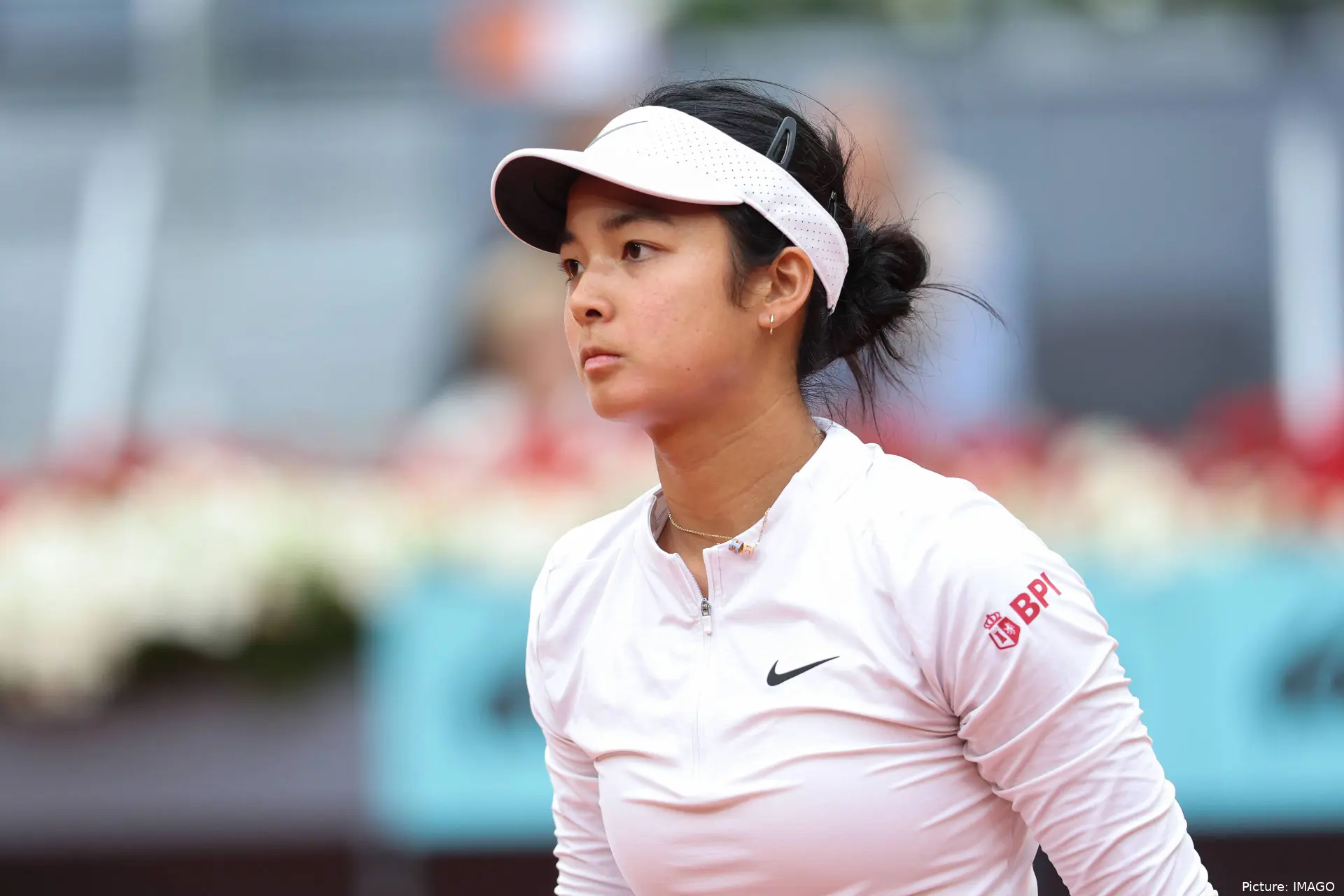
On the Love All podcast with Blair Henley, Kim Clijsters offered an in-depth look at the rapid rise of Alexandra Eala, the challenge of handling passionate support, and how crowd dynamics affected her own career at the highest level of the game.
Eala’s game: “She makes opponents feel very uncomfortable”
Eala’s surge up the rankings, from No. 137 in the world a year ago to No. 31 after her run in Dubai, has been one of the standout storylines of the season. Her matches in Dubai drew massive support from Filipino fans, creating an atmosphere not typically seen at that event.
But beyond the crowds, Clijsters sees a player whose game presents serious tactical challenges. “There are a lot of things that she does really well,” Clijsters explained. “And I think there are a lot of things that make her opponents feel very uncomfortable.”
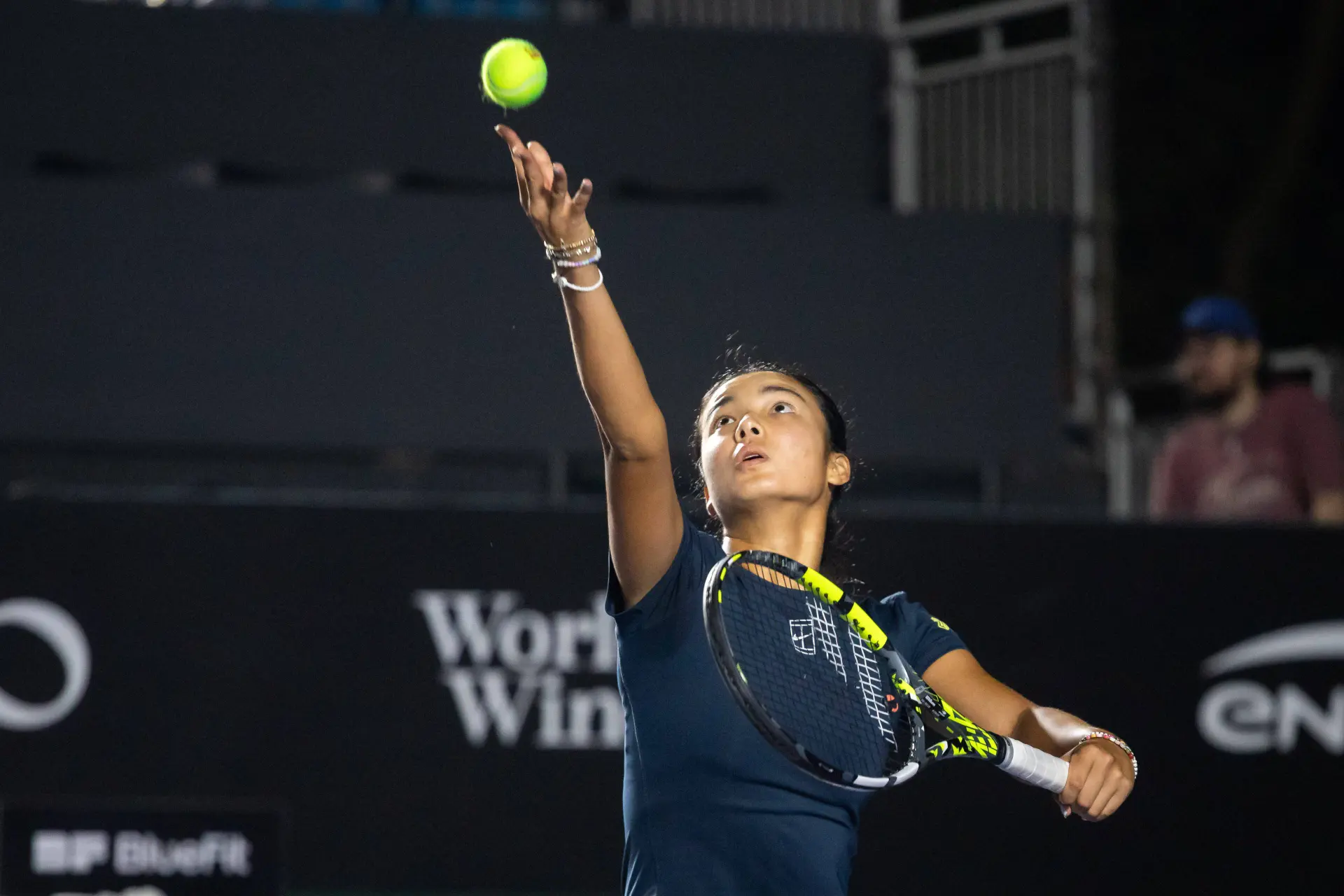
One factor is simply her left-handedness. “One of the things she can’t control is that she’s left-handed. There’s always something about playing a left-hander, you get pulled out of the court a little bit differently.”
Technically, Clijsters believes Eala’s backhand may be her most dangerous weapon. “Her forehand is really good. But I actually think her backhand is better. Her backhand is a little bit more of an aggressive shot.”
She highlighted the way Eala combines aggression with variation. “The combination of her aggressive baseline shots, especially on the backhand side, and then the ability to hit heavier spin and make her opponents step back behind the baseline, and then being able to create the angle with her forehand and open up the court, often to her opponent’s backhand, that’s something a lot of players have a really hard time dealing with.”
Clijsters also praised her movement and endurance. “Her footwork is really good. She has great stamina.”
And while still only 19 or 20 years old, Clijsters sees clear mental development. “She’s still very young, but we see the mental growth as well.”
The Rafa Nadal Academy Influence
Eala has trained in Spain since her early teens at the Rafa Nadal Academy, and Clijsters believes that environment has played a crucial role.
“She’s been in Spain for many years, I think she moved there when she was 13, training at Rafa’s academy. She’s been around people with a mindset that demands a lot but is also very focused on putting in the work and being respectful.”
Clijsters added, “I don’t think it’s a coincidence that she’s getting the results she is.”

Alexandra Eala in Madrid last year.
However, rapid fame brings challenges. After Eala’s close three-set loss to Alycia Parks at the Australian Open, she faced heavy criticism from some fans, something Rafael Nadal publicly addressed in support of her.
“There are a lot of new things she’s dealing with at such a young age,” Clijsters said. “It’s going to be very important for her to be protected a little bit from the craziness that comes with all of that, and to keep focusing on what she has to do.”
She even likened Eala’s status in her home country to global superstardom.
“She has to deal with this life of being like Michael Jordan in the Philippines. People think it’s just online and in the news, but it’s not easy to deal with changes like that so quickly.”
A “Pitbull” Mentality
Clijsters sees a particular competitive edge in Eala’s style. “She reminds me a little bit, she has that kind of pitbull mentality. Dominika Cibulková was a bit like that to me as well.”
What makes that so dangerous? “They have such quick feet, but also the ability, from a defensive position, to move into the court and suddenly become aggressive. That’s a very tough combination to handle on the other side of the net.”
Consistency, she believes, will now be key. “A lot of players know her now, they know her strengths and weaknesses, so she’ll have to make her strengths even stronger and work on the weaker areas.”
Feeding off the crowd: “Those night matches were great”
The conversation then shifted to the effect of crowd support, particularly relevant given the atmosphere surrounding Eala.
Clijsters admitted that experiences varied from match to match. “There were moments or matches where I was so locked in that it basically felt like I walked into the stadium and walked out without really absorbing much of what was going on.”
But at certain venues, especially the US Open, the energy could be electric. “At the U.S. Open, the crowd is probably the loudest. If you play a night session there, the people sitting down low are right there. You can make eye contact with them. You can hear them.”
She described the interaction as energising.“When they yell things like, ‘Come on, go for an ace,’ and then you hit an ace and look at them, those little things make you connect with the crowd.”
Clijsters found she could actively draw them into the contest. “If I was defending well, if I did the splits to retrieve a ball or chased down a drop shot, people love that effort and that all-out mindset. I was able to use that energy to play better in important moments.”
Far from being distracting, she often found it refreshing. “It gives you energy when you feel a little flat or not fully focused. Sometimes it’s nice to have that interaction that makes you forget the score for a second, or forget that you’re serving for the match. It’s nice to be a little distracted between points, but then fully focused again when you step up to the baseline.”
Where the real pressure came from
Interestingly, Clijsters said the crowd itself rarely added pressure. “No, I didn’t feel that,” she said when asked if she worried about disappointing a stadium full of fans.
Instead, the pressure came from within her team. “My trainer was leaving his family to help make me a better tennis player. My coaches, I wanted it for them just as much as I wanted it for myself. If I lost, I felt disappointed for them too.”
Representing her country carried even greater emotional weight. “In my time it was the Fed Cup, now it’s the Billie Jean King Cup. If you lose a match for your country, you take that more to heart. Playing for Belgium, that hurt more than losing a regular tournament match somewhere in the world for yourself.”
For Clijsters, those team losses were the toughest to absorb. “The Fed Cup, the Billie Jean King Cup, and losing for my teammates in big matches, that was the hardest for me.”

Samuel GillEditor-in-Chief
Samuel Gill is the Chief Content Officer (CCO) of TennisUpToDate.com, a role he has held since 2020. He is responsible for editorial governance across the platform, including setting content standards, overseeing accuracy and consistency, and guiding long-term editorial strategy. Since joining, he has contributed more than 10,000 articles and editorial pieces across the TennisUpToDate network, playing a central role in the daily operation and development of the site.
Based in Leicester, Samuel has a broad background in tennis media. In his current role, he works closely with editors and writers to ensure coverage meets clear journalistic standards, with particular attention to verification, consistency, and timely updates when new information becomes available.
claps 0visitors 0
Just In

Popular News
Latest Comments
- A healthy Qinwen may be hard to stop next season. She was already scaring her opponents before her medical leave(s). Unfortunately, Zheng insisted on singing again. On the positive side -- Mirra did not sing!! ;~}
 mandoist11-10-2026
 - Where is it written that athletes, entertainers... People in general... are mandated to keep looking at -- or even using [anti]Social Media? Public & private figures consistently complain and reveal their concerns about negativity and violence thrown at them -- yet they insist on participating. Avoid it, don't use it, don't read it. It's okay to occasionally look up at the World instead beating your eyes & thumbs to death on The Inventions out there.mandoist11-10-2026
- great articlestennisseserver07-10-2026
- Medvedev was leading Djokovic 7-5, 3-5 when an attempted return..' NO you ignorants, Djokovic was leading .weiss05-10-2026
- No more bullshit "Wildcards" to these two. Qualify like everyone else -- there will be cameras there, too. Time to scream... WTF ????!!!!mandoist29-09-2026
- Let's not BS the general public -- Sabalenka started showing cracks in her game last season. Her losses and near-losses started at about the same time she began being distracted by Fame (constant Selfies, making TV commercials, magazine shoots, endless Social Media nonsense, etc., etc.) One would think even Saba could recognize the parallels with others who failed before her -- Raducanu, Giorgi, Bouchard to name a few.mandoist25-09-2026
- Gross!! Hey Raducanu, Giorgi, and Bouchard -- reserve a seat at your Social Media Selfie table for Saba + Naomi. They're heading in your direction soon enough.mandoist24-09-2026
- And then these same players will complain about how lengthy their season’s were and need more time-off. I’m all for more tennis but the amount of tennis we get now is actually kind of crazy! We all need a break, especially the players.DaveyWavey23-09-2026
- You should do a comparison article for "different kinds of justice" the courts decide for tennis players. I can think of at least three players who received very small bans of a few months, however Tara Moore has been fighting for her literal survival the past few years. It seems odd considering she is not a "name" player, unlike the other cases.DaveyWavey22-09-2026
- PRIZE MONEY & POINTS Winner - $185,500 Finalist - $114,500 Semi-Finalist - $66,003 Quarter-Finalist - $35,000 Round of 16 - $18,045 Round of 32 - $13,005 Winner - 500 Finalist - 325 Semi-Finalist - 195 Quarter-Finalist - 108 Round of 16 - 60 Round of 32 - 1DaveyWavey20-09-2026

Loading