COLUMN: The laughter that launched a thousand conversations - and why Women’s Tennis is the real Golden Era
Column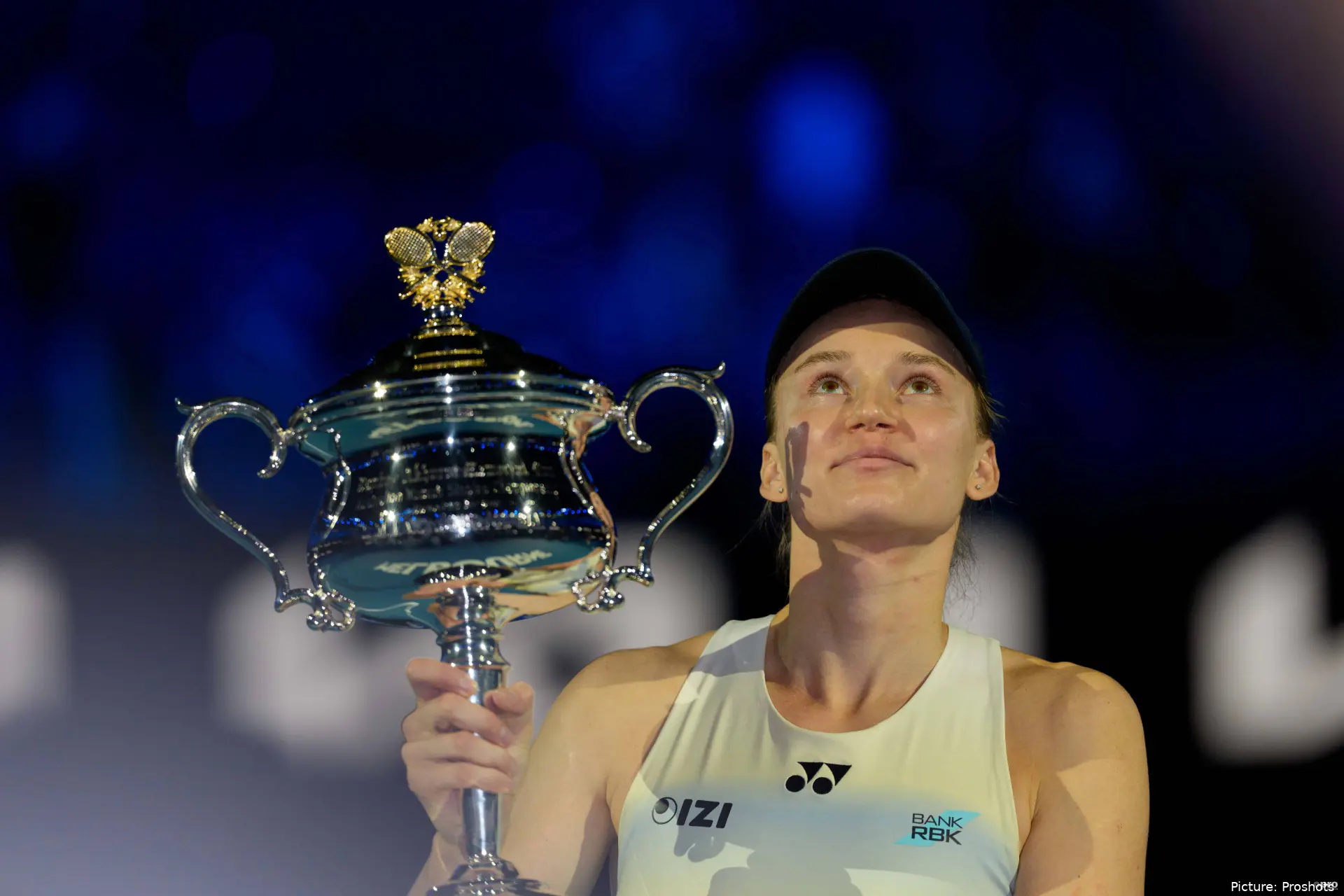
When the derisive laughter of the men’s U.S. Olympic team went mega-viral after President Trump complained that he would also need to invite the women’s gold medal team to the White House, something shifted.
The clip spread everywhere. The reaction was immediate. And while the moment was uncomfortable, it was clarifying.
That laughter did not land in a vacuum. It ignited a chain reaction. A beautiful one.
WTA becomes the main event week after week
The backlash was not only against misogyny. It was for something. For recognition. For reality. For the achievements of women in sport that no longer need defending, apologizing for, or qualifying.
And here, in tennis, that chain reaction feels especially relevant. I follow the WTA Tour obsessively. I almost never watch men’s tennis anymore. I check the results every few days, sure. But in what is undeniably a golden era for the quality of women’s tennis, the men’s game has become, for me, truly unwatchable. That’s not a hot take. It’s a considered one.
Let’s start with the obvious. The women’s tour right now is astonishingly deep. On any given week, the draw is loaded. Matches are layered with strategy. Momentum swings feel earned, not inevitable. Players adjust. They construct points. They solve problems in real time. You can feel the intelligence at work.

Meanwhile, the men’s tour has become increasingly about heated rivalries rather than the quality of tennis itself. The marketing is built around personality clashes and narrative tension, not around the craft of the sport. And the craft is where the problem lies.
Men’s tennis has become inherently and remarkably un-creative. The game is, in many ways, a victim of the failed advance of technology. Between the physical strength of the current generation and so-called racquet “advances,” the sport has devolved into a contest of who can hit the ball harder, earlier, and flatter for longer. Points are often reduced to ballistic exchanges that blur into one another.
The artistry that defined the men’s game in the 1960s, 70s, and 80s feels like ancient history. Serve-and-volley artistry. Touch at the net. Creative angles. Tactical variation. Those highlights now live primarily on YouTube, preserved like museum footage from a civilization that valued nuance.

Karolina Muchova, the champion in Doha - one of many top names who are anchoring a must watch product.
Today, too often, it’s just slapping at balls so hard that viewers can barely track them on television. Contrast that with the WTA. Women’s tennis right now is about intelligence. It’s about thoughtfulness. It’s about strategy layered on resilience. It’s about players who cannot simply overpower one another and therefore must out-think, out-adjust, and out-last each other.
Watch a tight third set between top players and you see problem-solving, not just punishment. You see changes in court position. Variations in spin. Tactical resets. Emotional recalibration. You see sport in its purest form.
A more commercial product to the masses
Dispassionately speaking, it is a remarkably better and more sale-able product. Which makes what has happened off the court all the more frustrating.
The WTA, as an organization, has been shambolic over the past decade. Leadership instability. Strategic missteps. Commercial confusion. Missed opportunities in markets that were ready and waiting. It is hard to reconcile the brilliance on court with the inconsistency in the boardroom.
The best analogy is not a world-class restaurant that too few people know about. It is a world-class restaurant that chooses to burn half its food, occasionally cook in sketchy alleys, and allow the business to be run by people who once thought it might be fun to run a restaurant.
The product is elite. The execution around it too often is not. And yet. The future of women’s sport is blindingly bright.
Look at women’s hockey. Look at women’s basketball. Look at the explosion of global interest in women’s football. The cultural tide has turned, not because of charity or quotas, but because the quality is undeniable.
Women’s tennis is right at the center of that shift. The depth. The rivalries that are earned through play rather than hype. The weekly unpredictability. The global diversity of champions. It is compelling in a way that feels organic and durable.
That viral laughter moment mattered because it revealed something many people are no longer willing to pretend about. Women’s achievements are not add-ons. They are not optional invitations. They are not footnotes to men’s success. In tennis, they are often the main event.
The irony is that the WTA does not need sympathy. It needs competence. It needs strategic clarity. It needs leadership that understands it is stewarding one of the most compelling products in global sport. If that happens, the next decade could be transformative.
As for the men’s game, it faces a different challenge. It must rediscover creativity. It must wrestle honestly with the technological arms race that has flattened its artistry. It must decide whether it wants to be a showcase of athletic force or a canvas for imagination. Right now, one tour feels like the future. The other feels like the echo of balls being struck ever harder, ever faster, in rallies that impress but rarely inspire.
And if that viral moment taught us anything, it is this: when excellence is overlooked or dismissed, the reaction is no longer silence. It is a chain reaction. Women’s tennis is not asking for the invitation. It is already hosting the party.

Aron SolomonGuest Author
A Pulitzer Prize-nominated journalist for his groundbreaking op-ed in The Independent exposing the NFL’s “race-norming” policies, Aron Solomon, JD, is a globally recognized thought leader in law, media, and strategy.
As Chief Strategy Officer for AMPLIFY, he leverages his deep expertise to shape the future of legal marketing. Aron has taught entrepreneurship at McGill University and the University of Pennsylvania and was honored as a Fastcase 50 recipient, recognizing him among the world’s top legal innovators. A prolific commentator on law, business, and culture, his insights regularly appear in Newsweek, The Hill, Crunchbase News, and Literary Hub.
He has also been featured in The New York Times, Fast Company, Fortune, Forbes, CBS News, CNBC, USA Today, ESPN, TechCrunch, BuzzFeed, Venture Beat and countless other leading global media outlets. We are proud to have Aron on board at TennisUpToDate, where his deep tennis expertise enriches the site with sharp, original columns that connect the sport to wider cultural debates.
claps 1visitors 1
Just In

Popular News
Latest Comments
- A healthy Qinwen may be hard to stop next season. She was already scaring her opponents before her medical leave(s). Unfortunately, Zheng insisted on singing again. On the positive side -- Mirra did not sing!! ;~}
 mandoist11-10-2026
 - Where is it written that athletes, entertainers... People in general... are mandated to keep looking at -- or even using [anti]Social Media? Public & private figures consistently complain and reveal their concerns about negativity and violence thrown at them -- yet they insist on participating. Avoid it, don't use it, don't read it. It's okay to occasionally look up at the World instead beating your eyes & thumbs to death on The Inventions out there.mandoist11-10-2026
- great articlestennisseserver07-10-2026
- Medvedev was leading Djokovic 7-5, 3-5 when an attempted return..' NO you ignorants, Djokovic was leading .weiss05-10-2026
- No more bullshit "Wildcards" to these two. Qualify like everyone else -- there will be cameras there, too. Time to scream... WTF ????!!!!mandoist29-09-2026
- Let's not BS the general public -- Sabalenka started showing cracks in her game last season. Her losses and near-losses started at about the same time she began being distracted by Fame (constant Selfies, making TV commercials, magazine shoots, endless Social Media nonsense, etc., etc.) One would think even Saba could recognize the parallels with others who failed before her -- Raducanu, Giorgi, Bouchard to name a few.mandoist25-09-2026
- Gross!! Hey Raducanu, Giorgi, and Bouchard -- reserve a seat at your Social Media Selfie table for Saba + Naomi. They're heading in your direction soon enough.mandoist24-09-2026
- And then these same players will complain about how lengthy their season’s were and need more time-off. I’m all for more tennis but the amount of tennis we get now is actually kind of crazy! We all need a break, especially the players.DaveyWavey23-09-2026
- You should do a comparison article for "different kinds of justice" the courts decide for tennis players. I can think of at least three players who received very small bans of a few months, however Tara Moore has been fighting for her literal survival the past few years. It seems odd considering she is not a "name" player, unlike the other cases.DaveyWavey22-09-2026
- PRIZE MONEY & POINTS Winner - $185,500 Finalist - $114,500 Semi-Finalist - $66,003 Quarter-Finalist - $35,000 Round of 16 - $18,045 Round of 32 - $13,005 Winner - 500 Finalist - 325 Semi-Finalist - 195 Quarter-Finalist - 108 Round of 16 - 60 Round of 32 - 1DaveyWavey20-09-2026

Loading