The battle to be heard: Oleksandra Oliynykova dismisses threats of fines and disqualifications as she strives to continue speaking out about Ukraine war
WTA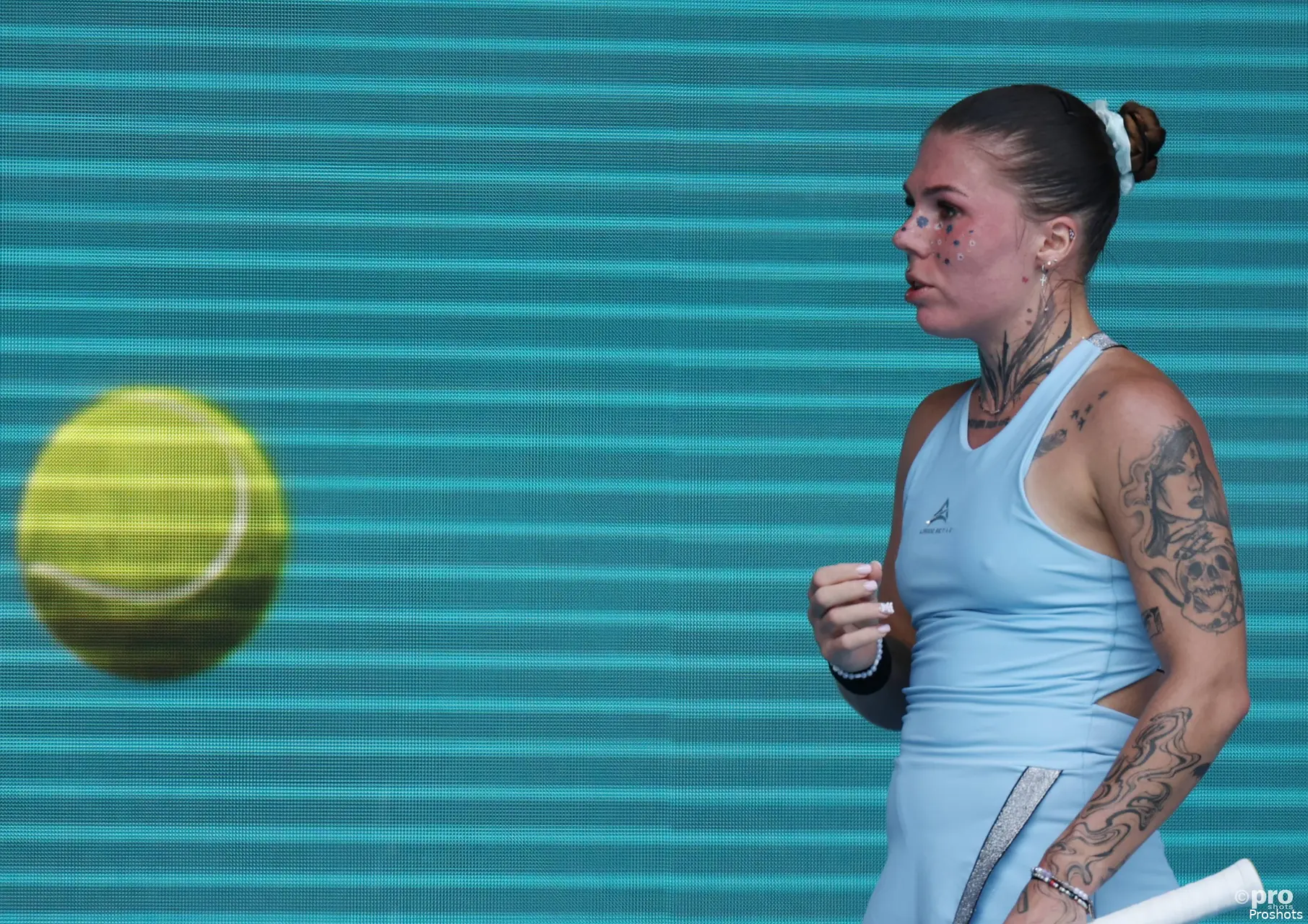
Oleksandra Oliynykova has burst onto the scene in 2026. Ranked number 68th in the world, she has recently picked up her first WTA 1000 wins enroute to the third round of the Rome Open as she continues her fine season on court. However, there are underlying factors to this that have taken centre stage in her time as a WTA player.
The tennis has never been the main headline around her. The Ukrainian has constantly spoken out against Russia and Belarus amid the Ukraine war, regularly calling out fellow tennis players from these countries for supporting the ongoing conflict as she indulges in a battle with the WTA to be heard. Now not scared of fines or disqualification, she is putting everything onto getting her point across on the big stage. In an interview with Ben Rothenberg on Bounces, she discussed and dissected these issues and how she would not stop speaking up about them.
Clear intentions at Melbourne Park
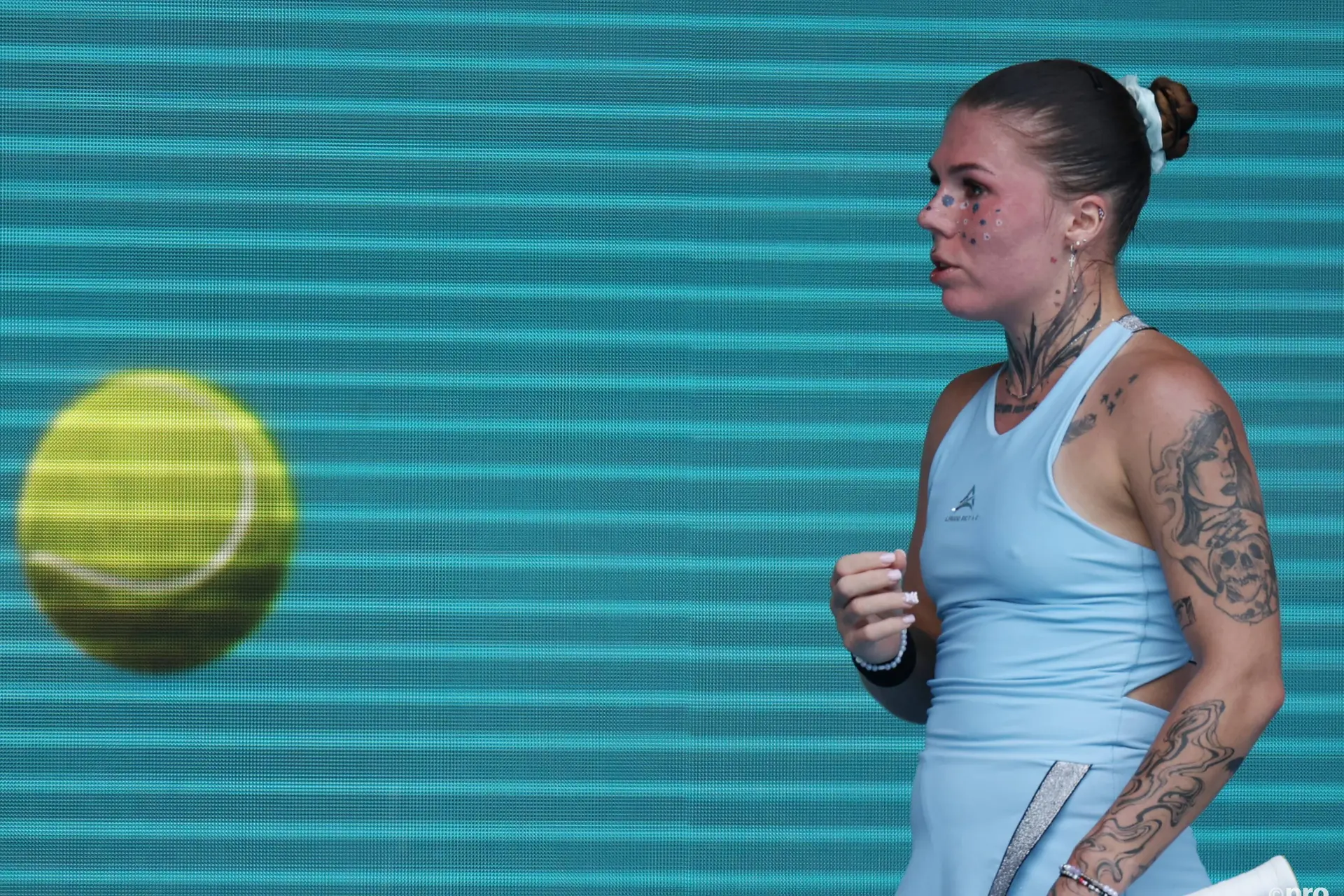
Oliynykova's Grand Slam debut at the Australian Open was not headlined around tennis for long. She made life tricky for reigning champion Madison Keys but succumbed to defeat. In her press conference, she boasted a t-shirt with the sentence: “I need your help to protect Ukrainian children and women, but I can’t talk about it here."
"I did this because I had a problem with censorship before," she explained. "WTA banned my logo twice; I was playing with a logo to promote crowdfunding to support Ukrainian defenders, and they banned it twice.
"And in general, I had a lot of problems with censorship. But for me, it was really important to [bring] attention that we need help. This t-shirt, I was wearing this to help support crowdfunding for air defense, because this something that can save the life of a child in Ukraine, you know? Innocent people. Civilians. In general, the terms of war are being censored a lot."
This is not just on the WTA Tour, but in her time on the ITF and Billie Jean King Cup. She would try to get her message across but it would never see the light of day. "Even when I was playing the Billie Jean King Cup [at a tie played in Poland in April], I was making some interviews—it was not WTA, it’s ITF—but it’s quite similar in every tournament. I see that my interviews were being cut—like 90 percent of what I’m speaking," she said.
"The interviews which are outside of the tournaments, they are [published] in full. So the shirt was for attention to the help we need, but also to the [censorship] problem that we have on tour: the limit on free speech."
She went on to speak on the things which got cut from her ITF days. "It was content for the social media. It’s probably, again, not connected to WTA, because it’s a different platform. But we were making a lot of content and I was really speaking a lot about the war in Ukraine, about how we’re not playing at home because it’s war, about how our players can’t wait until when Ukraine will win this war and it’s going to be peace again. We really want to play for our crowd, you know?"
A lot of content and effort Oliynykova worked on gone to waste. "We were filming a lot of content, but I didn’t see anything published where I was speaking about this, and I was speaking about this all the time. 90 percent of what I was speaking was about this."
Issues with the WTA
Oliynykova is very active on her Instagram page, regularly writing up long messages in posts or stories discussing the war and making it a prominent subject, linking it back to tennis. In one of them, she unveiled how the WTA came to her and advised to stop speaking out about a number of their players, like she previously had been doing. This ranged from a wide variety of Russian and Belarusian talents, including the world number one Aryna Sabalenka Down Under.
This incident occurred in her semi-final run in the Transylvania Open. "Actually they had issues with a lot of things I’d posted," she commented. "In Cluj-Napoca, it was specifically because I didn’t want to shake hands with Anna Bondar, because she participated in Gazprom tournaments. She went to Russia. And for me, I don’t see this in any different way than taking blood money. For me, it’s awful.
"Again, it is not a personal thing to Anna; it’s not anything about her personality. It’s just something I will never respect. And for me, this is the same—if we will try to see something similar in historic perspective—it’s the same as to go play in Nazi Germany, and to take that money, enjoy your match, and think that it’s all normal."
She released her true feelings on the situation, and the WTA were having none of it. "So I made this publication. And two WTA workers, they came to me and they started to talk about my publications. They said that I shouldn’t have said her name. Even though players, they are talking about each other all the time; there is not any rule about depersonalisation.
"But [the WTA staff] started to talk about that I’m attacking her—which is also not true, because this was just a fact: she did this, and Gazprom is a sponsor of war, and I see the war in Ukraine as something horrible. It is, you know? This is my opinion."
She stood up for herself. "But I didn’t attack her in any way," she stated. "Saying that my saying the facts is ‘attacking’? Because, you know, I didn’t say ‘Oh, I hate her, she’s awful, she’s stupid’ or something like this. No, I said this decision would be the same as to play in Nazi Germany. That’s how it started.
A lot of discourse around what should and should not be posted came next as both outfits wanted to set the guidelines. "I was talking to them for the next two months to clarify the rules. Because they have rules that you’re not allowed to say things which are harmful to other players. But the thing is that, for me, first of all: I’m saying the facts."
The 25-year-old came up with an example. "I don’t know if you remember the situation when Youzhny broke his head with the racket?" Mikhail Youzhny hit himself on the head three times with his racket at the 2008 Miami Open. This was completed out of frustration, and a bleeding wound cropped up on his forehead.
"It’s like the same to say that the video maker harmed Youzhny because he filmed this," she continued. "No! That is stupid. Let’s say it clear: I’m saying the facts that they did it; I didn’t force them to do this.
"It’s also missing the context that I’m saying that the facts about what they did, their decisions, because their decisions and their actions are affecting my life. Because this propaganda, it has a goal: to brainwash people in Russia so they go to kill Ukrainians. I’m a Ukrainian who lives in Ukraine—that’s affecting me. Actually, I’m the one who is harmed in this situation."
There was a sense of wanting to be protected on tour due to the events occurring in her home country. "I was asking them to clarify this. I was also asking them to protect me, because I feel unsafe on tour after all these situations. But I’m just not getting answers to my questions. I’m getting pressure from their side, though—that’s what was happening for the last two months."
Calling out certain tennis players - eg. Sabalenka
Russian celebrity beauty influencer Victoria Bonya posted a vide on Instagram repeatedly complimenting and praising the Russian President Vladimir Putin while also slamming some parts of the government. It got a whole lot of traction, more than a million people liked it. One of which was Sabalenka, who removed her like after the controversy rose as Oliynykova had her say.
She discussed more on the four-time Grand Slam champion. "If we will talk about Sabalenka, in her specific context, it’s actually a very small thing. Because this is the person who signed this document for Lukashenko in 2020: during the protests [in Belarus], she supported him, and she has never [withdrawn] this signature.
"These likes are visible, and the likes from public people on this publication, they show that you’re agreeing with this. And when the normal people see that some big person, famous person—I think she’s the most famous Belarusian woman in the world—when they see this, they see that people agree with this. And if they agree with it, then it’s OK. And if it’s OK, then it helps form a society."
Sabalenka is just being singled out here, with Oliynykova admitting she is one of many. "Of course it’s not only about one like of Sabalenka’s. It’s about all the system, which includes sports, music, television, films—all this. The cultural part of life creates the picture that war is normal, that Putin is doing something good, that Lukashenko is doing good.
"Because if the people like this are liking this publication, are participating in some propagandistic tournaments, it’s creating the image that you can go to the war, you can kill Ukrainians, you can kill Ukrainian kids, rape Ukrainian women, and when you are coming back to Russia, you will still be accepted by society. Because your celebrities—the tennis players, football players, musicians, movie stars—they are accepting this. They are showing this acceptance by likes on social media, or comments or maybe some publication—it could be different things. But in general, these are the pieces which are creating this image in the heads of Russians: if they will do these horrible things, they will still have a society to come back to."
Having prize money stripped from her
After competing at the Charleston Open, Oliynykova found out that she had been fined. "It was much less than how they were trying to scare me. They tried to scare me with like, thousands and thousands and thousands—money I wouldn’t be able to pay them. But in the end it was much smaller. I think it was also part of trying to scare me. Right now I’m actually not even sure if I’m allowed to say this, but it happened.
"At first they were trying to scare me that [fines] were supposed to be around $50,000 or $60,000—I’m not sure. I already forgot actually (laughs), because when I understood that this is actually their way to scare me and that it’s blackmailing, yeah, I decided not to think about this too much."
There were also threats of disqualification, but this has not been implemented yet. "There was also the option of disqualification. But you know, what I’m just thinking now: if they will disqualify me for saying the truth, it would be sad, of course, but it would be more acceptable from my perspective than to try to put myself into these standards which I believe are not fair, and are not about sport, not about sportsmanship, but are just about the system to make money."
She knew the apparent threats and this restricted what she wanted to say. "I was feeling so bad, even in communication with people around," she said. "Because I was really feeling like I need to say something to them. I want them to hear me, because I need to share with them the things I know. I have some experience; I’m educated about this system, you know? I know what I’m saying.
"But because they did not allow me to say it—'we will fine you, we will disqualify you,' all these things—I was feeling bad. I wanted to be at a distance from the public at one point, because I was feeling like what’s happening is fake. I was feeling like I wanted to go to the public to talk with people and everything, but in the same way, I was feeling this kind of shame, because of this system."
In the end, these threats do not scare her in the same way. "I decided that it’s OK, if they want to disqualify or fine me, because I want to be open with the people. I made the decision to keep speaking. After the match yesterday, I was again feeling these emotions to the crowd. I went to talk to people, to make photos, videos. And I was so happy, because that’s what I want to do on court."
What lies ahead in the future
While tennis is a big part of Oliynykova's life and her professional journey in the WTA is starting to flourish, there is concerns about how long she will stay in the sport. One of the quotes on her Instagram read: “I do not know how long I will continue to play.”
She underlined how the issues experienced back in Ukraine could force her to walk away. "I’m still in some way recovering mentally. Because as I said: I am a victim of the war," she acknowledged. "I’m living under attacks and living in this system where they are making everything, like, opposite. Everybody is defending not the values, but the interests of the corporation, the financial interests, big money, big stars—but not the real truth, the facts. They’re putting me under pressure.
The contrast from her home country to the tennis tournaments she competes at throughout the year is drastic. "Then when I come home [to Ukraine], I see this reality. I see the buildings destroyed. I hear the attacks. Then I’m coming to the tournaments where everything is so fancy, so glamorous. And I see the people defending this glamorous [system], but they don’t want to defend the interests of the people who are suffering. They don’t want even me to say [anything] about these things. They are blocking my voice, even after all the things I’m seeing when I’m at home. I don’t know, even, how to explain this feeling, I think."
This has led her to continue to speak out, bravely ignoring the risks and getting her point across to tennis fans around the world. "So I’m putting myself in the position," she said. "And you’re right: this is a platform to speak, and again I believe that sports are about humanity. I believe that this is a part of sport. All the things I said about communication, about fans, about being open, about speaking the truth—it’s all what sports are about. It’s not just only about money; it’s about fair competition. It’s about the emotions you’re going through.
"It shouldn’t be just the machine of making money; for me, that’s wrong. If I accepted that, it’s losing all the sense of sport for me. So, I’m risking to be disqualified. So yeah, I’m in between these two [choices]."
A new interview with Ukrainian player Oleksandra Oliynykova, who is increasingly at odds with the WTA over her continued outspokenness over the war in Ukraine and the star players, including Aryna Sabalenka, whom she names and calls out.
— Ben Rothenberg (@BenRothenberg) May 7, 2026
Free to read:https://t.co/6lZpF4uYxz
Lucas MichaelTennis Journalist
Lucas Michael is a tennis journalist based in Cambridge, UK, specializing in comprehensive coverage of the ATP and WTA tours. For the past 1.5 years, he has been a core contributor to TennisUpToDate, where he has authored more than 3,000 data-driven match reports, deep-dive analysis pieces, and engaging liveblogs.
Lucas pairs real-time statistical analysis with on-the-ground reporting, frequently traveling to tournaments to cover the action firsthand from the press box and player press conferences. This blend of advanced metrics and direct access allows him to provide sharp context regarding player form, tactical trends, and breaking tour developments.
He holds a BA (Hons) in Sports Journalism. Grounded in core journalistic ethics, Lucas places a strict emphasis on meticulous sourcing, editorial accuracy, and a commitment to updating live content swiftly as verified information emerges.
claps 0visitors 0
Just In


Popular News
Latest Comments
- Does Sinner need that 4.5 mil? I doubt it. He can make that with three modelling gigs!😅🤣Rapunzel21-10-2026
- Did "People Magazine" purchase this website? This nonstop storyline is bullshit.
 mandoist21-10-2026
 - Listen... this is of no concern to anyone but these two. Deal with your own issues -- most of us have our own. Thanks, media, for these insignificant follow-ups which are meaningless.mandoist21-10-2026
- This is so very very sad, for all three of them. I truly thought they had an unbreakable bond, but life throws up so many differing challenges. Having your homeland suffering in such a terrible way, makes happiness lose out to guilt as well. Our thoughts are with them. X💔bjsexton20-10-2026
- I have lost all respect for Svitolina! Could she not have waited until he had played at the Paris Masters!!! She is selfish and don't give a damn about Gael. That is NOT how love is demonstrated Elina!!Rapunzel19-10-2026
- Perhaps convenient tennis tour sex is not a strong enough experience in which to base a marriage?mandoist19-10-2026
- Fight the Good Fight... Tennis (sports in general) need more Humans such as yourself.mandoist18-10-2026
- When is WTA going to mandate Genetic Testing (DNA) ???mandoist18-10-2026
- Hey, Dan... you just wake up from a coma? Regardless -- Thanks for the comedy this morning!mandoist18-10-2026
- Two Things: 1. Stop allowing these Spoiled Trust-Fund Elitists to behave badly. Your little hand-slaps do not deter them. 2. STOP the incessantly annoying "towel wiping" nonsense!!!!mandoist15-10-2026

Loading