"A little bit disrespectful that you miss out on what happened in between": Novak Djokovic hits out at being called chaser in Sinner-Alcaraz dominance
ATP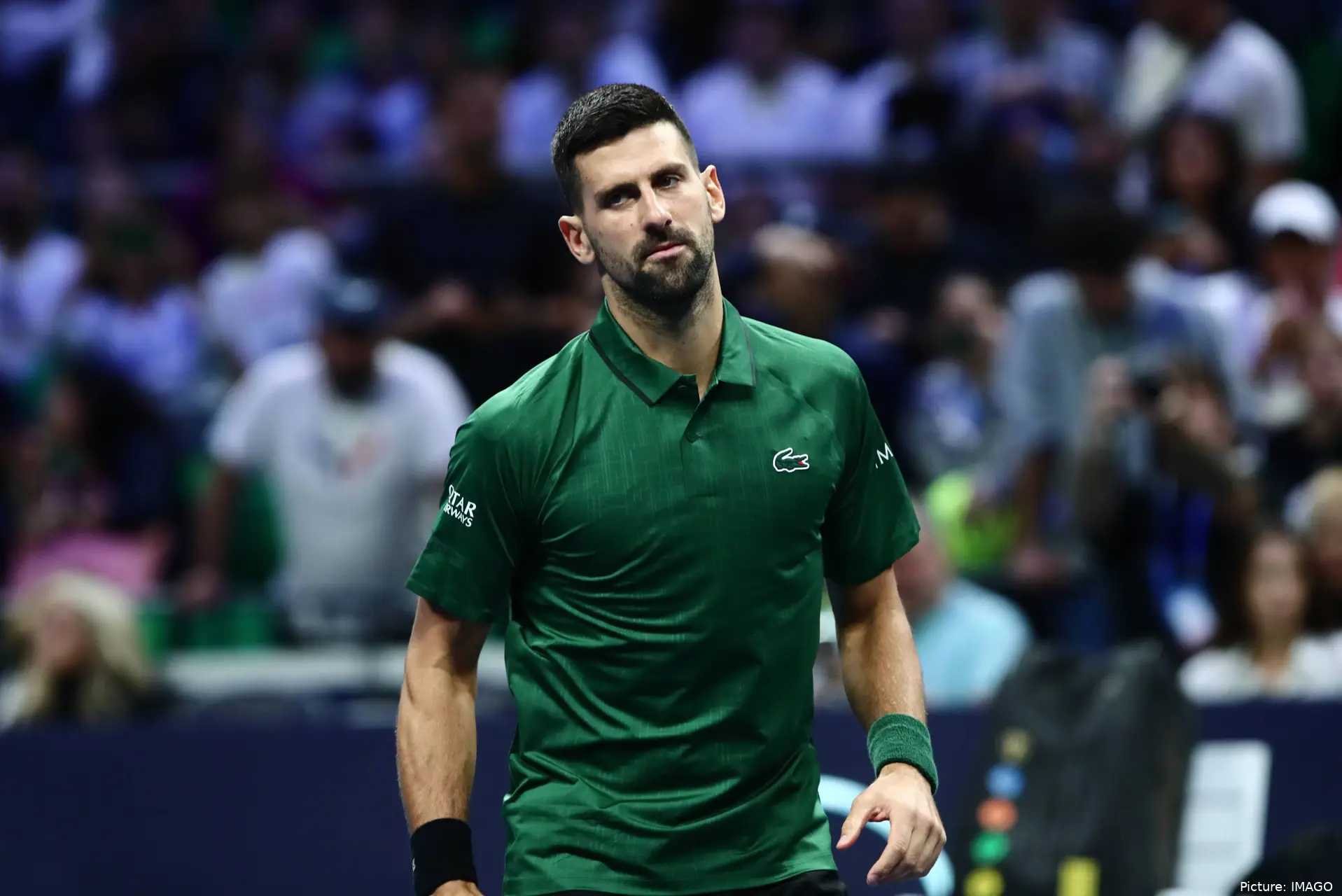
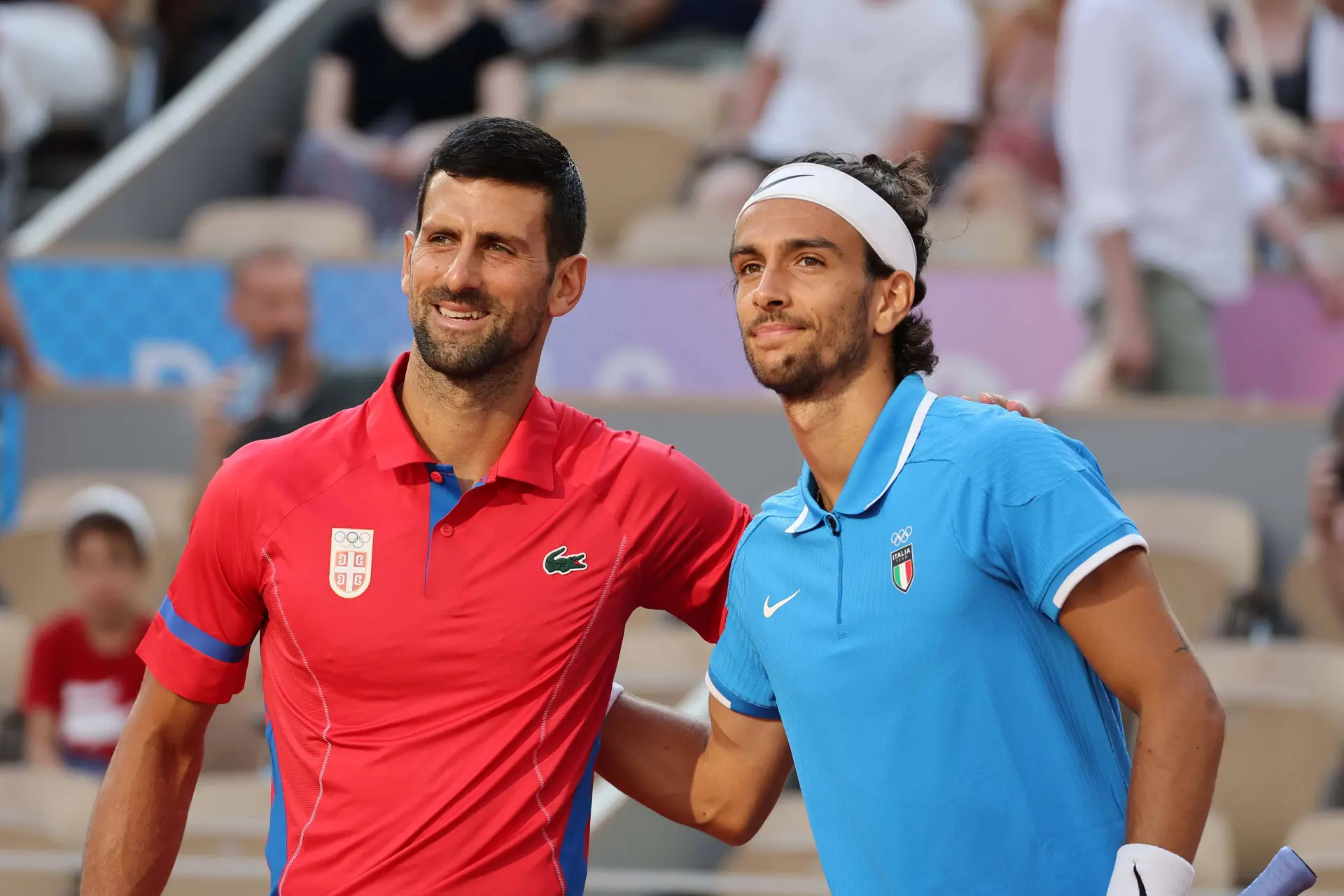
Novak Djokovic booked his place in the semi-finals of the 2026 Australian Open after Lorenzo Musetti was forced to retire from their quarter-final clash, with the Serbian leading 6–4, 6–3, 1–3 at the time of the Italian’s withdrawal.
Djokovic had taken control of the match by winning the opening two sets, but the contest ended prematurely early in the third when Musetti’s physical issues worsened, preventing him from continuing.
Speaking afterwards in his post-match press conference, Djokovic revealed that he only became aware of Musetti’s physical struggles late in the match.
“Honestly, the first time I saw him struggling a bit was in the third game of the third set when I broke his serve,” Djokovic explained. “But I’ve spoken to some members of his team – my former agent Eduardo is part of it – and he told me that Lorenzo had already complained at the beginning of the second set.
“I didn’t really feel that it affected his game much in the second set, but it probably got worse, and that’s what happened.”
Despite progressing, Djokovic was candid about his own performance levels and acknowledged that he would need to improve significantly heading into the semi-finals at the time whether he would face Sinner or Shelton. He now faces Sinner.
“Well, I’ve played Ben only once, in the semi-finals of the US Open years ago, so hopefully, if we get a chance to play again, we can have a good match,” he said. “If I play Jannik, I’ve lost to him, I think, four or five times in a row. He’s playing on such a high level right now, along with Carlos – they’re the two best players in the world.
“He’s the absolute favourite, but you never know. Hopefully I can deliver my A-game for that match-up, because that’s what’s going to be needed at least to have a chance. I wasn’t playing close to my best today, so I’m going to have to change that around.”
Physical condition and Musetti's retirement
Djokovic also provided an update on his physical condition, revealing that a blister remains his primary concern but insisting there are no major issues.
“I had a blister that needed to be looked at and re-taped,” he said. “That’s what I did last match and again now. That’s the biggest of my concerns, to be honest. I don’t have any other major issues.
“You always have some minor issues with your body – at least for me – every single day. But major issues, no. Thankfully, that’s still not posing a challenge or an obstacle for me to be able to play and move around the way I want to.”
Reflecting on Musetti’s retirement, Djokovic highlighted the brutal physical demands of tennis and the unique challenges of an individual sport.
“I think today’s example with Musetti really shows how challenging this sport is,” he said. “He was the better player on the court. He was close to winning it. He was in control. Obviously, something happens.
“If you’re part of a team sport, maybe you go out and somebody substitutes you for a set, you attend to your physical issue, and maybe you get a better chance to close out the match. But that’s not possible in our sport. That’s the beauty of tennis as an individual sport, but also a huge challenge.”
Djokovic admitted he understands Musetti’s frustration all too well, having suffered similar setbacks himself in recent seasons.
“I know exactly the feeling, and it’s horrible – particularly when you feel like you’re playing very well, like he was,” he said. “You can’t perform the way you want to. Your body is just not letting you. That’s a hard one to swallow, but that’s the sport we’re in.”
Confidence and motivation hasn't faded and Gauff camera issue
When asked whether he still believes he can reach his peak level at the business end of Grand Slams, Djokovic dismissed any suggestion that his confidence or motivation has faded.
“I think I underperformed compared to the level I showed throughout the tournament up to today,” he said. “I have to play better, no doubt about it. But I know that if I’m feeling well, my body is holding up, and I’m playing well, then I always have a chance.
“It’s the semi-finals of a Grand Slam. In terms of confidence and motivation, of course it’s always there. It must be – otherwise, what’s the point of competing?”
Djokovic also addressed the wider issue of injuries and retirements at this year’s Australian Open, pointing to a combination of extreme heat, the demanding tennis calendar and the unique pressures of the start of the season.
“It’s a two-edged sword,” he said. “The off-season is the only time of the year when you can really push yourself physically, but also mentally and emotionally, in terms of tweaking your game and trying to improve. That requires a lot of energy and effort, and it puts additional strain on the player.
“Also, most players haven’t competed in an official tournament for maybe a month and a half or two months. The body behaves very differently in an official match compared to practice sets.”

Novak Djokovic moves through again in Melbourne.
The 24-time Grand Slam champion was also outspoken on the growing presence of behind-the-scenes cameras at major tournaments, sympathising with Coco Gauff after her recent comments about feeling exposed.
“I empathise with her,” Djokovic said. “It’s really sad that you can’t move away anywhere and fume your frustration or anger without it being captured by a camera.
“But we live in a society where content is everything. It’s really hard for me to see the trend going in the opposite direction. If anything, it’s probably going to be the same or even more cameras. I’m against it. I think there should always be a limit, a borderline, where this is our space.”
Chasing the next generation isn't an iota for Djokovic
Finally, Djokovic rejected the idea that he is now ‘chasing’ the next generation, insisting that he remains focused on creating his own legacy.
“I don’t feel like I’m chasing, to be honest,” he said. “Roger and Rafa will always be my greatest rivals. I have tremendous respect for what Jannik and Carlos are doing.
“Are they better right now than me and the other guys? Yes, they are. The level and quality are phenomenal. But does that mean I walk out with a white flag? No. I’m going to fight until the last shot, the last point, and do my very best to challenge them.”
Djokovic was also drawn into a lighter exchange when questioned about the notion of ‘chasing’ the next generation, pushing back against the framing of the question itself.
When it was put to him that he was now chasing Jannik Sinner and Carlos Alcaraz in terms of Grand Slam titles, Djokovic interjected. “In terms of winning Grand Slam titles just right now?” he asked.
When the journalist responded by pointing out that he has won 24 Grand Slam titles, Djokovic replied: “So I’m always the chaser and I’ve never been chased? "In the meantime, you’ve won 24 Grand Slams," the journalist responded. It’s worth saying that sometimes, right?”
He went on to underline that his career cannot be reduced to a simple before-and-after comparison.
“I find it a little bit disrespectful that you miss out on what happened in between,” Djokovic said. “When I started chasing, as you say, Rafa and Roger, and now that I'm chasing Carlos and Jannik, there's probably about a 15-year period in between where I was dominating the Grand Slams. So I think it's important to put that in perspective.”
Djokovic reiterated that while Sinner and Alcaraz are currently setting the standard, his competitive fire remains undimmed.
“My intention is always clear,” he said. “In terms of achievements and objectives, I want to get to the championship match in every tournament, particularly Grand Slams. Slams are one of the biggest reasons why I keep on competing and playing tennis.
“Are they better right now than me and all the other guys? Yes, they are. The quality and the level is amazing. It's phenomenal. But does that mean that I walk out with a white flag? No. I'm going to fight until the last shot, the last point and do my very best to challenge them.”
Djokovic added with a smile that such cycles are inevitable in elite sport. “This is a kind of a natural cycle in sport,” he said. “You're going to have another two superstars, maybe even a third guy. That's good for our sport. These rivalries, the contrast of personalities and styles of play, are very good for tennis.”

Samuel GillEditor-in-Chief
Samuel Gill is the Chief Content Officer (CCO) of TennisUpToDate.com, a role he has held since 2020. He is responsible for editorial governance across the platform, including setting content standards, overseeing accuracy and consistency, and guiding long-term editorial strategy. Since joining, he has contributed more than 10,000 articles and editorial pieces across the TennisUpToDate network, playing a central role in the daily operation and development of the site.
Based in Leicester, Samuel has a broad background in tennis media. In his current role, he works closely with editors and writers to ensure coverage meets clear journalistic standards, with particular attention to verification, consistency, and timely updates when new information becomes available.
claps 0visitors 0
Just In

Popular News

Latest Comments
- Does Sinner need that 4.5 mil? I doubt it. He can make that with three modelling gigs!😅🤣Rapunzel21-10-2026
- Did "People Magazine" purchase this website? This nonstop storyline is bullshit.
 mandoist21-10-2026
 - Listen... this is of no concern to anyone but these two. Deal with your own issues -- most of us have our own. Thanks, media, for these insignificant follow-ups which are meaningless.mandoist21-10-2026
- This is so very very sad, for all three of them. I truly thought they had an unbreakable bond, but life throws up so many differing challenges. Having your homeland suffering in such a terrible way, makes happiness lose out to guilt as well. Our thoughts are with them. X💔bjsexton20-10-2026
- I have lost all respect for Svitolina! Could she not have waited until he had played at the Paris Masters!!! She is selfish and don't give a damn about Gael. That is NOT how love is demonstrated Elina!!Rapunzel19-10-2026
- Perhaps convenient tennis tour sex is not a strong enough experience in which to base a marriage?mandoist19-10-2026
- Fight the Good Fight... Tennis (sports in general) need more Humans such as yourself.mandoist18-10-2026
- When is WTA going to mandate Genetic Testing (DNA) ???mandoist18-10-2026
- Hey, Dan... you just wake up from a coma? Regardless -- Thanks for the comedy this morning!mandoist18-10-2026
- Two Things: 1. Stop allowing these Spoiled Trust-Fund Elitists to behave badly. Your little hand-slaps do not deter them. 2. STOP the incessantly annoying "towel wiping" nonsense!!!!mandoist15-10-2026

Loading