"Does a giant house with a 100-inch TV not exist in Europe? I don’t get it": Carlos Alcaraz living room photo leaves Querrey, Johnson and Isner puzzled
ATP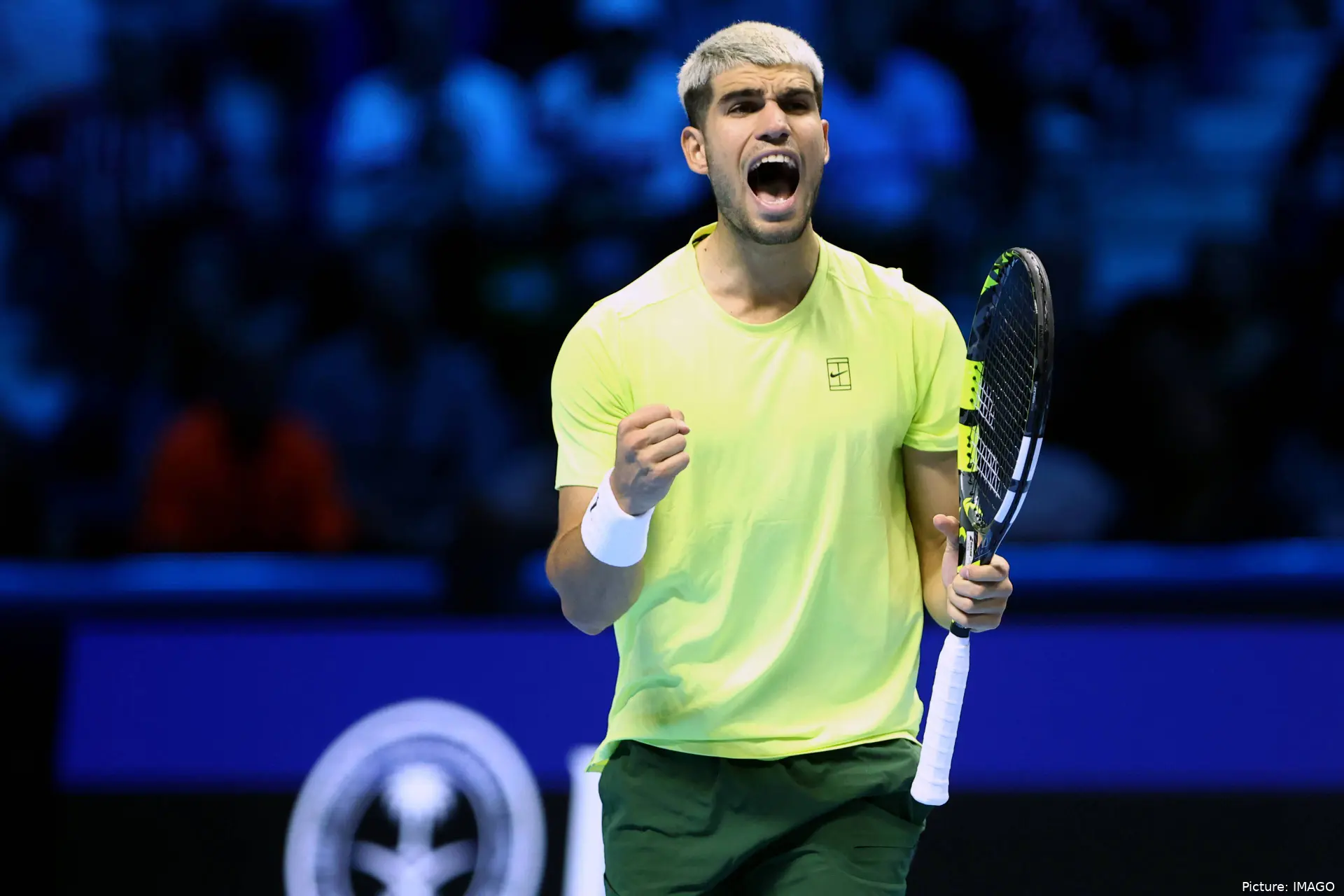
Italy’s dominance in the Davis Cup continues, with a historic three-peat championship that highlights the depth of talent and resilience in the team. Speaking on the Nothing Major podcast, Sam Querrey, Steve Johnson, and John Isner reflected on the tournament, sharing insight into standout performances, memorable moments, and the challenges facing the Davis Cup format.
Alcaraz’s viral living room photo
Before the tournament, Carlos Alcaraz captured the attention of the tennis world—not with a winning shot, but a picture of himself at home watching Spain take on Germany. The photo revealed a modest living room, surprising many fans who expected a lavish backdrop.
Steve Johnson remarked, “It looks exactly how it should. If you watched his Netflix documentary, this is what his house was like. He still lives at home with his parents. He’s got a small bedroom and does his workouts there. It’s crazy to me. I feel like they could have a bigger, more comfortable space, but this is very European.”
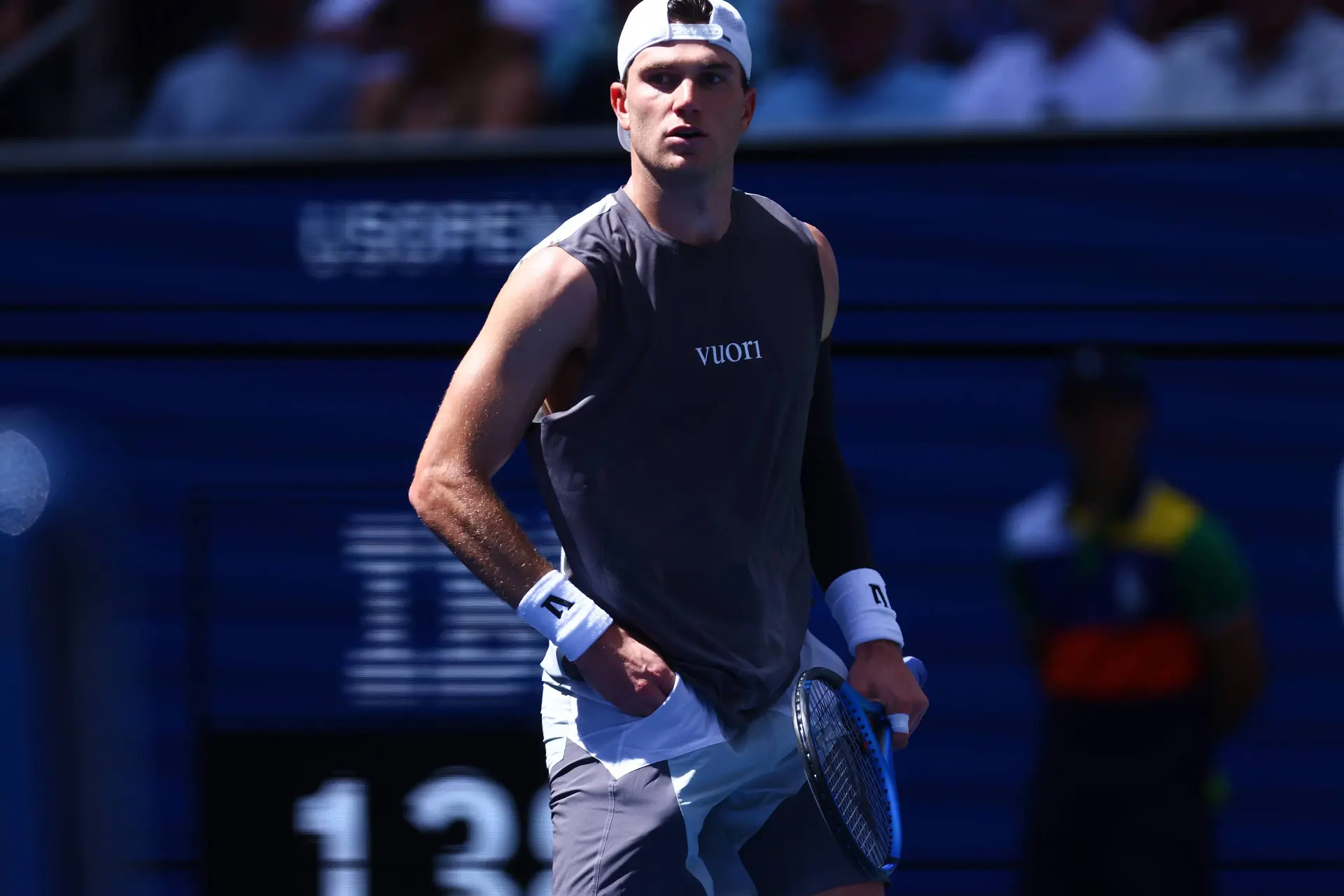
Sam Querrey noted the understated presence of trophies in the background, while John Isner added, “There’s no flex! Plastic wrap on the table, trophies in no order. He just put them up quickly.”
The trio compared it to Rafael Nadal’s similar humility, highlighting a culture among European players that contrasts sharply with the ostentatious lifestyles often associated with American athletes. Johnson summarized the sentiment: “Does a giant house with a 100-inch TV not exist in Europe? I don’t get it.”
Italy’s Davis Cup victory: depth and drama
Italy’s triumph in the Davis Cup was remarkable, achieved without their top stars, Jannik Sinner and Lorenzo Musetti. Cobolli and Berrettini anchored the team, delivering standout performances. Cobolli’s semifinal against Zizou Bergs was particularly dramatic, winning 7–6, 17–15 in the third-set tiebreak, saving six match points on the way to victory.
Sam Querrey and Steve Johnson praised the performance: “That match alone lifted Cobolli to higher stardom in Italy," siad Querrey as Johnson added to the debate. "But Berrettini—you can’t count him out. He hasn’t lost a Davis Cup singles match this decade. Ten straight wins. He steps up when it counts.”
The scheduling added to the challenge, with players required to compete on consecutive days. Johnson emphasized the importance of home support, noting that the atmosphere in Italy helped Cobolli overcome exhaustion: “If that wasn’t a home tie, I don’t know if he has the juice to get out of that match. The crowd carried him.”
The Future of the Davis Cup: Star participation and scheduling challenges
John Isner weighed in on the broader implications for the Davis Cup, particularly regarding top-10 player participation. This year, only Alexander Zverev appeared among the top ten, with Sinner, Alcaraz, and Musetti absent.
“It’s tough for top players. They come straight from the World Tour Finals or indoor tournaments like Paris,” Isner explained. “They need a break before the next season. Tennis is star-driven—you need these guys. Maybe having Davis Cup every other year would make it more prestigious and manageable.”
Steve Johnson added that a single-location format with home ties for early rounds could strike a balance between tradition and practicality: “You’d need one single event every other year. Sixteen teams at one site. If you win your first round, you’re automatically in the next edition. But home ties are still important for atmosphere.”
Memorable moments: Moutet’s risky play
The hosts also discussed moments of individual flair and missteps, such as Corentin Moutet’s infamous drop-shot attempt against Belgium. After a sequence of risky plays—including an underhanded overhead attempt—Moutet lost the set and struggled to regain composure.
Sam Querrey remarked, “Imagine one of you guys trying that for your country. You’d get demolished.” Steve Johnson added, “You can still be upset, but you can’t be surprised. That’s who he is. If he makes that shot, it probably fires him up.” Isner concluded, “You can’t pick him and then tell him the shenanigans that make him good are off-limits. That’s what makes him good.”

Samuel GillEditor-in-Chief
Samuel Gill is the Chief Content Officer (CCO) of TennisUpToDate.com, a role he has held since 2020. He is responsible for editorial governance across the platform, including setting content standards, overseeing accuracy and consistency, and guiding long-term editorial strategy. Since joining, he has contributed more than 10,000 articles and editorial pieces across the TennisUpToDate network, playing a central role in the daily operation and development of the site.
Based in Leicester, Samuel has a broad background in tennis media. In his current role, he works closely with editors and writers to ensure coverage meets clear journalistic standards, with particular attention to verification, consistency, and timely updates when new information becomes available.
claps 0visitors 0
Just In

Popular News
Latest Comments
- A healthy Qinwen may be hard to stop next season. She was already scaring her opponents before her medical leave(s). Unfortunately, Zheng insisted on singing again. On the positive side -- Mirra did not sing!! ;~}
 mandoist11-10-2026
 - Where is it written that athletes, entertainers... People in general... are mandated to keep looking at -- or even using [anti]Social Media? Public & private figures consistently complain and reveal their concerns about negativity and violence thrown at them -- yet they insist on participating. Avoid it, don't use it, don't read it. It's okay to occasionally look up at the World instead beating your eyes & thumbs to death on The Inventions out there.mandoist11-10-2026
- great articlestennisseserver07-10-2026
- Medvedev was leading Djokovic 7-5, 3-5 when an attempted return..' NO you ignorants, Djokovic was leading .weiss05-10-2026
- No more bullshit "Wildcards" to these two. Qualify like everyone else -- there will be cameras there, too. Time to scream... WTF ????!!!!mandoist29-09-2026
- Let's not BS the general public -- Sabalenka started showing cracks in her game last season. Her losses and near-losses started at about the same time she began being distracted by Fame (constant Selfies, making TV commercials, magazine shoots, endless Social Media nonsense, etc., etc.) One would think even Saba could recognize the parallels with others who failed before her -- Raducanu, Giorgi, Bouchard to name a few.mandoist25-09-2026
- Gross!! Hey Raducanu, Giorgi, and Bouchard -- reserve a seat at your Social Media Selfie table for Saba + Naomi. They're heading in your direction soon enough.mandoist24-09-2026
- And then these same players will complain about how lengthy their season’s were and need more time-off. I’m all for more tennis but the amount of tennis we get now is actually kind of crazy! We all need a break, especially the players.DaveyWavey23-09-2026
- You should do a comparison article for "different kinds of justice" the courts decide for tennis players. I can think of at least three players who received very small bans of a few months, however Tara Moore has been fighting for her literal survival the past few years. It seems odd considering she is not a "name" player, unlike the other cases.DaveyWavey22-09-2026
- PRIZE MONEY & POINTS Winner - $185,500 Finalist - $114,500 Semi-Finalist - $66,003 Quarter-Finalist - $35,000 Round of 16 - $18,045 Round of 32 - $13,005 Winner - 500 Finalist - 325 Semi-Finalist - 195 Quarter-Finalist - 108 Round of 16 - 60 Round of 32 - 1DaveyWavey20-09-2026

Loading