“Don’t be surprised if Sinner loses”: Daniil Medvedev challenges dominance narrative in Rome
ATPThursday, 14 May 2026 at 00:30
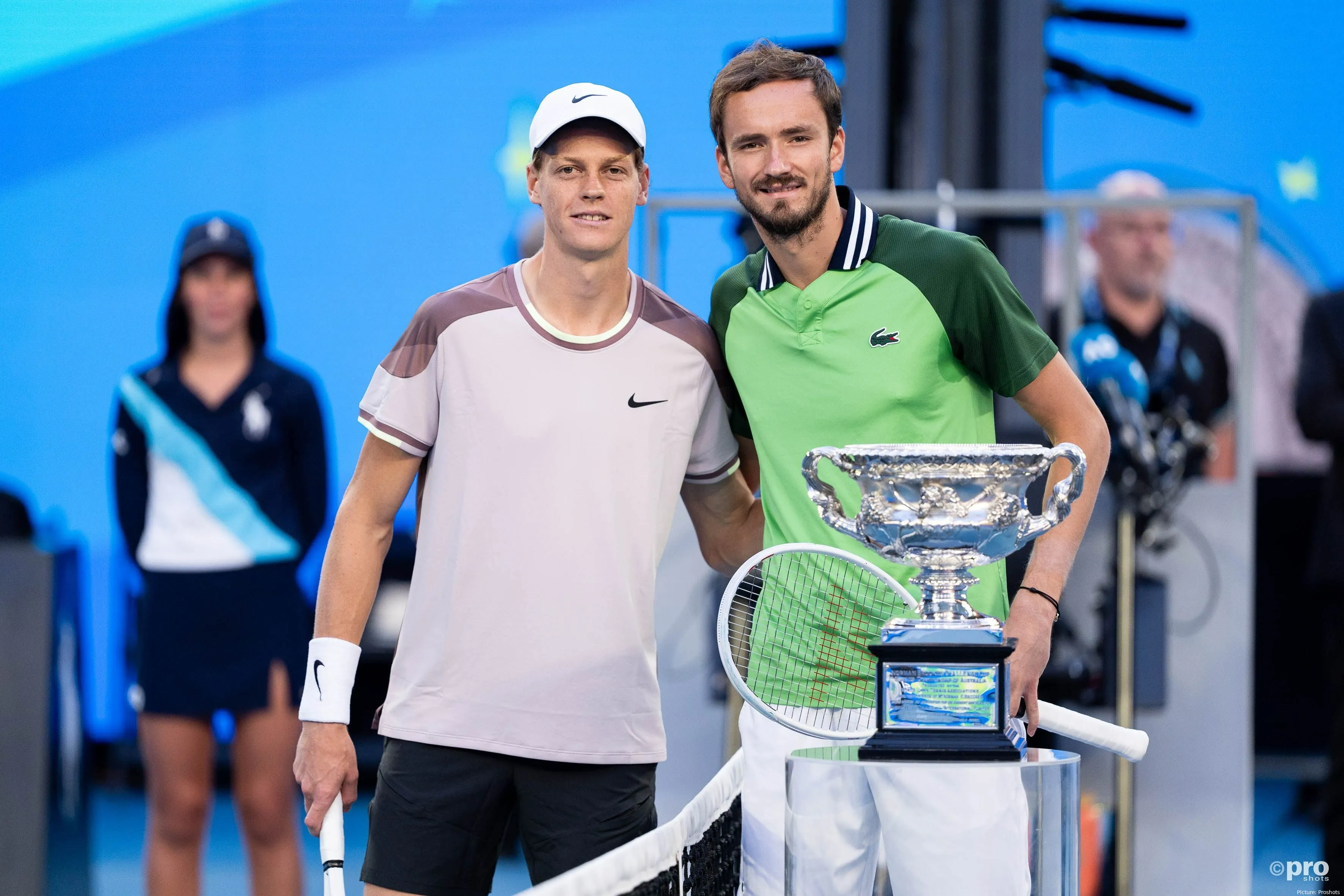
Daniil Medvedev used his Rome Open press conference to directly challenge the growing perception that world No. 1 Jannik Sinner is approaching untouchable status, insisting that even the most dominant players remain vulnerable over the course of a season defined by narrow margins.
The former US Open champion framed his current clay-court swing as a process of adjustment rather than transformation. His run in Rome has come despite an uneven start to the surface season, marked by both heavy defeats and controlled recoveries.
Medvedev reached the quarter-finals after a walkover in his opening round (Tomas Machac withdrew after injury), followed by victories over Pablo Llamas Ruiz (3-6, 6-4, 6-2) and Thiago Tirante (6-3, 6-2). He now faces Martin Landaluce for a place in the semi-finals.
A potential semi-final would likely bring a clash with either Andrey Rublev or Sinner, giving immediate relevance to his comments on dominance, pressure, and perceived inevitability at the top of men’s tennis.
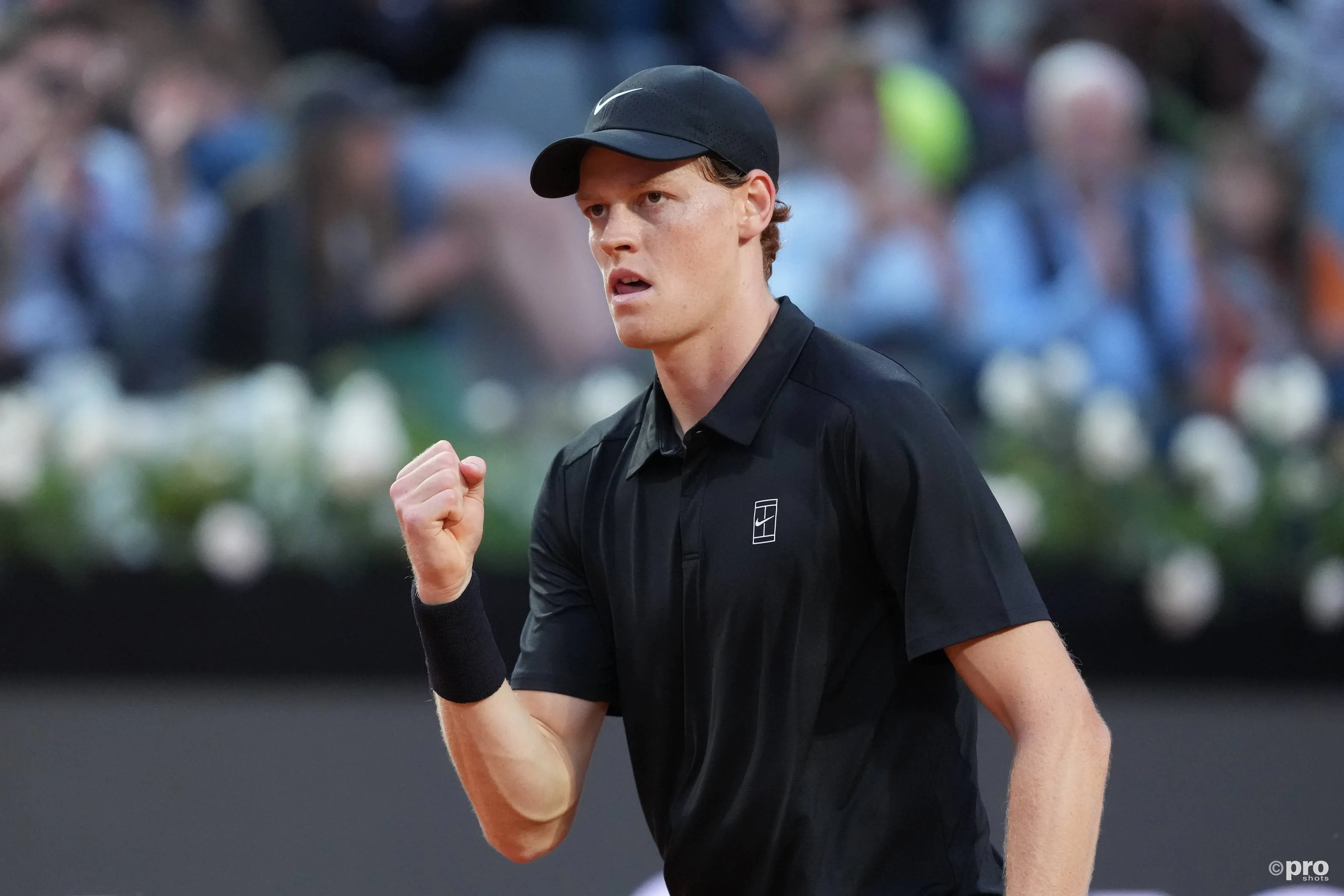
Monte Carlo collapse and clay-court recalibration
Medvedev opened by revisiting his difficult Monte Carlo campaign, using it as a reference point for how different types of defeats affect his recovery process and training decisions during the clay season.
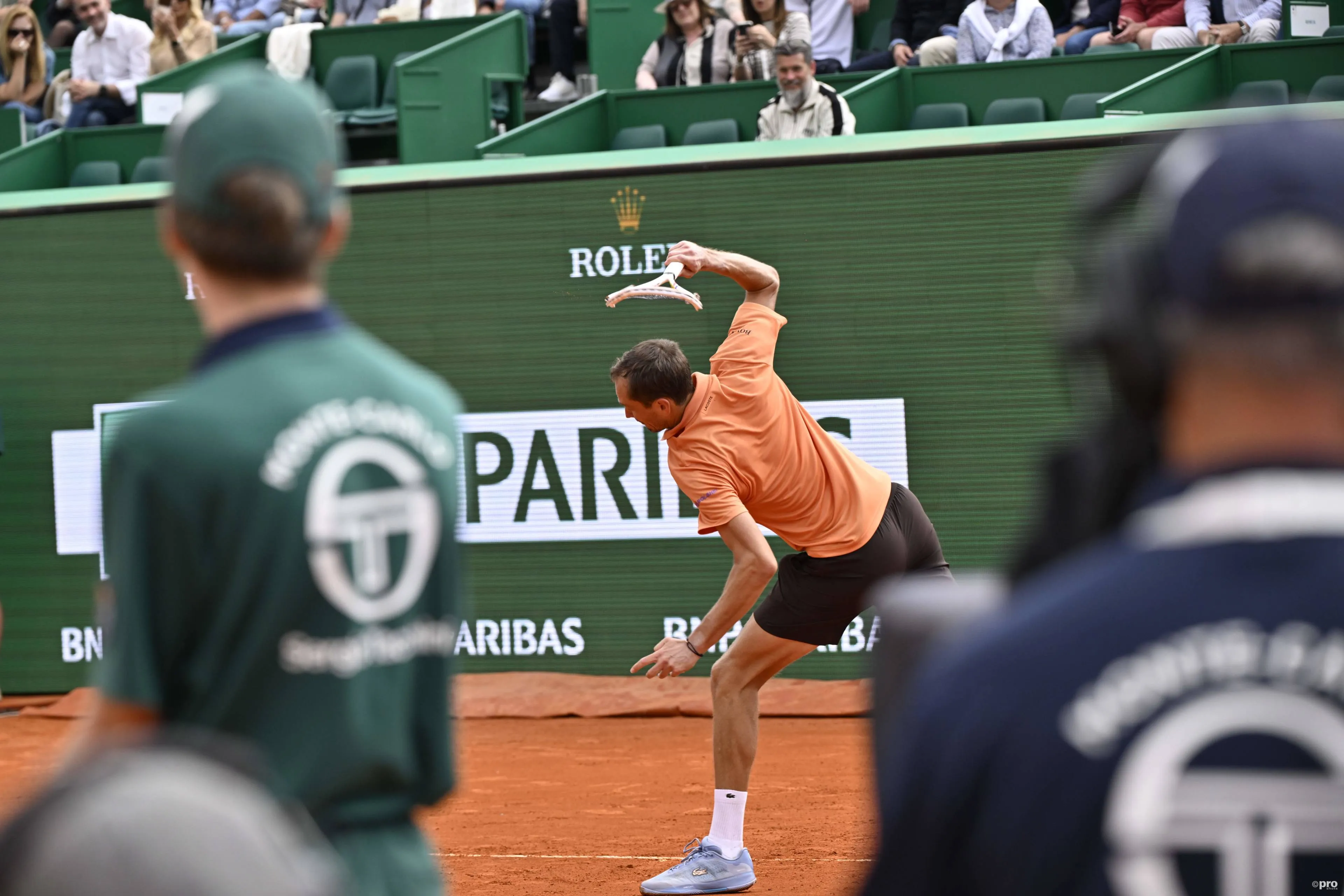
The discussion also revisited one of his most dramatic recent defeats, when he suffered a 0-6, 0-6 loss to Matteo Berrettini and reacted by smashing his racquet multiple times in a match that lasted under an hour, later receiving a €6,000 ATP fine for unsportsmanlike conduct.

Daniil Medvedev smashes raquet out of rage loss at the Monte-Carlo Masters
“Monte Carlo was tough. You can lose matches 6-3 6-3 and then you understand that the next day you need to work on your forehand, your backhand, your movement on clay or something else. But if you lose 6-0 6-0, you must relax, recover, and simply try to perform better next time.”
“In Madrid I played three good matches, including the one I lost against Flavio. In Monte Carlo I had no energy. Normally, when I want to break my racket, it is something I decide consciously. In the Principality, however, I did not want to do it. I thought it might give me a boost, but it didn’t happen (laughter, editor’s note). Even after the match, I thought I should not have done it. The best thing I could do, and what I did after that defeat, was to put the racket aside for a few days.”
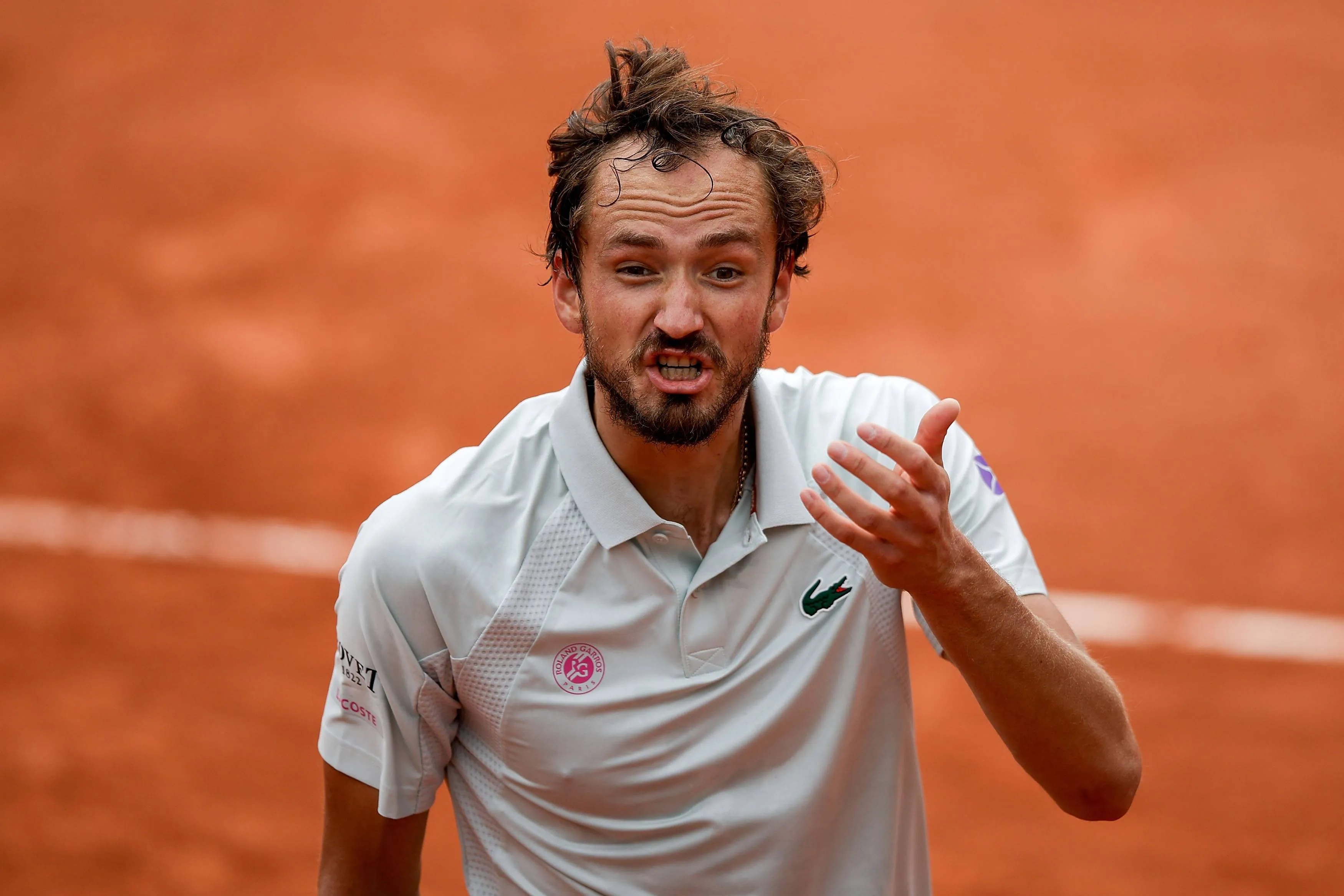
“Don’t be surprised if Sinner loses”: Medvedev questions dominance narrative
The central theme of Medvedev’s press conference was a direct challenge to the idea that Sinner’s current level represents near-certainty across tournaments. While acknowledging the Italian’s consistency, he insisted that elite tennis does not eliminate variability.
He pointed to the fact that even dominant players rarely maintain peak level indefinitely, and that matchups and conditions remain decisive at the highest level of the sport. “There is always a chance to beat Sinner, more or less. But lately he rarely has a bad day. Carlos and Novak can keep up with him. I have played him at Indian Wells, but never on clay. If Jannik loses, don’t be surprised; that is sport.”
The framing also connects to Medvedev’s own trajectory in Rome, where he has advanced despite acknowledging discomfort on clay, including his only clay-court title coming in 2023 Rome Open – defeating Holger Rune in the final.
Crowd pressure, betting culture and competitive environment
Medvedev also addressed external influences affecting matches, particularly crowd behaviour and the presence of betting-related reactions in stadium environments. He distinguished between general fan atmosphere and more problematic forms of engagement linked to gambling.
While acknowledging that Rome’s environment remained largely positive, he noted that certain spectator behaviours can cross boundaries and affect match conditions, even if not decisively altering outcomes.
“The problem is distinguishing between spectators who may have had too much to drink and are excited, and those who drink and have bet. The latter are the worst case. In these cases there is nothing that can be done. Sports betting is an established reality: it generates money, and sports, tournaments and players want that money."
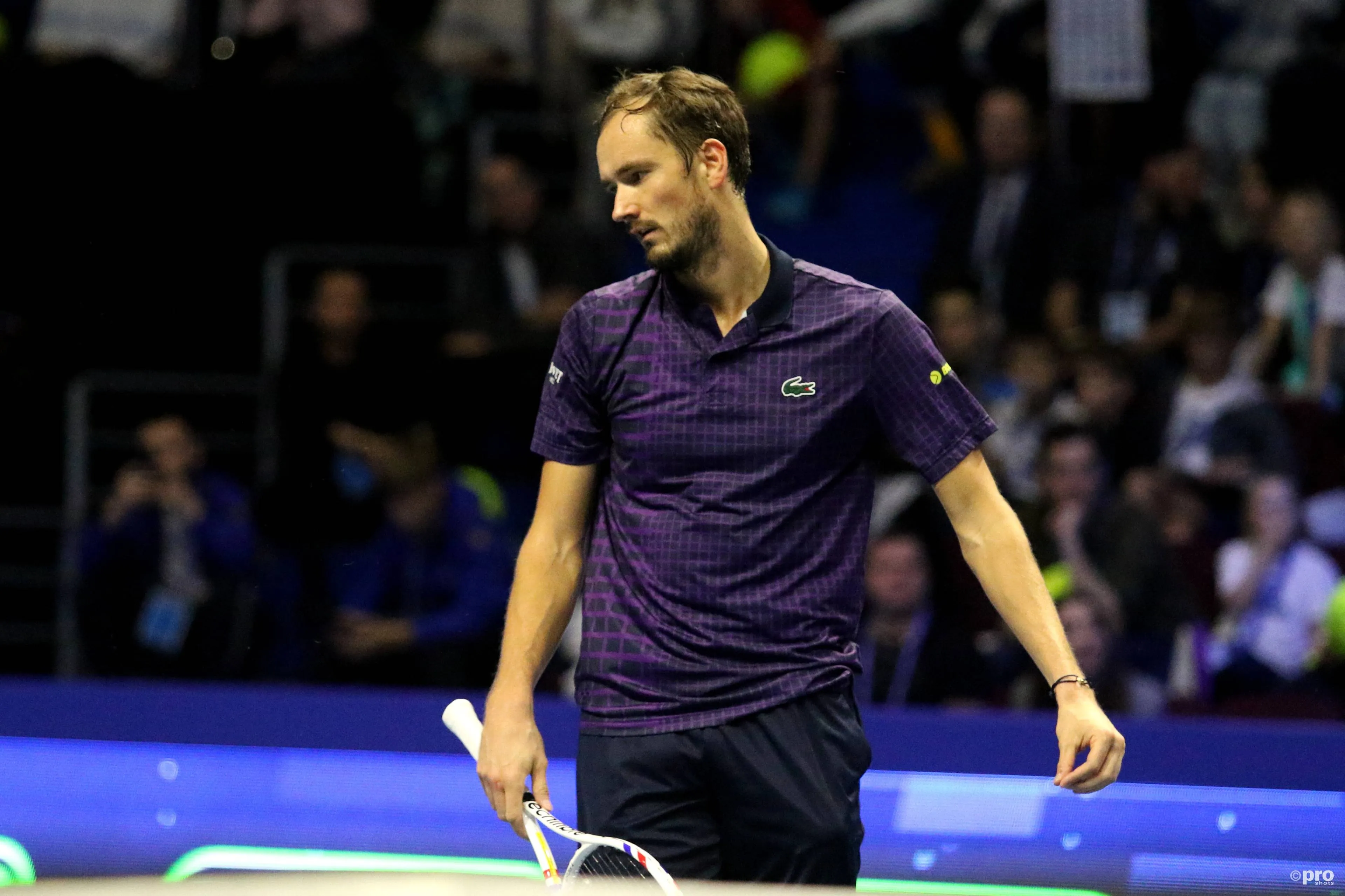
“Spectators are always expected to be respectful to both players. I have seen some matches where the limits seemed to have been crossed. Personally, in the match I played, I did not feel too much disturbance in that sense. There were some Spanish fans making noise with horns. But the overall atmosphere was very fun.”
The broader takeaway from Medvedev’s remarks is consistent with his central message in Rome: elite tennis remains fundamentally unstable. Even dominant players like Sinner operate within margins that can shift rapidly, reinforcing his view that no outcome at the top level should be considered guaranteed.

claps 0visitors 0
Just In
Popular News
Latest Comments
- Unreal. The amount of luck Coco Gauff had in that last game was simply insane. Most players need 14 matches to get that lucky.
- Her body mass is too much for the pace of a chamopinship run. Time is catching-up to her.
- "Injury" seemed to have very little to do with her loss. She almost said it out loud in her presser! Anyone paying close attention could see minor 'cracks' appearing in her game since last season. It's been proven that getting side-tracked by media junkets, filming TV commercials, soaking-up the perks, and incessant 'Social' network posting leads to major distractions from the tournament grind.
- Blaming citizens (innocent citizens) for what their bad leaders do is not really fair. Americans are learning that lesson every day!
- It's a shame that the WTA is calling the wrong person into meetings and intimidating them like this. Good on the player for speaking out. You can't expect Ukrainians to put aside that Russia has been bombing them for years and is still doing so.
- The girl needs professional help... and I don't mean sports.
- The way the current tennis players perform today, especially in the WTA, they should not be given any extra money. Let them boycott. They do not look like professionals. More balls land out of bounds and into the net than anything.
- Way past time for chair umps to REGAIN CONTROL over these entitled 'Special People'.
- WTF is this here for????
- Doubt she recalls which 'man' she acquired those underwear from... but the label probably has "ATP" on it.



Loading