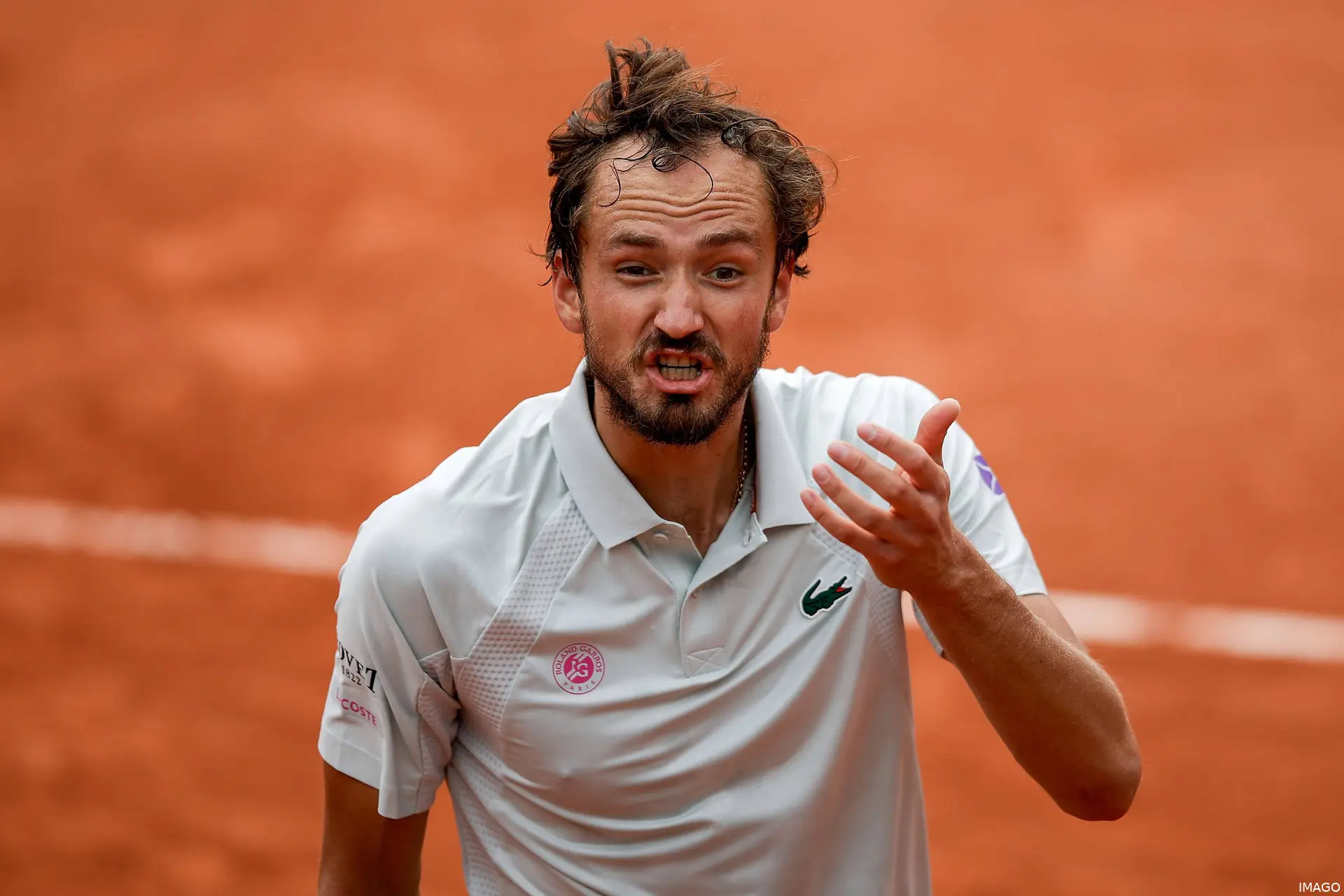
Former US Open champion Daniil Medvedev arrives at the Madrid Open attempting to reset after one of the most extreme defeats of his career, while also offering a detailed explanation of his ongoing difficulties on clay. The Russian addressed both his 6-0, 6-0 loss to Matteo Berrettini in Monte-Carlo and his broader discomfort on the surface, outlining two distinct but connected themes.
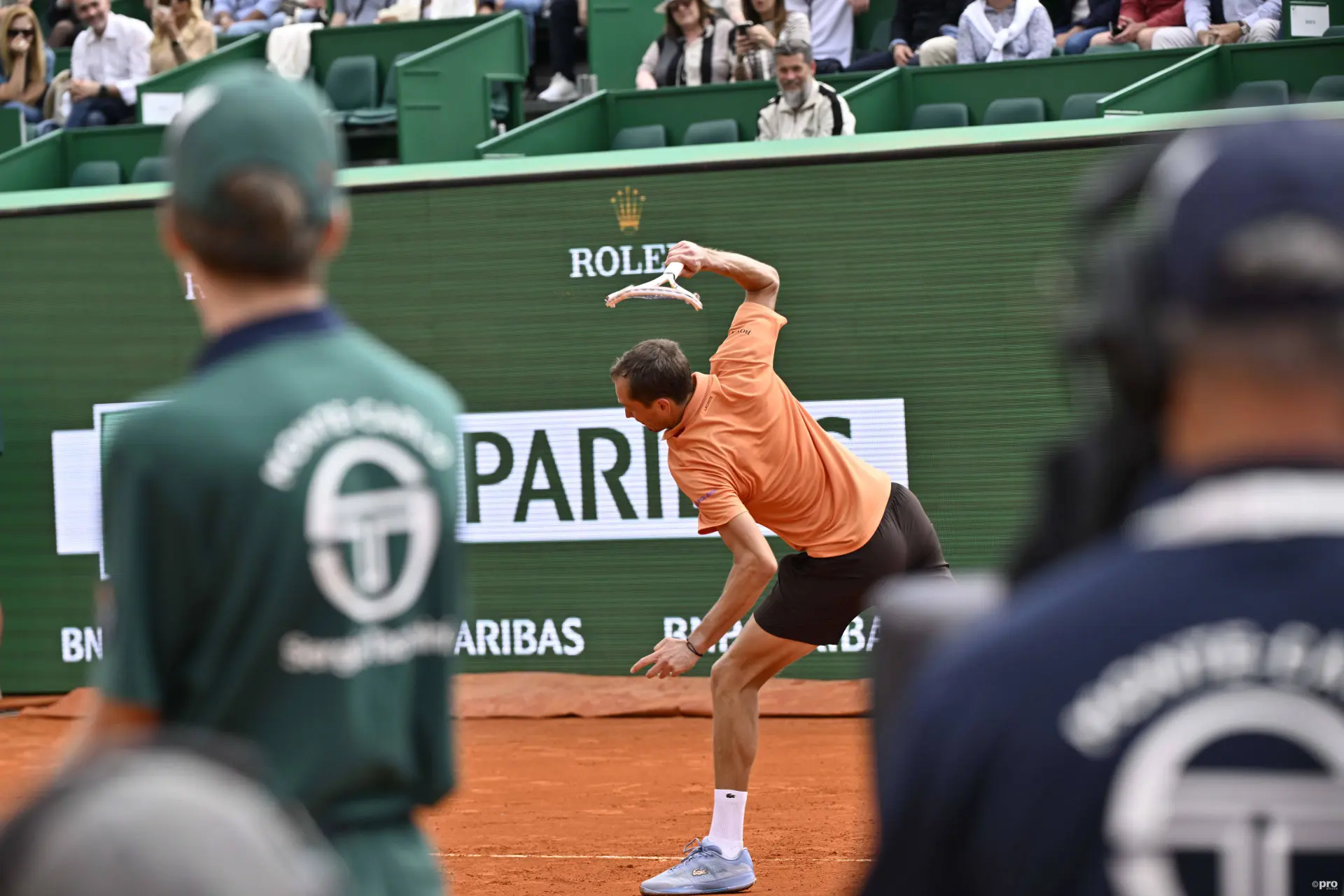
The Monte-Carlo result marked the first double bagel defeat of Medvedev’s professional career, accompanied by visible frustration that resulted in a code violation and a subsequent €6,000 fine from the ATP. Beyond the immediate impact, the loss reinforced long-standing questions around his adaptation to clay, a surface where results have historically been less consistent despite isolated success.
Now competing as the 7th seed in Madrid, Medvedev is set to open his campaign against either Fabian Marozsan or Ethan Quinn, with a potential second-round meeting against Denis Shapovalov. He is also defending quarter-final points from 2025, matching his best result at the event, while continuing to balance expectations with the realities of a surface that has rarely suited his game.
In assessing both the defeat and his clay performance more broadly, Medvedev provided a structured breakdown: first isolating the Berrettini loss as an abnormal performance driven by specific factors, and then expanding into a wider critique of clay as a surface defined by unpredictability and reduced control compared to hard courts.
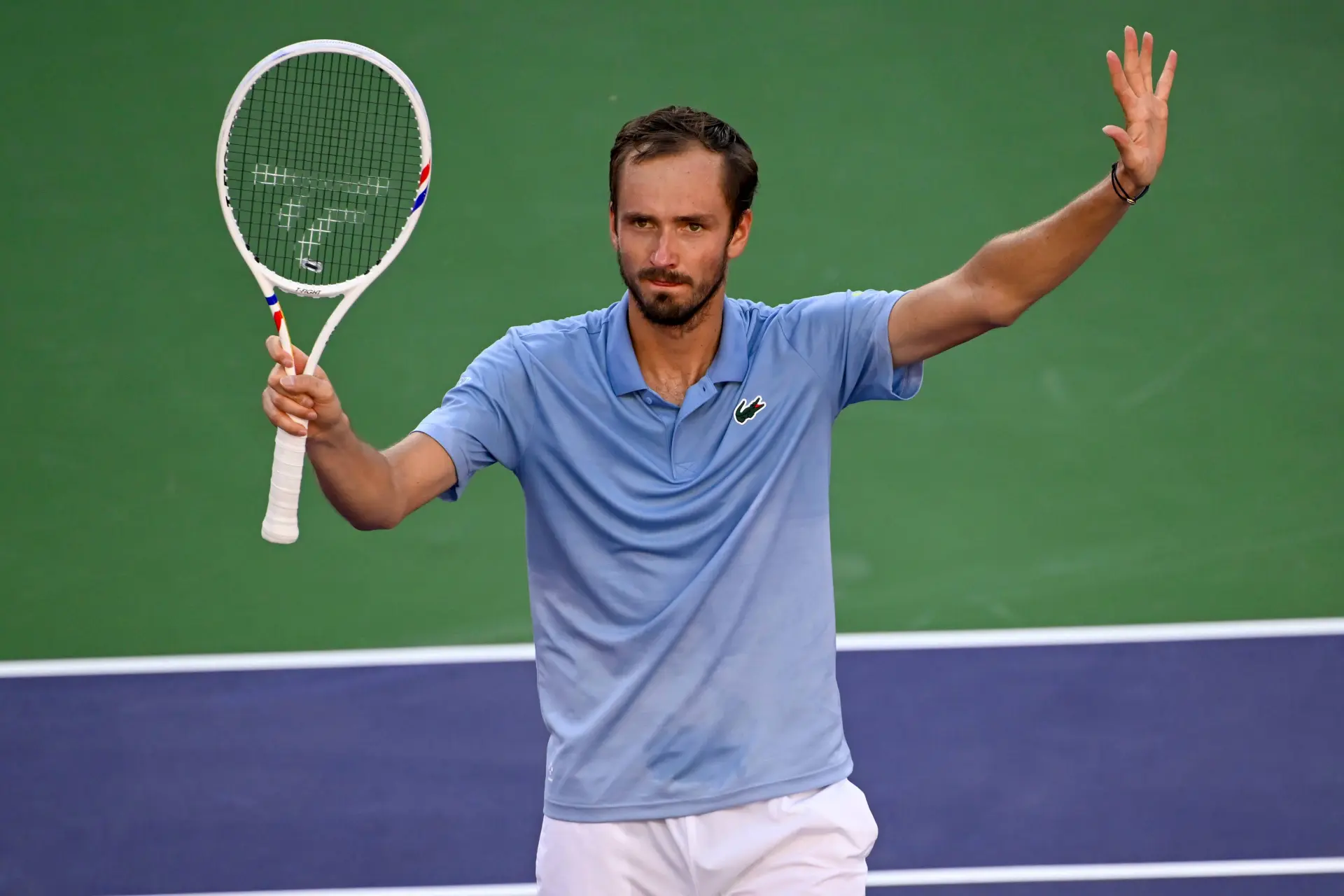
“Losing 6-0, 6-0 is humiliation”: Medvedev reflects on Berrettini defeat
Medvedev was clear in rejecting the idea that a double bagel result can be explained purely through technical deficiencies. Instead, he pointed to underlying causes, suggesting that extreme scorelines at this level are typically linked to factors beyond standard match dynamics. His assessment framed the loss as something to analyse rather than overgeneralise.
“When you lose 6-0, 6-0, there’s always a reason," he said in an interview from Madrid with Sofya Tartakova. "You can’t lose 6-0 at this level just by playing tennis. Something wasn’t right that day, and then you try to find the reason and make sure not to repeat it next time.”
The emotional dimension of the defeat remained significant, particularly given the rarity of such a result at elite level. Medvedev acknowledged the psychological weight of the scoreline, describing it in direct terms while placing it within the broader context of professional sport.
“It’s painful at least because of the humiliation, because losing 6-0, 6-0 is humiliation. But that’s life, that’s sport. I’m not the first, I won’t be the last.”
Despite the initial impact, Medvedev indicated that recovery followed a predictable timeline. The focus shifted from reaction to recalibration, using the gap between tournaments to rebuild rhythm and restore competitive clarity ahead of Madrid. “Of course, for a few days it was tough. I’d say about a week it was hard just to get back into rhythm and understand what to do next.”
“Clay is like FIFA”: Medvedev explains unpredictability on the surface
Beyond the specific defeat, Medvedev expanded on his long-standing difficulties on clay, offering a detailed explanation centred on the role of randomness. Rather than highlighting physical demands or rally tolerance, he focused on the variability of bounces and outcomes, which he sees as a defining limitation compared to hard courts.
“For me, clay is like FIFA. You can do everything right, but there’s still a big element of luck. Sometimes it’s the easiest ball, and it bounces badly, and you lose the point.”
This perspective contrasts sharply with his approach on faster surfaces, where he relies on structure, anticipation and incremental control. Medvedev identified this ability — consistently having the correct response under pressure — as a key trait shared by the leading players on tour.
“Almost no matter what the opponent does, you always have an answer — and usually the right one. You start to know where they’ll hit, where they’ll serve. That’s when it becomes very hard for them.”
On clay, however, he acknowledged that replicating this control requires significantly greater effort, while still being subject to external variables. The margin for error increases, and even well-constructed points can break down due to factors outside direct control. “I can do it on clay too, but it takes much more effort and a bit more luck than on hard. Sometimes one bad bounce, and everything you built is gone.”

Cristhián AvilaTennis Journalist
Cristhián Ávila is a tennis journalist based in Santiago, Chile, and has been part of the TennisUpToDate team since early 2023. He covers the ATP and WTA Tours as well as all four Grand Slams, producing breaking news, match reports, analysis, and regular liveblogs from major tournaments.
His reporting combines statistical analysis with clear explanation, helping readers understand tactical developments, player form, and broader storylines across the tour. Working fluently in both Spanish and English, Cristhián collaborates with an international editorial team and contributes to comprehensive global coverage. As part of his work, he has conducted interviews and media interactions with leading figures in the sport, including Caroline Wozniacki and John McEnroe.
In his journalism, Cristhián places strong emphasis on careful sourcing, editorial accuracy, and updating articles promptly when new, verified information becomes available. His coverage is grounded in research, context, and direct engagement with professional tennis.
claps 0visitors 0
Just In


Popular News



Latest Comments
- Does Sinner need that 4.5 mil? I doubt it. He can make that with three modelling gigs!😅🤣Rapunzel21-10-2026
- Did "People Magazine" purchase this website? This nonstop storyline is bullshit.
 mandoist21-10-2026
 - Listen... this is of no concern to anyone but these two. Deal with your own issues -- most of us have our own. Thanks, media, for these insignificant follow-ups which are meaningless.mandoist21-10-2026
- This is so very very sad, for all three of them. I truly thought they had an unbreakable bond, but life throws up so many differing challenges. Having your homeland suffering in such a terrible way, makes happiness lose out to guilt as well. Our thoughts are with them. X💔bjsexton20-10-2026
- I have lost all respect for Svitolina! Could she not have waited until he had played at the Paris Masters!!! She is selfish and don't give a damn about Gael. That is NOT how love is demonstrated Elina!!Rapunzel19-10-2026
- Perhaps convenient tennis tour sex is not a strong enough experience in which to base a marriage?mandoist19-10-2026
- Fight the Good Fight... Tennis (sports in general) need more Humans such as yourself.mandoist18-10-2026
- When is WTA going to mandate Genetic Testing (DNA) ???mandoist18-10-2026
- Hey, Dan... you just wake up from a coma? Regardless -- Thanks for the comedy this morning!mandoist18-10-2026
- Two Things: 1. Stop allowing these Spoiled Trust-Fund Elitists to behave badly. Your little hand-slaps do not deter them. 2. STOP the incessantly annoying "towel wiping" nonsense!!!!mandoist15-10-2026

Loading