Felix Auger-Aliassime in awe of Novak Djokovic despite gut-wrenching Wimbledon defeat: "It was an incredible battle against a true legend of our sport"
ATP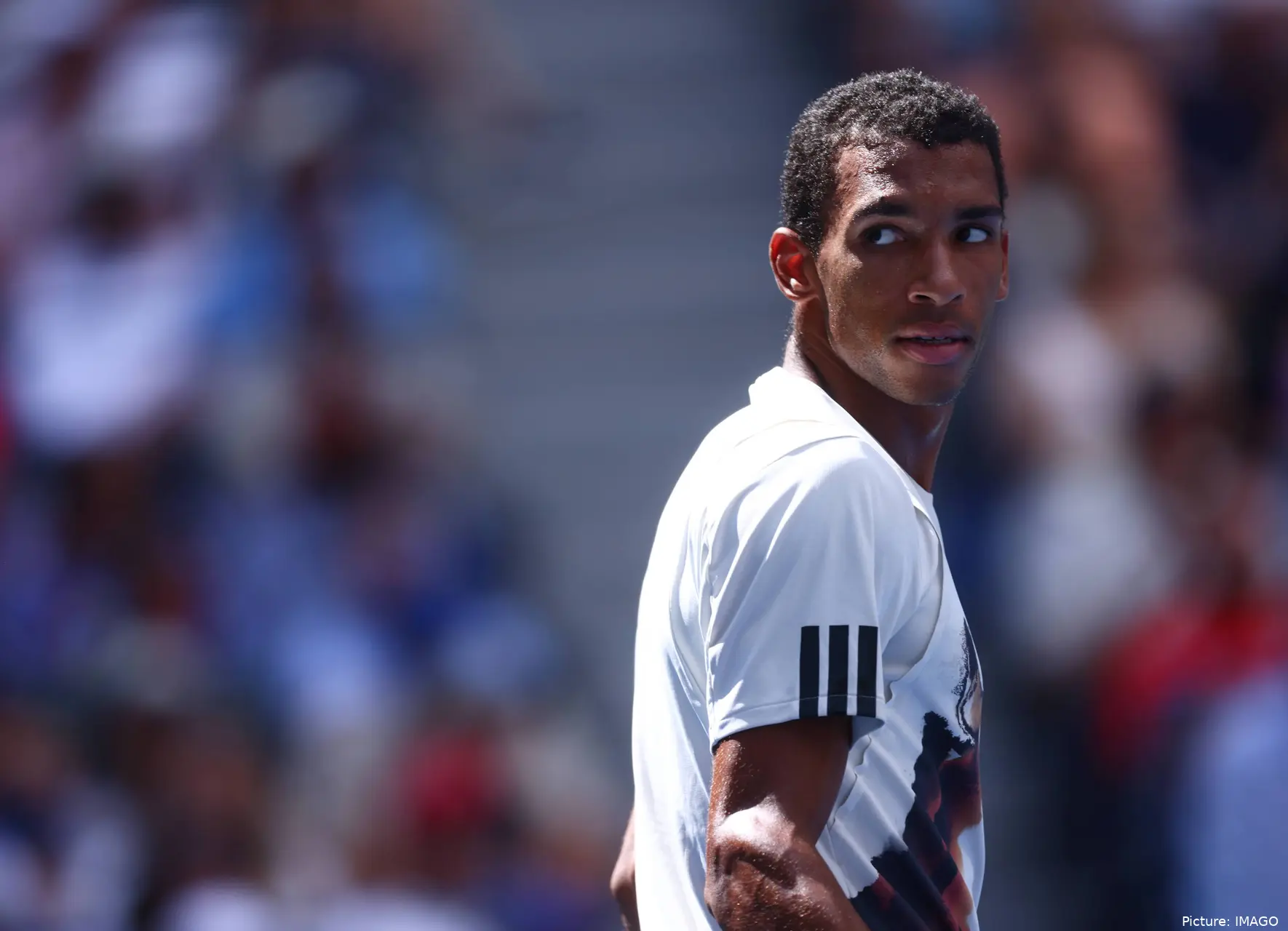
Felix Auger-Aliassime has suffered another deeply frustrating Grand Slam setback this year. He was involved in a Wimbledon thriller against seven-time Novak Djokovic, forcing a decisive fifth set before losing 7-6(10), 3-6, 6-3, 6-7(4), 7-6(4).
It was the longest quarter-final ever played out at SW19. Lasting over five hours, both players left everything on court as they looked to set up a semi-final tie against the defending Wimbledon champion Jannik Sinner, who in turn was just over two and a half hours in a straight set win over Jan-Lennard Struff.
The first set alone took over 80 minutes as Auger-Aliassime missed three set points in the tiebreak. Djokovic, who spurned two earlier in the set, saw another two go to waste before finally getting the set under his belt. He was quickly pegged back his determined opponent.
Djokovic seemed to have cracked Auger-Aliassime after a late break in the third set was followed by an early break of serve in the fourth, putting him in firm command. However, the number three seed broke back, and they would clash in another tiebreak, this time Auger-Aliassime finding the right tools to once more get back level. A fifth set was needed, and it would go the distance following 12 holds of serve.
The 24-time Grand Slam champion lived up to the pressure, taking a 4-2 lead and dropping just two points form there enroute to a hard fought victory in spectacular fashion. While he celebrated, Auger-Aliassime dwelled on what could have been.

Another missed opportunity
That is now two major tournaments in a row that the Canadian has been dealt with a definitive blow in the quarter-finals. First Flavio Cobolli at Roland Garros, and now Djokovic at Wimbledon. It was his first Wimbledon quarter-final appearance since 2021, winning just one match in his prior four campaigns in a very poor return.
He did not hold back on his praise for Djokovic afterwards while admitting that he was proud of his performance and fight shown on court and run over the past couple of weeks.
"In summary, it was an incredible battle against a true legend of our sport. It is what it is," he said in his press conference. "Obviously, it's a very tough loss to take. It already happened to me in the quarterfinals at Roland Garros, and it's happening again here.
"Throughout my career, I've already had other matches this close that didn't go my way. I'm going to have to find what I'm missing to turn these kinds of matches in my favour next time. In the meantime, I can be proud of the fight I put up and move forward."

Felix Auger-Aliassime's quest for a maiden major title goes on
Djokovic having that little extra
It was fair to say that confidence and belief was not the problem for the six-time major quarter-finalist. At the end of the day, the person at the other side of the net just had that little bit more. "I was very confident. I don't think that's the problem," he acknowledged. "After levelling at one set all, I had a slight dip in concentration in the third set, after more than two and a half hours of very high intensity.
"In the fourth set, I had the chance to come back, because he also went through a little slump that allowed me to level the score. But in the end, he once again showed that the bigger the stakes, the better he gets. In the decisive moments, he was more solid than me."
It was those high pressure moments that gave Djokovic the edge. "It's really a matter of playing styles. His is more consistent and more solid in moments of very high pressure than mine. His serve is probably one of the best on tour. And for the rest, we already know the recipe. On every second serve, he forces you to play one extra shot and he always returns with a lot of depth. We've seen it for many years, but it's still impressive to see him reproduce that over and over."
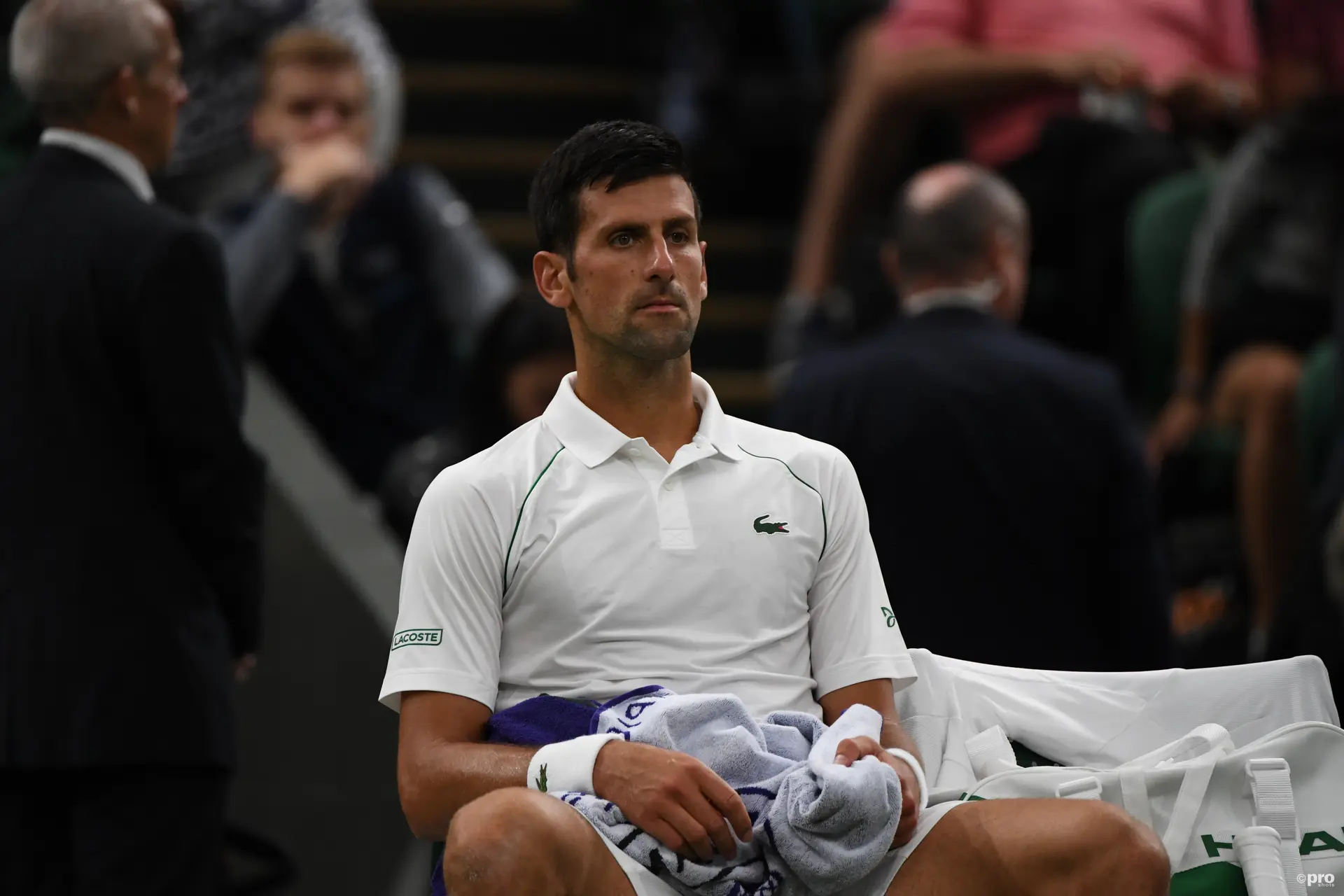
He discussed how the Serbian's game was so hard to play against, even when he not at his glistening best. "I've watched a lot of Novak matches over the years. Even when he wasn't at his best, like in the final against Roger here in 2019, he always gives that impression that in tiebreaks or decisive situations, he finds a good serve or manages to make you play one extra shot.
"It keeps you under pressure, prevents you from taking the initiative, neutralises your game, and leads him to wait for the opponent's mistake. I'm naturally an offensive player, but I'm going to have to learn to better choose when to attack and when to be more solid."
Lucas MichaelTennis Journalist
Lucas Michael is a tennis journalist based in Cambridge, UK, specializing in comprehensive coverage of the ATP and WTA tours. For the past 1.5 years, he has been a core contributor to TennisUpToDate, where he has authored more than 3,000 data-driven match reports, deep-dive analysis pieces, and engaging liveblogs.
Lucas pairs real-time statistical analysis with on-the-ground reporting, frequently traveling to tournaments to cover the action firsthand from the press box and player press conferences. This blend of advanced metrics and direct access allows him to provide sharp context regarding player form, tactical trends, and breaking tour developments.
He holds a BA (Hons) in Sports Journalism. Grounded in core journalistic ethics, Lucas places a strict emphasis on meticulous sourcing, editorial accuracy, and a commitment to updating live content swiftly as verified information emerges.
claps 0visitors 0
Just In

Popular News

Latest Comments
- Does Sinner need that 4.5 mil? I doubt it. He can make that with three modelling gigs!😅🤣Rapunzel21-10-2026
- Did "People Magazine" purchase this website? This nonstop storyline is bullshit.
 mandoist21-10-2026
 - Listen... this is of no concern to anyone but these two. Deal with your own issues -- most of us have our own. Thanks, media, for these insignificant follow-ups which are meaningless.mandoist21-10-2026
- This is so very very sad, for all three of them. I truly thought they had an unbreakable bond, but life throws up so many differing challenges. Having your homeland suffering in such a terrible way, makes happiness lose out to guilt as well. Our thoughts are with them. X💔bjsexton20-10-2026
- I have lost all respect for Svitolina! Could she not have waited until he had played at the Paris Masters!!! She is selfish and don't give a damn about Gael. That is NOT how love is demonstrated Elina!!Rapunzel19-10-2026
- Perhaps convenient tennis tour sex is not a strong enough experience in which to base a marriage?mandoist19-10-2026
- Fight the Good Fight... Tennis (sports in general) need more Humans such as yourself.mandoist18-10-2026
- When is WTA going to mandate Genetic Testing (DNA) ???mandoist18-10-2026
- Hey, Dan... you just wake up from a coma? Regardless -- Thanks for the comedy this morning!mandoist18-10-2026
- Two Things: 1. Stop allowing these Spoiled Trust-Fund Elitists to behave badly. Your little hand-slaps do not deter them. 2. STOP the incessantly annoying "towel wiping" nonsense!!!!mandoist15-10-2026

Loading