“From where I sit, nuance is required”: Andy Roddick questions Wimbledon £64.2M rise amid deeper revenue dispute
ATP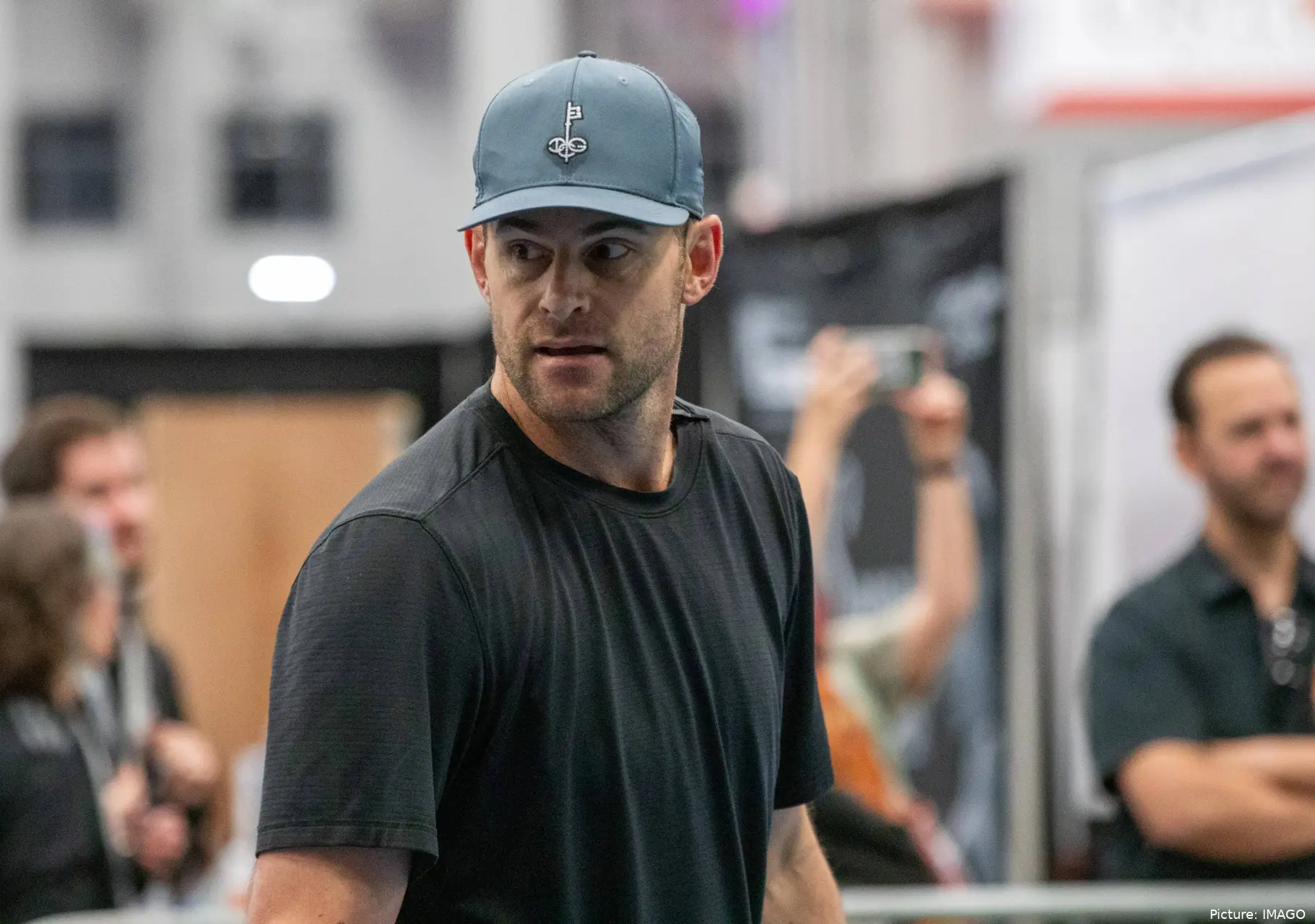
Andy Roddick opened the discussion on Wimbledon’s record £64.2 million ($86 million) prize money increase by framing it as a structural issue rather than a headline figure, arguing that the debate is often oversimplified and that deeper context is frequently lost in public discourse.
The All England Club confirmed a £10.7 million ($14.3 million) rise in the 2026 prize fund, bringing the total to £64.2 million ($86 million), a 20% year-on-year increase and the largest single uplift in the tournament’s history. Player representatives welcomed the move as progress but maintained that it does not resolve long-standing disagreements over revenue distribution.
At the centre of the dispute is the proportion of Wimbledon’s revenue allocated to prize money, with players arguing the current 14.4% share remains below previous benchmarks and below proposed long-term targets. The debate has been sharpened by parallel discussions across the Grand Slams over governance and welfare contributions.
Roddick used the platform to interrogate how prize money decisions are structured, repeatedly returning to what he described as a disconnect between headline figures and underlying financial logic. “Splashy headlines dominate conversations,” he said, suggesting that deeper analysis often disappears early in public debate.
Read also
Roddick questions revenue logic behind prize money model
Roddick focused heavily on the mechanics behind Wimbledon’s financial framework, questioning whether players are receiving sufficient visibility into how prize distributions are calculated.
“From where I sit, I’m just interested in how you get to prize money payouts,” the former world No. 1 said in Served with Roddick. “What are the factors involved when you release a prize money package? And I’ve got to be honest, this is pretty cool that we have you both on Serve, kind of just having a casual conversation. This is a cool moment for us.”

He also challenged the assumption that revenue alone should be the benchmark for prize money decisions, pointing to the layered nature of costs, investments, and infrastructure obligations within a Grand Slam environment.
“I’m not asking you to respond to the first part of this question, but there is litigation from one of the groups who have said that they represent players. It’s a class action suit, which means any player could be a plaintiff. I’m guessing that makes communications a little bit tougher.
There is now a new group that’s being represented by Larry Scott. It does involve the top players. They actually acknowledge they’re a part of this group, which probably helps a little bit. How does this get solved where everyone feels kind of good about the situation, especially considering the challenges legally with speaking back and forth right now?”
Structural tension between investment model and player expectations
The discussion then turned to Wimbledon’s “three-bucket” model, which divides resources between prize money, infrastructure projects and grassroots investment. Roddick questioned how that framework would evolve if the tournament’s ongoing expansion plans generate substantially higher revenues in the coming years, arguing that players are likely to seek greater clarity on how future financial growth would be shared.
“Are these conversations revenue-based conversations? I saw this morning you said using revenue to determine prize money makes no sense. Can you explain, because if I’m a player, I’m going, wait a minute, we’re doing all these things and you talk about investment back, but it could potentially double revenue. Should we know the state of affairs before that happens?”

While acknowledging that Wimbledon's model has been highly successful, Roddick suggested the issue becomes more complicated as the business continues to grow. He argued that conversations around prize money cannot be separated from discussions about future revenues and long-term investment plans.
“There’s something in there that works. And so that’s where we’re kind of coming at it from. I get where you’re coming from. I’m just saying I think that’s going to be a tougher one because things kind of change over time.”
Communication breakdown and outlook for player dialogue
Roddick also returned repeatedly to governance and communication structures, arguing that ongoing legal proceedings and fragmented representation have limited meaningful progress between stakeholders. He suggested that the sport risks stagnation if dialogue mechanisms remain informal or inconsistent.
He stressed that the current environment makes straightforward negotiation difficult, particularly when multiple player groups and legal frameworks overlap across tours and tournaments.
“I think the overriding point is there are things in place right now that make very, very straightforward conversations a little risky right now, and so I think that probably needs to be remedied. I hope we stop the last 40 years of having meetings about meetings and really kind of get to a place that everyone seems to be happy with.”

Cristhián AvilaTennis Journalist
Cristhián Ávila is a tennis journalist based in Santiago, Chile, and has been part of the TennisUpToDate team since early 2023. He covers the ATP and WTA Tours as well as all four Grand Slams, producing breaking news, match reports, analysis, and regular liveblogs from major tournaments.
His reporting combines statistical analysis with clear explanation, helping readers understand tactical developments, player form, and broader storylines across the tour. Working fluently in both Spanish and English, Cristhián collaborates with an international editorial team and contributes to comprehensive global coverage. As part of his work, he has conducted interviews and media interactions with leading figures in the sport, including Caroline Wozniacki and John McEnroe.
In his journalism, Cristhián places strong emphasis on careful sourcing, editorial accuracy, and updating articles promptly when new, verified information becomes available. His coverage is grounded in research, context, and direct engagement with professional tennis.
claps 0visitors 0
Just In

Popular News
Latest Comments
- Two Things: 1. Stop allowing these Spoiled Trust-Fund Elitists to behave badly. Your little hand-slaps do not deter them. 2. STOP the incessantly annoying "towel wiping" nonsense!!!!
 mandoist15-10-2026
 - A healthy Qinwen may be hard to stop next season. She was already scaring her opponents before her medical leave(s). Unfortunately, Zheng insisted on singing again. On the positive side -- Mirra did not sing!! ;~}mandoist11-10-2026
- Where is it written that athletes, entertainers... People in general... are mandated to keep looking at -- or even using [anti]Social Media? Public & private figures consistently complain and reveal their concerns about negativity and violence thrown at them -- yet they insist on participating. Avoid it, don't use it, don't read it. It's okay to occasionally look up at the World instead beating your eyes & thumbs to death on The Inventions out there.mandoist11-10-2026
- great articlestennisseserver07-10-2026
- Medvedev was leading Djokovic 7-5, 3-5 when an attempted return..' NO you ignorants, Djokovic was leading .weiss05-10-2026
- No more bullshit "Wildcards" to these two. Qualify like everyone else -- there will be cameras there, too. Time to scream... WTF ????!!!!mandoist29-09-2026
- Let's not BS the general public -- Sabalenka started showing cracks in her game last season. Her losses and near-losses started at about the same time she began being distracted by Fame (constant Selfies, making TV commercials, magazine shoots, endless Social Media nonsense, etc., etc.) One would think even Saba could recognize the parallels with others who failed before her -- Raducanu, Giorgi, Bouchard to name a few.mandoist25-09-2026
- Gross!! Hey Raducanu, Giorgi, and Bouchard -- reserve a seat at your Social Media Selfie table for Saba + Naomi. They're heading in your direction soon enough.mandoist24-09-2026
- And then these same players will complain about how lengthy their season’s were and need more time-off. I’m all for more tennis but the amount of tennis we get now is actually kind of crazy! We all need a break, especially the players.DaveyWavey23-09-2026
- You should do a comparison article for "different kinds of justice" the courts decide for tennis players. I can think of at least three players who received very small bans of a few months, however Tara Moore has been fighting for her literal survival the past few years. It seems odd considering she is not a "name" player, unlike the other cases.DaveyWavey22-09-2026

Loading