
Stefanos Tsitsipas admitted he went through months of deep uncertainty about his future on the ATP Tour, revealing that persistent back problems left him feeling closer to retirement than competition at several points last season.
Speaking after his return to action in Rotterdam, the former world No. 3 offered one of his most candid assessments yet of the physical and mental toll caused by an injury that derailed his 2025 campaign and forced him into an extended absence from regular competition.
“I had a long period without playing tennis, which I had never had before during my career,” Tsitsipas said in an interview with BolaVip during the ABN AMRO Rotterdam Open. “I felt like I was away from the court and the competition. Suddenly, I was just an observer of tennis and the ATP Tour, rather than an active participant.”
The Greek is looking to reconnect with his tennis after making his debut in Rotterdam with a victory over eighth seed Arthur Rinderknech (No. 28). It was an impressive performance from the two-time Grand Slam runner-up, who took the victory 7-5, 6-3 and is aiming to rebuild confidence following an inconsistent 2025 season.
Read also
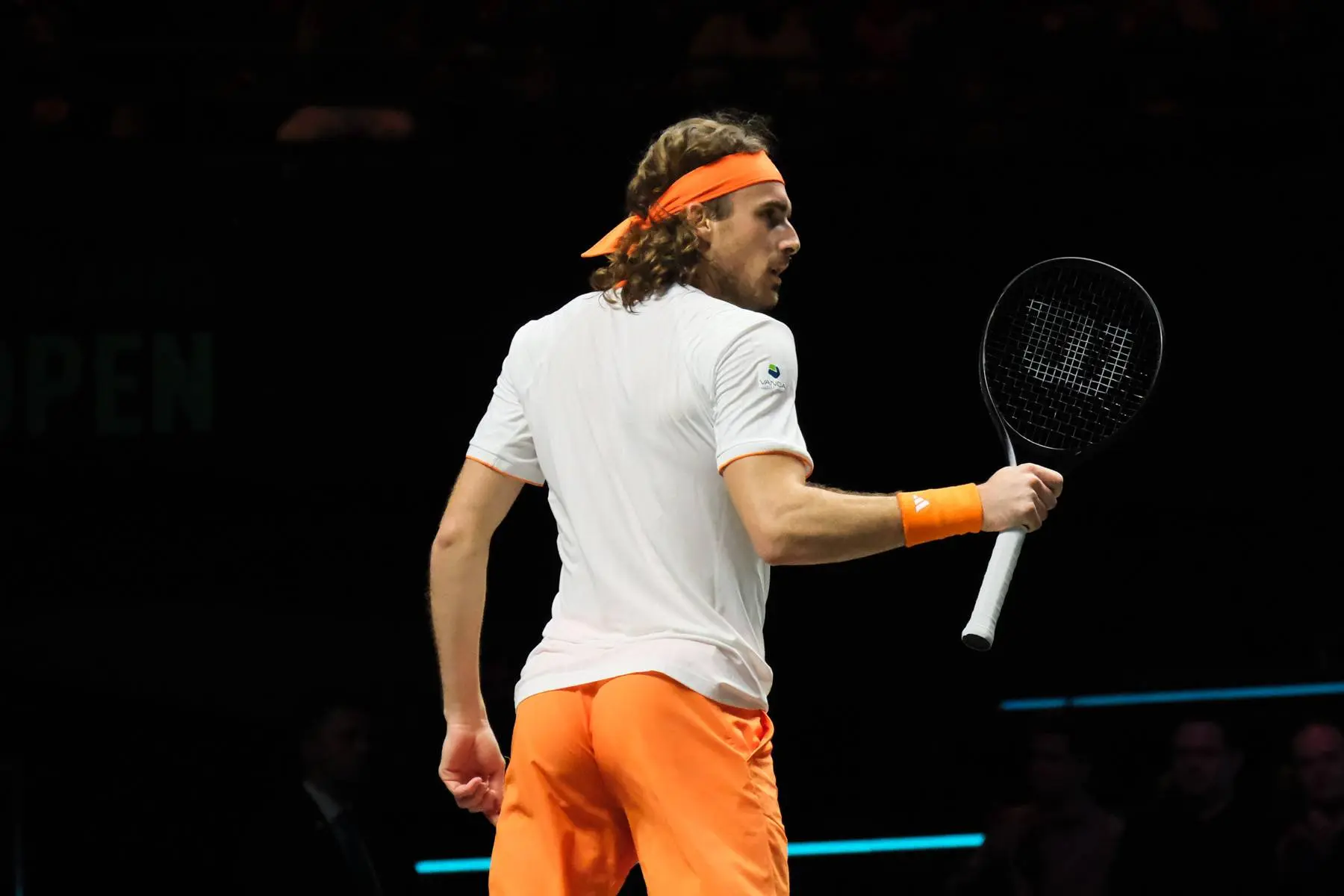
A season defined by pain and early exits
The 27-year-old’s struggles were reflected clearly in his results. Hampered by ongoing back issues, Tsitsipas failed to move past the second round in his final nine tournament appearances of the 2025 season. His campaign came to an end at the US Open, where he fell in a five-set battle to Daniel Altmaier, 6-7(5), 6-1, 6-4, 3-6, 5-7.
After that loss in New York, Tsitsipas played only two more matches for the remainder of the year, both in Davis Cup competition, before deciding to shut down his season entirely in an effort to recover.
The injury also had a significant impact on his ranking. Tsitsipas began the 2025 season ranked world No. 11, but the lack of match play and early defeats saw him drop to No. 32, his lowest position in several years. Notably, he failed to advance beyond the second round at all four Grand Slam tournaments last season, a stark contrast to a career that includes finals at both the French Open and Australian Open.

“It felt very odd and frustrating”
Beyond the results, Tsitsipas emphasized how helpless the situation often felt, particularly as his body refused to respond despite rest and medical consultations. “It felt very odd and frustrating because I couldn’t do much,” the world No. 32 explained. “My back is like it is, and there are only so many things I can do. If it refuses to heal, all I can do is wait and consult as many specialists as possible.”
The Greek acknowledged that the prolonged uncertainty began to affect his relationship with the sport itself, turning daily competition into a source of stress rather than motivation. “I experienced a lot of uncertainty for many months,” Tsitsipas said. “Even when I won the tournament in Dubai, I wasn’t sure if I could sustain that level or even continue playing. It kept getting worse during the spring, and eventually, I stopped enjoying the game.”

For Tsitsipas, the injury forced a fundamental shift in priorities, one that placed physical well-being ahead of titles, points, or expectations. “The game becomes less important, and health becomes the most important thing in your life,” he admitted. “Even earlier this year, I still had a lot of uncertainty about my future.”
Those doubts lingered into the early stages of the 2026 season, as Tsitsipas returned to competition at the Australian Open but was eliminated in the second round by Tomas Machac. Rotterdam marked his next appearance, serving as both a test of his recovery and a measure of confidence moving forward.
Encouraging signs in Rotterdam return
In his opening match at the ATP 500 event in Rotterdam, Tsitsipas defeated eighth seed Arthur Rinderknech 7-5, 6-3, producing one of his most solid performances in recent months. The Greek struck 16 winners against 14 unforced errors, showing improved movement and control despite lingering doubts about his physical condition. “Did it look like I was moving well on the court?” Tsitsipas said. “It didn’t always feel like that.”
Qualified for the quarterfinals, he will now face world No. 65 Botic van de Zandschulp, a player he has defeated twice before, most recently in Basel in October 2024. The matchup offers another opportunity for Tsitsipas to test his body against a different style of opponent as he continues rebuilding confidence.
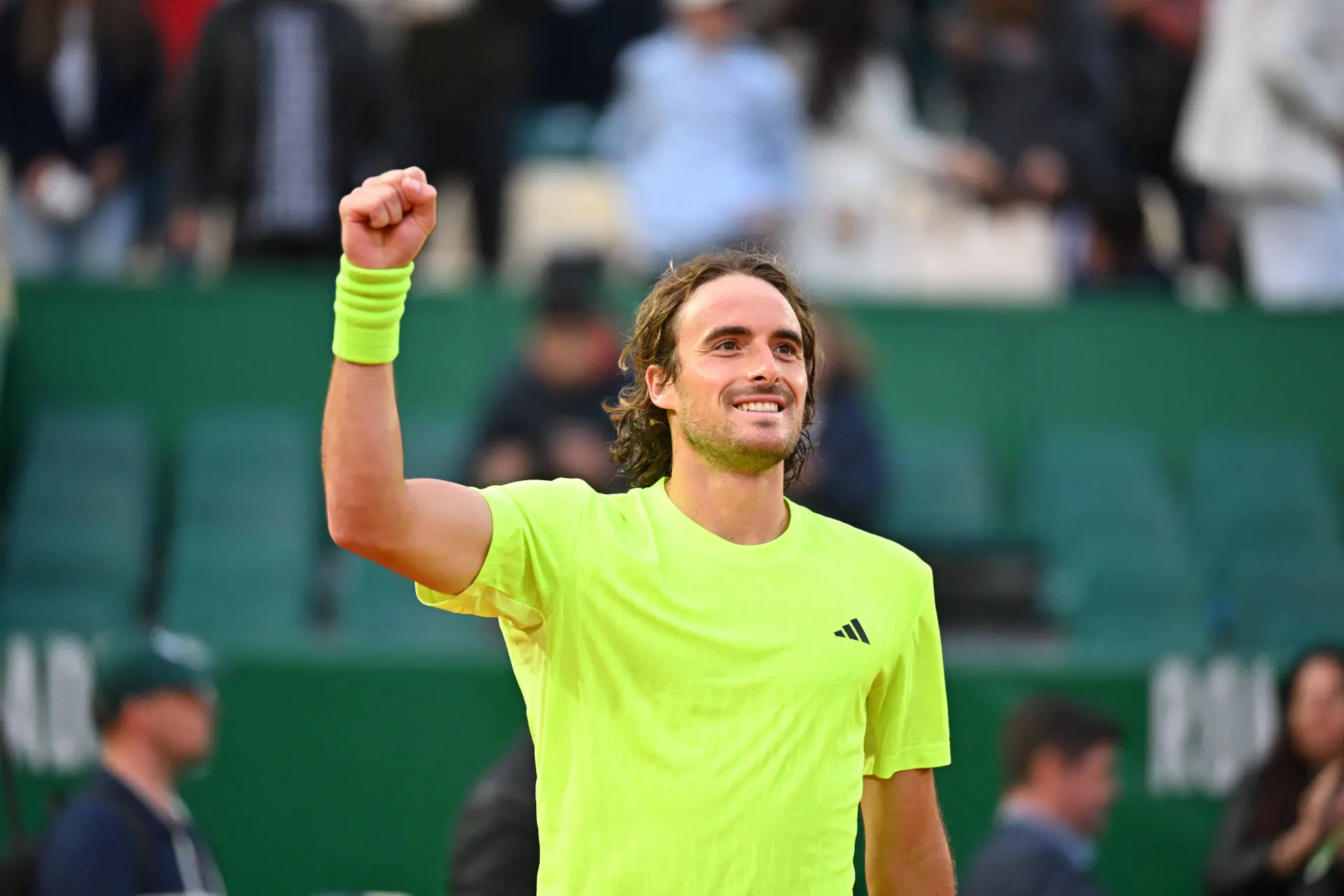
At the moment, his record at the start of the year stands at 7–2, and he has already secured his first win over a top-10 player a few weeks ago at the United Cup against Taylor Fritz. At 27 years old, Tsitsipas is looking to regain ground in the ATP rankings, and another victory would see him return to the top 30.

Cristhián AvilaTennis Journalist
Cristhián Ávila is a tennis journalist based in Santiago, Chile, and has been part of the TennisUpToDate team since early 2023. He covers the ATP and WTA Tours as well as all four Grand Slams, producing breaking news, match reports, analysis, and regular liveblogs from major tournaments.
His reporting combines statistical analysis with clear explanation, helping readers understand tactical developments, player form, and broader storylines across the tour. Working fluently in both Spanish and English, Cristhián collaborates with an international editorial team and contributes to comprehensive global coverage. As part of his work, he has conducted interviews and media interactions with leading figures in the sport, including Caroline Wozniacki and John McEnroe.
In his journalism, Cristhián places strong emphasis on careful sourcing, editorial accuracy, and updating articles promptly when new, verified information becomes available. His coverage is grounded in research, context, and direct engagement with professional tennis.
claps 0visitors 0
Just In

Popular News
Latest Comments
- A healthy Qinwen may be hard to stop next season. She was already scaring her opponents before her medical leave(s). Unfortunately, Zheng insisted on singing again. On the positive side -- Mirra did not sing!! ;~}
 mandoist11-10-2026
 - Where is it written that athletes, entertainers... People in general... are mandated to keep looking at -- or even using [anti]Social Media? Public & private figures consistently complain and reveal their concerns about negativity and violence thrown at them -- yet they insist on participating. Avoid it, don't use it, don't read it. It's okay to occasionally look up at the World instead beating your eyes & thumbs to death on The Inventions out there.mandoist11-10-2026
- great articlestennisseserver07-10-2026
- Medvedev was leading Djokovic 7-5, 3-5 when an attempted return..' NO you ignorants, Djokovic was leading .weiss05-10-2026
- No more bullshit "Wildcards" to these two. Qualify like everyone else -- there will be cameras there, too. Time to scream... WTF ????!!!!mandoist29-09-2026
- Let's not BS the general public -- Sabalenka started showing cracks in her game last season. Her losses and near-losses started at about the same time she began being distracted by Fame (constant Selfies, making TV commercials, magazine shoots, endless Social Media nonsense, etc., etc.) One would think even Saba could recognize the parallels with others who failed before her -- Raducanu, Giorgi, Bouchard to name a few.mandoist25-09-2026
- Gross!! Hey Raducanu, Giorgi, and Bouchard -- reserve a seat at your Social Media Selfie table for Saba + Naomi. They're heading in your direction soon enough.mandoist24-09-2026
- And then these same players will complain about how lengthy their season’s were and need more time-off. I’m all for more tennis but the amount of tennis we get now is actually kind of crazy! We all need a break, especially the players.DaveyWavey23-09-2026
- You should do a comparison article for "different kinds of justice" the courts decide for tennis players. I can think of at least three players who received very small bans of a few months, however Tara Moore has been fighting for her literal survival the past few years. It seems odd considering she is not a "name" player, unlike the other cases.DaveyWavey22-09-2026
- PRIZE MONEY & POINTS Winner - $185,500 Finalist - $114,500 Semi-Finalist - $66,003 Quarter-Finalist - $35,000 Round of 16 - $18,045 Round of 32 - $13,005 Winner - 500 Finalist - 325 Semi-Finalist - 195 Quarter-Finalist - 108 Round of 16 - 60 Round of 32 - 1DaveyWavey20-09-2026

Loading