"On clay you need to be more patient": Joao Fonseca assesses Monte Carlo conditions after strong debut win
ATPTuesday, 07 April 2026 at 02:30
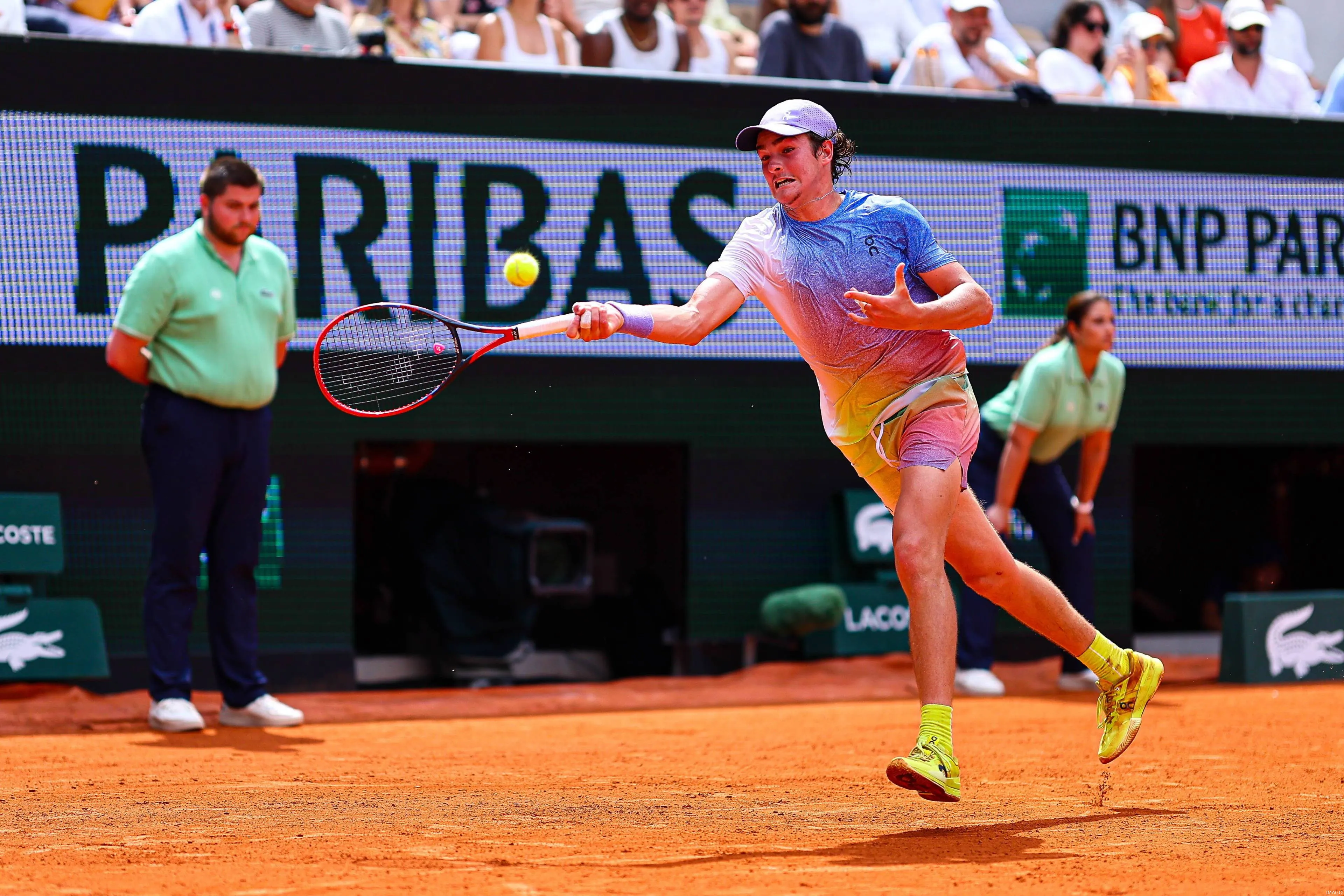
Joao Fonseca marked his first appearance at the Monte-Carlo Masters with a composed straight-sets win, underlining both his clay-court credentials and a developing understanding of match management at ATP level. The 19-year-old Brazilian, currently inside the top 50, broke serve five times in a controlled performance that balanced aggression with restraint against Gabriel Diallo.
The result comes after an uneven start to the 2026 season, where early exits in Melbourne and South American events raised questions about consistency rather than potential. Fonseca had shown flashes of his level during the Sunshine Double, including a meeting with Carlos Alcaraz in Miami, but had yet to translate those moments into sustained runs.
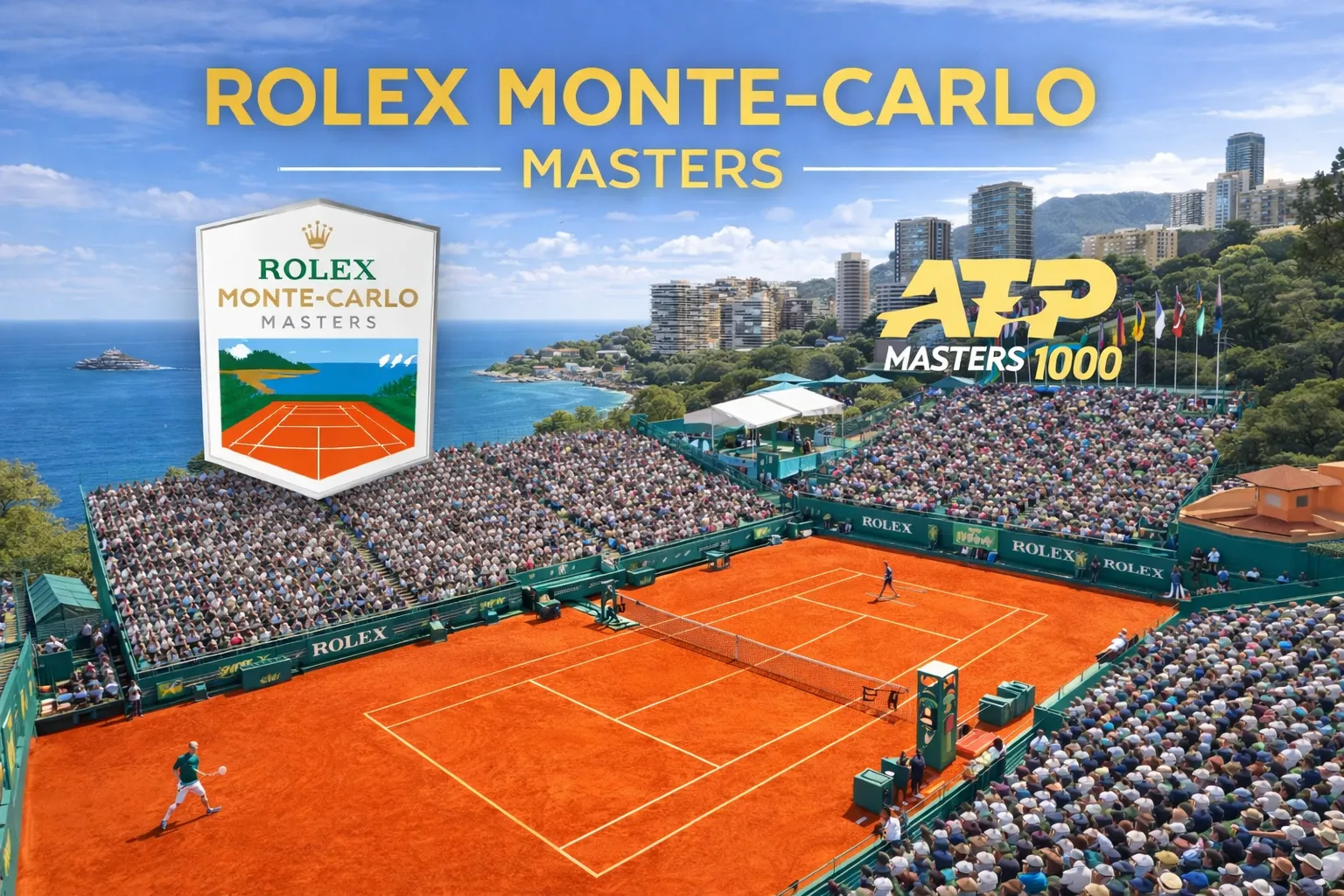
Monte Carlo offered a different context. Playing on a surface where he feels most comfortable, Fonseca described conditions that suited his game, noting the court was “a little bit fast” with a high bounce. That combination allowed him to use his natural power while still engaging in longer rallies, a key adjustment on clay.
His performance also reflected a growing tactical awareness. After struggling early against Diallo’s serve, Fonseca adjusted his return positioning and began to control baseline exchanges. The shift was decisive, particularly in the second set, where he recovered from a deficit to close the match with authority.
Clay adjustments shaping early-season reset
Fonseca’s own assessment of the match centred on adaptation. He acknowledged the difficulty of returning early on but pointed to a gradual improvement as he became more comfortable with both timing and positioning. The ability to recalibrate mid-match has become an essential component of his development, particularly on clay.
He framed clay not as a surface for immediate winners but as one that demands patience and physical endurance. Fonseca noted that points often require multiple phases, with opponents capable of extending rallies through defensive skills such as sliding and height variation. “I think I’m a guy with power in my shots, so on clay you need to be more patient," Fonseca said after his victory in Monte-Carlo.

"It’s not going to be one shot and it’s a winner," the Brazilian explained. "Sometimes it is, but it’s more difficult than on hard court or grass. You need to be patient, because the guy can slide and take a moonball and you need to do it again. So I think patience and mentality on this surface is very important, and also the physical side.”
The match itself provided a practical example of that mindset. Trailing 3-1 in the second set, Fonseca maintained composure and won five consecutive games to close the contest. The sequence highlighted both his baseline consistency and his ability to absorb pressure without overplaying.
“Like today, I was 3-1 down in the second set and then I did five games in a row. So to stay positive, with a good mentality that you can break again. That’s something I did today and hopefully for the rest of the clay season.”
Learning curve defined by elite benchmarks
Beyond the immediate result, Fonseca placed significant emphasis on the lessons gained from facing top-tier opponents earlier in the season. Matches against players such as Alcaraz and Jannik Sinner during the U.S. swing offered a direct reference point for the level required at the top of the game.
He described those encounters as essential for calibrating expectations, having previously only observed elite players through broadcasts. “For me as a young player coming to the tour, it was important to see their level. People say they play amazing, but I only saw them on TV. I was curious to play them and see my level. Of course, they play like this the whole year.”

That perspective feeds directly into his current priorities. Rather than focusing on single-match peaks, Fonseca identified consistency as the defining next step in his progression. The Monte Carlo win, while encouraging, fits into a broader process of stabilising performance across surfaces and tournament contexts.
“I played good matches against them, but I want to find this consistency in every match, every tournament. It was important for my development to stay humble, keep my feet on the ground, and see that I’m on the right path.”

claps 0visitors 0
Just In


Popular News
Latest Comments
- It's a shame that the WTA is calling the wrong person into meetings and intimidating them like this. Good on the player for speaking out. You can't expect Ukrainians to put aside that Russia has been bombing them for years and is still doing so.
- The girl needs professional help... and I don't mean sports.
- The way the current tennis players perform today, especially in the WTA, they should not be given any extra money. Let them boycott. They do not look like professionals. More balls land out of bounds and into the net than anything.
- Way past time for chair umps to REGAIN CONTROL over these entitled 'Special People'.
- WTF is this here for????
- Doubt she recalls which 'man' she acquired those underwear from... but the label probably has "ATP" on it.
- I've lately been thinking everyone is pointing to the wrong location for "illness" and constant "injury". Perhaps some 'couch time' is in order at this point?
- She has long outlived this shitshow she started. So, according to this lucky winner, ALL THE WORLD's CITIZENS should shun one another while forced to live under threatening, insane Leaders and Regimes? A sad individual who thinks she's changing the World with her ridiculous shunning of Russian opponents. Must be a hard life worrying about Ukraine from her balcony overlooking Monte Carlo? WTA needs to take a REAL stand here. Otherwise ban flags and handshakes by Russia, China, Israel, Iran, USA..... (Get the picture??)
- They still with that crap??? These Ukrainians need to just stop. Your Russian opponents have nothing to do with the war against your country. They didn't start it and by you not shaking their hands certainly won't end it. All this bitterness and unforgiveness will not augur well for these silly women.
- Tennis knows it has a huge problem with Hi-Tech line calls on clay. They've admitted so behind closed doors. However they do nothing except make a rule that no one can argue a call; no matter the proof. Perhaps the new WTA CEO will take a stand??

Loading