Rome Open ATP Day Three Round-Up | Novak Djokovic eliminated in surprise loss as Zverev and Musetti secure controlled progress
ATP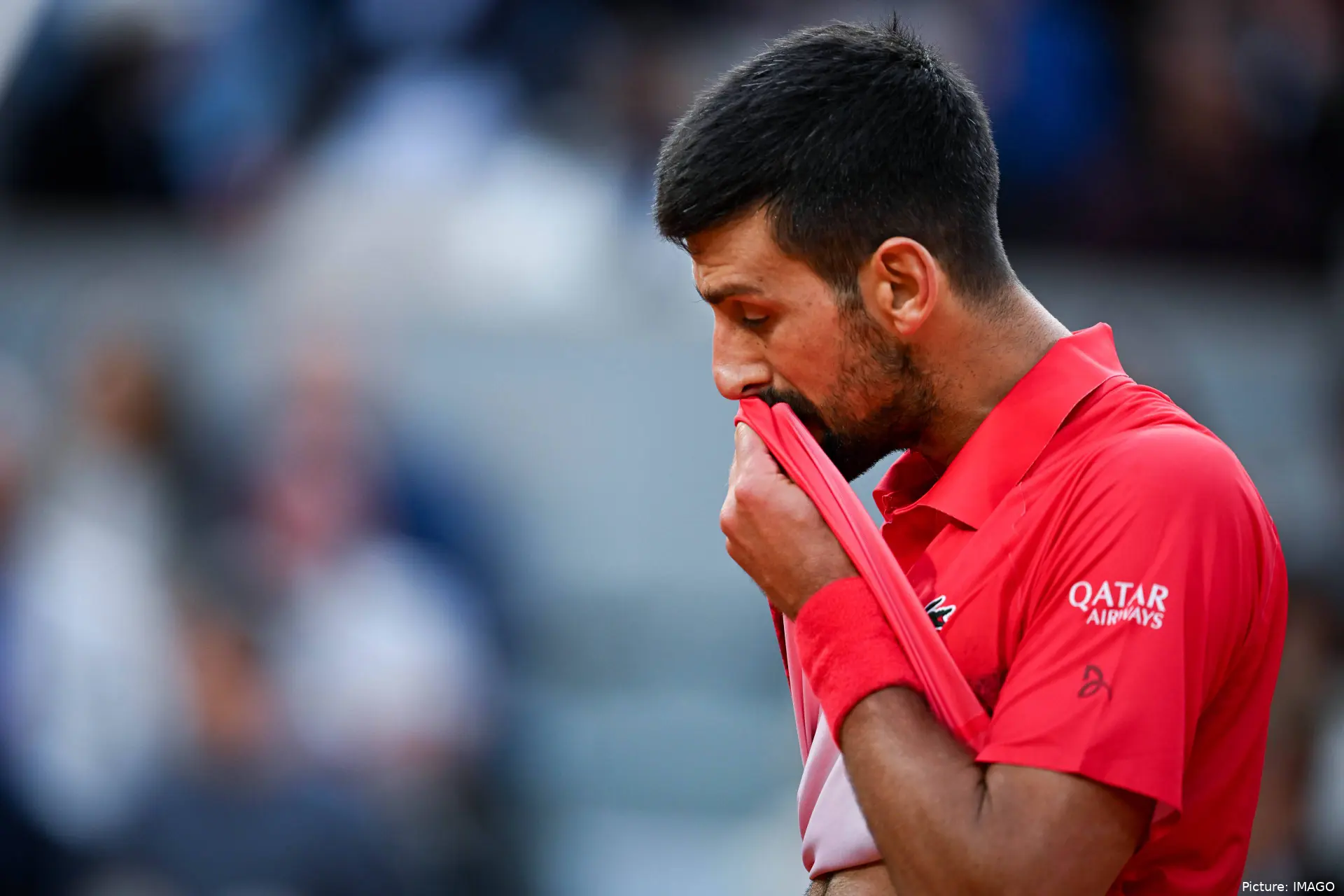
The big seeds are now set to enter the competition in the
ATP Rome Open. Day Three delivered major disruption in the second round, with Novak Djokovic eliminated by Dino Prižmić in a three-set upset and Alex de Minaur also falling late against Matteo Arnaldi. The Rome Open draw shifted significantly as multiple seeded pathways opened up, while Lorenzo Musetti and Alexander Zverev advanced with controlled wins across a day defined by momentum swings and physical baseline battles.
Beyond the headline results, the Rome Open second round highlighted clear differences in execution under pressure, with several matches decided by serve-return efficiency rather than sustained dominance. The Rome Open also featured straight-sets wins from Francisco Cerúndolo, Tommy Paul and Ugo Humbert, while Casper Ruud and Alexander Bublik progressed with structured performances that reinforced form heading into a reshaped third round.
Prižmić executes structured baseline shift to topple Djokovic
Dino Prižmić def. Novak Djokovic 2-6, 6-2, 6-4
Djokovic started with clear control of baseline structure, using depth on the return to prevent Prižmić from taking early initiative in rallies. In the opening set, he consistently targeted the Croatian’s backhand in neutral exchanges, forcing defensive positioning and creating early service breaks through pressure on second serves.
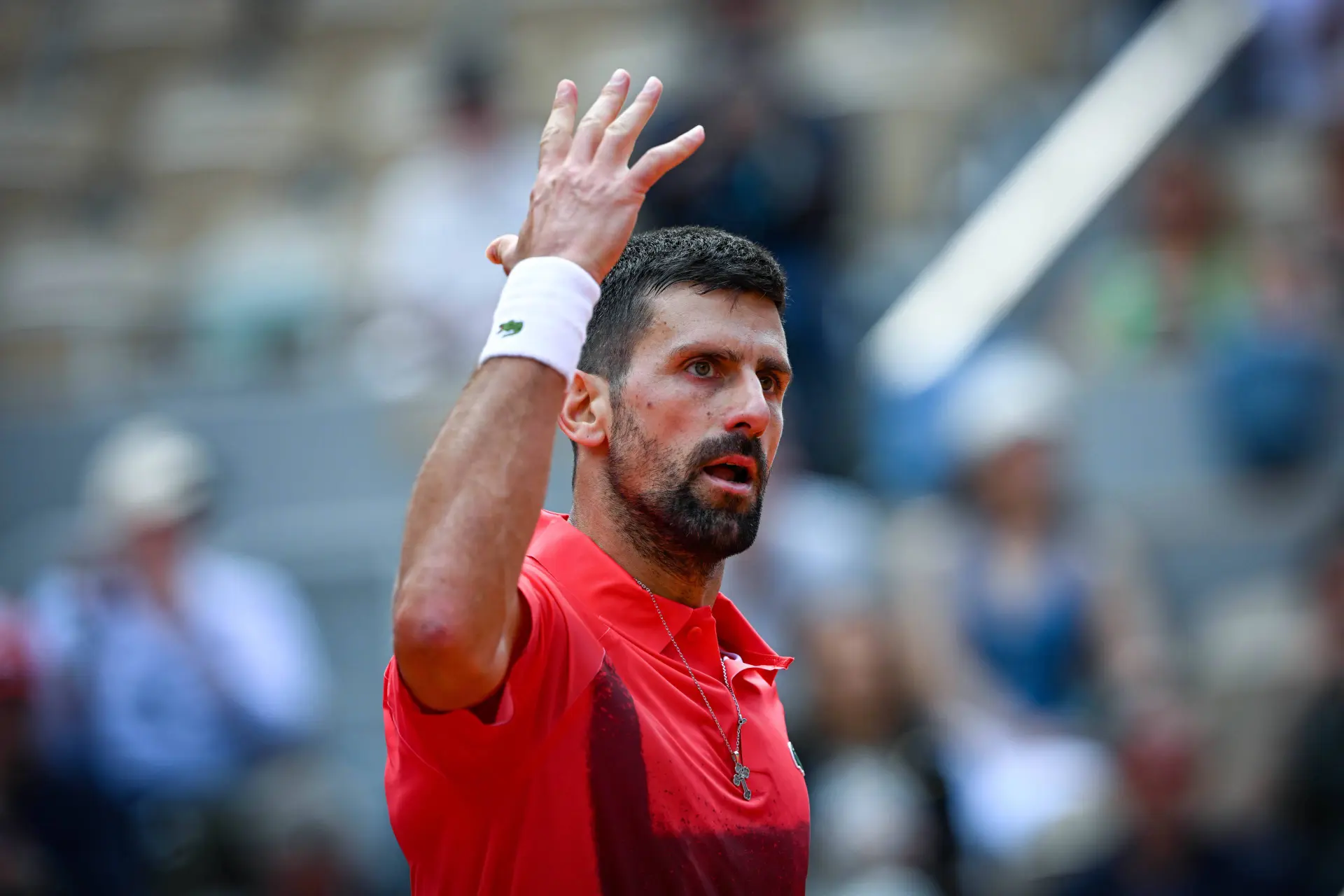
The match shifted in the second set when Prižmić began stepping further inside the baseline on return games, particularly against second serves. This adjustment reduced Djokovic’s ability to dictate from the first strike and extended rallies into more neutral patterns. As exchanges lengthened, Djokovic’s service games became less secure, with reduced efficiency in closing points once the initial advantage was established.
In the deciding set, the match was defined by marginal differences in rally tolerance rather than outright aggression. Prižmić sustained deeper ball placement through extended baseline exchanges, limiting Djokovic’s court positioning advantage. While Djokovic briefly re-stabilised his level mid-set, Prižmić held firmer in pressure service games and consistently neutralised return phases. The outcome reflects a gradual erosion of control in neutral rallies rather than a single momentum swing.

Arnaldi overturns de Minaur through return aggression
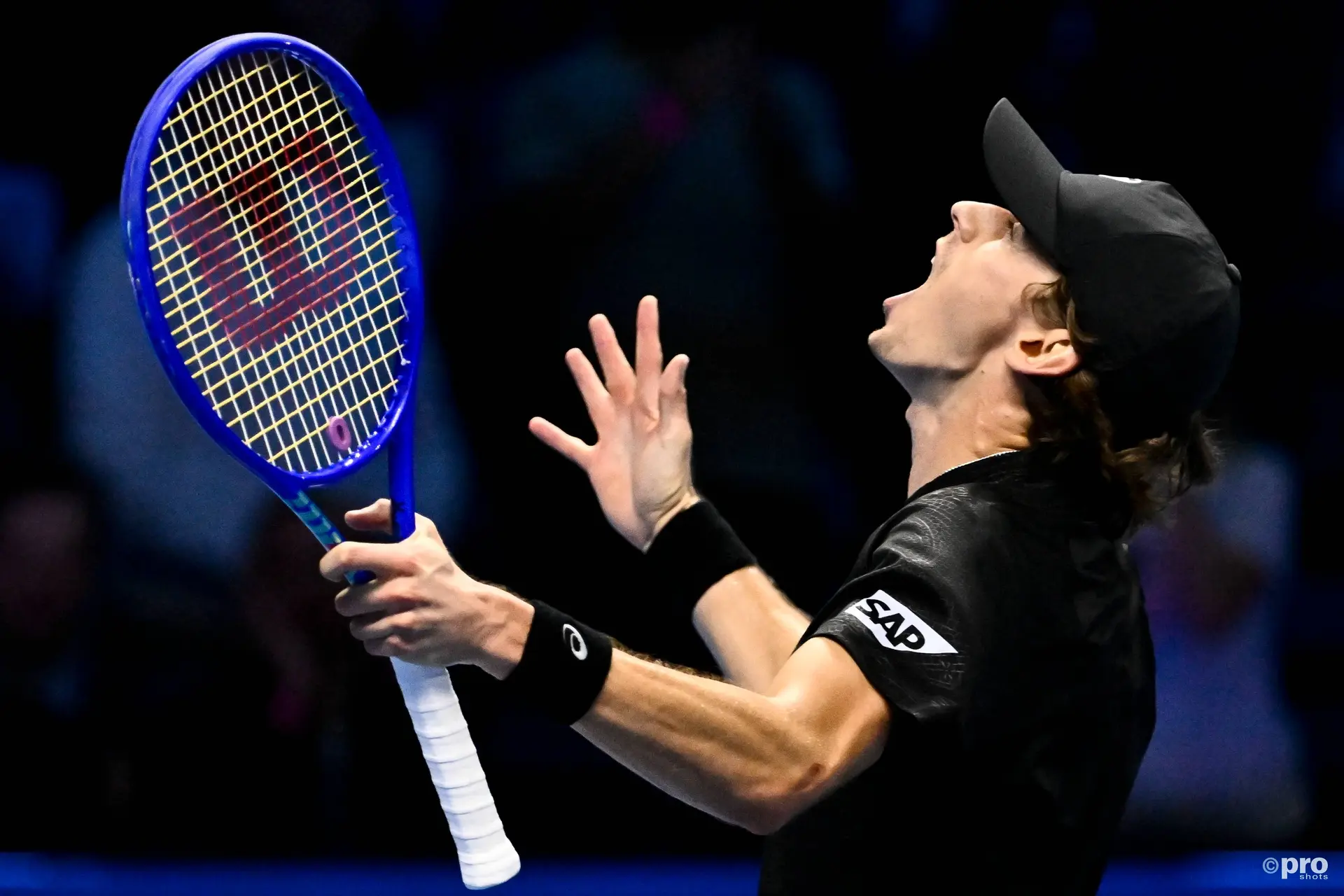
Matteo Arnaldi def. Alex de Minaur 4-6, 7-6, 6-4
De Minaur built early control through structured defensive positioning, absorbing pace and forcing Arnaldi into extended rally construction. His opening set advantage came from high first-serve consistency and disciplined neutral exchanges.
Arnaldi adjusted by stepping further inside return position and increasing pressure on second serves, which reduced de Minaur’s ability to initiate baseline rhythm. This change became decisive in the second set, where Arnaldi extended service games and created more neutralising depth from both wings.
The final set was defined by marginal differences in rally tolerance, with Arnaldi sustaining heavier depth into de Minaur’s backhand side and forcing shorter defensive replies. The decisive break came after repeated pressure on second serve returns, closing a match defined by incremental tactical adjustment.
Cerúndolo dismantles Tabilo through early strike dominance
Francisco Cerúndolo def. Alejandro Tabilo 6-0, 6-2
Cerúndolo established immediate structural dominance by targeting Tabilo’s second serve and stepping forward into return positions. The Argentine dictated rally length from the opening games, consistently finishing points inside five shots.
The key tactical element was court compression: Cerúndolo reduced Tabilo’s available angles by taking the ball earlier and forcing defensive positioning on both wings. This prevented any transition into neutral baseline exchanges and repeatedly generated break-point scenarios.
Across both sets, Cerúndolo maintained high return conversion efficiency, breaking serve in clusters that prevented momentum stabilisation. The one-sided nature of the match was defined by serve-return imbalance rather than baseline parity, securing a controlled progression in Rome.
Paul controls baseline tempo with structured return pressure
Tommy Paul def. Aleksandar Vukic 6-4, 6-2
Paul began by targeting Vukic’s second serve, stepping inside the baseline to reduce reaction time and force early defensive contact. This allowed him to dictate early return games and establish separation in key moments of the opening set.
The adjustment in the second set was increased depth consistency, particularly on backhand exchanges, which limited Vukic’s ability to transition into aggressive forehand patterns. Paul’s service games also improved through higher first-serve percentage, reducing pressure phases.
The match was ultimately decided by return efficiency in mid-set games, where Paul consistently created break-point opportunities through structured rally extension rather than outright winners. This controlled pattern secured a clear two-set progression.

Bublik closes out convincing win over Báez
Alexander Bublik def. Sebastián Báez 6-1, 6-2
Bublik delivered a commanding straight-sets performance against clay-court specialist Sebastián Báez, immediately imposing himself through aggressive shot-making and early control of baseline exchanges. From the opening games, the Kazakh dictated tempo on serve and return, consistently preventing Báez from settling into extended clay-court rallies.
The key difference came in how Bublik managed first-strike patterns, using early forehand acceleration to finish points quickly and deny Báez the time typically required to construct defensive resistance on the surface. This reduced the Argentine’s ability to stabilise return games and forced him into reactive positions throughout both sets.
The result represents a clear return to form for Bublik after three consecutive defeats on clay, with this performance defined less by fluctuation and more by sustained tactical clarity. The straight-sets win re-establishes momentum in his campaign, with controlled aggression replacing recent inconsistency on the surface.

Zverev stabilises after early resistance to overcome Altmaier
Alexander Zverev def. Daniel Altmaier 7-5, 6-3
Zverev started by establishing early baseline control through depth on the backhand wing, aiming to push Altmaier behind the baseline and prevent forward court positioning. However, the opening set remained under pressure due to fluctuating service efficiency, with Altmaier generating multiple break-point chances by extending return games and neutralising second-serve patterns.
A key statistical swing came in first-serve performance. Zverev finished the match with a higher first-serve percentage in the second set (above 65%), which significantly reduced the number of neutralising return rallies. He also improved his effectiveness on first-serve points, winning over 70% of first-serve exchanges, limiting Altmaier’s ability to build consistent return pressure. Altmaier, by contrast, failed to convert multiple early break opportunities in the opening set, which proved decisive in the overall structure of the match.
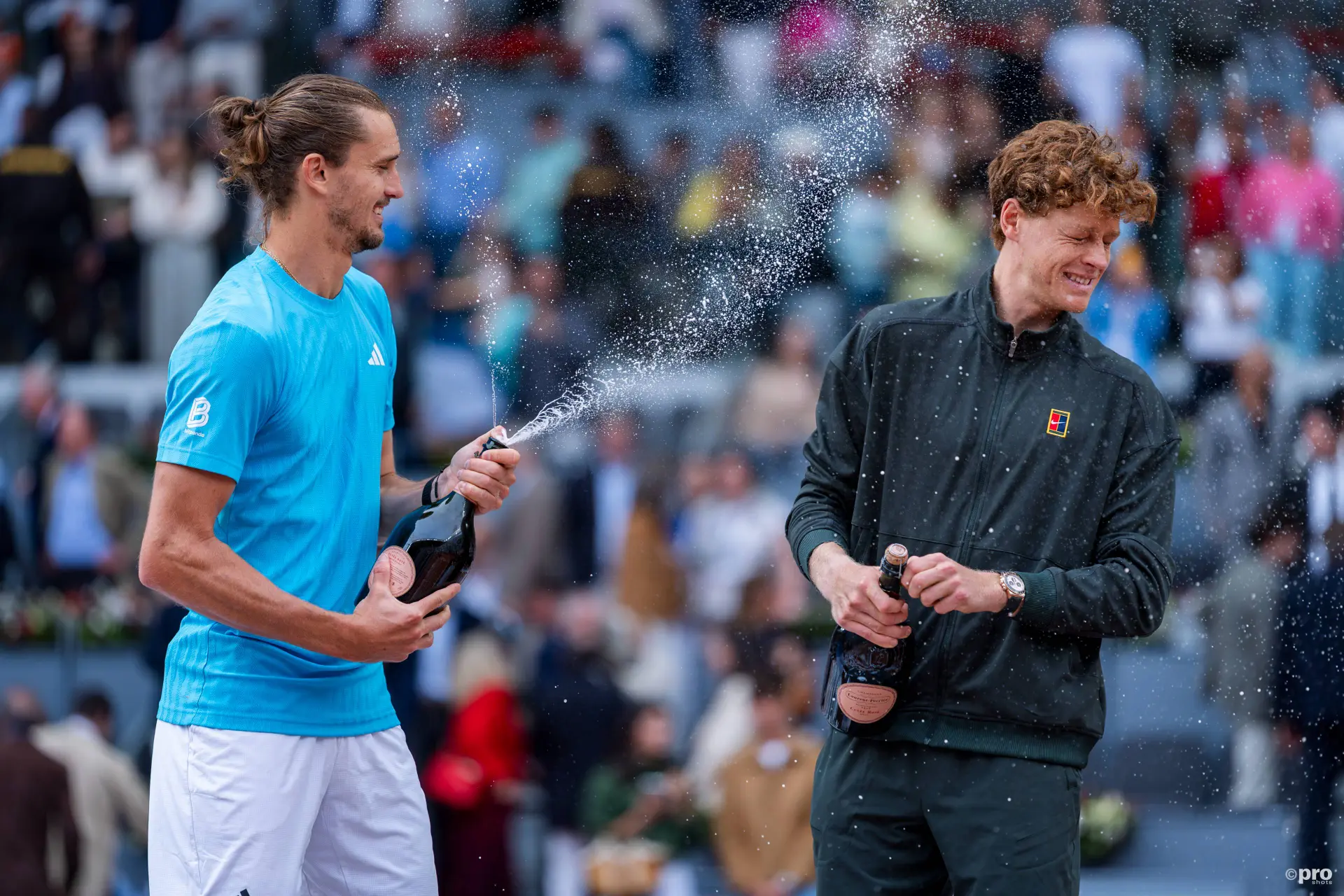
The tactical impact was visible in rally length distribution. As Zverev increased first-serve consistency, baseline exchanges shortened, reducing exposure to Altmaier’s return aggression. He also cleaned up second-serve vulnerability, lowering the number of pressure points faced per service game in the second set. Altmaier’s break-point conversion rate remained low despite creating chances, and this inefficiency became the structural difference between competitiveness and separation.

Ruud imposes structural baseline control in routine progression
Casper Ruud def. Zachary Svajda 6-1, 6-3
Ruud dominated through consistent depth targeting, forcing Svajda behind the baseline and limiting forward court positioning. Early breaks were built on return consistency rather than aggressive shot-making.
The second set followed a similar pattern, with Ruud maintaining controlled rally length and prioritising percentage tennis on serve. Svajda’s inability to extend rallies beyond neutral phases limited any tactical disruption.
Ruud’s efficiency in holding service games ensured minimal pressure exposure, allowing a straightforward progression through structured baseline dominance.
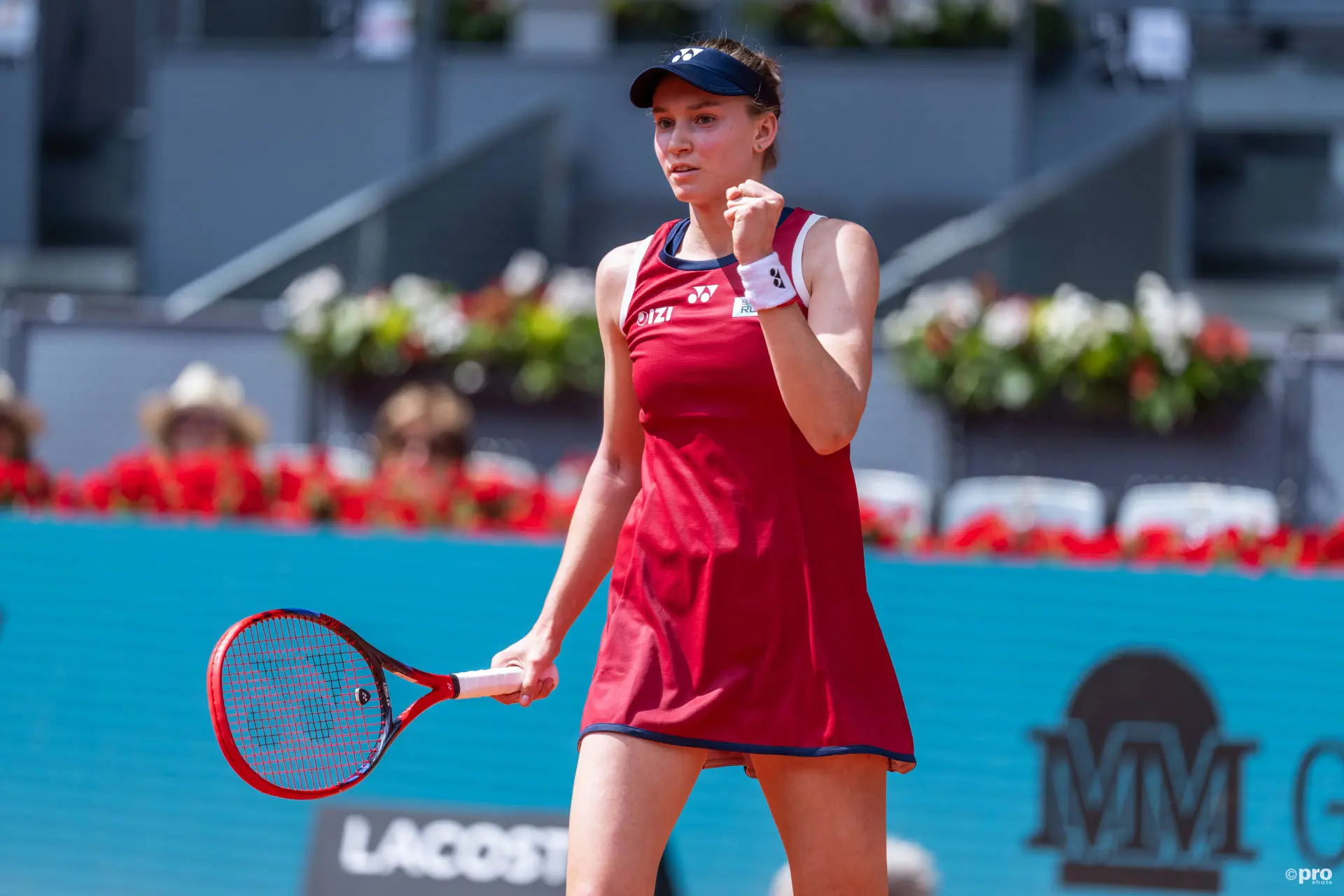
Musetti closes match through controlled rally management and serve efficiency
Lorenzo Musetti def. Giovanni Mpetshi Perricard 6-4, 6-4
Musetti established early control by neutralising serve impact through deep return positioning and early contact on second serves. This reduced Mpetshi Perricard’s ability to dictate short-point sequences.
The tactical centre of the match was rally extension control, where Musetti consistently forced additional shots and created positional imbalance on the Frenchman’s backhand side. This gradually reduced service game security.
Musetti’s serving efficiency—72% first serves in and 70% first-serve points won—ensured he maintained scoreboard stability while applying return pressure. He closes the Rome Open second round section with a controlled, low-error win profile.


Lucas MichaelTennis Journalist
Lucas Michael is a tennis journalist based in Cambridge, UK, specializing in comprehensive coverage of the ATP and WTA tours. For the past 1.5 years, he has been a core contributor to TennisUpToDate, where he has authored more than 3,000 data-driven match reports, deep-dive analysis pieces, and engaging liveblogs.
Lucas pairs real-time statistical analysis with on-the-ground reporting, frequently traveling to tournaments to cover the action firsthand from the press box and player press conferences. This blend of advanced metrics and direct access allows him to provide sharp context regarding player form, tactical trends, and breaking tour developments.
He holds a BA (Hons) in Sports Journalism. Grounded in core journalistic ethics, Lucas places a strict emphasis on meticulous sourcing, editorial accuracy, and a commitment to updating live content swiftly as verified information emerges.
claps 0visitors 0
Just In



Popular News
Latest Comments
- Does Sinner need that 4.5 mil? I doubt it. He can make that with three modelling gigs!😅🤣Rapunzel21-10-2026
- Did "People Magazine" purchase this website? This nonstop storyline is bullshit.
 mandoist21-10-2026
 - Listen... this is of no concern to anyone but these two. Deal with your own issues -- most of us have our own. Thanks, media, for these insignificant follow-ups which are meaningless.mandoist21-10-2026
- This is so very very sad, for all three of them. I truly thought they had an unbreakable bond, but life throws up so many differing challenges. Having your homeland suffering in such a terrible way, makes happiness lose out to guilt as well. Our thoughts are with them. X💔bjsexton20-10-2026
- I have lost all respect for Svitolina! Could she not have waited until he had played at the Paris Masters!!! She is selfish and don't give a damn about Gael. That is NOT how love is demonstrated Elina!!Rapunzel19-10-2026
- Perhaps convenient tennis tour sex is not a strong enough experience in which to base a marriage?mandoist19-10-2026
- Fight the Good Fight... Tennis (sports in general) need more Humans such as yourself.mandoist18-10-2026
- When is WTA going to mandate Genetic Testing (DNA) ???mandoist18-10-2026
- Hey, Dan... you just wake up from a coma? Regardless -- Thanks for the comedy this morning!mandoist18-10-2026
- Two Things: 1. Stop allowing these Spoiled Trust-Fund Elitists to behave badly. Your little hand-slaps do not deter them. 2. STOP the incessantly annoying "towel wiping" nonsense!!!!mandoist15-10-2026

Loading