“Impossible doesn’t exist for him”: Goran Ivanisevic backs Novak Djokovic to contend again at Grand Slams
ATP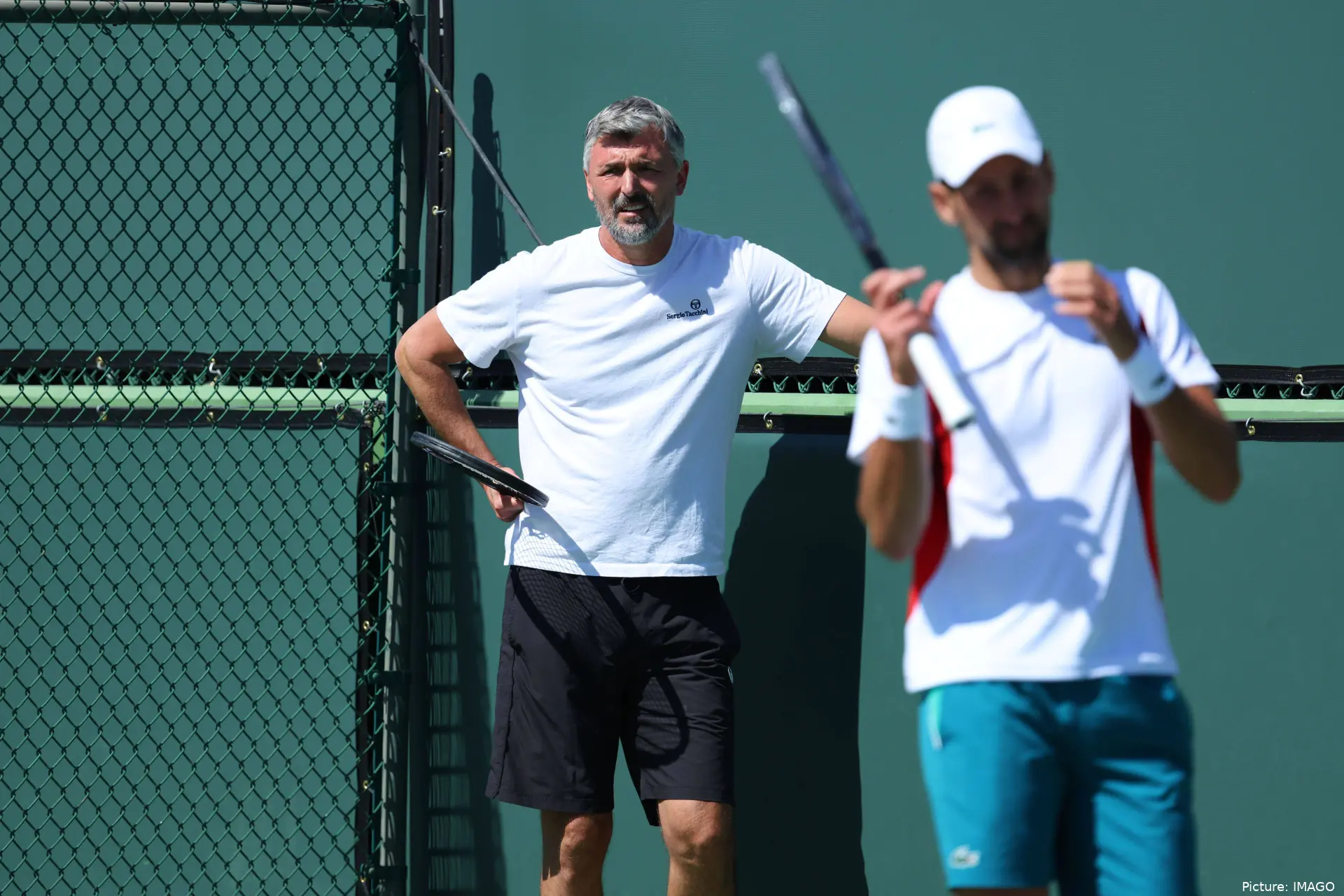
Novak Djokovic’s position at the top of men’s tennis continues to generate debate, but those closest to him maintain that his competitive ceiling remains unchanged. Former coach Goran Ivanisevic, who worked alongside the Serbian for more than five years during one of the most successful periods of his career, has offered a clear assessment: doubts around Djokovic often underestimate the psychological dimension that has defined his longevity.
Djokovic, currently managing a reduced schedule in 2026, has played only two tournaments so far this season. He reached the final at the Australian Open and later fell in the fourth round of Indian Wells to defending champion Jack Draper, compiling a 7–2 record. His withdrawal from both the Miami Open and Monte Carlo Masters has further fuelled speculation about his physical condition and long-term prospects.
However, Ivanisevic’s perspective is shaped by direct experience. During their partnership, Djokovic secured multiple Grand Slam titles and reaffirmed his position among the sport’s most consistent performers. Even in the period since his last major title at the 2023 US Open, the Serbian has remained competitive, reaching two finals and five semi-finals across the last nine Grand Slam events.
Against that backdrop, Ivanisevic rejects the narrative of decline, pointing instead to Djokovic’s sustained ability to compete deep into tournaments and maintain a top-three ranking despite limited appearances. His argument centres less on physical metrics and more on mindset, which he considers the decisive factor in high-level competition.
Read also
“You can never rule him out”: Ivanisevic on Djokovic’s mentality
Ivanisevic’s analysis focuses on Djokovic’s competitive psychology, which he describes as fundamentally different from most players on tour. Drawing on years of close collaboration, he argues that conventional limits do not apply in the same way, particularly in the context of Grand Slam tournaments where mental resilience often determines outcomes.
He also criticised recurring external assessments that question Djokovic’s chances, suggesting that such evaluations overlook core elements of elite performance. For Ivanisevic, motivation remains intact, driven by a sustained attachment to the sport and the competitive environment rather than external expectations or rankings.
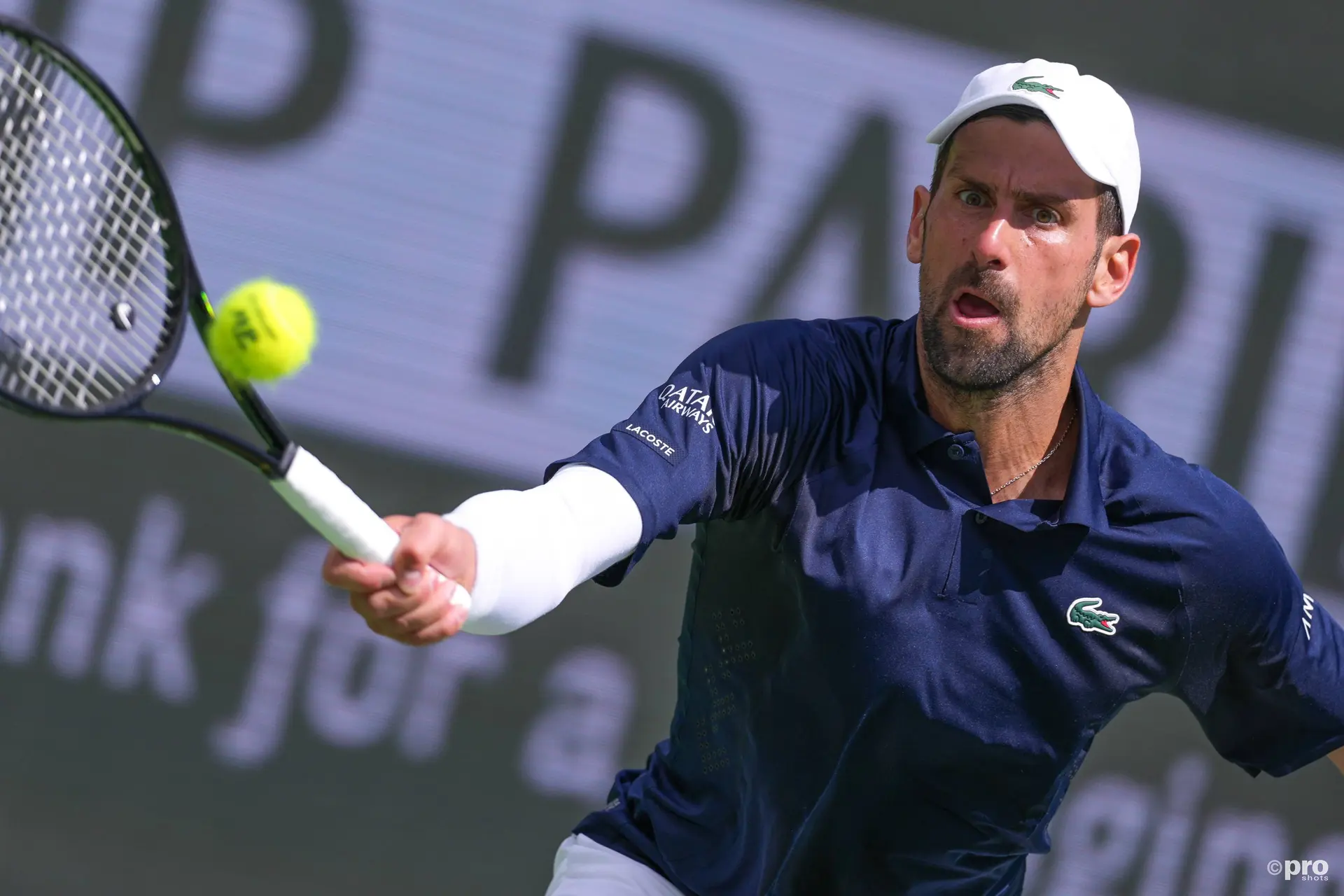
"If I hadn’t been with Novak, maybe I would have said it’s not possible," Ivanisevic said to Sportklub. "But because I know him and I’ve watched him play for five years, the words ‘I can’t’, ‘impossible’ don’t exist for him… they are not part of his vocabulary. It’s possible, of course it’s possible. When I think about the final in Australia, he’s there, you can never rule him out. If he is mentally prepared and focused, that’s all."
"I hear many so-called tennis experts, and there is always someone who writes him off. I don’t know if those people even watch or understand tennis. Djokovic is motivated by the fact that he loves tennis, loves being on court, loves competition, loves winning."
"I also heard he plans to play until the Olympic Games, and there is still time before that… He will still be among the best," the Croatian coach added. "Look how many tournaments he played last year, and he finished No. 3 in the world. It doesn’t matter what is said."
"I still think only Novak can beat them"
Djokovic’s current phase reflects a strategic reduction in workload rather than a full competitive decline. Since the start of 2024, his scheduling has become increasingly selective, prioritising major tournaments and recovery periods. That approach has coincided with a consistent presence in the latter stages of Grand Slams, even without adding to his title count.
The Serbian’s run to the Australian Open final earlier this year reinforced that pattern, confirming his ability to compete across best-of-five formats. Ivanisevic’s argument aligns with that evidence: while younger players such as Carlos Alcaraz and Jannik Sinner have taken leading roles on the tour, Djokovic remains a viable contender in scenarios where experience and match management become decisive.
"They, especially Alcaraz, lost matches last season in best-of-three tournaments. I didn’t expect Korda to beat him in Miami, although I respect him a lot; he’s an incredible player but often struggles with injuries. As for Sinner, in Australia he lost to Novak, who you can always lose to. I also saw his loss to Mensik in Doha. So… Sinner and Alcaraz lost two matches each, but I wouldn’t call it a crisis. In Grand Slams, I still think only Novak can beat them, although it’s not easy to defeat both in a day and a half."
New chapter with Arthur Fils and broader tour perspective
Alongside his comments on Djokovic, Ivanisevic has recently returned to coaching in a different context, joining the team of Arthur Fils. The French player, who missed a significant portion of the 2025 season through injury, has made a strong return in 2026, compiling a 13–5 record that includes a final in Doha and a semi-final run in Miami.
Ivanisevic described the collaboration as a long-term project, emphasising alignment within the coaching team and the player’s developmental trajectory. Fils, previously ranked as high as world No. 14 before his injury layoff, is viewed internally as a future top-five contender, although expectations remain deliberately measured at this stage.
"It’s great. First of all, I have to thank Cinka; he had called me several times before, but at that time I had other projects. Now everything happened very quickly. We spoke for five minutes, and the collaboration started almost immediately. We understand each other, and it’s very important that as coaches we share the same vision so we can complement each other."
"Arthur is one of the most talented young players. Before the injury, he was No. 14 in the world," Ivanisevic claimed. "Unfortunately, he was out for seven months, but with a few more months he represents the future of tennis. I see him in the Top 5; he has enormous quality. I hope he gets there soon, but there is no pressure. It’s a project that excites me a lot."

Cristhián AvilaTennis Journalist
Cristhián Ávila is a tennis journalist based in Santiago, Chile, and has been part of the TennisUpToDate team since early 2023. He covers the ATP and WTA Tours as well as all four Grand Slams, producing breaking news, match reports, analysis, and regular liveblogs from major tournaments.
His reporting combines statistical analysis with clear explanation, helping readers understand tactical developments, player form, and broader storylines across the tour. Working fluently in both Spanish and English, Cristhián collaborates with an international editorial team and contributes to comprehensive global coverage. As part of his work, he has conducted interviews and media interactions with leading figures in the sport, including Caroline Wozniacki and John McEnroe.
In his journalism, Cristhián places strong emphasis on careful sourcing, editorial accuracy, and updating articles promptly when new, verified information becomes available. His coverage is grounded in research, context, and direct engagement with professional tennis.
claps 0visitors 0
Just In

Popular News
Latest Comments
- Fight the Good Fight... Tennis (sports in general) need more Humans such as yourself.
 mandoist18-10-2026
 - When is WTA going to mandate Genetic Testing (DNA) ???mandoist18-10-2026
- Hey, Dan... you just wake up from a coma? Regardless -- Thanks for the comedy this morning!mandoist18-10-2026
- Two Things: 1. Stop allowing these Spoiled Trust-Fund Elitists to behave badly. Your little hand-slaps do not deter them. 2. STOP the incessantly annoying "towel wiping" nonsense!!!!mandoist15-10-2026
- A healthy Qinwen may be hard to stop next season. She was already scaring her opponents before her medical leave(s). Unfortunately, Zheng insisted on singing again. On the positive side -- Mirra did not sing!! ;~}mandoist11-10-2026
- Where is it written that athletes, entertainers... People in general... are mandated to keep looking at -- or even using [anti]Social Media? Public & private figures consistently complain and reveal their concerns about negativity and violence thrown at them -- yet they insist on participating. Avoid it, don't use it, don't read it. It's okay to occasionally look up at the World instead beating your eyes & thumbs to death on The Inventions out there.mandoist11-10-2026
- great articlestennisseserver07-10-2026
- Medvedev was leading Djokovic 7-5, 3-5 when an attempted return..' NO you ignorants, Djokovic was leading .weiss05-10-2026
- No more bullshit "Wildcards" to these two. Qualify like everyone else -- there will be cameras there, too. Time to scream... WTF ????!!!!mandoist29-09-2026
- Let's not BS the general public -- Sabalenka started showing cracks in her game last season. Her losses and near-losses started at about the same time she began being distracted by Fame (constant Selfies, making TV commercials, magazine shoots, endless Social Media nonsense, etc., etc.) One would think even Saba could recognize the parallels with others who failed before her -- Raducanu, Giorgi, Bouchard to name a few.mandoist25-09-2026

Loading