ATP Miami Open Semifinals Round-Up | Jannik Sinner holds off Zverev, as Jiri Lehecka books first Masters final
ATP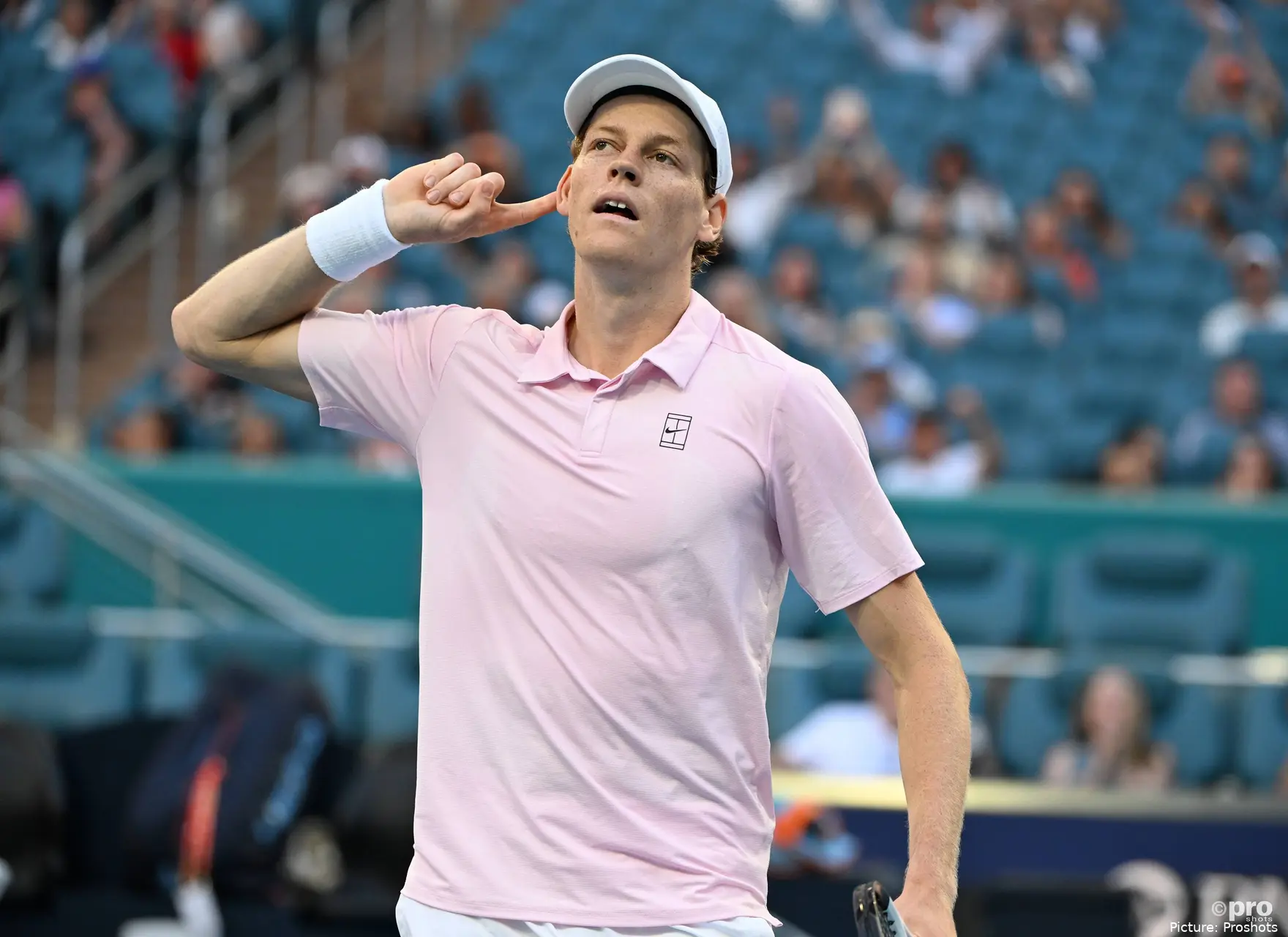
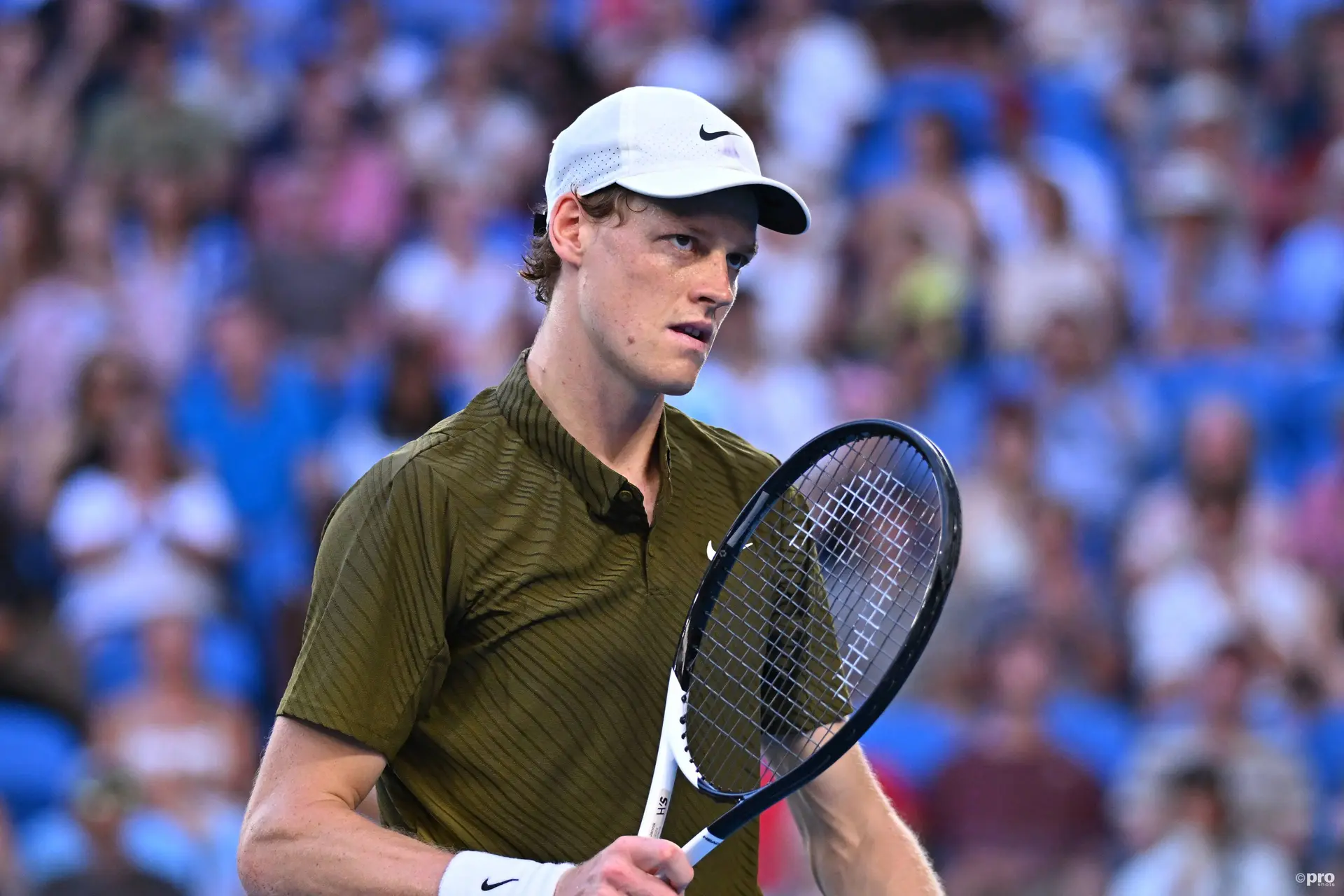
Jannik Sinner and Jiri Lehecka secured their places in the Miami Open final after two semi-finals shaped by contrasting match dynamics. Sinner navigated a structurally tight contest against Alexander Zverev, while Lehecka imposed himself early and sustained control against Arthur Fils. The Miami semi-finals therefore produced a final pairing defined by efficiency versus momentum.
Both results carry broader implications within the Miami Open context. Sinner continues to consolidate his position among the most consistent performers at Masters 1000 level, returning to a final he won in 2024. Lehecka, meanwhile, reaches his first final at this category, confirming a steady progression through the draw and positioning himself for a significant ranking shift.
Lehecka builds scoreboard pressure early to neutralise Fils’ patterns
Jiri Lehecka def. Arthur Fils 6-2, 6-2
Lehecka’s progression to the Miami Open final was defined by immediate control of return games. From the opening game, he applied pressure on Fils’ serve, generating multiple break opportunities and converting early to establish a lead. That initial break altered the match structure, forcing Fils into shorter margins on serve while Lehecka settled into consistent service holds without facing break points.
Read also
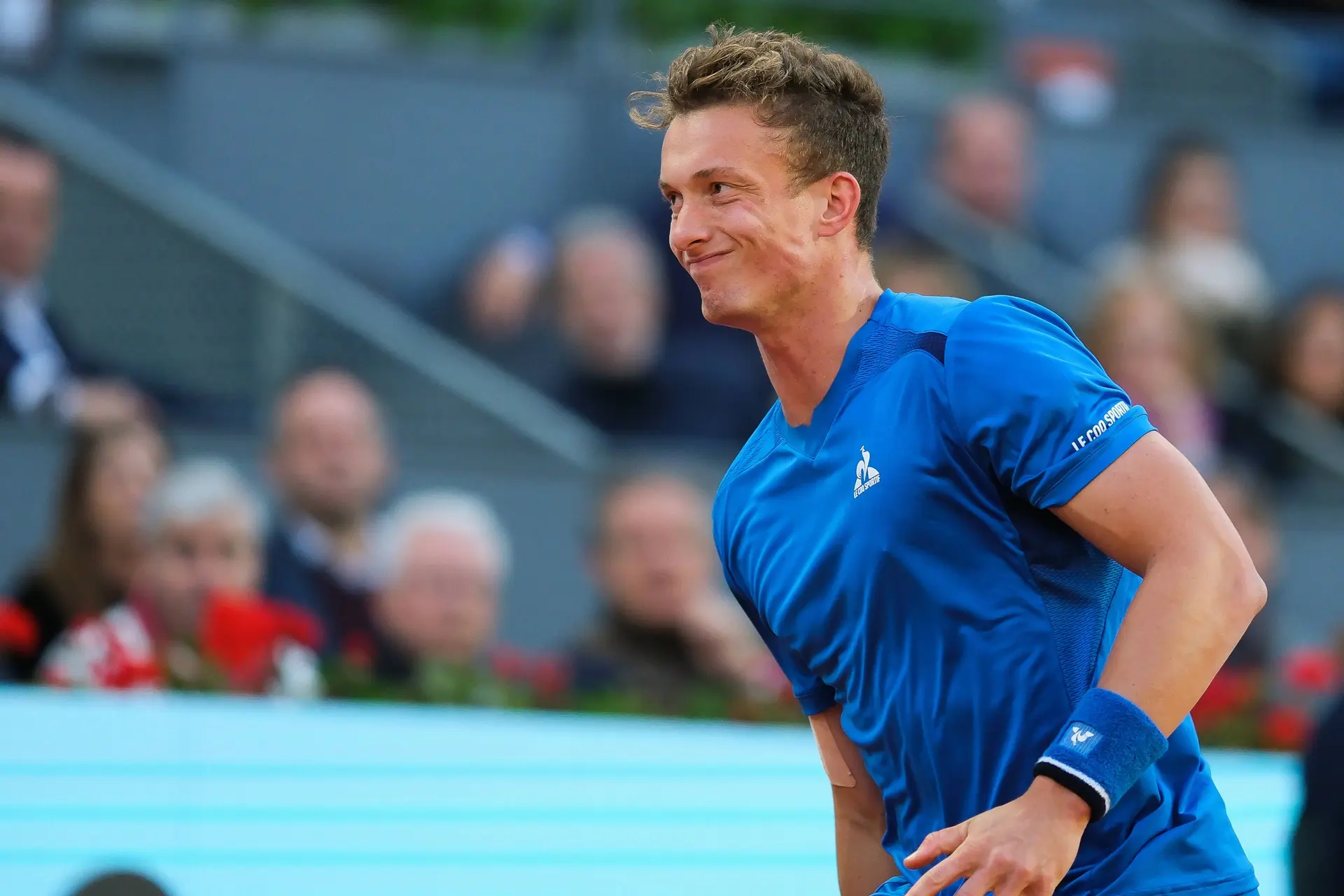
Across the first set, the Czech maintained a clear baseline pattern: depth through the middle, followed by directional changes to expose Fils’ movement. A second break arrived through sustained return pressure rather than isolated winners, reflecting a systematic approach rather than high-risk shot-making. Fils attempted to shorten points, but his error rate increased when forced to defend from deeper court positions.
The second set began with a brief reset from Fils, who held to open, but Lehecka quickly reasserted control by targeting the second serve. He stepped further inside the baseline on return, reducing Fils’ time and consistently initiating neutral rallies on his own terms. The early break in the set reinforced the same dynamic seen in the opener, with Lehecka dictating court positioning rather than pace.
Midway through the set, Fils produced his most competitive service games, saving break points and extending rallies, but these efforts did not translate into return pressure. Lehecka’s service games remained efficient, with high first-serve percentages allowing him to avoid extended defensive exchanges. The absence of scoreboard pressure on his own serve enabled him to continue playing within structured patterns.
The closing phase reflected accumulated pressure. After a prolonged game of nearly ten minutes, Lehecka secured a second break in the set, effectively ending the contest. The final service game was managed without deviation from his established patterns, completing a performance with minimal fluctuations in level.
Statistically, the outcome was aligned with these dynamics. Lehecka won 82% of first-serve points and 50% on second serve, while also taking 67% of points on Fils’ second serve. Fils, by contrast, managed only 33% behind his second serve and was unable to convert any break opportunities, largely due to not generating them. Lehecka advances to his first Miami Open final, where he will face a significantly different tactical profile.
Match Statistics Jiri Lehecka vs. Arthur Fils
| Jiri Lehecka | VS | Arthur Fils |
|---|---|---|
| Service | ||
| 6 | Aces | 4 |
| 0 | Double Faults | 3 |
| 73% (33/45) | 1st Service Percentage | 66% (41/62) |
| 82% (27/33) | 1st Service Points Won | 61% (25/41) |
| 50% (6/12) | 2nd Service Points Won | 33% (7/21) |
| - (0/0) | Break Points Saved | 60% (6/10) |
| 100% (8/8) | Service Games | 50% (4/8) |
| Return | ||
| 39% (16/41) | 1st Return Points Won | 18% (6/33) |
| 67% (14/21) | 2nd Return Points Won | 50% (6/12) |
Sinner controls key phases to resolve narrow margins against Zverev
Jannik Sinner def. Alexander Zverev 6-3, 7-6(4)
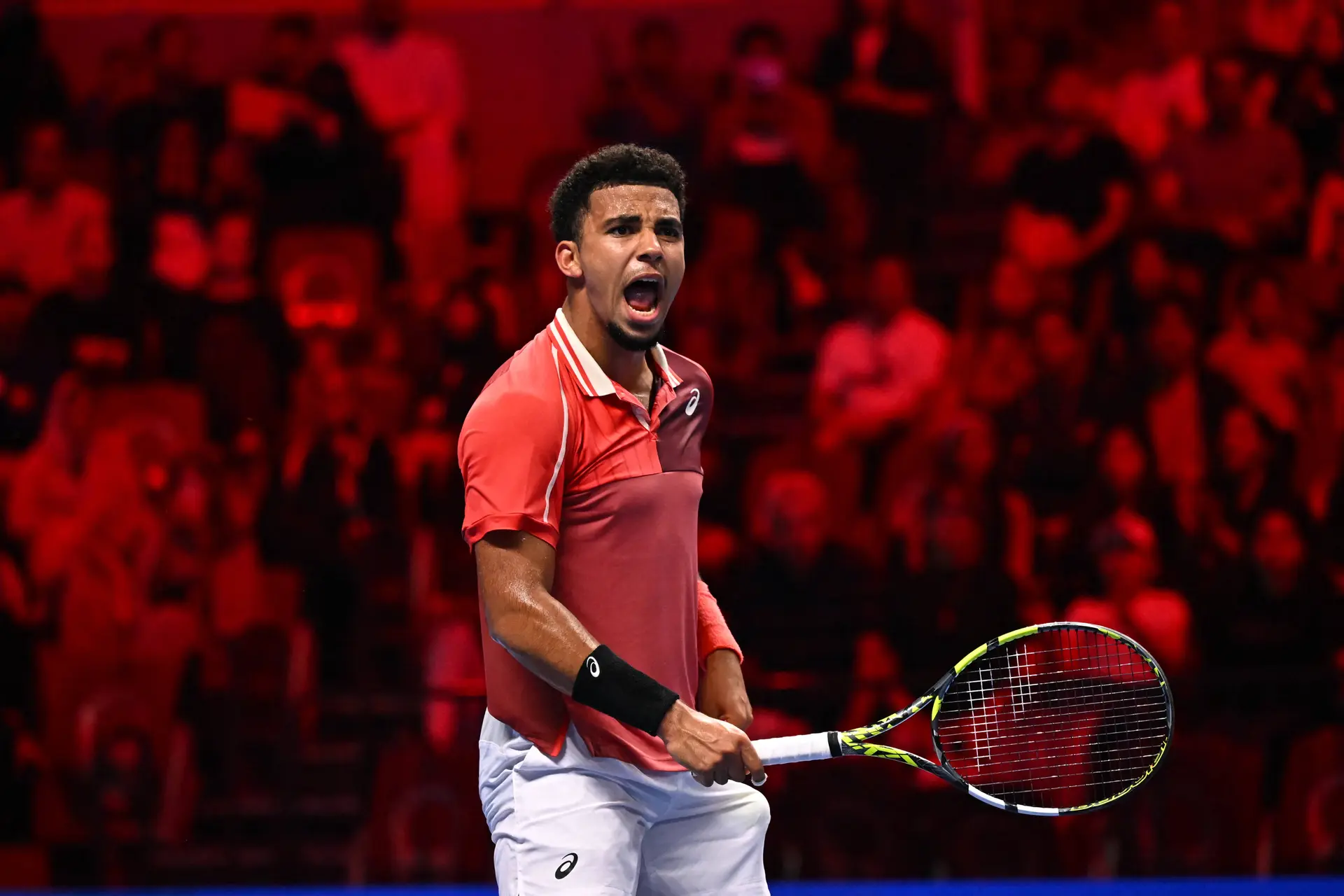
Sinner’s victory over Zverev unfolded through incremental control rather than sustained dominance. The opening games established the tone, with Zverev applying early pressure on return and forcing Sinner into a break point in his first service game. Sinner’s response—relying on first-serve precision in high-pressure points—set the baseline for the match, allowing him to avoid an early deficit.
The first set shifted at 3-1, when Sinner converted the first break after extending rallies and forcing Zverev into deeper court positions. Prior to that moment, Zverev had held comfortably and showed higher immediate efficiency on serve. However, once broken, the German struggled to generate consistent return pressure, while Sinner consolidated through clean service games and controlled point construction.
From that stage, Sinner maintained scoreboard leverage without needing further breaks. His service patterns—particularly wide serves followed by forehand control—limited Zverev’s ability to engage in neutral rallies. The set closed without additional volatility, reflecting Sinner’s capacity to protect a single-break advantage.
The second set evolved into a more balanced exchange. Both players increased first-serve efficiency, leading to a sequence of holds with limited return opportunities. Zverev showed improved baseline tolerance and began incorporating more forward positioning, including selective net approaches to shorten points and disrupt Sinner’s rhythm.
Despite this adjustment, Zverev’s impact on return remained limited. The German created isolated moments of pressure—most notably earning a break point at 4-4—but Sinner again relied on first-serve accuracy to neutralise these situations. At 4-5, Zverev faced break points himself but managed to hold, extending the set and forcing a tie-break scenario.
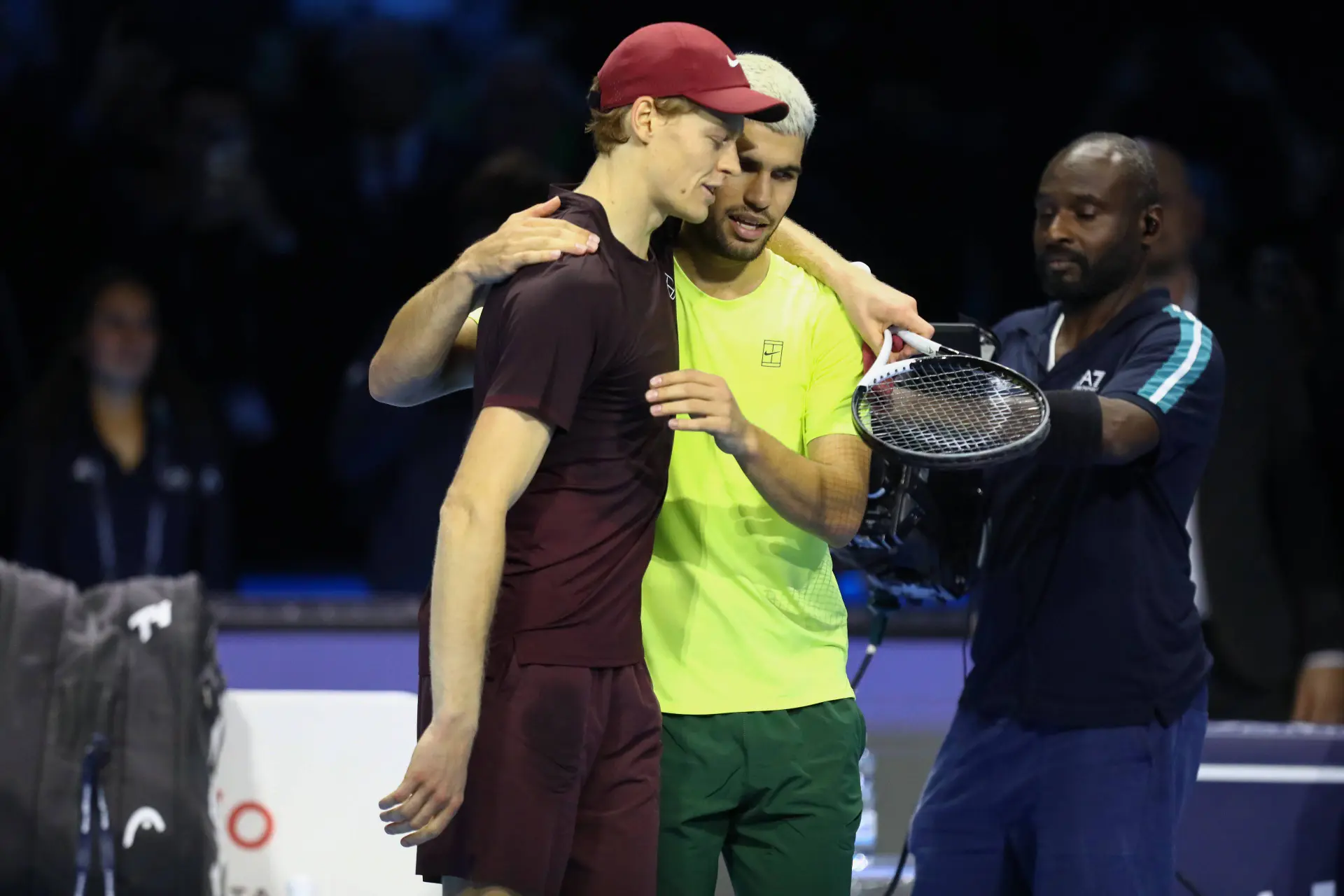
The tie-break was decided by a single mini-break, reflecting the marginal differences between the players across the set. Sinner maintained clarity in serve placement and avoided second-serve exposure, while Zverev was unable to generate return depth in the decisive exchanges. The Italian closed the match on serve, maintaining composure in the final sequence.
The statistical layer reinforces the match narrative. Sinner recorded 15 aces, won 78% of first-serve points, and held all 11 service games without facing a break conversion. Zverev matched the 78% on first serve and achieved 67% on second serve, but his return effectiveness—22% of first-serve return points won—limited his ability to shift control. Sinner advances to his fourth Miami Open final, where he will attempt to defend his title and extend his current trajectory.
Match Statistics Zverev vs. Sinner
| Zverev | VS | Sinner |
|---|---|---|
| Service | ||
| 5 | Aces | 15 |
| 1 | Double Faults | 0 |
| 74% (46/62) | 1st Service Percentage | 71% (55/77) |
| 78% (36/46) | 1st Service Points Won | 78% (43/55) |
| 67% (12/18) | 2nd Service Points Won | 50% (10/20) |
| 75% (3/4) | Break Points Saved | 100% (2/2) |
| 90% (9/10) | Service Games | 100% (11/11) |
| Return | ||
| 22% (12/55) | 1st Return Points Won | 22% (10/46) |
| 50% (10/20) | 2nd Return Points Won | 33% (6/18) |


Cristhián AvilaTennis Journalist
Cristhián Ávila is a tennis journalist based in Santiago, Chile, and has been part of the TennisUpToDate team since early 2023. He covers the ATP and WTA Tours as well as all four Grand Slams, producing breaking news, match reports, analysis, and regular liveblogs from major tournaments.
His reporting combines statistical analysis with clear explanation, helping readers understand tactical developments, player form, and broader storylines across the tour. Working fluently in both Spanish and English, Cristhián collaborates with an international editorial team and contributes to comprehensive global coverage. As part of his work, he has conducted interviews and media interactions with leading figures in the sport, including Caroline Wozniacki and John McEnroe.
In his journalism, Cristhián places strong emphasis on careful sourcing, editorial accuracy, and updating articles promptly when new, verified information becomes available. His coverage is grounded in research, context, and direct engagement with professional tennis.
claps 0visitors 0
Just In

Popular News
Latest Comments
- Fight the Good Fight... Tennis (sports in general) need more Humans such as yourself.
 mandoist18-10-2026
 - When is WTA going to mandate Genetic Testing (DNA) ???mandoist18-10-2026
- Hey, Dan... you just wake up from a coma? Regardless -- Thanks for the comedy this morning!mandoist18-10-2026
- Two Things: 1. Stop allowing these Spoiled Trust-Fund Elitists to behave badly. Your little hand-slaps do not deter them. 2. STOP the incessantly annoying "towel wiping" nonsense!!!!mandoist15-10-2026
- A healthy Qinwen may be hard to stop next season. She was already scaring her opponents before her medical leave(s). Unfortunately, Zheng insisted on singing again. On the positive side -- Mirra did not sing!! ;~}mandoist11-10-2026
- Where is it written that athletes, entertainers... People in general... are mandated to keep looking at -- or even using [anti]Social Media? Public & private figures consistently complain and reveal their concerns about negativity and violence thrown at them -- yet they insist on participating. Avoid it, don't use it, don't read it. It's okay to occasionally look up at the World instead beating your eyes & thumbs to death on The Inventions out there.mandoist11-10-2026
- great articlestennisseserver07-10-2026
- Medvedev was leading Djokovic 7-5, 3-5 when an attempted return..' NO you ignorants, Djokovic was leading .weiss05-10-2026
- No more bullshit "Wildcards" to these two. Qualify like everyone else -- there will be cameras there, too. Time to scream... WTF ????!!!!mandoist29-09-2026
- Let's not BS the general public -- Sabalenka started showing cracks in her game last season. Her losses and near-losses started at about the same time she began being distracted by Fame (constant Selfies, making TV commercials, magazine shoots, endless Social Media nonsense, etc., etc.) One would think even Saba could recognize the parallels with others who failed before her -- Raducanu, Giorgi, Bouchard to name a few.mandoist25-09-2026

Loading