"I’d much rather not be the No. 1 ranked American and be ranked top five": Global success above national pride for Taylor Fritz
ATP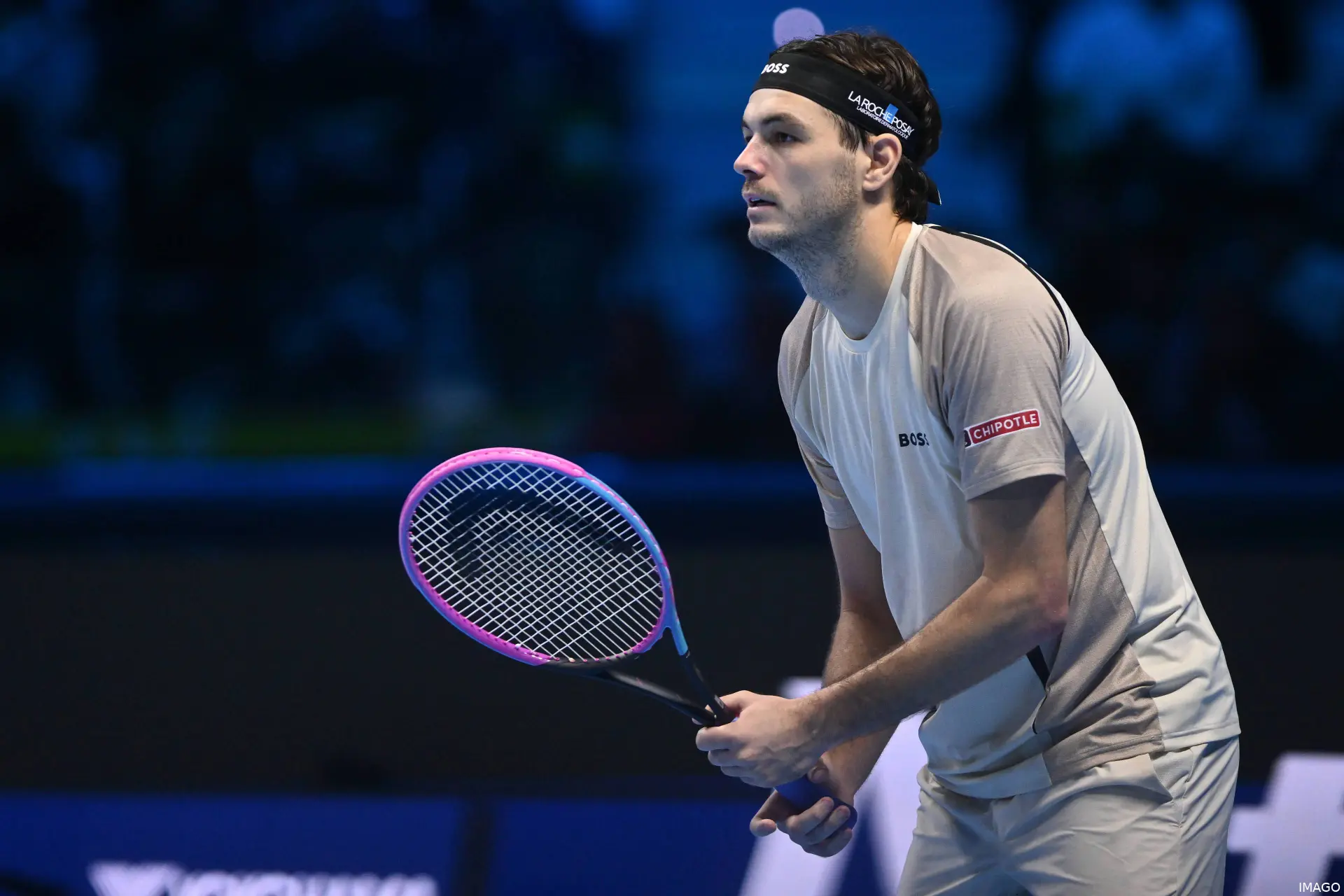
Taylor Fritz has downplayed the significance of his status as the top-ranked American, stating that his primary objectives lie in reaching the top tier of the ATP rankings and competing for major titles. Speaking in an interview on the Nothing Major podcast, the World No. 7 offered a candid assessment of his current position following a demanding stretch across Indian Wells and the Miami Open.
Fritz’s comments come at a moment of relative stagnation in results. The American exited in the third round at Indian Wells, losing to Alex Michelsen, before falling in the fourth round in Miami to Jiri Lehecka, who has since progressed to his first Masters 1000 final. Those results extended a sequence without a deep run during the Sunshine Double.
Despite maintaining a position inside the top 10, Fritz’s broader trajectory reflects a more complex picture. He is currently ranked World No. 7 but is projected to drop to No. 8 after Miami. In the ATP Race, which tracks points accumulated during the 2026 season, he sits outside the leading group at No. 16, highlighting the gap between ranking stability and current-year performance.
His most notable result this season remains a runner-up finish at the Dallas Open, where he lost to compatriot Ben Shelton. Physical concerns have also shaped his campaign, with Fritz recently withdrawing from the Monte Carlo Masters due to ongoing knee issues that have affected him since the start of the year.

“I’d rather be top five”: Fritz reframes American No. 1 debate
Fritz addressed directly the question of whether being the No. 1 American carries weight in his current stage of career, making clear that his ambitions extend beyond that label. While he has held that status for extended periods, he framed it as secondary to broader performance goals.
He explained that many of the milestones he once targeted have already been achieved, shifting his focus toward higher rankings, deeper runs in Grand Slam tournaments, and success in the biggest events on the calendar. “A lot of the things that I’ve wanted to accomplish, I have ticked off. So I’m more focused on the things that I haven’t done, like higher ranking, winning big titles, going deep in slams. That stuff is much more important to me.”
That perspective becomes more explicit when he compares national standing with global ranking, positioning the latter as the more meaningful indicator of progress. “I’d much rather not be the No. 1 ranked American and be ranked top five than be the No. 1 American and be ranked 10. It’s more important to me to be doing that kind of stuff.”
Fritz also linked that shift in priorities to changes in his weekly approach, noting that earlier concerns about consistency at smaller events have been replaced by a stronger emphasis on performance in major tournaments.
Injuries limit training as Fritz chases elite level
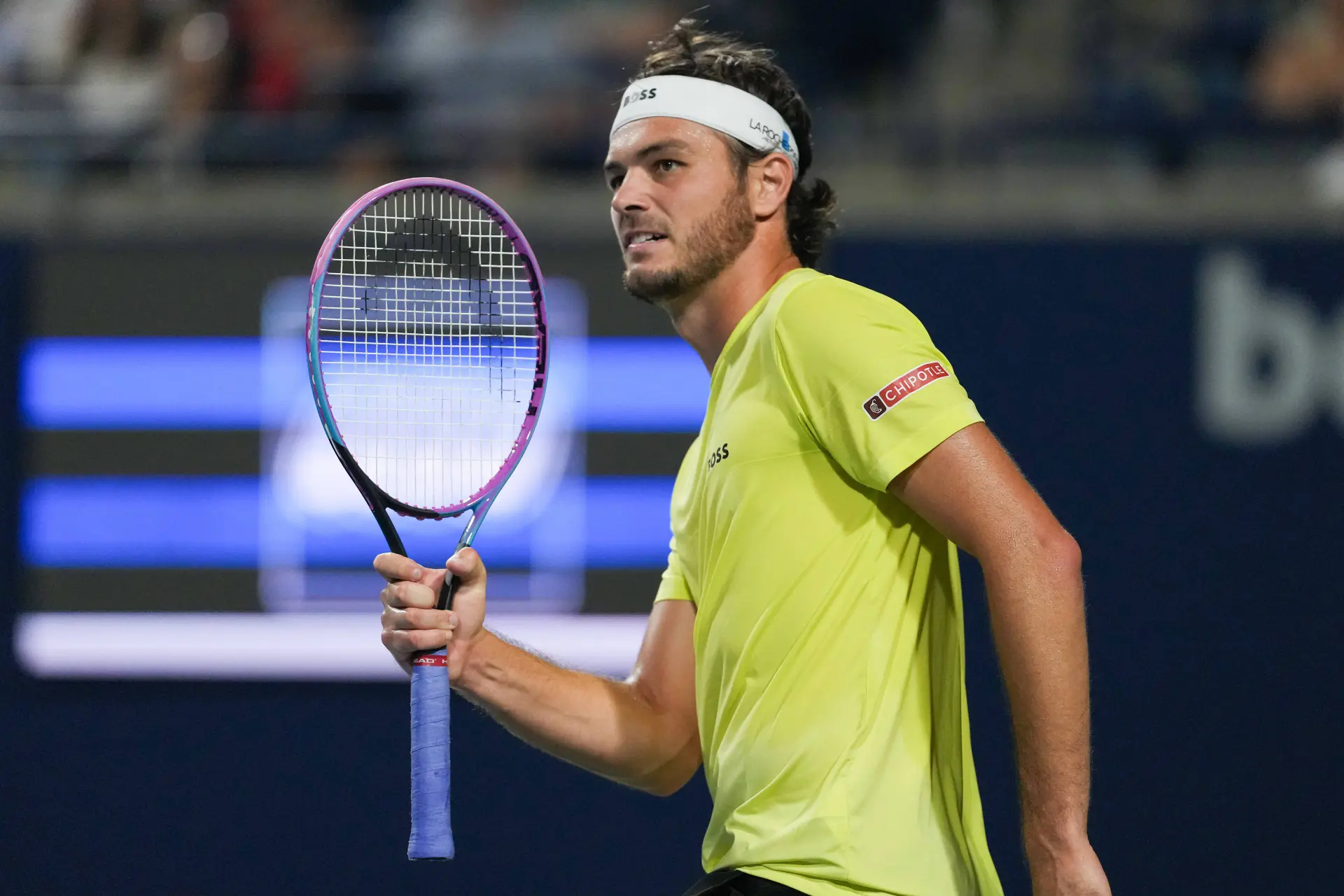
Alongside his competitive goals, Fritz highlighted physical limitations as the primary factor affecting his ability to close the gap to the top tier of the ATP Tour. His ongoing knee issue has restricted both training intensity and match preparation, complicating efforts to build momentum.
He described the situation as a recurring constraint, where maintaining health often comes at the expense of the workload required to improve key aspects of his game. That trade-off has been a defining element of his recent months on tour. “Lately, I feel like that’s been stopped a little bit just with injuries in the body. It really limits how much I can work and how much I can practice. That’s been tough. I’ve just been trying to do my best to recover and still play and still have a good level.”
The variability of his condition has also made it difficult to establish rhythm, with performance levels fluctuating depending on physical response from match to match. “It can feel great one day and then feel really awful the next day, especially if I get off a flight or play a long match. Sometimes I’m not necessarily in pain, but I feel like I’m moving awful. It’s tough for me to tell if I’m compensating or if it’s okay. It’s just a process, but it’s definitely improving.”
Losses to top players continue to define development path
Fritz also outlined how his encounters with leading players such as Jannik Sinner and Carlos Alcaraz continue to shape his development. Rather than focusing on individual matchups, he emphasised recurring patterns in his defeats that guide his training priorities.
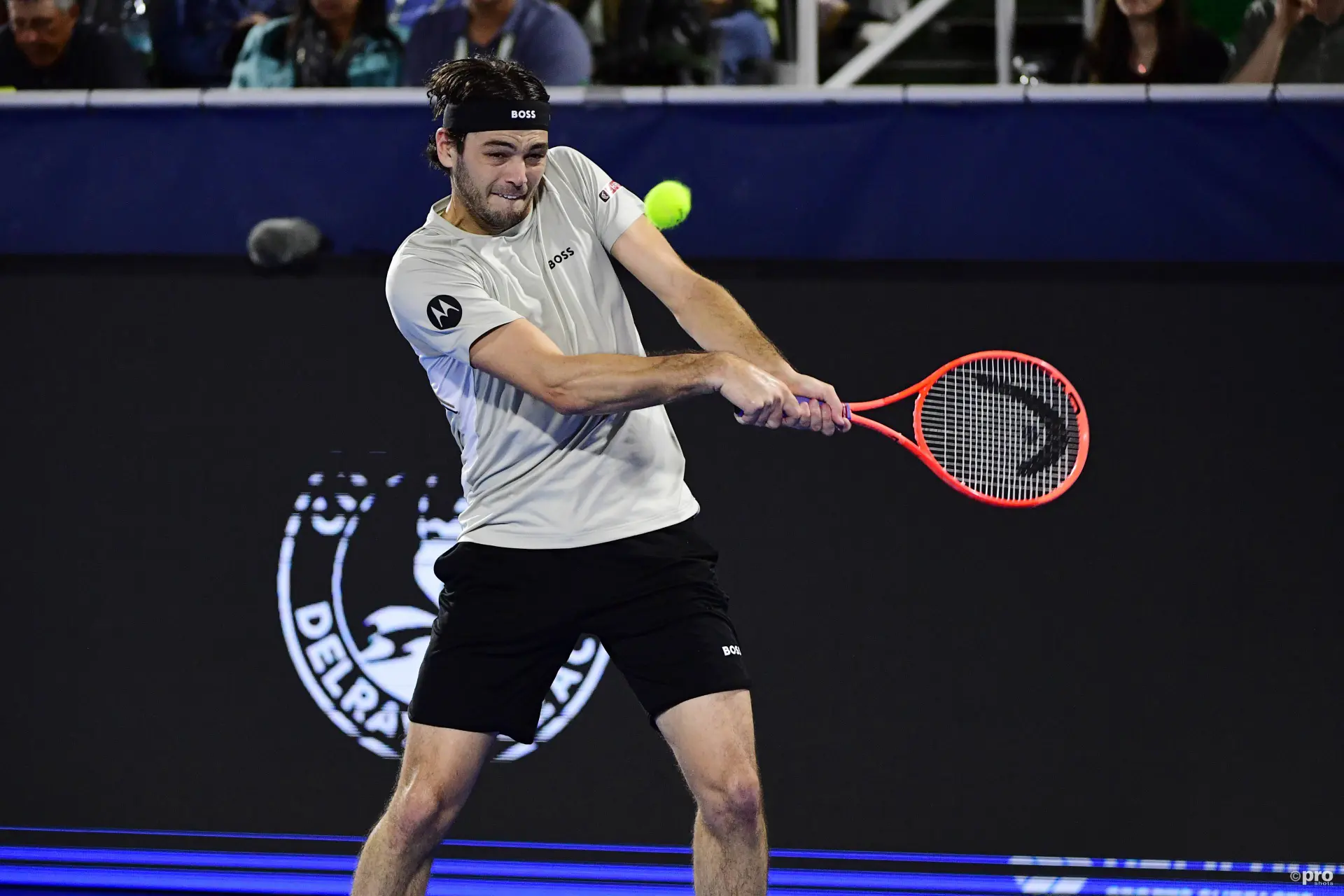
From his perspective, those losses provide a clear diagnostic of what remains to be improved, reinforcing a process-driven approach rather than opponent-specific adjustments. “Every time I play those guys, or any of the top guys, and I lose, it’s always fresh in my head the things I need to work on and the things I need to get better at if I want to compete and give myself a better chance of winning.”
As the tour transitions toward the clay-court swing, Fritz’s immediate schedule remains uncertain. After withdrawing from Monte Carlo, he has already suggested the possibility of skipping further events if his recovery does not progress as expected, leaving open the prospect of a reduced clay season as he prioritises long-term fitness over short-term results.

Cristhián AvilaTennis Journalist
Cristhián Ávila is a tennis journalist based in Santiago, Chile, and has been part of the TennisUpToDate team since early 2023. He covers the ATP and WTA Tours as well as all four Grand Slams, producing breaking news, match reports, analysis, and regular liveblogs from major tournaments.
His reporting combines statistical analysis with clear explanation, helping readers understand tactical developments, player form, and broader storylines across the tour. Working fluently in both Spanish and English, Cristhián collaborates with an international editorial team and contributes to comprehensive global coverage. As part of his work, he has conducted interviews and media interactions with leading figures in the sport, including Caroline Wozniacki and John McEnroe.
In his journalism, Cristhián places strong emphasis on careful sourcing, editorial accuracy, and updating articles promptly when new, verified information becomes available. His coverage is grounded in research, context, and direct engagement with professional tennis.
claps 0visitors 0
Just In

Popular News
Latest Comments
- Fight the Good Fight... Tennis (sports in general) need more Humans such as yourself.
 mandoist18-10-2026
 - When is WTA going to mandate Genetic Testing (DNA) ???mandoist18-10-2026
- Hey, Dan... you just wake up from a coma? Regardless -- Thanks for the comedy this morning!mandoist18-10-2026
- Two Things: 1. Stop allowing these Spoiled Trust-Fund Elitists to behave badly. Your little hand-slaps do not deter them. 2. STOP the incessantly annoying "towel wiping" nonsense!!!!mandoist15-10-2026
- A healthy Qinwen may be hard to stop next season. She was already scaring her opponents before her medical leave(s). Unfortunately, Zheng insisted on singing again. On the positive side -- Mirra did not sing!! ;~}mandoist11-10-2026
- Where is it written that athletes, entertainers... People in general... are mandated to keep looking at -- or even using [anti]Social Media? Public & private figures consistently complain and reveal their concerns about negativity and violence thrown at them -- yet they insist on participating. Avoid it, don't use it, don't read it. It's okay to occasionally look up at the World instead beating your eyes & thumbs to death on The Inventions out there.mandoist11-10-2026
- great articlestennisseserver07-10-2026
- Medvedev was leading Djokovic 7-5, 3-5 when an attempted return..' NO you ignorants, Djokovic was leading .weiss05-10-2026
- No more bullshit "Wildcards" to these two. Qualify like everyone else -- there will be cameras there, too. Time to scream... WTF ????!!!!mandoist29-09-2026
- Let's not BS the general public -- Sabalenka started showing cracks in her game last season. Her losses and near-losses started at about the same time she began being distracted by Fame (constant Selfies, making TV commercials, magazine shoots, endless Social Media nonsense, etc., etc.) One would think even Saba could recognize the parallels with others who failed before her -- Raducanu, Giorgi, Bouchard to name a few.mandoist25-09-2026

Loading