Wimbledon ATP Day Three Round-Up | Novak Djokovic too strong for Tsitsipas as Sinner and Medvedev advance smoothly
ATP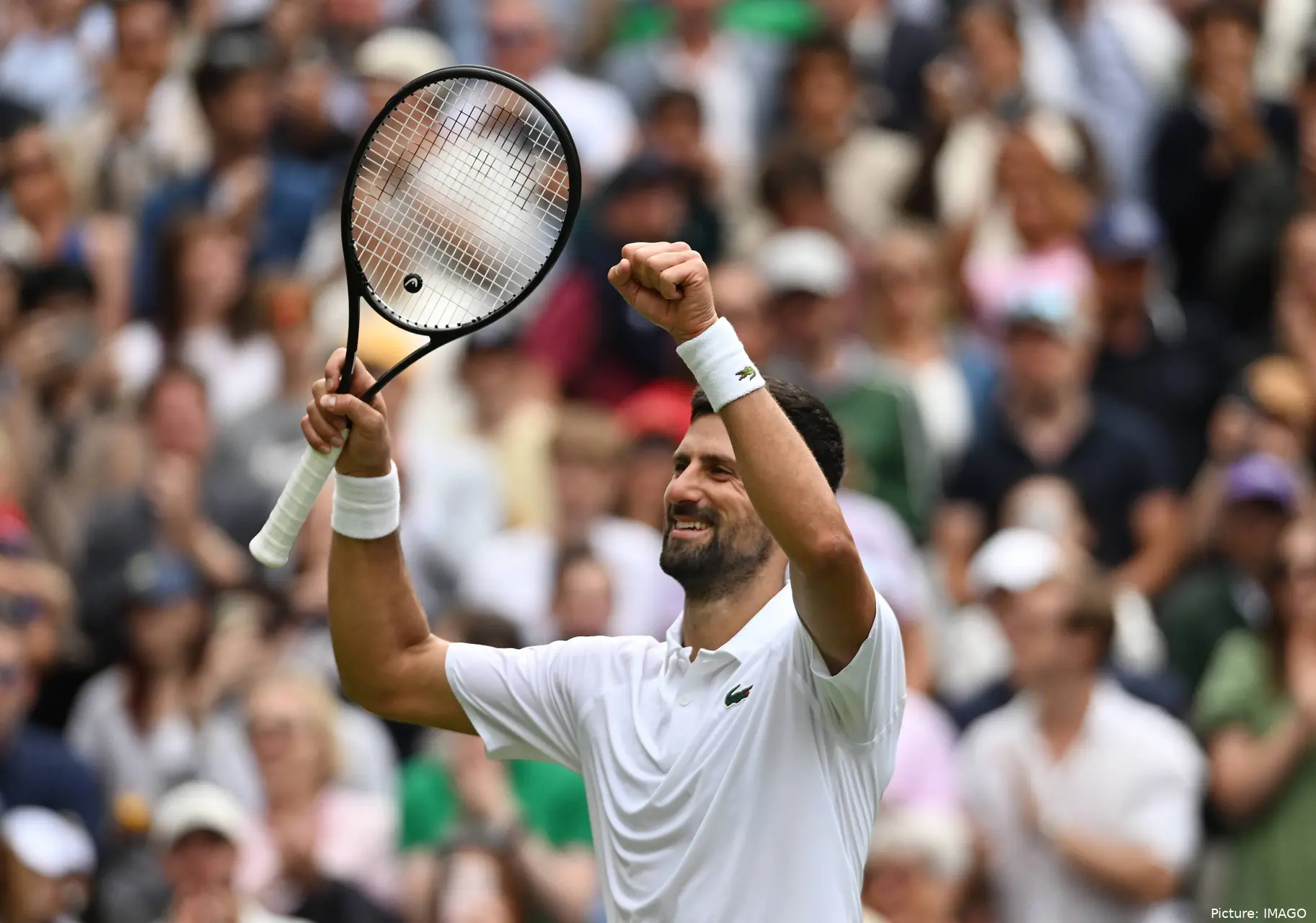
An intense second-round slate at Wimbledon delivered a clear split between seeded control and major disruption. Jannik Sinner and Novak Djokovic both advanced with straight-set wins, reaffirming their authority at the top of the tournament, while Félix Auger-Aliassime also progressed with a composed, efficient performance.
Elsewhere, Daniil Medvedev advanced after overcoming a challenging four-set battle, avoiding an early shock in a match that tested his rhythm before he reasserted control. Hubert Hurkacz delivered one of the most complete displays of the round, combining serve precision and baseline discipline, while João Fonseca continued his breakthrough run with another assured win.
Hurkacz powers past Ofner with clean grass-court efficiency
Hubert Hurkacz def. Sebastian Ofner 7-6, 6-4, 6-4
Hurkacz continued his strong grass-court resurgence with a controlled straight-sets win, building on the momentum from his opening-round upset over Casper Ruud. The 2021 Wimbledon semifinalist once again leaned heavily on serve dominance, using a high first-serve percentage to dictate tempo from the baseline and avoid extended exchanges.
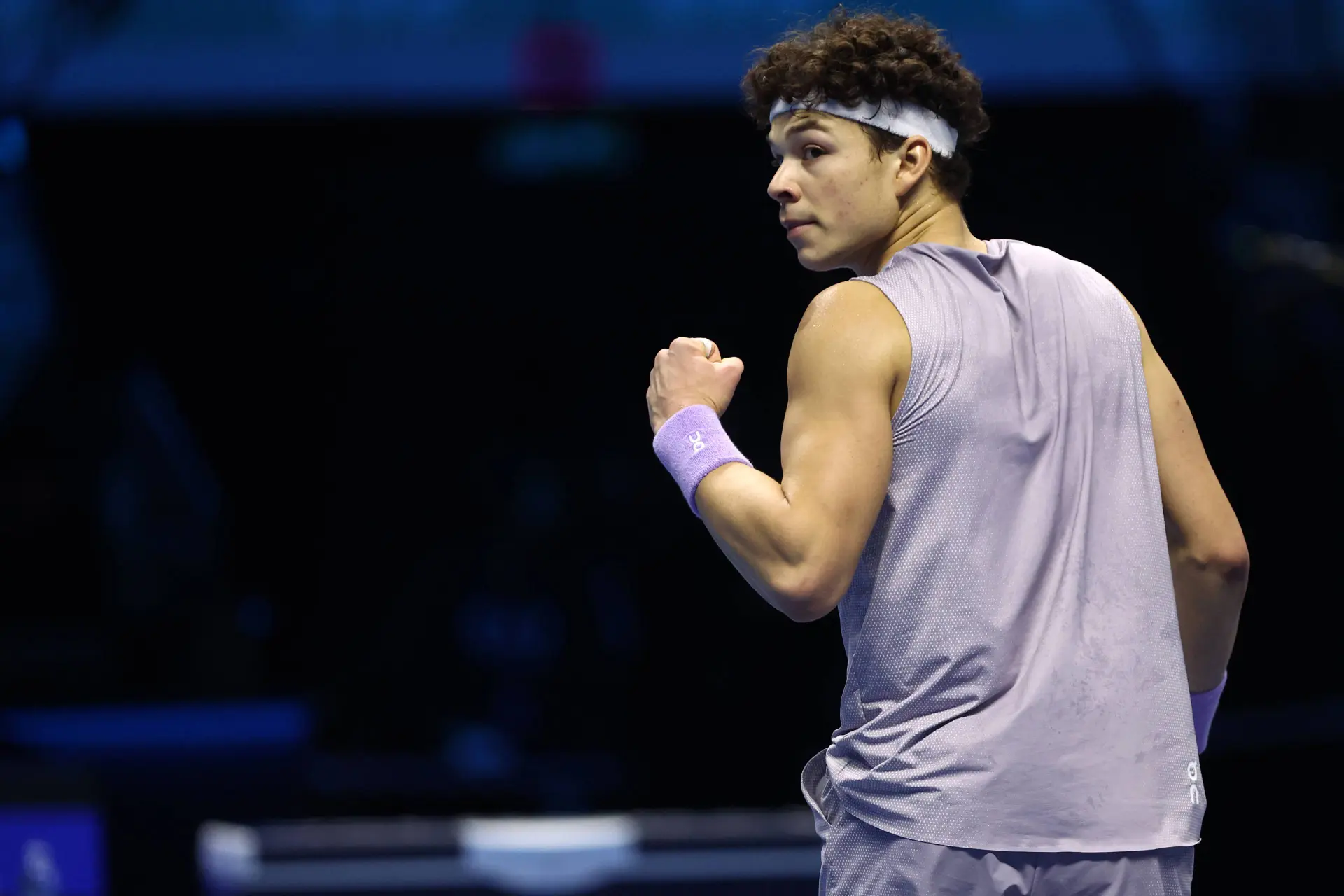
The opening set was decided in a tight tiebreak, where Hurkacz’s serve reliability proved decisive. From there, he maintained structural control across service games, repeatedly holding with minimal resistance. Across the match he produced 71% first serves in, won 88% of those points, and generated three breaks while conceding only one service game, underlining a near-complete serving performance.
The win marks his return to the third round at a Grand Slam for the first time in over two years, with his ranking projected to climb back inside the top 75. He now faces Tommy Paul in what represents a significant step-up in intensity.

Hubert Hurkacz at the ATP Finals in 2023
Sinner survives tiebreak pressure to extend Wimbledon dominance
Jannik Sinner def. Nuno Borges 7-6, 7-6, 6-4
Sinner was forced into two extended sets early on, with both the opening and second sets decided in tiebreaks after Borges consistently held serve and resisted baseline pressure. The Italian’s ability to stabilise under scoreboard pressure became the defining factor in the first two sets.
The turning point came in the second-set tiebreak sequence, where Sinner recovered from a break deficit earlier in the set to re-establish parity and gradually take control. Once he secured the lead in sets, momentum shifted decisively. A brief response from Borges, who managed to break back, was immediately neutralised as Sinner strung together consecutive breaks to shut down any comeback window.
Statistically, Sinner produced 22 aces and won 88% of points behind his first serve, reinforcing his efficiency in high-pressure service moments. The match ultimately followed a pattern of tight early resistance followed by controlled separation in the final set. He advances to face Jenson Brooksby in the third round.

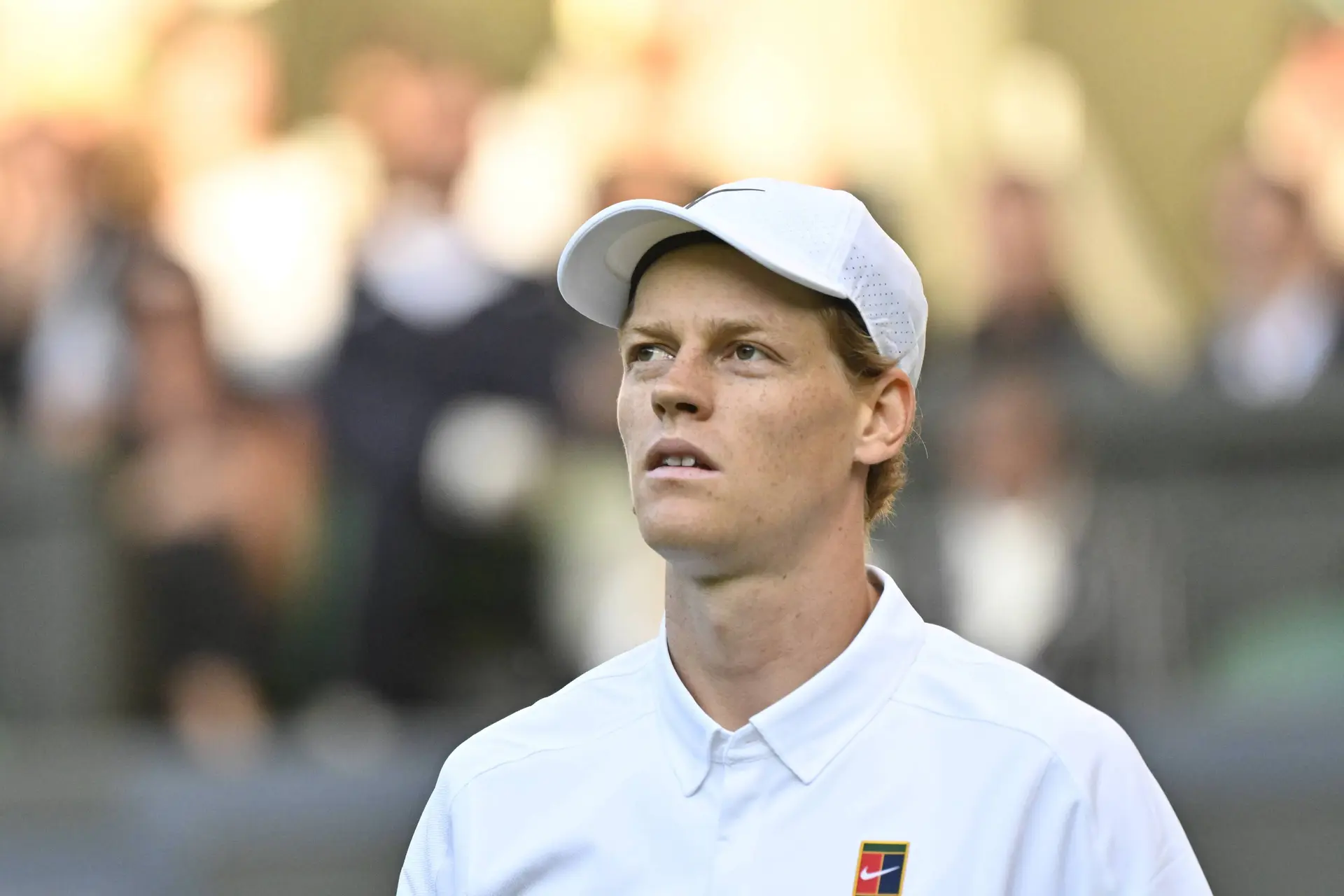
Jannik Sinner of Italy celebrates following his match against Miomir Kecmanovic of Serbia during the Gentlemen's Singles on day one of the 2026 Wimbledon
Djokovic controls tight opener before closing in four-set win
Novak Djokovic def. Stefanos Tsitsipas 6-3, 6-4, 4-6, 6-3
Djokovic delivered a composed and tactically precise straight-sets victory over Stefanos Tsitsipas, requiring just under two hours to secure progression. The Serbian controlled baseline exchanges from early in the match, absorbing Tsitsipas’ aggression and redirecting depth into the Greek’s backhand wing to force structural errors.
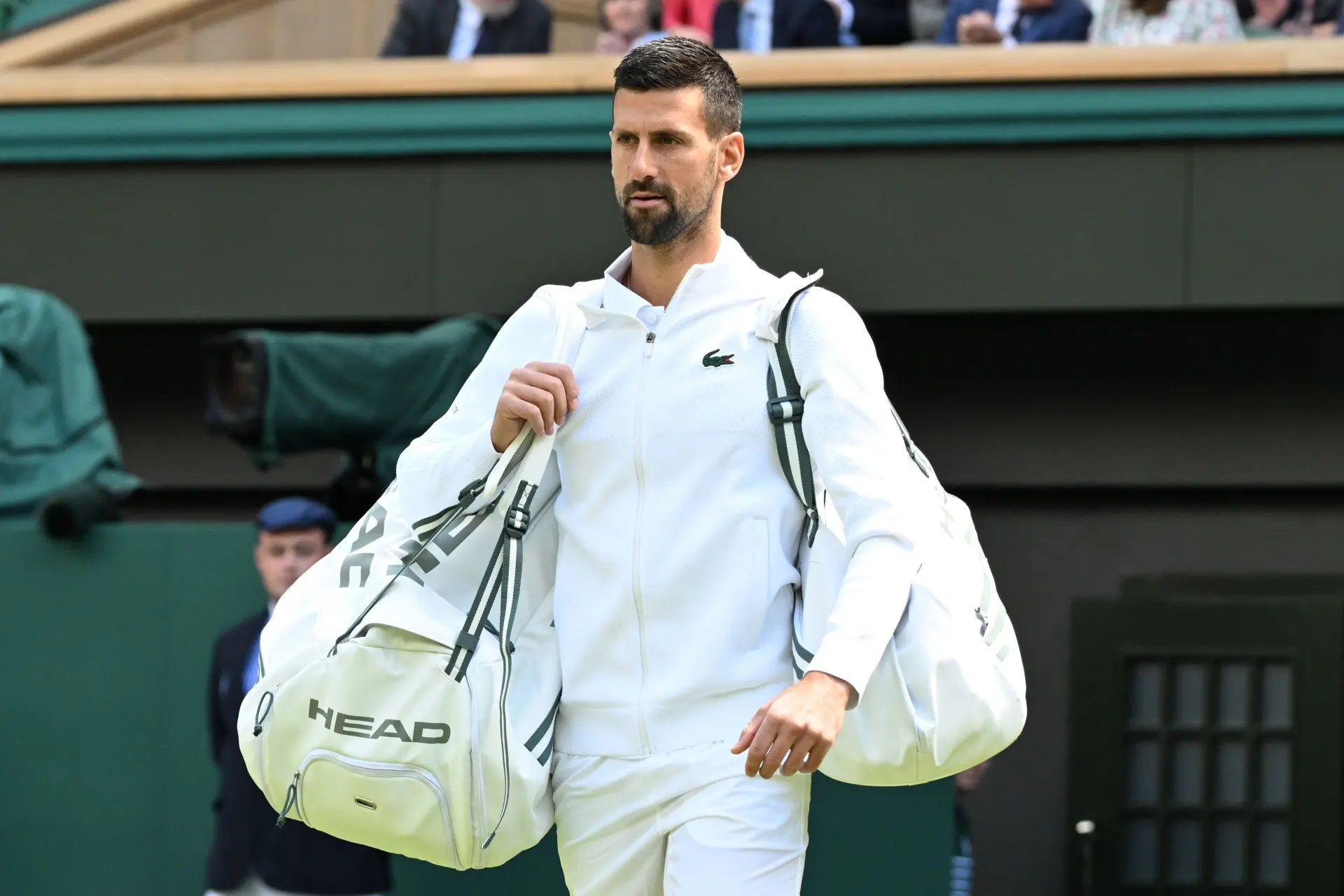
Across the contest, Djokovic maintained elite efficiency on serve, winning 88% of points behind his first delivery and saving all five break points faced. More importantly, he converted 4 of 5 break opportunities, consistently capitalising on Tsitsipas’ shorter service games and second-serve vulnerability.
Tsitsipas produced isolated stretches of strong play but was unable to sustain pressure across sets, particularly as Djokovic increased return depth in the second and third sets. The result sends Djokovic into the third round, where he will face Arthur Rinderknech as he continues his pursuit of another deep Wimbledon run.

Medvedev breaks down Mérida resistance after early setbacks
Daniil Medvedev def. Daniel Mérida 6-3, 3-6, 5-7, 6-2
Medvedev was forced into a more complex contest than expected after dropping the opening set in under 30 minutes, as Daniel Mérida initially dictated tempo with aggressive baseline hitting and confident shot selection. The Russian struggled early to control depth and timing, allowing the young Spaniard to take command.
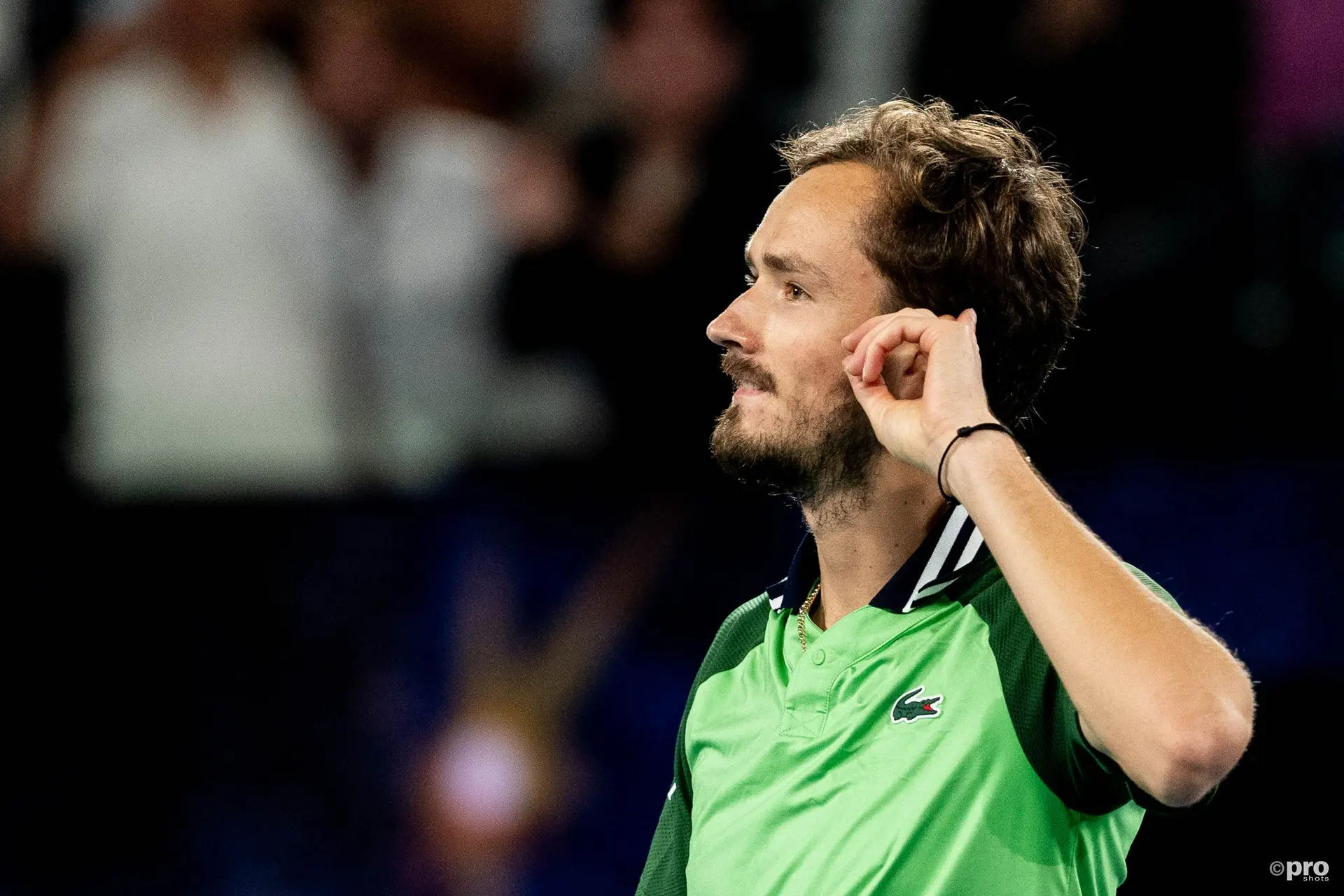
From the second set onward, Medvedev shifted tactical structure, increasing return aggression and targeting Mérida’s second serve to disrupt rhythm. The adjustment paid immediate dividends as he began to control longer rallies and create more neutral-to-offensive positions.
Despite briefly losing the third set, Medvedev reasserted authority in the fourth, where he broke multiple times and closed out the match with reduced error count and improved court positioning. Overall, he finished with five breaks of serve, offsetting the early damage and securing progression to the third round, where he will face either Brandon Nakashima or Jan-Lennard Struff.
Fonseca extends breakout run with dominant grass-court win
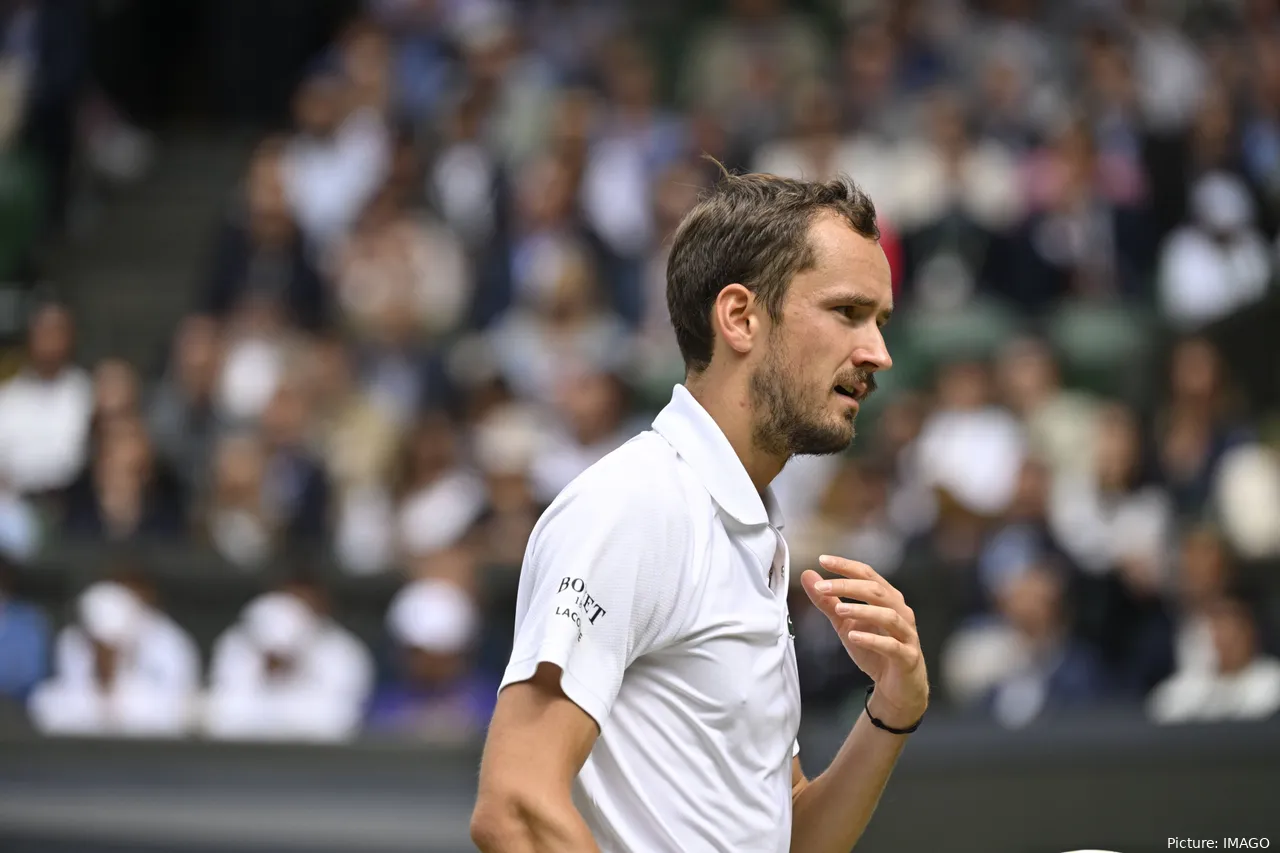
João Fonseca def. Jesper de Jong 6-1, 7-5, 6-4
Fonseca continued his breakthrough Wimbledon campaign with another straight-sets win, consolidating his emergence as one of the most effective young performers on grass this fortnight. The Brazilian imposed early control through aggressive returning and early-ball striking, breaking De Jong repeatedly in the opening set.
The second set presented more resistance, with De Jong extending rallies and briefly disrupting Fonseca’s rhythm on serve. However, the Brazilian maintained composure in key service games, avoiding prolonged dips and striking late in the set to regain separation. The third set followed a similar pattern, with Fonseca managing pressure phases more efficiently than his opponent.
Across the match he generated five breaks, while conceding only one, highlighting his growing effectiveness on return. His improved service stability has become a key factor in his progression through the draw. He advances to face qualifier Roman Safiullin, who arrives in strong form after a five-set victory run at SW19.

Joao Fonseca after defeating Djokovic to reach the quarter-finals of Roland Garros 2026
Auger-Aliassime controls key moments to reach third round in straight sets
Felix Auger-Aliassime def. Dino Prižmić 7-6, 6-3, 7-5
Auger-Aliassime navigated a competitive straight-sets win in a match defined more by tight margins than sustained dominance. Prižmić matched him for large stretches of the opening set, pushing proceedings into a tiebreak where the Canadian’s serve execution and first-strike clarity made the difference.
Once ahead, Auger-Aliassime raised his return positioning and began taking time away from Prižmić’s service games, particularly on second serves. The second set reflected that shift, with the Canadian creating more frequent short-ball opportunities and consolidating leads with improved baseline efficiency.
The third set tightened again, with Prižmić holding serve under pressure and forcing Auger-Aliassime to close out in a late-stage exchange. The Canadian ultimately secured a decisive late break to avoid a fourth set, sealing progression with controlled finishing patterns. He moves into the third round maintaining a clean straight-sets record at Wimbledon so far.

Read also
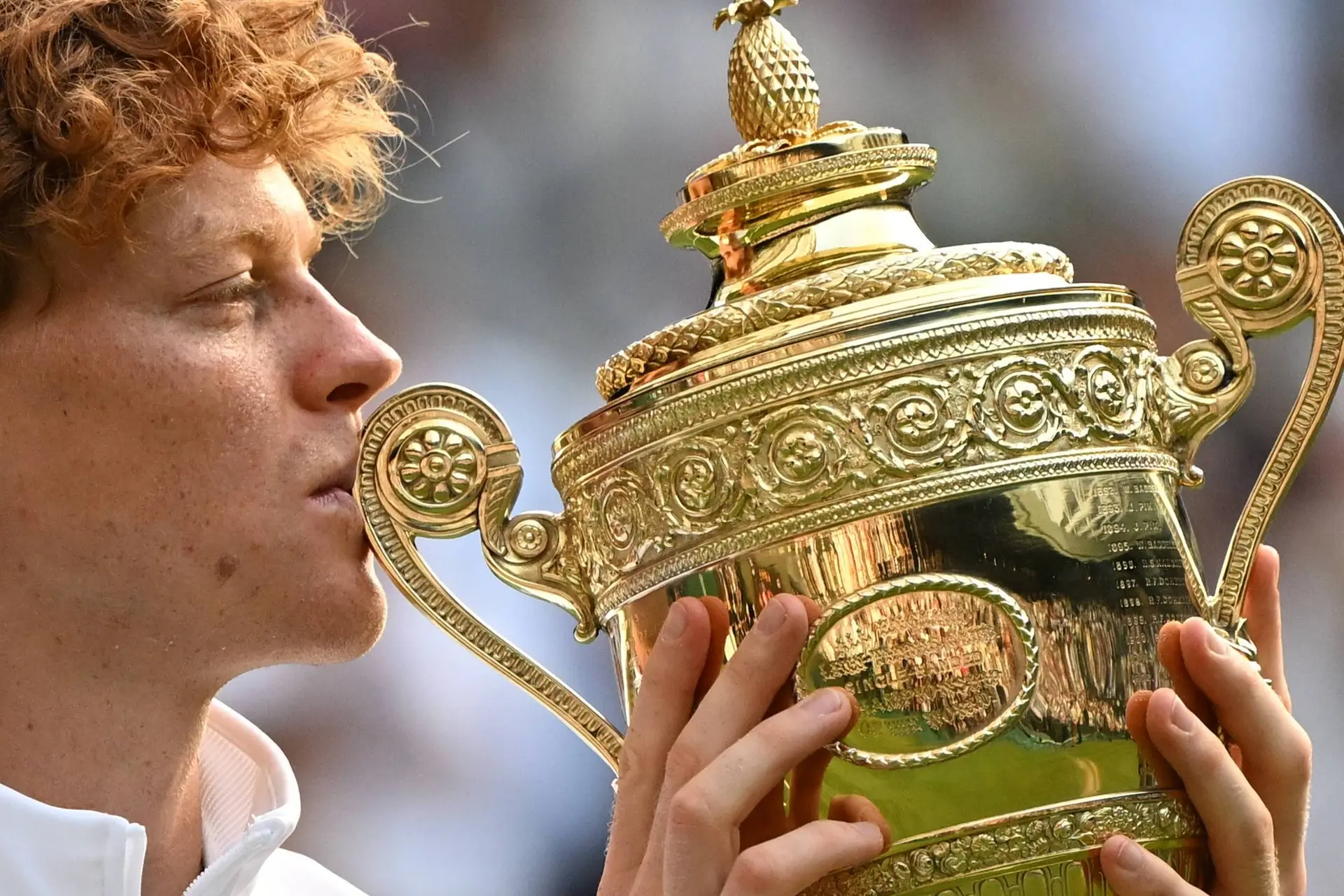



Lucas MichaelTennis Journalist
Lucas Michael is a tennis journalist based in Cambridge, UK, specializing in comprehensive coverage of the ATP and WTA tours. For the past 1.5 years, he has been a core contributor to TennisUpToDate, where he has authored more than 3,000 data-driven match reports, deep-dive analysis pieces, and engaging liveblogs.
Lucas pairs real-time statistical analysis with on-the-ground reporting, frequently traveling to tournaments to cover the action firsthand from the press box and player press conferences. This blend of advanced metrics and direct access allows him to provide sharp context regarding player form, tactical trends, and breaking tour developments.
He holds a BA (Hons) in Sports Journalism. Grounded in core journalistic ethics, Lucas places a strict emphasis on meticulous sourcing, editorial accuracy, and a commitment to updating live content swiftly as verified information emerges.
claps 0visitors 0
Just In

Popular News
Latest Comments
- A healthy Qinwen may be hard to stop next season. She was already scaring her opponents before her medical leave(s). Unfortunately, Zheng insisted on singing again. On the positive side -- Mirra did not sing!! ;~}
 mandoist11-10-2026
 - Where is it written that athletes, entertainers... People in general... are mandated to keep looking at -- or even using [anti]Social Media? Public & private figures consistently complain and reveal their concerns about negativity and violence thrown at them -- yet they insist on participating. Avoid it, don't use it, don't read it. It's okay to occasionally look up at the World instead beating your eyes & thumbs to death on The Inventions out there.mandoist11-10-2026
- great articlestennisseserver07-10-2026
- Medvedev was leading Djokovic 7-5, 3-5 when an attempted return..' NO you ignorants, Djokovic was leading .weiss05-10-2026
- No more bullshit "Wildcards" to these two. Qualify like everyone else -- there will be cameras there, too. Time to scream... WTF ????!!!!mandoist29-09-2026
- Let's not BS the general public -- Sabalenka started showing cracks in her game last season. Her losses and near-losses started at about the same time she began being distracted by Fame (constant Selfies, making TV commercials, magazine shoots, endless Social Media nonsense, etc., etc.) One would think even Saba could recognize the parallels with others who failed before her -- Raducanu, Giorgi, Bouchard to name a few.mandoist25-09-2026
- Gross!! Hey Raducanu, Giorgi, and Bouchard -- reserve a seat at your Social Media Selfie table for Saba + Naomi. They're heading in your direction soon enough.mandoist24-09-2026
- And then these same players will complain about how lengthy their season’s were and need more time-off. I’m all for more tennis but the amount of tennis we get now is actually kind of crazy! We all need a break, especially the players.DaveyWavey23-09-2026
- You should do a comparison article for "different kinds of justice" the courts decide for tennis players. I can think of at least three players who received very small bans of a few months, however Tara Moore has been fighting for her literal survival the past few years. It seems odd considering she is not a "name" player, unlike the other cases.DaveyWavey22-09-2026
- PRIZE MONEY & POINTS Winner - $185,500 Finalist - $114,500 Semi-Finalist - $66,003 Quarter-Finalist - $35,000 Round of 16 - $18,045 Round of 32 - $13,005 Winner - 500 Finalist - 325 Semi-Finalist - 195 Quarter-Finalist - 108 Round of 16 - 60 Round of 32 - 1DaveyWavey20-09-2026

Loading