“No one wants to be 80 in the world”: Alexander Bublik on instability inside ATP rankings
ATPSunday, 17 May 2026 at 20:30
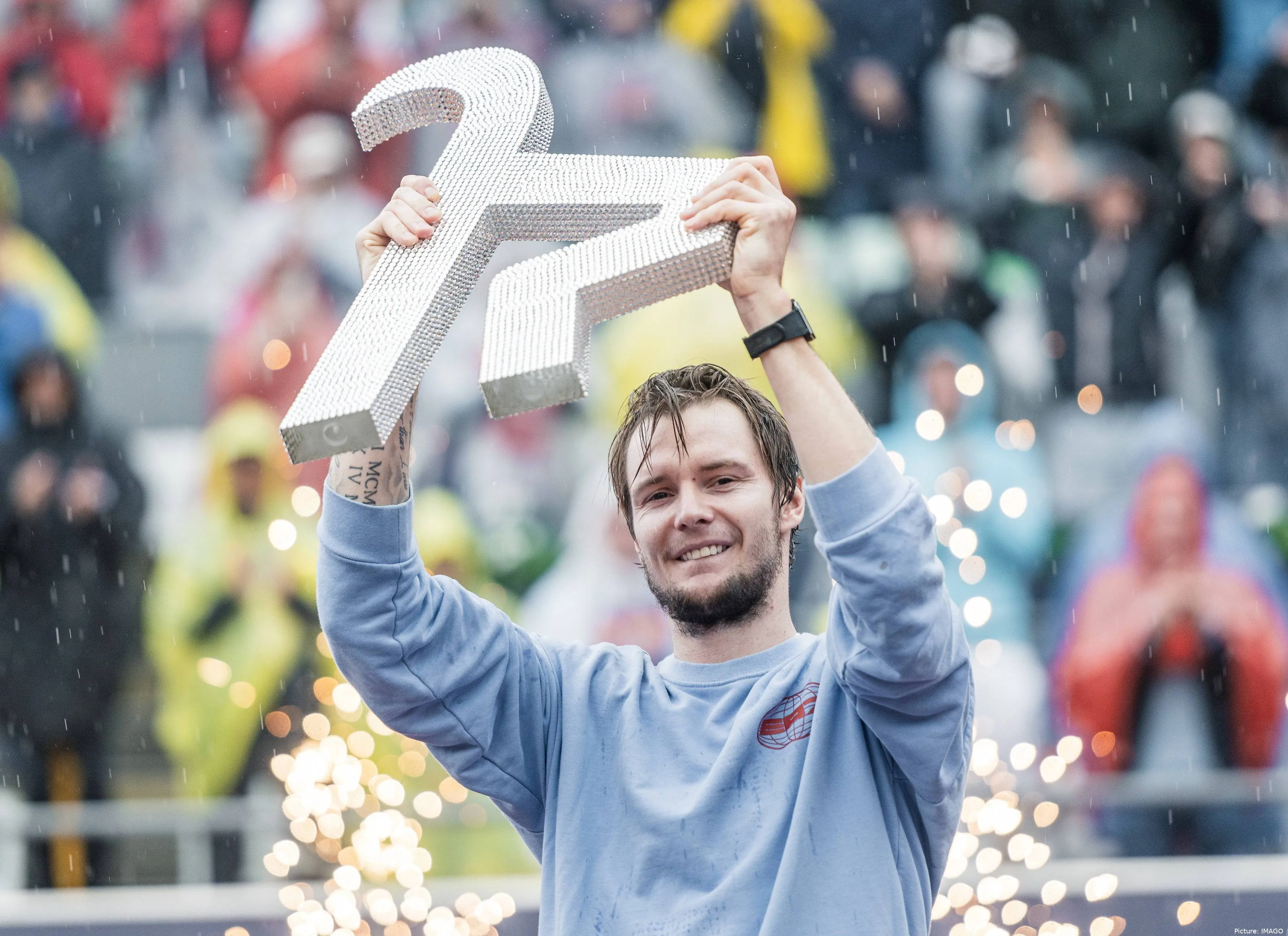
Alexander Bublik has offered a detailed reflection on the instability that has defined much of his ATP career, focusing in particular on ranking volatility and the pressure that comes with fluctuating positions inside the sport’s hierarchy. The world No. 11 used a recent interview with The Guardian to expand on the challenges of maintaining consistency across a season that continues to oscillate between strong results and early exits.
His 2026 campaign has followed the same pattern. A Monte-Carlo quarter-final briefly reinforced his position near the top tier of the game, but the momentum has not stabilised across the clay swing. At the Rome Open, he was eliminated in the round of 32 by Learner Tien, a result that reflected broader inconsistency across recent tournaments.
Bublik’s ranking trajectory has remained one of the central themes of his career, having moved from inside the top 20 to outside the top 80 before bouncing back to reach his best ranking and enter the top 10 for the first time.
The Kazakh, now 28, is attempting to establish stability at the upper end of the rankings after confirming his return to the top 10 following several weeks outside it. His run to the third round in Rome ensured that return, although he now approaches Roland Garros with pressure attached due to a significant block of points to defend from last year’s clay swing.

Ranking pressure and instability inside the ATP system
Bublik addressed the fragility of ranking positions and the psychological impact of movement within the ATP structure, particularly for players operating between tiers of the game. His comments reflected a career marked by sharp transitions between stability and decline.
“No one wants to be 80 in the world,” he says in an interview with The Guardian. “It’s a little step in my career. I’ve never been there. I guess I was out of the top 50 for the first time in seven years. So for me, it was a hit.”
The Kazakh had been close to dropping outside the top 100 a year earlier, but later found consistency through a stronger run of results. He won up to four titles in 2025 and produced deep runs in Grand Slams and Masters 1000 events that pushed him back among the best players and, at points, higher than ever before.

Perception, emotion and external environment
Beyond rankings, Bublik also spoke about how players manage pressure and emotional expression in a highly visible sporting environment.
“I think emotions are emotions,” the world No. 11 says after his third-round defeat in Rome. “I guess it’s just we live in a world where everyone tries to fake and I think there’s nothing wrong in just releasing your emotions in a way because it’s a stressful sport. We travel a lot, we play a lot, there’s a lot of things on the line so occasionally, if you release it, I guess there’s nothing wrong with that.”
He also extended that idea to the broader digital environment surrounding the sport, questioning authenticity in how individuals present themselves. “I guess the entire social media is fake, so I guess all the people who are there pretend to be someone they’re not. I guess it’s fake,” he says.
Financial structure and competitive reality
Bublik also addressed the economic foundations of professional tennis, describing the sport as a business structure that becomes evident early in a player’s career. His perspective linked financial awareness directly to professional motivation and sustainability.
“I think you realise quickly, once you start making your first money playing tennis, that it’s a big business,” Alexander Bublik says. “It’s nice to win trophies, it’s nice to be playing in a beautiful arena, it’s all nice but at the end of the day you got to pay yourself and I think that was the very first motivation I had when I became a professional.”
Bublik’s season now moves towards Geneva and Roland Garros, where ranking pressure will intensify due to points accumulated during last year’s breakthrough run to the French Open quarter-finals.

claps 0visitors 0
Just In
Popular News
Latest Comments
- I didn't see them -- where were The God's sitting??
 mandoist17-05-2026
 - What a crock-o-shit this media attack is! There are plenty of such incidents to choose from in tennis. Players often walk past as they are concentrating on what's coming. Some realize it and turn back to connect with the kid; some just simply are focused elsewhere and should not be anti-Social Media Slammed for it. Wasting space online when there are more important subjects to cover.mandoist17-05-2026
- May God continue to bless and anointing this beautiful young woman!Rapunzel17-05-2026
- Poor sap. She dumped him with a Capital "D" !! Oh well... as long he "doesn't tell me what to do" he may survive most of this season.mandoist15-05-2026
- Anytime your opponent blows their opportunities can be called "luck". Have to admit though, Gauff can run like hell. Ditto for Svitolina. Of course there's always that old addage: "Have to be Good to be Lucky".mandoist15-05-2026
- They should change the name 'Wildcard' to "Sponsorship Card".mandoist15-05-2026
- Unreal. The amount of luck Coco Gauff had in that last game was simply insane. Most players need 14 matches to get that lucky.
 MrAndreeva12-05-2026
 - Her body mass is too much for the pace of a chamopinship run. Time is catching-up to her.mandoist10-05-2026
- "Injury" seemed to have very little to do with her loss. She almost said it out loud in her presser! Anyone paying close attention could see minor 'cracks' appearing in her game since last season. It's been proven that getting side-tracked by media junkets, filming TV commercials, soaking-up the perks, and incessant 'Social' network posting leads to major distractions from the tournament grind.mandoist10-05-2026
- Blaming citizens (innocent citizens) for what their bad leaders do is not really fair. Americans are learning that lesson every day!mandoist10-05-2026

Loading